The 71st alphabetical volume of the Orthodox Encyclopedia has been published

Вышел в свет 71-й алфавитный том «Православной энциклопедии»
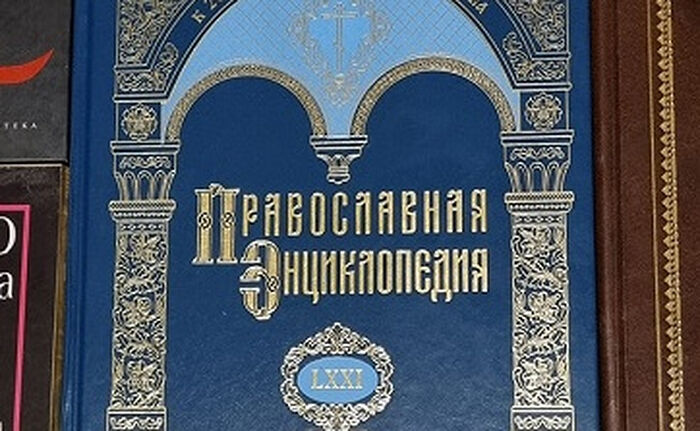
The 71st alphabetical volume of the Orthodox Encyclopedia has been published. The new volume continues the publication of articles on the letter "F". This edition opens with an article on Archbishop Theodore (nephew of St. Sergius of Radonezh), founder of Moscow's Simonov Monastery, and concludes with a detailed article on the great Orthodox saint Theophan the Hermit, spiritual writer and theologian, Patriarchy.ru reports. The peculiarity of the volume is its predominantly biographical character. In particular, the volume contains information about the ascetic writer Bishop Theodore of Edessa; the Blessed Prince Theodore of Starodub, who was killed in the Horde; the Monk Theodore, hegumen of the monastery of Chora in Constantinople; the Egyptian ascetic Theodore, founder of Nitrian monasticism; the Monk Theodore the Silent, who asceticized in the Kiev-Pechersk monastery; The Monk-martyr Theodore, martyred by Prince Mstislav Svyatopolchich; Theodore of Antioch, who suffered under Julian the Apostate; Theodore of Pergia, martyr, killed under Emperor Antoninus Pius; the Monk Theodore (Ivan Ushakov), uncle of Admiral Theodore Ushakov, glorified in the Sanaksarsk Monastery. The volume also contains an article on the most outstanding Russian naval commander Fyodor Ushakov. Detailed biographical data is given, canonization and iconography are described of a saint. The article on Bishop Theodore of Mopsuestia tells about the predecessor of Nestorianism, an outstanding representative of the Antiochian school, revered in the Church of the East. His writings, anthropology, Christology and Mariology are discussed in detail. The reader will be able to learn about the activities of the outstanding Byzantine writer Theodore Metochitus, the Byzantine confessor of the second period of iconoclasm Theodore the Inscribed, and the Byzantine church historian Theodore the Reader. Russian readers will probably be familiar with the lives of the boyar Theodore, who was martyred in the Horde together with Prince Michael, as well as the noble prince Theodore Yaroslavich, the elder brother of Alexander Nevsky. Serbian saints include Theodore (Sladic), burned by the Turks in Bosnia in 1788. The Serbian theme is continued by the biographies of the hagiographer and hymnographer Theodosius Hilendarts and Archbishop of Belgrade and Metropolitan of Serbia Theodosius (Mraovic), King Stefan Dragutin (in monasticism Theoktista). Bulgaria was represented by Theodosius of Tarnovo, a famous Hesychast, a continuer of the work of St. Gregory Sinaiticus. The volume contains detailed articles on two Patriarchs of Constantinople with the name Theodore (and two with the name Theodotus), two Patriarchs of Alexandria, including the present Patriarch Theodore II (Horeftakis). In the article. The most detailed of these articles discusses the work of Theodore Valsamon, a Byzantine statesman and ecclesiastical figure who was a major expert on the canonization of the Russian and Alexandrian Orthodox Churches. The articles on the four Patriarchs of Antioch follow, the most detailed of which describes the activities of Theodore Valsamon, a Byzantine statesman and churchman, a major specialist in canon law, and Patriarch Theodoret of Antioch. The reader can also familiarize himself with materials about Patriarch Theodore of Jerusalem; the three Catholicos of All Georgia; the first major Arab Orthodox theologian Theodore Abu Qurra; the Syrian Christian writer, exegete Theodore Bar Kony; Theodore Askida, Metropolitan of Caesarea of Cappadocia, a famous church figure of the time of Emperor Justinian, an active participant in the Fifth Ecumenical Council in Constantinople; the Monk Theodore Sikeot, whose Life is a unique literary monument and an important historical source; the Byzantine chronicler Theodore Scutariot. The volume includes articles on Patriarch Theodosius Voradiot of Constantinople, flattering characterization of whom is given by his contemporary Nikita Choniates. Patriarch Theodosius II was deposed by the Turks. Patriarch Theodosius of Alexandria is known as a supporter of Monophysitism. The volume contains biographies of six Patriarchs of Antioch with the name Theodosius, the most detailed of which tells of Theodosius VI (Spyridon Aburdzheli), who died in 1970, two Patriarchs of Jerusalem with the same name; Patriarch Theoktistos of Romania; Metropolitan Theoliptus of Philadelphia, an outstanding theologian and ascetic writer. A detailed article is dedicated to the memory of the Great Martyr Theodore Stratilates, who suffered in Heraclea under Emperor Licinius. The material tells about the history of his veneration and iconography. The reader will be able to get acquainted with the biography of the Monk Theodore Studit, the defender of iconoclasm and reformer of monasticism. It tells about the texts he created, including hymnographic texts, epigrams, and even lost works and writings of dubious authenticity; the bibliography alone is several pages long. A detailed article describes the activities of Theophanes the Greek. The volume contains an article on Theodosius, hegumen of the monastery of Philotheos on Athos, one of the Athonite ascetics. The seminal article examines the activities of Emperor Theodosius the Great, the last ruler to retain control of the full Roman Empire for a short period of time. His grandson Theodosius II achieved much less success during his long reign. Of the other rulers of states whose articles are included in the We should note the creator and emperor of the Nicaean state Theodore Laskar, his grandson Theodore II Duca Laskar, who was the first Byzantine writer to prepare a multi-volume edition of his works. The volume tells about the activities of contemporary figures of the Russian Orthodox Church with the name Theodore, as well as about the first bishop of Novgorod, Theodore (11th century); the first bishop of the city of Vladimir-on-Klyazma, Theodore, an associate of Prince Andrei Bogolyubsky; the Volokolamsk Archbishop Theodore (Pozdeyevsky), rector of the Moscow Theological Academy, who was shot in 1937. Fans of Russian history will be interested in the articles on the Tver prince Theodore Alexeevich, who was martyred together with his father Alexander Mikhailovich in the Horde in 1339; the Russian tsar Theodore Alexeevich (ruled in 1676-1682), the elder brother of Peter the Great.), the elder brother of Peter the Great, who actively promoted the development of education in the country; Tsar Feodor Borisovich Godunov (the second and last representative of this dynasty in Russian history), who was strangled together with his mother Maria Grigorievna; and Tsar Feodor Ioannovich (reigned in 1584-98), the last representative of the Rurikovich dynasty. The last article tells, in particular, about the history of his veneration as a locally honored Moscow saint. The Peter the Great era will be presented before the reader in articles about Archbishop Theodosius (Theodore Yanovsky) of Novgorod and Velikolutsk and Theophanes (Prokopovich), the first-ranking member of the Holy Synod. The reader will be able to read articles about Metropolitan Theodosius of All Russia (1461-1464.); Archbishop Theodosius (Polonitsky-Uglitsky) of Chernigov and Novgorod-Seversky; Saint Theodosius (Kharitonov), Archbishop of Astrakhan; the Monk Theodosius, hegumen of the Assumption Kiev-Pechersk Monastery; the Monk Theodosius, founder of the Cherepovets Resurrection Monastery; the Monk Theodosius (Fedor Lebedev), hegumen of the Antoniev Siy Trinity Monastery; the Russian freethinker and heretic Theodosius Kosom. The volume includes biographical materials on many of the new martyrs who suffered from Soviet power. We may note the articles on the priest-martyr Theodore Alexinsky, shot at the Butovo polygon; the priest-martyr Theodore Antipin, tortured by the Red Army; the priest-martyr Theodore Bakkalinsky, shot in Rzhev; the priest Theodore Bogoyavlensky, shot in the Matreshkin Buerak tract; Theodore Gusev; Theodore Dorofeev; Theodore Kohlerov; Theodore Lebedev; Theodore Maliarovsky; Theodore Nedosekin; Theodore Poroykov; Theodore Raspopov; Theodore Remizov; Theodore Smirnov; Theodore Chichkanov; Theodore Yakovlev; Theodosius Belenky; Feodosiy Alexandrov; Feodosiy Bobkov; Feodosiy Sobolev; Feodosiy Ganitsky; Feodot Shatokhin; Feoktist Smelnitsky; Feoktist Khoperskov. Among the priestly martyrs are also Theodore (Abrosimov), Theodore (Bogoyavlensky), Theodore (Nikitin), Bishop Theodosius (Vashchinsky) of Mogilev, Bishop Theophan (Ilmensky) of Solikamsk. The biographies of Theodore, born in Jerusalem, "tortured in the Bulgars"; the first Russian martyrs Theodore and John, Vikings killed in Kiev; St. Theodore and St. Paul, founders and hegumens of the Boris and Gleb monastery at the Ustye, will be of great interest to the reader; St. Theoktistos, Archbishop of Novgorod; the Monk Theodore and Christopher, nuns of the Clarjet Desert; the New Martyr Theodore the New, the Monk Theodore the Sanctified, disciple of the Monk Pachomius the Great; Bishop Theodore the Good of Tver; Archbishop Theoktist of Tver and Kashin, a holy martyr; Archbishop Theodoret of Ryazan and Murom; enlightener of the Loparians with the same name; the holy martyr Theodoret, who suffered under Julian the Apostate; Bishop Theodoret of Kirr, exegete and theologian; Theodosius (Kryvoezero Desert of the Trinity Theodosius (Kryukov); Archbishop Theodosius of Novgorod and Pskov; Metropolitan Theopemptos of Kiev; Theodosius (Frank Lazor), third Primate of the Orthodox Church in America; Theodosius (Shinji Nagashima), Metropolitan of All Japan. The encyclopedia published an article on one of the most revered martyrs, Theodore Tyrone, who suffered under Emperors Maximian Galerius and Macimianus Dye in the city of Amasia. The sources, the martyrdom itself, the miracles of St. Theodore Tyrone, his veneration, the Slavic tradition pertaining to this saint, and his iconography are discussed in detail. Another article contains information about the Monk Theodore Trichinus, who left the world to become a monk. The volume contains articles about the Blessed Princes Feodore Rostislavich Cherny, David and Constantine, and the elder Feodore of Siberia (known as Feodore Kuzmich). In this material the legend about the departure of Emperor Alexander Pavlovich is considered in detail. Specialists in church music will be interested in the biography of Theodore Papaparaschou of Phocaea, Greek melurgist, publisher of the "Treasury of Anfology"; an article on Theodore the Christian, protopope of the Annunciation Cathedral of the Moscow Kremlin, teacher of the sovereign's singing deacons. The volume contains articles on Church figures with the name Theodora. Let us note the Venerable Theodora, princess of Nizhny Novgorod, wife of Prince Andrei Konstantinovich; the Venerable Theodora, disciple of the Monk of St. John the Baptist; and the Venerable Theodora, disciple of the Monk of St. John the Baptist. The reader can learn about the wife of Emperor Justinian, St. Theodora, whose image was forever imprinted by the historian Procopius of Caesarea. Of interest to historians is the article on Empress Theodora, one of the few women who ruled Byzantium. Readers can also learn about the blessed Theodosia, mother of Alexander Nevsky; Theodosia, who took martyrdom in Constantinople during the time of iconoclasm. Among the few non-biographical articles in the volume are materials on the Church of St. Theodore near the Copper Tetrapylon in Constantinople; the Monastery of St. Theodore Stratilat of the Bakhchisarai region in the Crimea; a very extensive article on the Theodore Icon of the Mother of God, which tells about its iconography, history and venerated lists; and an article on the Theodotian Icon "Hodegetria" of Ryazan. The volume also tells about the Theodorov Kashpir Icon of the Mother of God; the monastery of the Theodorov Icon in the Shuisky District of Ivanovo Oblast; and the Theodosia and Kerch Diocese. Traditionally, the articles of the "Orthodox Encyclopedia" are accompanied by extensive illustrative material: color maps and numerous photographic reproductions of portraits, works of church art.
Share:
The 71st alphabetical volume of the Orthodox Encyclopedia has been published The 71st alphabetical volume of the Orthodox Encyclopedia has been published The 71st alphabetical volume of the Orthodox Encyclopedia has been published. The new volume continues the publication of articles on the letter "F". This edition opens with an article on Archbishop Theodore (nephew of St. Sergius of Radonezh), founder of Moscow's Simonov Monastery, and concludes with a detailed article on the great Orthodox saint Theophan the Hermit, spiritual writer and theologian, Patriarchy.ru reports. The peculiarity of the volume is its predominantly biographical character. In particular, the volume contains information about the ascetic writer Bishop Theodore of Edessa; the Blessed Prince Theodore of Starodub, who was killed in the Horde; the Monk Theodore, hegumen of the monastery of Chora in Constantinople; the Egyptian ascetic Theodore, founder of Nitrian monasticism; the Monk Theodore the Silent, who asceticized in the Kiev-Pechersk monastery; The Monk-martyr Theodore, martyred by Prince Mstislav Svyatopolchich; Theodore of Antioch, who suffered under Julian the Apostate; Theodore of Pergia, martyr, killed under Emperor Antoninus Pius; the Monk Theodore (Ivan Ushakov), uncle of Admiral Theodore Ushakov, glorified in the Sanaksarsk Monastery. The volume also contains an article on the most outstanding Russian naval commander Fyodor Ushakov. Detailed biographical data is given, canonization and iconography are described of a saint. The article on Bishop Theodore of Mopsuestia tells about the predecessor of Nestorianism, an outstanding representative of the Antiochian school, revered in the Church of the East. His writings, anthropology, Christology and Mariology are discussed in detail. The reader will be able to learn about the activities of the outstanding Byzantine writer Theodore Metochitus, the Byzantine confessor of the second period of iconoclasm Theodore the Inscribed, and the Byzantine church historian Theodore the Reader. Russian readers will probably be familiar with the lives of the boyar Theodore, who was martyred in the Horde together with Prince Michael, as well as the noble prince Theodore Yaroslavich, the elder brother of Alexander Nevsky. Serbian saints include Theodore (Sladic), burned by the Turks in Bosnia in 1788. The Serbian theme is continued by the biographies of the hagiographer and hymnographer Theodosius Hilendarts and Archbishop of Belgrade and Metropolitan of Serbia Theodosius (Mraovic), King Stefan Dragutin (in monasticism Theoktista). Bulgaria was represented by Theodosius of Tarnovo, a famous Hesychast, a continuer of the work of St. Gregory Sinaiticus. The volume contains detailed articles on two Patriarchs of Constantinople with the name Theodore (and two with the name Theodotus), two Patriarchs of Alexandria, including the present Patriarch Theodore II (Horeftakis). In the article. The most detailed of these articles discusses the work of Theodore Valsamon, a Byzantine statesman and ecclesiastical figure who was a major expert on the canonization of the Russian and Alexandrian Orthodox Churches. The articles on the four Patriarchs of Antioch follow, the most detailed of which describes the activities of Theodore Valsamon, a Byzantine statesman and churchman, a major specialist in canon law, and Patriarch Theodoret of Antioch. The reader can also familiarize himself with materials about Patriarch Theodore of Jerusalem; the three Catholicos of All Georgia; the first major Arab Orthodox theologian Theodore Abu Qurra; the Syrian Christian writer, exegete Theodore Bar Kony; Theodore Askida, Metropolitan of Caesarea of Cappadocia, a famous church figure of the time of Emperor Justinian, an active participant in the Fifth Ecumenical Council in Constantinople; the Monk Theodore Sikeot, whose Life is a unique literary monument and an important historical source; the Byzantine chronicler Theodore Scutariot. The volume includes articles on Patriarch Theodosius Voradiot of Constantinople, flattering characterization of whom is given by his contemporary Nikita Choniates. Patriarch Theodosius II was deposed by the Turks. Patriarch Theodosius of Alexandria is known as a supporter of Monophysitism. The volume contains biographies of six Patriarchs of Antioch with the name Theodosius, the most detailed of which tells of Theodosius VI (Spyridon Aburdzheli), who died in 1970, two Patriarchs of Jerusalem with the same name; Patriarch Theoktistos of Romania; Metropolitan Theoliptus of Philadelphia, an outstanding theologian and ascetic writer. A detailed article is dedicated to the memory of the Great Martyr Theodore Stratilates, who suffered in Heraclea under Emperor Licinius. The material tells about the history of his veneration and iconography. The reader will be able to get acquainted with the biography of the Monk Theodore Studit, the defender of iconoclasm and reformer of monasticism. It tells about the texts he created, including hymnographic texts, epigrams, and even lost works and writings of dubious authenticity; the bibliography alone is several pages long. A detailed article describes the activities of Theophanes the Greek. The volume contains an article on Theodosius, hegumen of the monastery of Philotheos on Athos, one of the Athonite ascetics. The seminal article examines the activities of Emperor Theodosius the Great, the last ruler to retain control of the full Roman Empire for a short period of time. His grandson Theodosius II achieved much less success during his long reign. Of the other rulers of states whose articles are included in the We should note the creator and emperor of the Nicaean state Theodore Laskar, his grandson Theodore II Duca Laskar, who was the first Byzantine writer to prepare a multi-volume edition of his works. The volume tells about the activities of contemporary figures of the Russian Orthodox Church with the name Theodore, as well as about the first bishop of Novgorod, Theodore (11th century); the first bishop of the city of Vladimir-on-Klyazma, Theodore, an associate of Prince Andrei Bogolyubsky; the Volokolamsk Archbishop Theodore (Pozdeyevsky), rector of the Moscow Theological Academy, who was shot in 1937. Fans of Russian history will be interested in the articles on the Tver prince Theodore Alexeevich, who was martyred together with his father Alexander Mikhailovich in the Horde in 1339; the Russian tsar Theodore Alexeevich (ruled in 1676-1682), the elder brother of Peter the Great.), the elder brother of Peter the Great, who actively promoted the development of education in the country; Tsar Feodor Borisovich Godunov (the second and last representative of this dynasty in Russian history), who was strangled together with his mother Maria Grigorievna; and Tsar Feodor Ioannovich (reigned in 1584-98), the last representative of the Rurikovich dynasty. The last article tells, in particular, about the history of his veneration as a locally honored Moscow saint. The Peter the Great era will be presented before the reader in articles about Archbishop Theodosius (Theodore Yanovsky) of Novgorod and Velikolutsk and Theophanes (Prokopovich), the first-ranking member of the Holy Synod. The reader will be able to read articles about Metropolitan Theodosius of All Russia (1461-1464.); Archbishop Theodosius (Polonitsky-Uglitsky) of Chernigov and Novgorod-Seversky; Saint Theodosius (Kharitonov), Archbishop of Astrakhan; the Monk Theodosius, hegumen of the Assumption Kiev-Pechersk Monastery; the Monk Theodosius, founder of the Cherepovets Resurrection Monastery; the Monk Theodosius (Fedor Lebedev), hegumen of the Antoniev Siy Trinity Monastery; the Russian freethinker and heretic Theodosius Kosom. The volume includes biographical materials on many of the new martyrs who suffered from Soviet power. We may note the articles on the priest-martyr Theodore Alexinsky, shot at the Butovo polygon; the priest-martyr Theodore Antipin, tortured by the Red Army; the priest-martyr Theodore Bakkalinsky, shot in Rzhev; the priest Theodore Bogoyavlensky, shot in the Matreshkin Buerak tract; Theodore Gusev; Theodore Dorofeev; Theodore Kohlerov; Theodore Lebedev; Theodore Maliarovsky; Theodore Nedosekin; Theodore Poroykov; Theodore Raspopov; Theodore Remizov; Theodore Smirnov; Theodore Chichkanov; Theodore Yakovlev; Theodosius Belenky; Feodosiy Alexandrov; Feodosiy Bobkov; Feodosiy Sobolev; Feodosiy Ganitsky; Feodot Shatokhin; Feoktist Smelnitsky; Feoktist Khoperskov. Among the priestly martyrs are also Theodore (Abrosimov), Theodore (Bogoyavlensky), Theodore (Nikitin), Bishop Theodosius (Vashchinsky) of Mogilev, Bishop Theophan (Ilmensky) of Solikamsk. The biographies of Theodore, born in Jerusalem, "tortured in the Bulgars"; the first Russian martyrs Theodore and John, Vikings killed in Kiev; St. Theodore and St. Paul, founders and hegumens of the Boris and Gleb monastery at the Ustye, will be of great interest to the reader; St. Theoktistos, Archbishop of Novgorod; the Monk Theodore and Christopher, nuns of the Clarjet Desert; the New Martyr Theodore the New, the Monk Theodore the Sanctified, disciple of the Monk Pachomius the Great; Bishop Theodore the Good of Tver; Archbishop Theoktist of Tver and Kashin, a holy martyr; Archbishop Theodoret of Ryazan and Murom; enlightener of the Loparians with the same name; the holy martyr Theodoret, who suffered under Julian the Apostate; Bishop Theodoret of Kirr, exegete and theologian; Theodosius (Kryvoezero Desert of the Trinity Theodosius (Kryukov); Archbishop Theodosius of Novgorod and Pskov; Metropolitan Theopemptos of Kiev; Theodosius (Frank Lazor), third Primate of the Orthodox Church in America; Theodosius (Shinji Nagashima), Metropolitan of All Japan. The encyclopedia published an article on one of the most revered martyrs, Theodore Tyrone, who suffered under Emperors Maximian Galerius and Macimianus Dye in the city of Amasia. The sources, the martyrdom itself, the miracles of St. Theodore Tyrone, his veneration, the Slavic tradition pertaining to this saint, and his iconography are discussed in detail. Another article contains information about the Monk Theodore Trichinus, who left the world to become a monk. The volume contains articles about the Blessed Princes Feodore Rostislavich Cherny, David and Constantine, and the elder Feodore of Siberia (known as Feodore Kuzmich). In this material the legend about the departure of Emperor Alexander Pavlovich is considered in detail. Specialists in church music will be interested in the biography of Theodore Papaparaschou of Phocaea, Greek melurgist, publisher of the "Treasury of Anfology"; an article on Theodore the Christian, protopope of the Annunciation Cathedral of the Moscow Kremlin, teacher of the sovereign's singing deacons. The volume contains articles on Church figures with the name Theodora. Let us note the Venerable Theodora, princess of Nizhny Novgorod, wife of Prince Andrei Konstantinovich; the Venerable Theodora, disciple of the Monk of St. John the Baptist; and the Venerable Theodora, disciple of the Monk of St. John the Baptist. The reader can learn about the wife of Emperor Justinian, St. Theodora, whose image was forever imprinted by the historian Procopius of Caesarea. Of interest to historians is the article on Empress Theodora, one of the few women who ruled Byzantium. Readers can also learn about the blessed Theodosia, mother of Alexander Nevsky; Theodosia, who took martyrdom in Constantinople during the time of iconoclasm. Among the few non-biographical articles in the volume are materials on the Church of St. Theodore near the Copper Tetrapylon in Constantinople; the Monastery of St. Theodore Stratilat of the Bakhchisarai region in the Crimea; a very extensive article on the Theodore Icon of the Mother of God, which tells about its iconography, history and venerated lists; and an article on the Theodotian Icon "Hodegetria" of Ryazan. The volume also tells about the Theodorov Kashpir Icon of the Mother of God; the monastery of the Theodorov Icon in the Shuisky District of Ivanovo Oblast; and the Theodosia and Kerch Diocese. Traditionally, the articles of the "Orthodox Encyclopedia" are accompanied by extensive illustrative material: color maps and numerous photographic reproductions of portraits, works of church art.
The 71st alphabetical volume of the Orthodox Encyclopedia has been published. The new volume continues the publication of articles on the letter "F". This edition opens with an article on Archbishop Theodore (nephew of St. Sergius of Radonezh), founder of Moscow's Simonov Monastery, and concludes with a detailed article on the great Orthodox saint Theophan the Hermit, spiritual writer and theologian, Patriarchy.ru reports. The peculiarity of the volume is its predominantly biographical character. In particular, the volume contains information about the ascetic writer Bishop Theodore of Edessa; the Blessed Prince Theodore of Starodub, who was killed in the Horde; the Monk Theodore, hegumen of the monastery of Chora in Constantinople; the Egyptian ascetic Theodore, founder of Nitrian monasticism; the Monk Theodore the Silent, who asceticized in the Kiev-Pechersk monastery; The Monk-martyr Theodore, martyred by Prince Mstislav Svyatopolchich; Theodore of Antioch, who suffered under Julian the Apostate; Theodore of Pergia, martyr, killed under Emperor Antoninus Pius; the Monk Theodore (Ivan Ushakov), uncle of Admiral Theodore Ushakov, glorified in the Sanaksarsk Monastery. The volume also contains an article on the most outstanding Russian naval commander Fyodor Ushakov. Detailed biographical data is given, canonization and iconography are described of a saint. The article on Bishop Theodore of Mopsuestia tells about the predecessor of Nestorianism, an outstanding representative of the Antiochian school, revered in the Church of the East. His writings, anthropology, Christology and Mariology are discussed in detail. The reader will be able to learn about the activities of the outstanding Byzantine writer Theodore Metochitus, the Byzantine confessor of the second period of iconoclasm Theodore the Inscribed, and the Byzantine church historian Theodore the Reader. Russian readers will probably be familiar with the lives of the boyar Theodore, who was martyred in the Horde together with Prince Michael, as well as the noble prince Theodore Yaroslavich, the elder brother of Alexander Nevsky. Serbian saints include Theodore (Sladic), burned by the Turks in Bosnia in 1788. The Serbian theme is continued by the biographies of the hagiographer and hymnographer Theodosius Hilendarts and Archbishop of Belgrade and Metropolitan of Serbia Theodosius (Mraovic), King Stefan Dragutin (in monasticism Theoktista). Bulgaria was represented by Theodosius of Tarnovo, a famous Hesychast, a continuer of the work of St. Gregory Sinaiticus. The volume contains detailed articles on two Patriarchs of Constantinople with the name Theodore (and two with the name Theodotus), two Patriarchs of Alexandria, including the present Patriarch Theodore II (Horeftakis). In the article. The most detailed of these articles discusses the work of Theodore Valsamon, a Byzantine statesman and ecclesiastical figure who was a major expert on the canonization of the Russian and Alexandrian Orthodox Churches. The articles on the four Patriarchs of Antioch follow, the most detailed of which describes the activities of Theodore Valsamon, a Byzantine statesman and churchman, a major specialist in canon law, and Patriarch Theodoret of Antioch. The reader can also familiarize himself with materials about Patriarch Theodore of Jerusalem; the three Catholicos of All Georgia; the first major Arab Orthodox theologian Theodore Abu Qurra; the Syrian Christian writer, exegete Theodore Bar Kony; Theodore Askida, Metropolitan of Caesarea of Cappadocia, a famous church figure of the time of Emperor Justinian, an active participant in the Fifth Ecumenical Council in Constantinople; the Monk Theodore Sikeot, whose Life is a unique literary monument and an important historical source; the Byzantine chronicler Theodore Scutariot. The volume includes articles on Patriarch Theodosius Voradiot of Constantinople, flattering characterization of whom is given by his contemporary Nikita Choniates. Patriarch Theodosius II was deposed by the Turks. Patriarch Theodosius of Alexandria is known as a supporter of Monophysitism. The volume contains biographies of six Patriarchs of Antioch with the name Theodosius, the most detailed of which tells of Theodosius VI (Spyridon Aburdzheli), who died in 1970, two Patriarchs of Jerusalem with the same name; Patriarch Theoktistos of Romania; Metropolitan Theoliptus of Philadelphia, an outstanding theologian and ascetic writer. A detailed article is dedicated to the memory of the Great Martyr Theodore Stratilates, who suffered in Heraclea under Emperor Licinius. The material tells about the history of his veneration and iconography. The reader will be able to get acquainted with the biography of the Monk Theodore Studit, the defender of iconoclasm and reformer of monasticism. It tells about the texts he created, including hymnographic texts, epigrams, and even lost works and writings of dubious authenticity; the bibliography alone is several pages long. A detailed article describes the activities of Theophanes the Greek. The volume contains an article on Theodosius, hegumen of the monastery of Philotheos on Athos, one of the Athonite ascetics. The seminal article examines the activities of Emperor Theodosius the Great, the last ruler to retain control of the full Roman Empire for a short period of time. His grandson Theodosius II achieved much less success during his long reign. Of the other rulers of states whose articles are included in the We should note the creator and emperor of the Nicaean state Theodore Laskar, his grandson Theodore II Duca Laskar, who was the first Byzantine writer to prepare a multi-volume edition of his works. The volume tells about the activities of contemporary figures of the Russian Orthodox Church with the name Theodore, as well as about the first bishop of Novgorod, Theodore (11th century); the first bishop of the city of Vladimir-on-Klyazma, Theodore, an associate of Prince Andrei Bogolyubsky; the Volokolamsk Archbishop Theodore (Pozdeyevsky), rector of the Moscow Theological Academy, who was shot in 1937. Fans of Russian history will be interested in the articles on the Tver prince Theodore Alexeevich, who was martyred together with his father Alexander Mikhailovich in the Horde in 1339; the Russian tsar Theodore Alexeevich (ruled in 1676-1682), the elder brother of Peter the Great.), the elder brother of Peter the Great, who actively promoted the development of education in the country; Tsar Feodor Borisovich Godunov (the second and last representative of this dynasty in Russian history), who was strangled together with his mother Maria Grigorievna; and Tsar Feodor Ioannovich (reigned in 1584-98), the last representative of the Rurikovich dynasty. The last article tells, in particular, about the history of his veneration as a locally honored Moscow saint. The Peter the Great era will be presented before the reader in articles about Archbishop Theodosius (Theodore Yanovsky) of Novgorod and Velikolutsk and Theophanes (Prokopovich), the first-ranking member of the Holy Synod. The reader will be able to read articles about Metropolitan Theodosius of All Russia (1461-1464.); Archbishop Theodosius (Polonitsky-Uglitsky) of Chernigov and Novgorod-Seversky; Saint Theodosius (Kharitonov), Archbishop of Astrakhan; the Monk Theodosius, hegumen of the Assumption Kiev-Pechersk Monastery; the Monk Theodosius, founder of the Cherepovets Resurrection Monastery; the Monk Theodosius (Fedor Lebedev), hegumen of the Antoniev Siy Trinity Monastery; the Russian freethinker and heretic Theodosius Kosom. The volume includes biographical materials on many of the new martyrs who suffered from Soviet power. We may note the articles on the priest-martyr Theodore Alexinsky, shot at the Butovo polygon; the priest-martyr Theodore Antipin, tortured by the Red Army; the priest-martyr Theodore Bakkalinsky, shot in Rzhev; the priest Theodore Bogoyavlensky, shot in the Matreshkin Buerak tract; Theodore Gusev; Theodore Dorofeev; Theodore Kohlerov; Theodore Lebedev; Theodore Maliarovsky; Theodore Nedosekin; Theodore Poroykov; Theodore Raspopov; Theodore Remizov; Theodore Smirnov; Theodore Chichkanov; Theodore Yakovlev; Theodosius Belenky; Feodosiy Alexandrov; Feodosiy Bobkov; Feodosiy Sobolev; Feodosiy Ganitsky; Feodot Shatokhin; Feoktist Smelnitsky; Feoktist Khoperskov. Among the priestly martyrs are also Theodore (Abrosimov), Theodore (Bogoyavlensky), Theodore (Nikitin), Bishop Theodosius (Vashchinsky) of Mogilev, Bishop Theophan (Ilmensky) of Solikamsk. The biographies of Theodore, born in Jerusalem, "tortured in the Bulgars"; the first Russian martyrs Theodore and John, Vikings killed in Kiev; St. Theodore and St. Paul, founders and hegumens of the Boris and Gleb monastery at the Ustye, will be of great interest to the reader; St. Theoktistos, Archbishop of Novgorod; the Monk Theodore and Christopher, nuns of the Clarjet Desert; the New Martyr Theodore the New, the Monk Theodore the Sanctified, disciple of the Monk Pachomius the Great; Bishop Theodore the Good of Tver; Archbishop Theoktist of Tver and Kashin, a holy martyr; Archbishop Theodoret of Ryazan and Murom; enlightener of the Loparians with the same name; the holy martyr Theodoret, who suffered under Julian the Apostate; Bishop Theodoret of Kirr, exegete and theologian; Theodosius (Kryvoezero Desert of the Trinity Theodosius (Kryukov); Archbishop Theodosius of Novgorod and Pskov; Metropolitan Theopemptos of Kiev; Theodosius (Frank Lazor), third Primate of the Orthodox Church in America; Theodosius (Shinji Nagashima), Metropolitan of All Japan. The encyclopedia published an article on one of the most revered martyrs, Theodore Tyrone, who suffered under Emperors Maximian Galerius and Macimianus Dye in the city of Amasia. The sources, the martyrdom itself, the miracles of St. Theodore Tyrone, his veneration, the Slavic tradition pertaining to this saint, and his iconography are discussed in detail. Another article contains information about the Monk Theodore Trichinus, who left the world to become a monk. The volume contains articles about the Blessed Princes Feodore Rostislavich Cherny, David and Constantine, and the elder Feodore of Siberia (known as Feodore Kuzmich). In this material the legend about the departure of Emperor Alexander Pavlovich is considered in detail. Specialists in church music will be interested in the biography of Theodore Papaparaschou of Phocaea, Greek melurgist, publisher of the "Treasury of Anfology"; an article on Theodore the Christian, protopope of the Annunciation Cathedral of the Moscow Kremlin, teacher of the sovereign's singing deacons. The volume contains articles on Church figures with the name Theodora. Let us note the Venerable Theodora, princess of Nizhny Novgorod, wife of Prince Andrei Konstantinovich; the Venerable Theodora, disciple of the Monk of St. John the Baptist; and the Venerable Theodora, disciple of the Monk of St. John the Baptist. The reader can learn about the wife of Emperor Justinian, St. Theodora, whose image was forever imprinted by the historian Procopius of Caesarea. Of interest to historians is the article on Empress Theodora, one of the few women who ruled Byzantium. Readers can also learn about the blessed Theodosia, mother of Alexander Nevsky; Theodosia, who took martyrdom in Constantinople during the time of iconoclasm. Among the few non-biographical articles in the volume are materials on the Church of St. Theodore near the Copper Tetrapylon in Constantinople; the Monastery of St. Theodore Stratilat of the Bakhchisarai region in the Crimea; a very extensive article on the Theodore Icon of the Mother of God, which tells about its iconography, history and venerated lists; and an article on the Theodotian Icon "Hodegetria" of Ryazan. The volume also tells about the Theodorov Kashpir Icon of the Mother of God; the monastery of the Theodorov Icon in the Shuisky District of Ivanovo Oblast; and the Theodosia and Kerch Diocese. Traditionally, the articles of the "Orthodox Encyclopedia" are accompanied by extensive illustrative material: color maps and numerous photographic reproductions of portraits, works of church art.