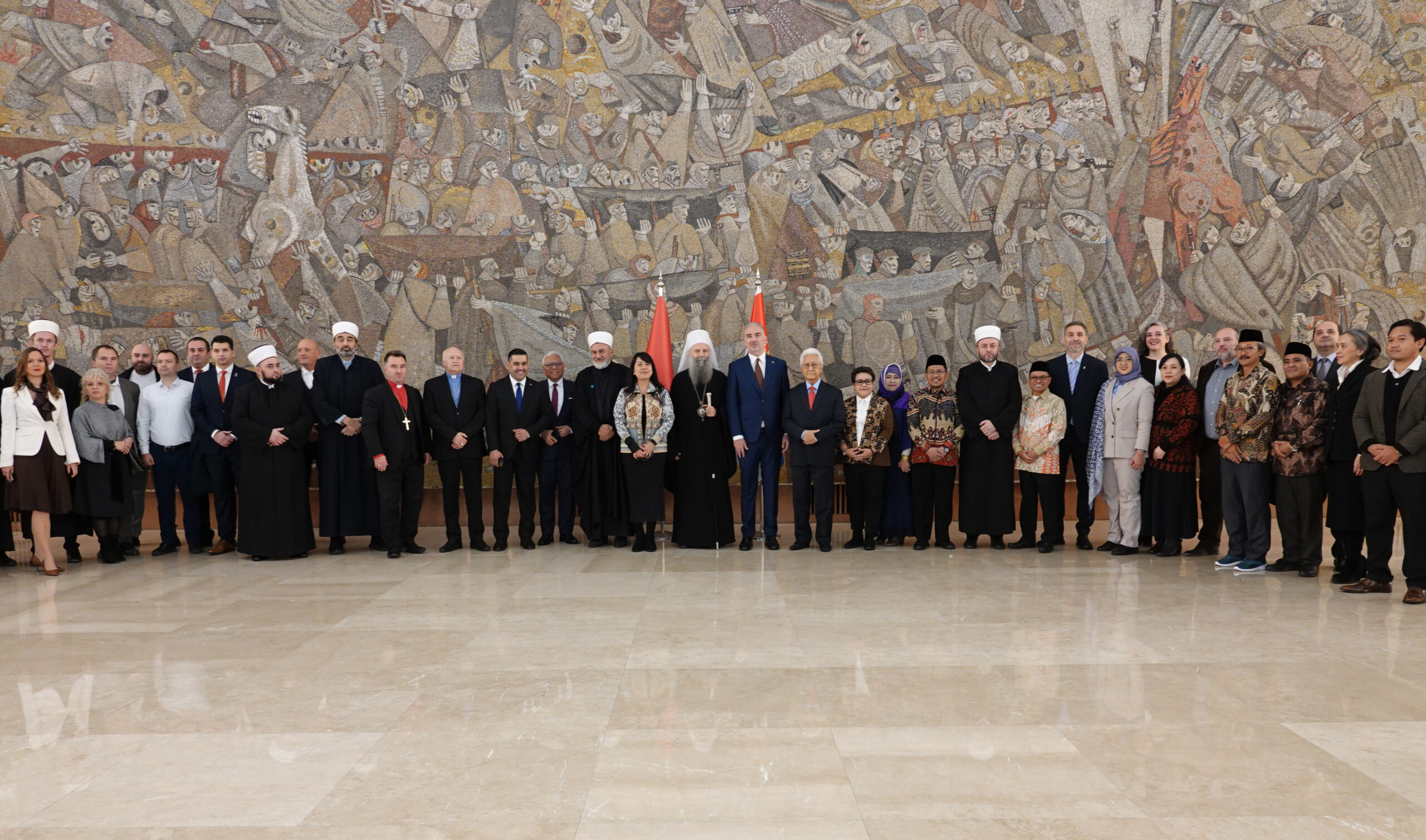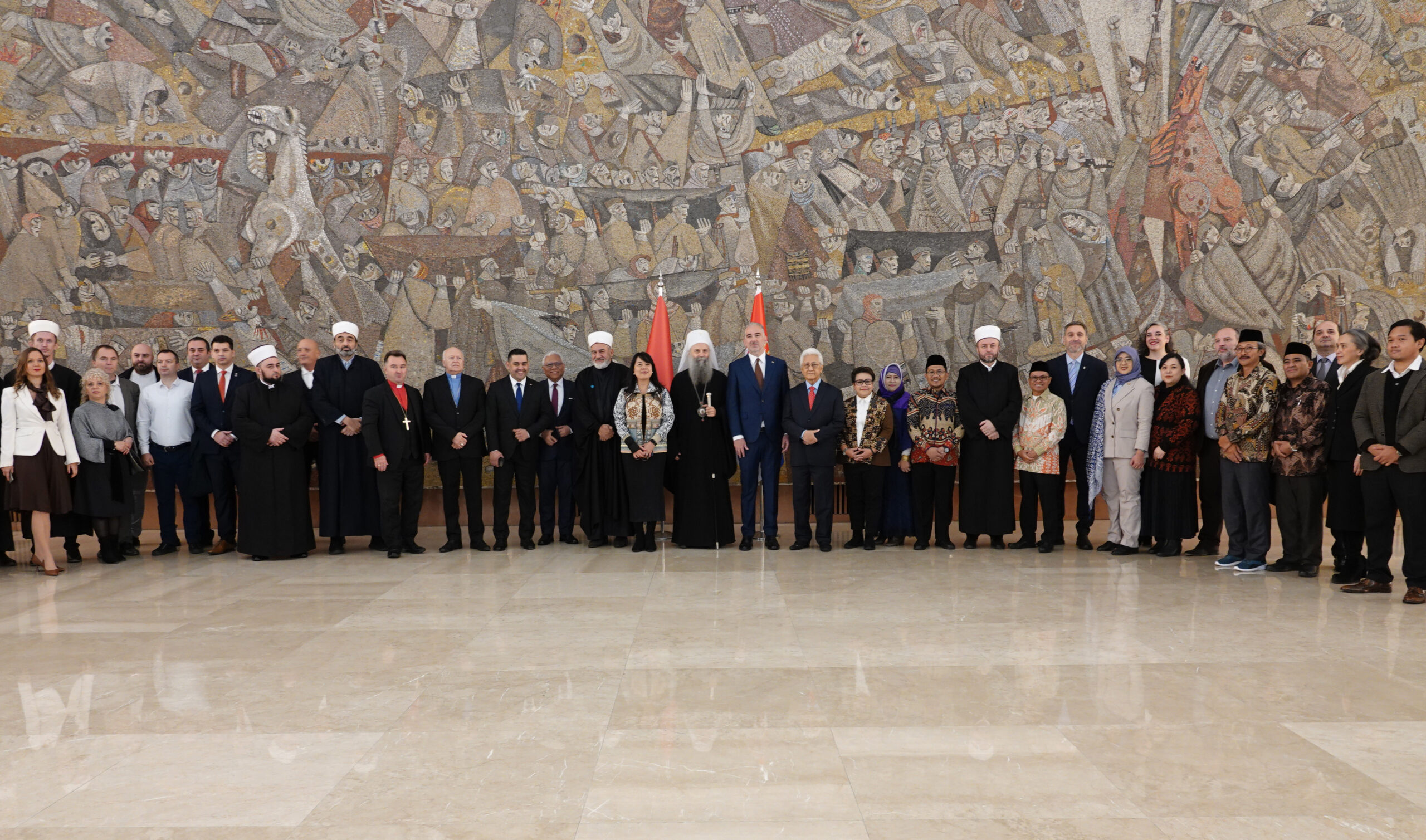
The Fifth Bilateral Interreligious Dialogue between Serbia and Indonesia under the slogan "Dialogue to Peace: Tolerance and Culture" was held on November 12, 2024 in the ceremonial hall of the Palace of Serbia in Belgrade.
Indonesia has been engaged in interreligious dialog with partner countries around the world for more than three decades. The first bilateral interreligious dialog between Serbia and Indonesia, held in Belgrade in 2011, was rated by Indonesian partners as the most successful the country has ever achieved with any country. The good practice was continued in 2013 during the Second Dialogue in Jakarta, which will be remembered for the fact that the Orthodox Patriarch visited the country for the first time - a glowing memory of Patriarch Irinej of Serbia. The third bilateral interreligious dialog between Serbia and Indonesia was held in Belgrade in 2015. In this case, Indonesia was very supportive of the Republic of Serbia, because during the conference in Paris, it voted against the accession of the so-called Kosovo to UNESCO. The fourth dialogue took place in 2019 in Yogyakarta, and today the Republic of Serbia, more precisely the Office for Cooperation with Churches and Religious Communities of the Ministry of Justice and its director Dr. Vladimir Roganovic, is again hosting a delegation of the Republic of Indonesia in the fifth bilateral interfaith dialog.
In his welcoming remarks, Dr. Roganović expressed his satisfaction that he was able to open the Fifth Bilateral Interfaith Dialogue between the Republic of Serbia and Indonesia on behalf of the Ministry of Justice, warmly welcoming all participants of the meeting. Director Roganović emphasized that the dialogue, which was first held in 2011 in the same venue as today, has made significant progress and recalled the historic visit of Patriarch Irinej to Indonesia, and that His Holiness Patriarch of Serbia, Mgr. Porphyrios is a regular and valuable participant in all interreligious meetings, which shows how important they are for the Serbian Orthodox Church, but also for all traditional religious communities, which together with the state contribute to building mutual understanding, cooperation and respect for diversity.
The theme of today's conference, as Director Roganovich emphasized, is "Dialogue for the sake of tolerance and culture". - This theme is the pinnacle of any monotheistic religion. It aims to promote peace, first of all with God, but also with other people. The purpose of today's dialog is not only to continue interreligious understanding and promote peace and tolerance, but also to deepen knowledge, to open new perspectives and maintaining the continuity of our important interreligious relations. In many aspects, we had the opportunity to learn from the Republic of Indonesia," said Dr. Roganović, thanking the leadership of this friendly country for the support it provides to the Republic of Serbia in preserving its territorial integrity, both in the UN and elsewhere.
This was followed by the welcoming speech of the Patriarch of Serbia Mr. Porfirije, who expressed his joy at being once again involved in the interfaith dialog between Serbia and Indonesia, which has been ongoing since 2011.
- I am glad that for almost a decade and a half there has been continuity in this noble idea of getting to know people. The meetings remind us that facilitating any dialog, and in our case, interfaith dialog, is good for every person of faith who knows what they profess and who they are, and therefore has a need to understand what someone of a different faith professes. We achieve such healthy relationships between people, in this case believers, through such a platform for dialog that brings interfaith literacy, and the person who knows their knowledge expresses understanding and cannot be abused towards the other and the other. Interreligious, i.e. interfaith, dialogue is often misinterpreted, which is why it is crucial to trace the path on which we encounter people who profess to believe in God in a different way, people who enrich our knowledge of the world we share with them. This path - or, rather, the crossing of paths - is the basic premise of any dialog, and even more so of interfaith dialog, the result of which is an understanding and acceptance of the other and the different in our lives and social community, not just for a certain period of time, but for life - forever. Dialogue between religions is not syncretism. And it is not proselytizing. Interreligious dialog is a concrete process in which each of us brings to the meeting platform our knowledge and good will for mutual understanding between people, - said Patriarch Porfiry, whose address can be read in full HERE
.
The Ambassador of the Republic of Indonesia to the Republic of Serbia, Mr.. Muhammad Chantra emphasized the importance of dialogue for both countries, even though they are physically at a distance. - For Indonesia, our dialog is of great importance, as it helps to address and alleviate various challenges facing the modern world. I hope that through dialog and cooperation, a foundation can be built for more harmonious world," said Ambassador Chantra.
Ms. Siti Nugraha Mauludi, Director General for Information and Public Diplomacy of the Ministry of Foreign Affairs of the Republic of Indonesia, reminded the audience of the rich history of mutual friendship and cooperation between Serbia and Indonesia, which this year celebrates a significant anniversary - 70 years since the establishment of diplomatic relations, with a special focus on cooperation in the Movement. Director Mauludi pointed to today's global challenges and frequent conflicts, emphasizing: - Our common task is to find solutions to all challenges through mutual cooperation. The struggle for peace begins precisely with dialog. Promoting dialog is the key to preserving and promoting diversity, as well as protecting peace and religious freedom. Indonesia is committed to promoting and preserving these values and is pleased to note that a delegation of the most experienced people from Indonesia has arrived in Belgrade and will continue to support this dialog even after the conference is over. A special focus of the dialog is the cooperation of five universities, which will further enhance interreligious cooperation and improve the dialog.
Ms. Mauludi expressed her enthusiasm for the rich history of Serbia and announced a new dialogue for 2026, and Indonesia would be honored to reciprocate Serbia's warm hospitality.
The last word at the opening session was delivered by Prof. Dr. Muhamed Ali Ramdhani, Secretary General of the Ministry of Religion of the Republic of Indonesia. Prof. Muhamed expressed his gratitude for participating in the bilateral dialogue, emphasizing that peace and tolerance are the key to finding a common language. He said efforts in the dialog should be more intensive as dialog is a bridge that unites people. - Indonesia, as a Muslim-majority country, is proud of its diverse religious landscape and its religious diversity is a strength symbolized by the slogan "Unity in Diversity" . Indonesia's Ministry of Religion plays a key role in promoting religious tolerance by supporting national programs that tighten religious regulations and allow for the construction of religious buildings. Delegates from Indonesia under the auspices of the ministry believe that cooperation in education is extremely important as it inspires a commitment to a world based on tolerance," said Prof. Muhammad. Prof. Muhammad expressed confidence that the existing relationship and dialog will continue and strengthen, promoting harmony in the world we live in.
After The first session of the scientific conference entitled "Religious Tolerance in Public Speaking" began with introductory speeches and was dedicated to reviewing the current efforts and initiatives aimed at promoting harmonious relations between the religious communities of Serbia and Indonesia. In their speeches, speakers analyzed existing mechanisms and activities that create an atmosphere of mutual acceptance and peaceful coexistence in both countries.
The main topics discussed included two key issues. First, the role of the government's domestic and foreign policies in promoting acceptance and peaceful coexistence. Speakers emphasized the importance of the active role that government can play in promoting mutual respect and tolerance. Examples of various initiatives and policies implemented by both countries to provide a safe environment for different religious communities are discussed. The second issue was the promotion of religious literacy as a basis for better understanding and acceptance of diversity. Speakers noted that education on religious and cultural diversity can be a powerful tool for building a society where all people, regardless of their religious affiliation, are respected.
The session concluded with a call for strengthening dialog and cooperation between different religious communities, as well as the need to continue investing in projects that promote tolerance and peaceful coexistence.
The second and final session of the meeting, entitled "The Importance of Churches and Religious Communities in the Preservation of Cultural Heritage," focused on the role that religious institutions play in preserving cultural identity and heritage in times of rapid and constant change. Speakers from Serbia and Indonesia shared their experiences, giving examples of best practices and initiatives implemented in their societies to protect cultural and religious heritage.
The first issue discussed at the session was the role of religious leaders and communities in the preservation of cultural and religious heritage. The speakers emphasized that religious leaders and communities play an important role in preserving the traditions and cultural wealth of their peoples. Relying on their institutions, religious communities can actively work to preserve old customs, cultural monuments and religious symbols, thus contributing to the preservation of collective identity. In response to the question of how to promote identity preservation, speakers discussed strategies to foster a sense of belonging and to preserve cultural identity in the contemporary world. The meeting concluded with a recommendation to religious communities to continue their efforts to promote and protect cultural heritage, and a call to strengthen cooperation between religious institutions and civil society in order to intensify efforts to preserve heritage in the modern era.
Indonesia has been engaged in interreligious dialog with partner countries around the world for more than three decades. The first bilateral interreligious dialog between Serbia and Indonesia, held in Belgrade in 2011, was rated by Indonesian partners as the most successful the country has ever achieved with any country. The good practice was continued in 2013 during the Second Dialogue in Jakarta, which will be remembered for the fact that the Orthodox Patriarch visited the country for the first time - a glowing memory of Patriarch Irinej of Serbia. The third bilateral interreligious dialog between Serbia and Indonesia was held in Belgrade in 2015. In this case, Indonesia was very supportive of the Republic of Serbia, because during the conference in Paris, it voted against the accession of the so-called Kosovo to UNESCO. The fourth dialogue took place in 2019 in Yogyakarta, and today the Republic of Serbia, more precisely the Office for Cooperation with Churches and Religious Communities of the Ministry of Justice and its director Dr. Vladimir Roganovic, is again hosting a delegation of the Republic of Indonesia in the fifth bilateral interfaith dialog.
In his welcoming remarks, Dr. Roganović expressed his satisfaction that he was able to open the Fifth Bilateral Interfaith Dialogue between the Republic of Serbia and Indonesia on behalf of the Ministry of Justice, warmly welcoming all participants of the meeting. Director Roganović emphasized that the dialogue, which was first held in 2011 in the same venue as today, has made significant progress and recalled the historic visit of Patriarch Irinej to Indonesia, and that His Holiness Patriarch of Serbia, Mgr. Porphyrios is a regular and valuable participant in all interreligious meetings, which shows how important they are for the Serbian Orthodox Church, but also for all traditional religious communities, which together with the state contribute to building mutual understanding, cooperation and respect for diversity.
The theme of today's conference, as Director Roganovich emphasized, is "Dialogue for the sake of tolerance and culture". - This theme is the pinnacle of any monotheistic religion. It aims to promote peace, first of all with God, but also with other people. The purpose of today's dialog is not only to continue interreligious understanding and promote peace and tolerance, but also to deepen knowledge, to open new perspectives and maintaining the continuity of our important interreligious relations. In many aspects, we had the opportunity to learn from the Republic of Indonesia," said Dr. Roganović, thanking the leadership of this friendly country for the support it provides to the Republic of Serbia in preserving its territorial integrity, both in the UN and elsewhere.
This was followed by the welcoming speech of the Patriarch of Serbia Mr. Porfirije, who expressed his joy at being once again involved in the interfaith dialog between Serbia and Indonesia, which has been ongoing since 2011.
- I am glad that for almost a decade and a half there has been continuity in this noble idea of getting to know people. The meetings remind us that facilitating any dialog, and in our case, interfaith dialog, is good for every person of faith who knows what they profess and who they are, and therefore has a need to understand what someone of a different faith professes. We achieve such healthy relationships between people, in this case believers, through such a platform for dialog that brings interfaith literacy, and the person who knows their knowledge expresses understanding and cannot be abused towards the other and the other. Interreligious, i.e. interfaith, dialogue is often misinterpreted, which is why it is crucial to trace the path on which we encounter people who profess to believe in God in a different way, people who enrich our knowledge of the world we share with them. This path - or, rather, the crossing of paths - is the basic premise of any dialog, and even more so of interfaith dialog, the result of which is an understanding and acceptance of the other and the different in our lives and social community, not just for a certain period of time, but for life - forever. Dialogue between religions is not syncretism. And it is not proselytizing. Interreligious dialog is a concrete process in which each of us brings to the meeting platform our knowledge and good will for mutual understanding between people, - said Patriarch Porfiry, whose address can be read in full HERE
.
The Ambassador of the Republic of Indonesia to the Republic of Serbia, Mr.. Muhammad Chantra emphasized the importance of dialogue for both countries, even though they are physically at a distance. - For Indonesia, our dialog is of great importance, as it helps to address and alleviate various challenges facing the modern world. I hope that through dialog and cooperation, a foundation can be built for more harmonious world," said Ambassador Chantra.
Ms. Siti Nugraha Mauludi, Director General for Information and Public Diplomacy of the Ministry of Foreign Affairs of the Republic of Indonesia, reminded the audience of the rich history of mutual friendship and cooperation between Serbia and Indonesia, which this year celebrates a significant anniversary - 70 years since the establishment of diplomatic relations, with a special focus on cooperation in the Movement. Director Mauludi pointed to today's global challenges and frequent conflicts, emphasizing: - Our common task is to find solutions to all challenges through mutual cooperation. The struggle for peace begins precisely with dialog. Promoting dialog is the key to preserving and promoting diversity, as well as protecting peace and religious freedom. Indonesia is committed to promoting and preserving these values and is pleased to note that a delegation of the most experienced people from Indonesia has arrived in Belgrade and will continue to support this dialog even after the conference is over. A special focus of the dialog is the cooperation of five universities, which will further enhance interreligious cooperation and improve the dialog.
Ms. Mauludi expressed her enthusiasm for the rich history of Serbia and announced a new dialogue for 2026, and Indonesia would be honored to reciprocate Serbia's warm hospitality.
The last word at the opening session was delivered by Prof. Dr. Muhamed Ali Ramdhani, Secretary General of the Ministry of Religion of the Republic of Indonesia. Prof. Muhamed expressed his gratitude for participating in the bilateral dialogue, emphasizing that peace and tolerance are the key to finding a common language. He said efforts in the dialog should be more intensive as dialog is a bridge that unites people. - Indonesia, as a Muslim-majority country, is proud of its diverse religious landscape and its religious diversity is a strength symbolized by the slogan "Unity in Diversity" . Indonesia's Ministry of Religion plays a key role in promoting religious tolerance by supporting national programs that tighten religious regulations and allow for the construction of religious buildings. Delegates from Indonesia under the auspices of the ministry believe that cooperation in education is extremely important as it inspires a commitment to a world based on tolerance," said Prof. Muhammad. Prof. Muhammad expressed confidence that the existing relationship and dialog will continue and strengthen, promoting harmony in the world we live in.
After The first session of the scientific conference entitled "Religious Tolerance in Public Speaking" began with introductory speeches and was dedicated to reviewing the current efforts and initiatives aimed at promoting harmonious relations between the religious communities of Serbia and Indonesia. In their speeches, speakers analyzed existing mechanisms and activities that create an atmosphere of mutual acceptance and peaceful coexistence in both countries.
The main topics discussed included two key issues. First, the role of the government's domestic and foreign policies in promoting acceptance and peaceful coexistence. Speakers emphasized the importance of the active role that government can play in promoting mutual respect and tolerance. Examples of various initiatives and policies implemented by both countries to provide a safe environment for different religious communities are discussed. The second issue was the promotion of religious literacy as a basis for better understanding and acceptance of diversity. Speakers noted that education on religious and cultural diversity can be a powerful tool for building a society where all people, regardless of their religious affiliation, are respected.
The session concluded with a call for strengthening dialog and cooperation between different religious communities, as well as the need to continue investing in projects that promote tolerance and peaceful coexistence.
The second and final session of the meeting, entitled "The Importance of Churches and Religious Communities in the Preservation of Cultural Heritage," focused on the role that religious institutions play in preserving cultural identity and heritage in times of rapid and constant change. Speakers from Serbia and Indonesia shared their experiences, giving examples of best practices and initiatives implemented in their societies to protect cultural and religious heritage.
The first issue discussed at the session was the role of religious leaders and communities in the preservation of cultural and religious heritage. The speakers emphasized that religious leaders and communities play an important role in preserving the traditions and cultural wealth of their peoples. Relying on their institutions, religious communities can actively work to preserve old customs, cultural monuments and religious symbols, thus contributing to the preservation of collective identity. In response to the question of how to promote identity preservation, speakers discussed strategies to foster a sense of belonging and to preserve cultural identity in the contemporary world. The meeting concluded with a recommendation to religious communities to continue their efforts to promote and protect cultural heritage, and a call to strengthen cooperation between religious institutions and civil society in order to intensify efforts to preserve heritage in the modern era.
Share: