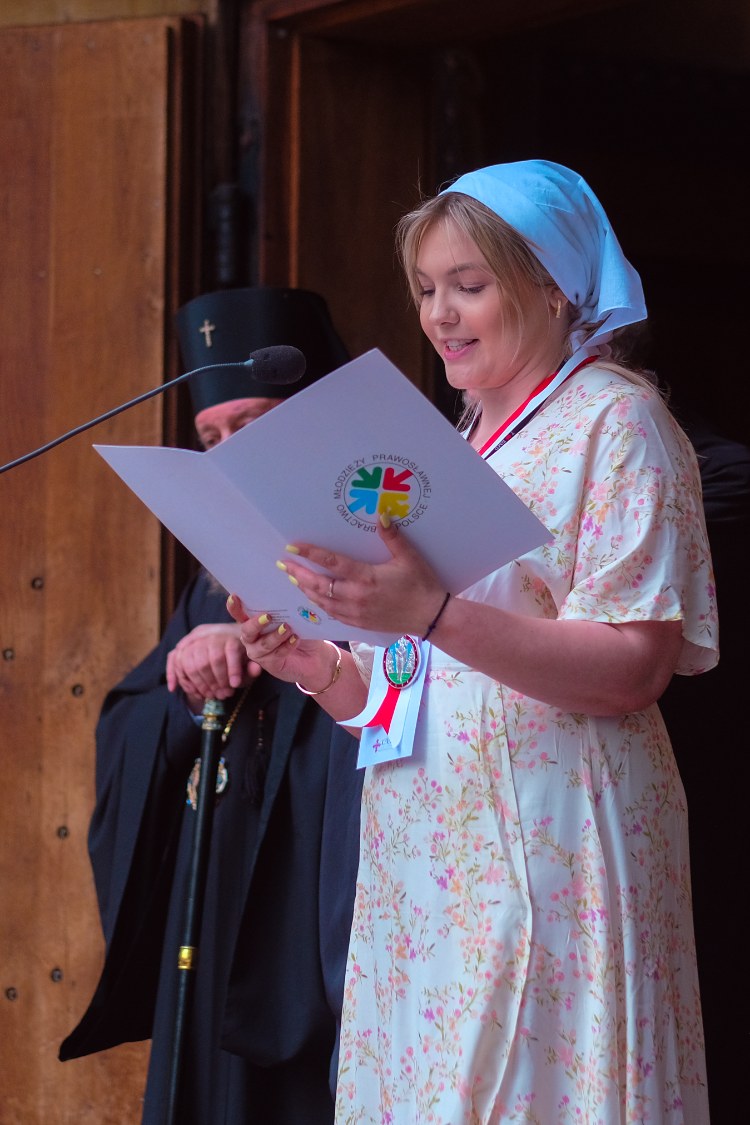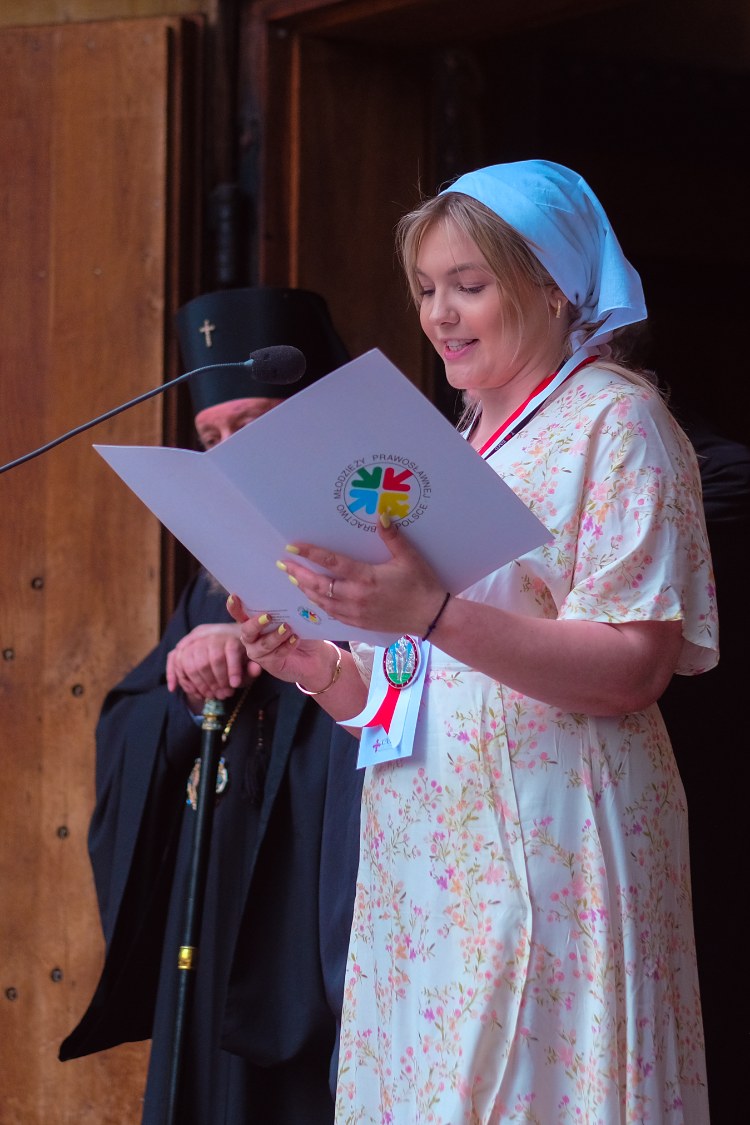
From May 30 to June 2, 2024, the 45th Anniversary Festival took place. Nationwide Easter pilgrimage of Orthodox youth to the Holy Mountain of Grabarka. This annual event, organized by the Brotherhood of Orthodox Youth at the Monastery of St. Martha and Mary, invariably attracts hundreds of young people from all over Poland. Compared to previous years, this year's meeting was extended by one day, which was intended to participate in the celebrations marking the 45th anniversary of the founding of the Brotherhood.
The Easter pilgrimage began with an evening service celebrated in the monastery church of the Transfiguration of the Lord by Archbishop Gregory of Bielsk, the custodian of the Brotherhood of Orthodox Youth on behalf of the Holy Council of Bishops. His Eminence Metropolitan Savva, His Excellency Bishop Paul and His Excellency Bishop Barsonofii were present in the church. After the traditional consecration of water at the foot of the Holy Mountain and the installation of the memorial cross, Metropolitan Savva addressed the audience. His Eminence, referring to his own memories, gave the key facts from the history of the Orthodox youth movement in our country, which led to its formalization and the founding of the Brotherhood. He recalled that the goals that were set for the first generation of fraternities were to The desire to work for the good of the Church, the desire to know their faith better and the strengthening of relationships with other Orthodox young people - should also guide today's youth. Then the head of the Church in Poland awarded the people honored for the activities of the BMP, awarding them with the Order of St. Mary Magdalene.
The program of the Easter Pilgrimage has been a constant over the years. The evening of its first day is the time when the young people meet in a clearing near the monastery around a communal bonfire, where they have the opportunity to integrate with music and singing in the languages of the peoples who make up the mosaic of the faithful of our Church. In the following days, participants take part in worship services, workshops and group discussions. This year they could acquire skills in making traditional straw jewelry, the so-called pavuk, learn to weave chotek, get acquainted with the paraliturgical songs of Podlasie, and learn the secrets of photography. The topic of the discussion group meetings was chosen to meet the expectations of young people expressed in previous years. They concerned m.in. the Orthodox vision of life after death, the relationship between psychology and spirituality, liturgics and the symbolism of church equipment. There was great interest in the meeting on the role of women in the Church with a special focus on the mothers and wives of clergy. A significant point in the program of each Easter pilgrimage is "100 Questions to...' when young people have the opportunity to ask questions of interest to bishops, clergy, monks, as well as more experienced lay activists of the Brotherhood.
During all the services celebrated during this year's Easter Pilgrimage, youth choirs, both professional and those made up of the event participants themselves, sang. This is a unique opportunity for young people to learn the practical aspects of liturgical life and gain experience to better serve the Church in the future. All of them-Saturday Holy Liturgy and All-Night Vigil, as well as Sunday night Holy Liturgy-were celebrated by the visiting trustees of parish and diocesan fraternities under the leadership of His Excellency Archbishop Gregory.
On the occasion of the meeting of the youth on the Holy Mountain Grabarka and the anniversary of the Brotherhood, a new issue of the magazine ' Arche. News of the Brotherhood' prepared exclusively by the efforts of the youth. It contained articles about the history of Orthodoxy in Poland, current events of our organization, interviews with former members of the Brotherhood and reflections of young people about the world around them and the role of the Church in their lives.
Jubilee 45. The Easter pilgrimage of young people to the Holy Mountain Grabarka fits in with the celebration of the centenary of the independence of the Polish Autocephalous Orthodox Church. The history of the Brotherhood fills almost half of the period of the functioning of the Orthodox Church in our country as an independent, autocephalous structure. As His Eminence Metropolitan Savva noted during this year's inauguration, the coincidence of both anniversaries directs our attention to the role of the young in the Church and emphasizes the need for their hard work to ensure the continuity of the Orthodox tradition in our lands.
The Easter pilgrimage of young people to the Holy Mountain of Grabarka was started in 1980. Their number gradually increased and reached a ceiling of several thousand in the 90s. The 20th century from ca. 10 years, a constant number of 350-400 people participate in the youth gatherings on the Holy Mountain. Easter pilgrimages are inextricably linked with the history of the Brotherhood of Orthodox Youth in Poland. It was at the time of its second edition, i.e. in 1981, that the idea of establishing the Brotherhood was born, and the young people then gathered on the Holy Mountain Grabarka sent a letter to the Holy Council of Bishops asking for blessing to start the activity. In the following years, the spring meetings at the Monastery of St. Martha and Mary became the most recognizable event and Grabarka itself is a place especially favored by young people.
The Easter pilgrimage began with an evening service celebrated in the monastery church of the Transfiguration of the Lord by Archbishop Gregory of Bielsk, the custodian of the Brotherhood of Orthodox Youth on behalf of the Holy Council of Bishops. His Eminence Metropolitan Savva, His Excellency Bishop Paul and His Excellency Bishop Barsonofii were present in the church. After the traditional consecration of water at the foot of the Holy Mountain and the installation of the memorial cross, Metropolitan Savva addressed the audience. His Eminence, referring to his own memories, gave the key facts from the history of the Orthodox youth movement in our country, which led to its formalization and the founding of the Brotherhood. He recalled that the goals that were set for the first generation of fraternities were to The desire to work for the good of the Church, the desire to know their faith better and the strengthening of relationships with other Orthodox young people - should also guide today's youth. Then the head of the Church in Poland awarded the people honored for the activities of the BMP, awarding them with the Order of St. Mary Magdalene.
The program of the Easter Pilgrimage has been a constant over the years. The evening of its first day is the time when the young people meet in a clearing near the monastery around a communal bonfire, where they have the opportunity to integrate with music and singing in the languages of the peoples who make up the mosaic of the faithful of our Church. In the following days, participants take part in worship services, workshops and group discussions. This year they could acquire skills in making traditional straw jewelry, the so-called pavuk, learn to weave chotek, get acquainted with the paraliturgical songs of Podlasie, and learn the secrets of photography. The topic of the discussion group meetings was chosen to meet the expectations of young people expressed in previous years. They concerned m.in. the Orthodox vision of life after death, the relationship between psychology and spirituality, liturgics and the symbolism of church equipment. There was great interest in the meeting on the role of women in the Church with a special focus on the mothers and wives of clergy. A significant point in the program of each Easter pilgrimage is "100 Questions to...' when young people have the opportunity to ask questions of interest to bishops, clergy, monks, as well as more experienced lay activists of the Brotherhood.
During all the services celebrated during this year's Easter Pilgrimage, youth choirs, both professional and those made up of the event participants themselves, sang. This is a unique opportunity for young people to learn the practical aspects of liturgical life and gain experience to better serve the Church in the future. All of them-Saturday Holy Liturgy and All-Night Vigil, as well as Sunday night Holy Liturgy-were celebrated by the visiting trustees of parish and diocesan fraternities under the leadership of His Excellency Archbishop Gregory.
On the occasion of the meeting of the youth on the Holy Mountain Grabarka and the anniversary of the Brotherhood, a new issue of the magazine ' Arche. News of the Brotherhood' prepared exclusively by the efforts of the youth. It contained articles about the history of Orthodoxy in Poland, current events of our organization, interviews with former members of the Brotherhood and reflections of young people about the world around them and the role of the Church in their lives.
Jubilee 45. The Easter pilgrimage of young people to the Holy Mountain Grabarka fits in with the celebration of the centenary of the independence of the Polish Autocephalous Orthodox Church. The history of the Brotherhood fills almost half of the period of the functioning of the Orthodox Church in our country as an independent, autocephalous structure. As His Eminence Metropolitan Savva noted during this year's inauguration, the coincidence of both anniversaries directs our attention to the role of the young in the Church and emphasizes the need for their hard work to ensure the continuity of the Orthodox tradition in our lands.
The Easter pilgrimage of young people to the Holy Mountain of Grabarka was started in 1980. Their number gradually increased and reached a ceiling of several thousand in the 90s. The 20th century from ca. 10 years, a constant number of 350-400 people participate in the youth gatherings on the Holy Mountain. Easter pilgrimages are inextricably linked with the history of the Brotherhood of Orthodox Youth in Poland. It was at the time of its second edition, i.e. in 1981, that the idea of establishing the Brotherhood was born, and the young people then gathered on the Holy Mountain Grabarka sent a letter to the Holy Council of Bishops asking for blessing to start the activity. In the following years, the spring meetings at the Monastery of St. Martha and Mary became the most recognizable event and Grabarka itself is a place especially favored by young people.
Share: