A multi-volume collection of Georgian chants is presented at the State Folklore Center

Многотомный сборник грузинских песнопений представлен в Государственном фольклорном центре
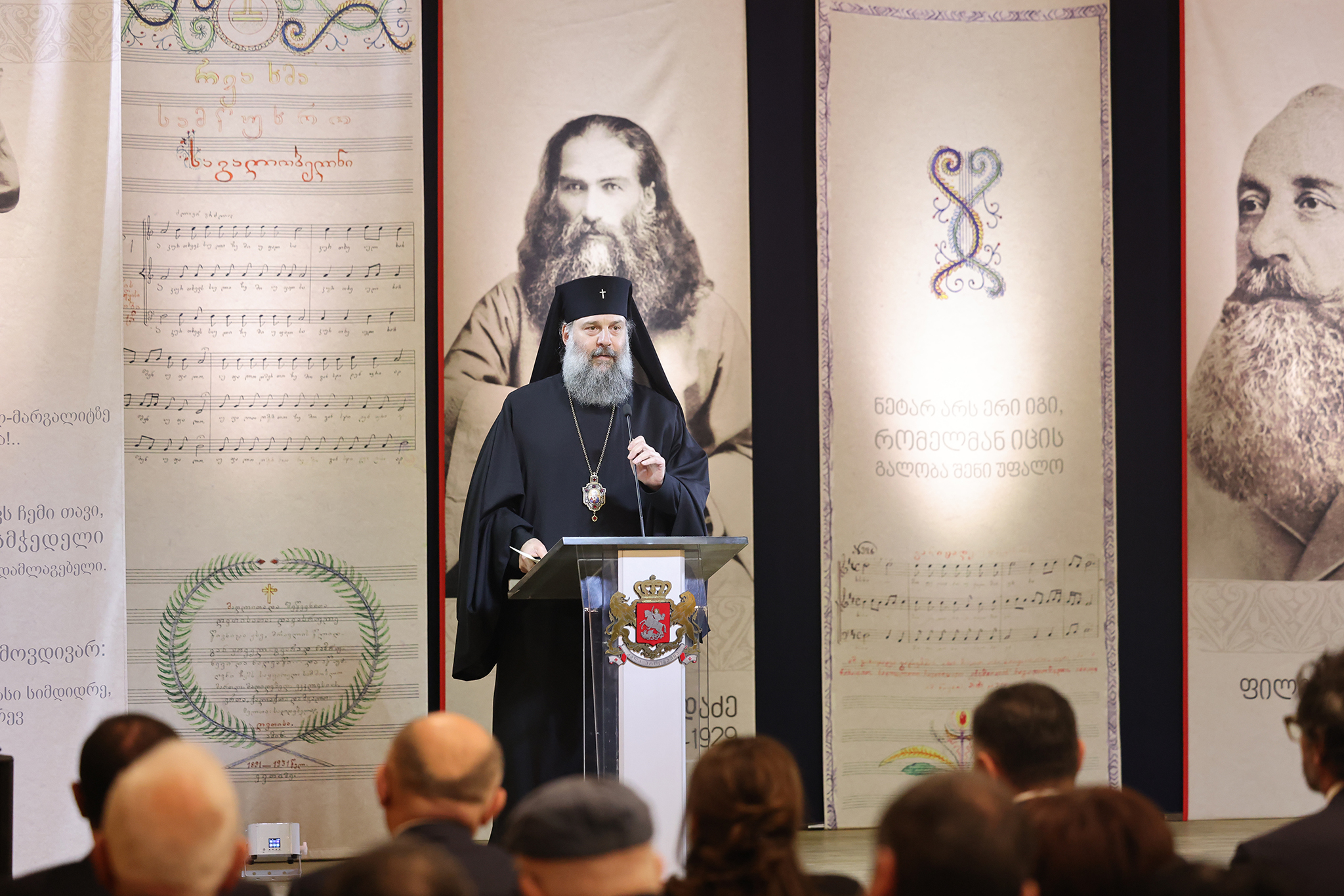
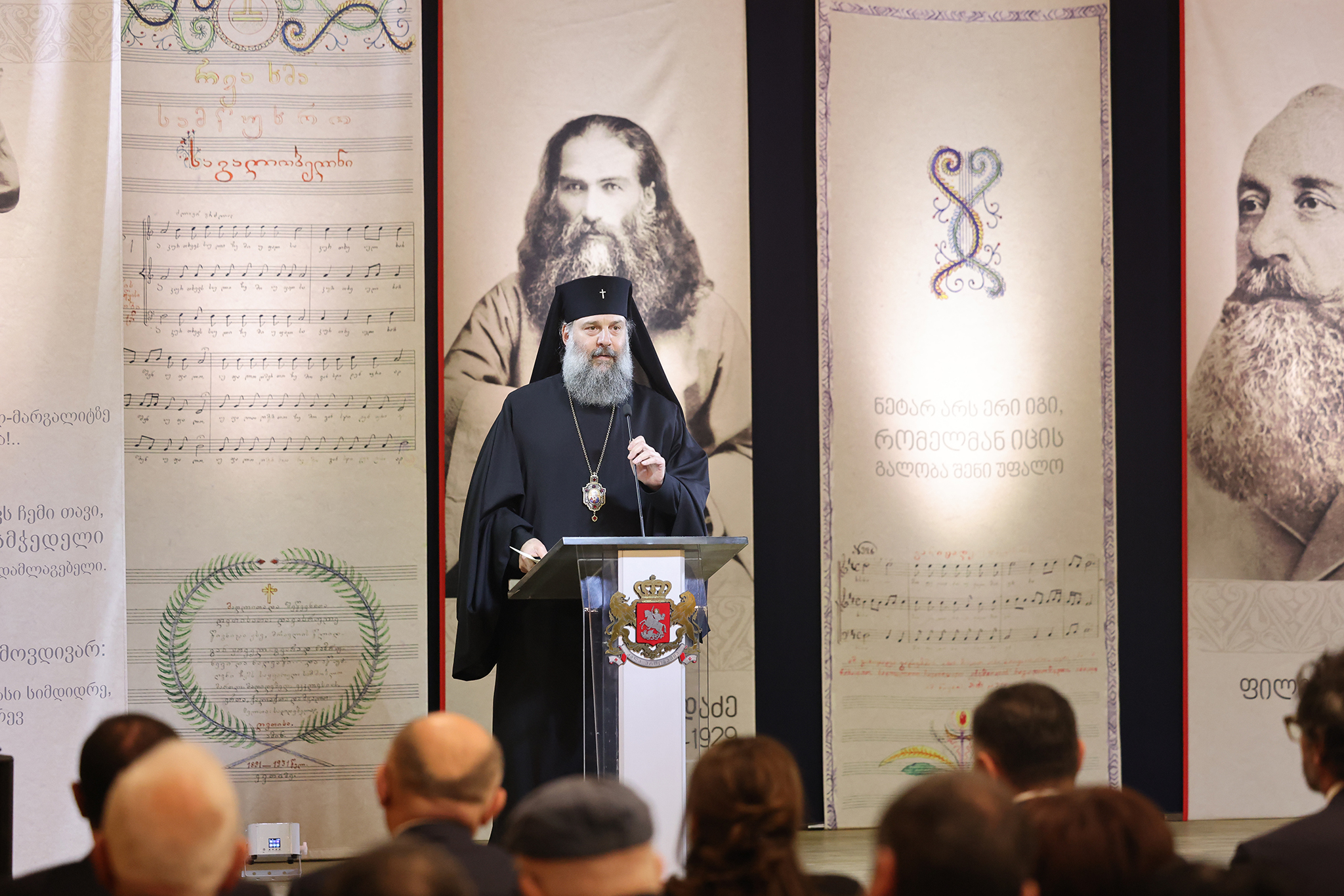
On March 14, the presentation of the multi-volume "Georgian Chanting - Anthology" took place at the Anzor Erkomaishvili State Folklore Center. At the event, Metropolitan Shio (Mujiri) of Senaki and Chkhorotsk, Metropolitan of Senaki and Chkhorotsk, read out a letter from Catholicos-Patriarch of All Georgia Ilia II: In connection with the publication of 29 volumes of Georgian hymns Georgian hymnody was based on Georgian liturgical writing and ancient national polyphony. This ecclesiastical art is an expression of the identity and outlook of our people. Its roots were connected with the traditions of the Jerusalem Church, and it is natural, because until the end of the X century we followed the Jerusalem style of worship and had Jerusalem liturgical practice; And in the X-XI centuries it was replaced by Constantinople and gained a dominant position. The establishment of the new rule in our country is associated with the Georgian Fathers who worked on Mount Athos, among whom St. George Mtatsmindeli's achievements are exceptionally great. Of course, some changes were made later, but a new wave of changes in hymn and liturgical texts was caused by corrections made according to Slavonic liturgical collections by the middle of the 18th century. During all this time our people were able to develop by their creative genius the knowledge gained in singing, so that, along with traditional polyphony, it has become a phenomenon of national and universal significance. In the 19th century, the Tsarist-Russian regime wanted to ban Georgian chanting along with the Georgian language in order to erase these manifestations of national identity (and others). There was a threat of destruction of the unique heritage, which was further aggravated under the atheist regime. This is what led to the need to record hymns on sheet music. This was first done in 1842 (by Archimandrite Sophron Eristavi and Andria Mrevlishvili). The greatest number of hymns were recorded in the 80-90s of the 19th century and the beginning of the 20th century. Great contribution to this work was made by the canonized: Ilia Martal (Chavchavadze), Bishops Alexander and Gabriel, Dimitri Kifiani. St. Filimon Koridze, brothers Karbelashvili and Ekvtime Kereselidze did invaluable work. Other great figures are Rajden Khundadze, Mikhail Ipolitov-Ivanov, David Chijavadze, David Ahetashvili, Mikhail Elizbarashvili, Andria Arakishvili, Zakaria Faliashvili, Grigol Chkhikvadze and others. Thanks to their work, more than 10,000 hymns have been preserved. In the 20th century, Georgian folklorists recorded the wonderful material of Artem Erkomaishvili and other masters. Later we had to revive all this and bring it to the listeners. Mr. Anzor Erkomaishvili and his ensembles - "Gordela" and "Rustav" carried this mission to the people and earned great interest and love both among our people and in the music world. The church has continued this mission by using hymns in worship services. I would like to thank Anchiskhati, Sion, Svetitskhovli, the St. Choirs of Trinity Cathedral, Mrs. Leah Salakaya and other priests who faithfully served this divine work in the towns and villages. But in our time the process of preservation and popularization of Georgian polyphony has set new demands and the need to publish the sheet music preserved in the archives has arisen. The State Folklore Center (headed by Giorgi Donadze), with the support of the Ministry of Culture and the Georgian Chant Foundation, began digitizing Georgian hymns in 2014, and in 2016 published an anthology of chants. And here before you today are 29 volumes of this anthology, including more than 6000 hymns. Most of them were printed for the first time and made widely available. This is the result of a tremendous amount of work, which was mainly done by St. Svimon Jangulashvili, head of the choir of Trinity Cathedral, and our famous singer, ethnomusicologist Levan Veshapidze, with the support of outstanding musicologists - Ms. Rusudan Tsurtsumia, Tamar Chkheidze, Nino Razmadze and their foreign colleagues - Mr. John Graham and Eric Halvorson. A prominent participant in this entire process is St. George Mtatsmindeli University of Singing, whose graduates work all over Georgia. It is also a very important fact that in the last 9 years the State Folklore Center has established lottery schools in 32 municipalities of the country, where more than 1000 children study Georgian folk songs and church chants free of charge. The published volumes are not only a guarantee for the preservation of our cultural heritage, but will also make a great contribution to the familiarization and study of the diversity and depth of Georgian chants for both the students of the mentioned university and the students of the lottery schools. In addition to them, our national heritage becomes accessible to all musicians, researchers and amateurs in Georgia and all over the world. Finally, it should be said that without the continuous support of the state and the Georgian Chant Foundation, it would be impossible to achieve the current result, it would be impossible to revitalize Georgian chant and it would be impossible to protect it with modern technologies. . There is still much to be done, as more than half of the manuscripts are yet to be printed and presented to the public. These notes contain hymns for all feasts and liturgical gongs - hymns created and systematized according to the 8-tone system or other liturgical traditions. It is necessary to bring back to our churches, which will restore the former glory of Georgian worship. May God bless all those who participated in the creation of the Georgian anthem and those who contributed to its preservation, protection and dissemination. May God bless our church singers, lotbarists, conductors, chant researchers and lovers of this ecclesiastical art. In the Psalm we read: "Blessed is the people who know Thy song, O Lord." May God grant Georgia this blessedness, Amen!
Share:

A multi-volume collection of Georgian chants is presented at the State Folklore Center A multi-volume collection of Georgian chants is presented at the State Folklore Center On March 14, the presentation of the multi-volume "Georgian Chanting - Anthology" took place at the Anzor Erkomaishvili State Folklore Center. At the event, Metropolitan Shio (Mujiri) of Senaki and Chkhorotsk, Metropolitan of Senaki and Chkhorotsk, read out a letter from Catholicos-Patriarch of All Georgia Ilia II: In connection with the publication of 29 volumes of Georgian hymns Georgian hymnody was based on Georgian liturgical writing and ancient national polyphony. This ecclesiastical art is an expression of the identity and outlook of our people. Its roots were connected with the traditions of the Jerusalem Church, and it is natural, because until the end of the X century we followed the Jerusalem style of worship and had Jerusalem liturgical practice; And in the X-XI centuries it was replaced by Constantinople and gained a dominant position. The establishment of the new rule in our country is associated with the Georgian Fathers who worked on Mount Athos, among whom St. George Mtatsmindeli's achievements are exceptionally great. Of course, some changes were made later, but a new wave of changes in hymn and liturgical texts was caused by corrections made according to Slavonic liturgical collections by the middle of the 18th century. During all this time our people were able to develop by their creative genius the knowledge gained in singing, so that, along with traditional polyphony, it has become a phenomenon of national and universal significance. In the 19th century, the Tsarist-Russian regime wanted to ban Georgian chanting along with the Georgian language in order to erase these manifestations of national identity (and others). There was a threat of destruction of the unique heritage, which was further aggravated under the atheist regime. This is what led to the need to record hymns on sheet music. This was first done in 1842 (by Archimandrite Sophron Eristavi and Andria Mrevlishvili). The greatest number of hymns were recorded in the 80-90s of the 19th century and the beginning of the 20th century. Great contribution to this work was made by the canonized: Ilia Martal (Chavchavadze), Bishops Alexander and Gabriel, Dimitri Kifiani. St. Filimon Koridze, brothers Karbelashvili and Ekvtime Kereselidze did invaluable work. Other great figures are Rajden Khundadze, Mikhail Ipolitov-Ivanov, David Chijavadze, David Ahetashvili, Mikhail Elizbarashvili, Andria Arakishvili, Zakaria Faliashvili, Grigol Chkhikvadze and others. Thanks to their work, more than 10,000 hymns have been preserved. In the 20th century, Georgian folklorists recorded the wonderful material of Artem Erkomaishvili and other masters. Later we had to revive all this and bring it to the listeners. Mr. Anzor Erkomaishvili and his ensembles - "Gordela" and "Rustav" carried this mission to the people and earned great interest and love both among our people and in the music world. The church has continued this mission by using hymns in worship services. I would like to thank Anchiskhati, Sion, Svetitskhovli, the St. Choirs of Trinity Cathedral, Mrs. Leah Salakaya and other priests who faithfully served this divine work in the towns and villages. But in our time the process of preservation and popularization of Georgian polyphony has set new demands and the need to publish the sheet music preserved in the archives has arisen. The State Folklore Center (headed by Giorgi Donadze), with the support of the Ministry of Culture and the Georgian Chant Foundation, began digitizing Georgian hymns in 2014, and in 2016 published an anthology of chants. And here before you today are 29 volumes of this anthology, including more than 6000 hymns. Most of them were printed for the first time and made widely available. This is the result of a tremendous amount of work, which was mainly done by St. Svimon Jangulashvili, head of the choir of Trinity Cathedral, and our famous singer, ethnomusicologist Levan Veshapidze, with the support of outstanding musicologists - Ms. Rusudan Tsurtsumia, Tamar Chkheidze, Nino Razmadze and their foreign colleagues - Mr. John Graham and Eric Halvorson. A prominent participant in this entire process is St. George Mtatsmindeli University of Singing, whose graduates work all over Georgia. It is also a very important fact that in the last 9 years the State Folklore Center has established lottery schools in 32 municipalities of the country, where more than 1000 children study Georgian folk songs and church chants free of charge. The published volumes are not only a guarantee for the preservation of our cultural heritage, but will also make a great contribution to the familiarization and study of the diversity and depth of Georgian chants for both the students of the mentioned university and the students of the lottery schools. In addition to them, our national heritage becomes accessible to all musicians, researchers and amateurs in Georgia and all over the world. Finally, it should be said that without the continuous support of the state and the Georgian Chant Foundation, it would be impossible to achieve the current result, it would be impossible to revitalize Georgian chant and it would be impossible to protect it with modern technologies. . There is still much to be done, as more than half of the manuscripts are yet to be printed and presented to the public. These notes contain hymns for all feasts and liturgical gongs - hymns created and systematized according to the 8-tone system or other liturgical traditions. It is necessary to bring back to our churches, which will restore the former glory of Georgian worship. May God bless all those who participated in the creation of the Georgian anthem and those who contributed to its preservation, protection and dissemination. May God bless our church singers, lotbarists, conductors, chant researchers and lovers of this ecclesiastical art. In the Psalm we read: "Blessed is the people who know Thy song, O Lord." May God grant Georgia this blessedness, Amen!
On March 14, the presentation of the multi-volume "Georgian Chanting - Anthology" took place at the Anzor Erkomaishvili State Folklore Center. At the event, Metropolitan Shio (Mujiri) of Senaki and Chkhorotsk, Metropolitan of Senaki and Chkhorotsk, read out a letter from Catholicos-Patriarch of All Georgia Ilia II: In connection with the publication of 29 volumes of Georgian hymns Georgian hymnody was based on Georgian liturgical writing and ancient national polyphony. This ecclesiastical art is an expression of the identity and outlook of our people. Its roots were connected with the traditions of the Jerusalem Church, and it is natural, because until the end of the X century we followed the Jerusalem style of worship and had Jerusalem liturgical practice; And in the X-XI centuries it was replaced by Constantinople and gained a dominant position. The establishment of the new rule in our country is associated with the Georgian Fathers who worked on Mount Athos, among whom St. George Mtatsmindeli's achievements are exceptionally great. Of course, some changes were made later, but a new wave of changes in hymn and liturgical texts was caused by corrections made according to Slavonic liturgical collections by the middle of the 18th century. During all this time our people were able to develop by their creative genius the knowledge gained in singing, so that, along with traditional polyphony, it has become a phenomenon of national and universal significance. In the 19th century, the Tsarist-Russian regime wanted to ban Georgian chanting along with the Georgian language in order to erase these manifestations of national identity (and others). There was a threat of destruction of the unique heritage, which was further aggravated under the atheist regime. This is what led to the need to record hymns on sheet music. This was first done in 1842 (by Archimandrite Sophron Eristavi and Andria Mrevlishvili). The greatest number of hymns were recorded in the 80-90s of the 19th century and the beginning of the 20th century. Great contribution to this work was made by the canonized: Ilia Martal (Chavchavadze), Bishops Alexander and Gabriel, Dimitri Kifiani. St. Filimon Koridze, brothers Karbelashvili and Ekvtime Kereselidze did invaluable work. Other great figures are Rajden Khundadze, Mikhail Ipolitov-Ivanov, David Chijavadze, David Ahetashvili, Mikhail Elizbarashvili, Andria Arakishvili, Zakaria Faliashvili, Grigol Chkhikvadze and others. Thanks to their work, more than 10,000 hymns have been preserved. In the 20th century, Georgian folklorists recorded the wonderful material of Artem Erkomaishvili and other masters. Later we had to revive all this and bring it to the listeners. Mr. Anzor Erkomaishvili and his ensembles - "Gordela" and "Rustav" carried this mission to the people and earned great interest and love both among our people and in the music world. The church has continued this mission by using hymns in worship services. I would like to thank Anchiskhati, Sion, Svetitskhovli, the St. Choirs of Trinity Cathedral, Mrs. Leah Salakaya and other priests who faithfully served this divine work in the towns and villages. But in our time the process of preservation and popularization of Georgian polyphony has set new demands and the need to publish the sheet music preserved in the archives has arisen. The State Folklore Center (headed by Giorgi Donadze), with the support of the Ministry of Culture and the Georgian Chant Foundation, began digitizing Georgian hymns in 2014, and in 2016 published an anthology of chants. And here before you today are 29 volumes of this anthology, including more than 6000 hymns. Most of them were printed for the first time and made widely available. This is the result of a tremendous amount of work, which was mainly done by St. Svimon Jangulashvili, head of the choir of Trinity Cathedral, and our famous singer, ethnomusicologist Levan Veshapidze, with the support of outstanding musicologists - Ms. Rusudan Tsurtsumia, Tamar Chkheidze, Nino Razmadze and their foreign colleagues - Mr. John Graham and Eric Halvorson. A prominent participant in this entire process is St. George Mtatsmindeli University of Singing, whose graduates work all over Georgia. It is also a very important fact that in the last 9 years the State Folklore Center has established lottery schools in 32 municipalities of the country, where more than 1000 children study Georgian folk songs and church chants free of charge. The published volumes are not only a guarantee for the preservation of our cultural heritage, but will also make a great contribution to the familiarization and study of the diversity and depth of Georgian chants for both the students of the mentioned university and the students of the lottery schools. In addition to them, our national heritage becomes accessible to all musicians, researchers and amateurs in Georgia and all over the world. Finally, it should be said that without the continuous support of the state and the Georgian Chant Foundation, it would be impossible to achieve the current result, it would be impossible to revitalize Georgian chant and it would be impossible to protect it with modern technologies. . There is still much to be done, as more than half of the manuscripts are yet to be printed and presented to the public. These notes contain hymns for all feasts and liturgical gongs - hymns created and systematized according to the 8-tone system or other liturgical traditions. It is necessary to bring back to our churches, which will restore the former glory of Georgian worship. May God bless all those who participated in the creation of the Georgian anthem and those who contributed to its preservation, protection and dissemination. May God bless our church singers, lotbarists, conductors, chant researchers and lovers of this ecclesiastical art. In the Psalm we read: "Blessed is the people who know Thy song, O Lord." May God grant Georgia this blessedness, Amen!