Bishop Kirill: St. Sava is the Prince of Silence

Епископ Кирило: Святой Савва – князь молчания
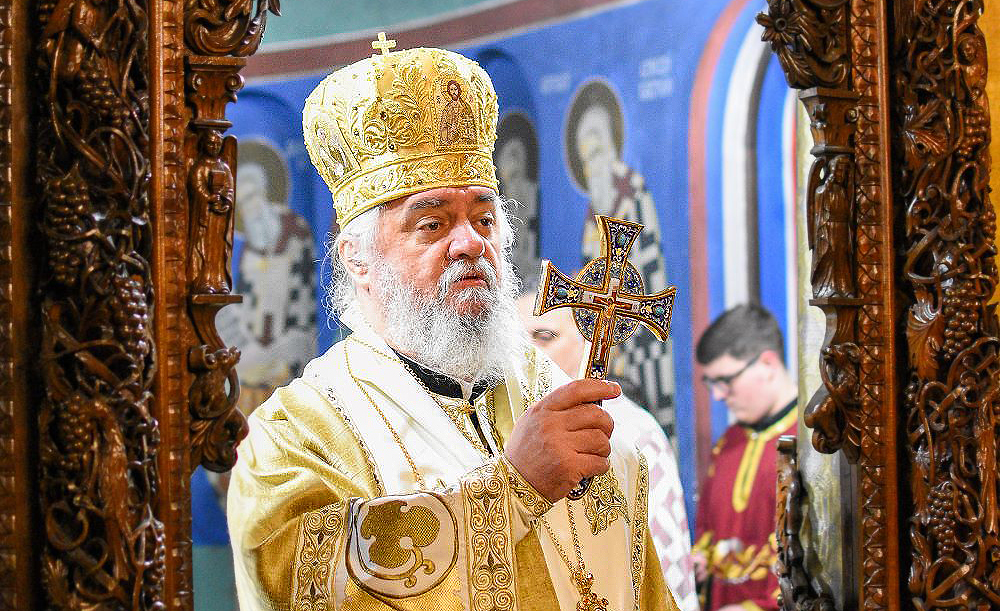
Svetosava sermon of His Eminence Mr. Kirill, Bishop of Buenos Aires and South Central America, Administrator of Zagreb-Ljubljana, at the traditional SKD Education Academy, held on January 26, 2024, on the eve of Savindan, at the Vatroslav Lisinski Concert Hall in Zagreb. The President of the Serbian Cultural Association "Prosveta". The distinguished Mr. Mile Radovic and other honored guests, dear brothers and sisters, may we all be blessed by the feast of our Holy Father Sava, the first Serbian Archbishop. In the beginning was the Word, and the Word was in God, and the Word was God. (John 1:1) This is how the Evangelist John describes the Son of God, the only begotten of the Father, born before all ages, light from light, true God from true God. He, the future prince and heir and possessor of all goods, according to the words of St. Paul the Apostle, the Lord Jesus Christ, being rich, for our sakes became poor and became man, that we might be enriched by His poverty ( 2 Cor. 8. 9). That love of the Son of God, out of which His kenosis, or condescension to human nature, to the cross and to death for the salvation of fallen Adam and the human race, was always the deep inspiration and power of the exploits of every ascetic of virtue throughout the history of mankind. All generations of ascetics, apostles, martyrs, the honorable and righteous people referred to the deeds, words and teachings of the Savior Jesus Christ, but especially to His miraculous works, mostly done in silence or stillness. In St. Peter the Apostle, who witnessed the Transfiguration of Christ, we read that the Father testified of the Son: "This is my beloved Son, who is according to my will. The Feast of the Holy Transfiguration of the Lord, that is, His feat of prayer and silence on the holy Mount Tabor, when the Savior shone with the immaterial energies and light of the Godhead, is the main model and goal of the feat and the main theme of ascetic literature. Stung by such love of the Son of God, another earthly prince, Rastko Nemanjic, born, it is believed, more than 850 years ago at the court of Nemanja, also impoverished himself to monasticism in order to become the Prince of Silence, i.e., silence, and so that we, his Serbian people, might be enriched by his poverty. Prince Rastko left the court of his physical father, with its beauty, entertainment, and comforts of food and drink; and replaced all this with simple monastic garb, a humble cell, fasting and asceticism. Rastko was only seventeen years old when he became a monk at Savva. "Vanity over vanity, everything is vanity," ," wrote another King Solomon twenty-one centuries before Rastko, who enjoyed all the pleasures of this world. And so Prince Rastko left the kingdom and the treasures of this world as vanity, in order to become the Prince of Silence. Following the example of the ancient ascetics, especially the Saints, Savva also loved to stand before God and seek God in mental and bodily silence, prayer and fasting. The longing for a secluded hermit life never left him. The so-called Hesychastirion or translated House of Silence in Kareia St. Sava, for which Sava wrote the famous Kareia type. There are such houses of silence in Studenitsa, and in Milesheva, and in other places where Savva was only in the company of God, because God alone is enough - this is the rule of hermits of all times. This feat helped Savva to obtain what he desired most of all - a heart illuminated by heaven and indescribable tranquility. He also had visions of the heavenly world and in one of them he saw his father Simeon in heavenly glory, who said to him: You will be honored with two crowns, one ascetic and the other apostolic ... Thus St. Sava was an outstanding builder of the human soul as the invisible Temple of the Holy Spirit. Let us say here that the historiographical assumptions that Rastko went to Athos and became a monk were planned by Nemanja himself for political reasons. Especially since such assumptions are refuted by the fact of Nemanja's own late monasticism. Just as Sava He imitated the greatest hermits and priests, and he wanted others, especially those of his people, to follow his path. St. Sava paid the greatest attention to the emergence of Serbian monasticism. And he did this clearly realizing that Orthodoxy is incomplete without monasticism, living the traditions of the ancient ascetics of the Christian East. With this ultimate asceticism and feat, St. Sava established his spiritual verticality and expressed his love for God. For twenty years Sava refused his parents' invitations to return to Serbia from Sveta Gora. He knew the words of St. Arsenius the Great: God knows that I love people, but I cannot be with God and with people at the same time . However, his love for his people and his desire, as Domenian writes about it, to lead his people out of Egyptian slavery, his noble aspiration to make the Serbs a holy nation, led him out of his beloved desert and brought him to the scene of history, where Sava would build his spiritual horizon - love for his neighbors. Saint Sava would spend his entire life crucified on this cross of double love for God and for his neighbors. From that spiritual horizon of his, which again drew strength from his exploits in the silence of monastic sketes and cells and, of course, from the Holy Mysteries, arose those deeds for which we, people, most of all glorify him. Savva is the restorer of monasticism; builder of the beautiful gifts of Hilandar Žiće; Sava is the first archbishop of the autocephalous Serbian Church; he is our Moses, that is, the legislator of the Nomocanon or Krmčia and other ecclesiastical and monastic rules. St. Sava is also a builder of schools and hospitals, an impeccable ecclesiastical diplomat, but also a diplomat in state missions. St. Sava is also the angel who guided the ship of the Serbian Church through storms, Unias and Bogomil heresies and steered it finally to the East, towards Jerusalem. Since we are speaking at the Academy of the Serbian Cultural Society "Prosveta". Let us emphasize the particularly instructive or, better to say, enlightening significance of St. Sava for our people, but not only for our people. Thanks to St. Sava's written and written thoughts, Serbian literature would become an equal member of the literary life of the Orthodox-Slavic world, having its nucleus in Byzantine-Slavic literature. Therefore, St. Sava is credited with the great role of the originator of Serbian literature, so his double significance lies in his being the creator of an independent Serbian Church and an independent Serbian literature. He worked to strengthen Serbian literary life and thereby also strengthened the spiritual life of the Serbs, so the connection between monastic and literary life is extremely great. First of all, the connection is reflected in the fact that all the monasteries built and inherited became the center of the Svetosava reform, and each of these monasteries took on the role of a literary center. In addition, libraries played an important role in the lives of the monks, and much time was devoted to reading books. Speaking more specifically about St. Sava's literary work, it should be pointed out that his literary foundation lies in early Christian, Byzantine, and Old Slavonic literature, but his literary origins should also be sought in liturgical literature. Sava's first works are devoted to ascetic and monastic life: the Karean type, the Hilandarian type, the Studenic type. Strictly speaking, these are ecclesiastical works, but even in them we find original and vivid features of Savva's language and style that would characterize his literary works. As Dimitri Bogdanovich notes, the Karean tipik is not devoid of its original warmth and poeticism, and in Savoy's interpretation of the Khilandar type the style is enriched with the freshness of gifted expressiveness of language. Savoy's most significant literary work, however, is the Vita of St. Simeon, which he writes in the introduction to the Studenica tipik. Hagiographies, a genre taken from Byzantine literature, are unique from an ideological point of view, since the creates a cult of a certain personality, which is a living memory of the fact of moral and spiritual transformation. In this case, the transformation is connected with Nemanja's renunciation of the throne, power and greatness in this world for the sake of the Kingdom of Heaven. In this connection Bogdanović points out that the description of Simeon's death, all in alternating images and dialogues, restrained and agitated at the same time, belongs to the most beautiful pages of old Serbian literature. A continuation of the meaning of the vitalization can be seen in Sava's Service to St. Simeon, which is also subject to the poetic laws of the Byzantine genre. Undoubtedly, the Service to St. Simeon is the first literary work of this genre. It begins the series of liturgical units in which the cult of the holy rulers of the Nemanjić dynasty was formed, and at the same time this service is the real beginning of Serbian poetry. If, in addition to literary activity, we take into account the missionary, spiritual and educational activities of St. Sava, the words of Miloš Crnjanski are great and true: the legend of Sava and the work of Sava will remain the most majestic and sublime thing that was born to us, through the darkness of centuries, on the bitter soil of the Balkans, giving us its rays from the past, always shining. The Judgment Book (Nomokanon - Krmchia) expands the literary and enlightenment significance of the St. Sava beyond the Balkans, as the Nomocanon became the basis of Church legislation in both the Russians and other Slavic peoples. St. Sava is responsible for the fact that the Serbian Orthodox Church began to deal with basic religious, ecclesiastical and even some pedagogical issues relatively early before other Orthodox Churches. In the 13th century Nomokanon, St. Sava wrote the duty of every priest to be a teacher and to educate children at the same time. St. Sava personally worked hard for the enlightenment of the people and is the first Serbian enlightener who enlightened his fatherland. Thanks to the Karean Typikos governing the priests, St. Sava transferred the duty of enlightenment to the abbots and monks in the monasteries. The Serbian Orthodox Church, thanks to St. Sava, received the right to open and administer public schools. This is confirmed by the fact that it organized its seminaries and educated priests who were also the first Serbian teachers. Historical sources indicate that the Serbian Orthodox Church took a more serious interest in the problems of upbringing, education and teaching, opening a theological faculty in Belgrade in 1920 and somewhat later other faculties in Libertville and Foča. Thus the formation and systematically developed the pedagogy of Orthodoxy as a separate scientific discipline, for which the professors who taught pedagogy at the theological faculty at the time are primarily responsible. In this spirit of St. Sava, we should look at the opening of our Serbian Orthodox High School of Kantakuzin Katarina Brankovic in 2005, during the glowing memory of Metropolitan Jovan (Pavlovic), as well as the recent start of Metropolitan John St. Sava. Orthodox High School in Podgorica, as well as other Serbian Church Folk Schools around the world. Likewise, Sava made an exceptional contribution and stimulation of health care in Serbia, both on a theoretical and scientific level and on a more concrete, that is, practical level, by opening hospitals. He personally opened a hospital in the monastery of Studenica. It treated not only the privileged classes - the spiritual and secular nobility - but also ordinary people, i.e. representatives of the subordinate social classes. In order to spread the culture of health, to train personnel for treatment - doctors, as well as to spread knowledge about medicines, in Hilandar and Studenitsa Sava personally organized the translation of ancient medical literature, the works of Hippocrates, Dioscorides, Galen and the Arabic physician and theorist of medicine, known among Christians like Avicenna. In addition to hospitals, Sava, like his father Stefan Nemanja - St. Simeon, initiated the opening of orphanages, the first social institutions in Serbia for orphans and the poor. Together with his father, he is the first and true founder, as it is called today, of the social protection system in the Serbian state of Nemanjic. However, the purpose of Sava's education must be emphasized here. It can be said that Sava's enlightenment rested on his holiness. St. Sava's pedagogy is Christ-like. This is the reason why St. Sava's pedagogy rests on certain metaphysical provisions, which are not to be found among the "piles of philosophies" of this world. It was the thought of the Christian tradition that St. Sava lived by. Sava's Christian, ascetic metaphysics led to an understanding of the basic pedagogical problems associated with upbringing and education. Through endeavors, feats, self-restraint, faith, and frequent prayer for eternal life, one can achieve the ultimate goal of his Christ-like life. Because the goal of upbringing and education is to transform the whole personality of man and to unite it with God, i.e. to establish his image in man. Therefore, the spiritual-educational thought of Christianity and Byzantium, and thus of the saints, avoided an individualistic conception in which the goals are progress, justice, equality - are evaluated only in terms of the rights of the individual, where society is understood as a set of atomized units, as alienation, existential vacuum and depersonalization , - writes Patriarch Porphyrius and continues: Such a personal approach enables the participants of education, as free individuals, to take seriously and responsibly the contradictions and challenges of their time, in order to avoid the catastrophic consequences that can be produced by the harsh technological civilization . In the end, for the sake of truth, it must be said that St. Sava could not have accomplished so much without the help of his holy family and especially his father, Rev. Simeon Mirtochivo. That love between son and father, in which the father gave birth to the son physically and then the son gave birth to the father spiritually, is a beautiful icon of love in the Holy Trinity. The heavenly Father gives birth to the Son in eternity, and the Son, by His incarnation and provision of salvation, enables fallen man, in the words of the Apostle Paul, to be God in all things (1 Cor. 15:28), spiritually giving birth to new sons and daughters. According to popular wisdom, until the father is born, the son does not go around the house, which refers to bread and loaves; namely, until the big bread is baked, the hostess bakes a loaf to temporarily satisfy the child's hunger. Let us follow the call our Archpastor St. Sava on his path that leads to eternal life, and let us be fed with the Bread that comes down from heaven - Christ our God. Let us become his younger brothers and sisters, so that men and nations, seeing our good works, may glorify our Father in heaven, to whom with his only begotten Son and the Most Holy Spirit be glory and praise forever and ever. Amen.
Share:
Bishop Kirill: St. Sava is the Prince of Silence Bishop Kirill: St. Sava is the Prince of Silence Svetosava sermon of His Eminence Mr. Kirill, Bishop of Buenos Aires and South Central America, Administrator of Zagreb-Ljubljana, at the traditional SKD Education Academy, held on January 26, 2024, on the eve of Savindan, at the Vatroslav Lisinski Concert Hall in Zagreb. The President of the Serbian Cultural Association "Prosveta". The distinguished Mr. Mile Radovic and other honored guests, dear brothers and sisters, may we all be blessed by the feast of our Holy Father Sava, the first Serbian Archbishop. In the beginning was the Word, and the Word was in God, and the Word was God. (John 1:1) This is how the Evangelist John describes the Son of God, the only begotten of the Father, born before all ages, light from light, true God from true God. He, the future prince and heir and possessor of all goods, according to the words of St. Paul the Apostle, the Lord Jesus Christ, being rich, for our sakes became poor and became man, that we might be enriched by His poverty ( 2 Cor. 8. 9). That love of the Son of God, out of which His kenosis, or condescension to human nature, to the cross and to death for the salvation of fallen Adam and the human race, was always the deep inspiration and power of the exploits of every ascetic of virtue throughout the history of mankind. All generations of ascetics, apostles, martyrs, the honorable and righteous people referred to the deeds, words and teachings of the Savior Jesus Christ, but especially to His miraculous works, mostly done in silence or stillness. In St. Peter the Apostle, who witnessed the Transfiguration of Christ, we read that the Father testified of the Son: "This is my beloved Son, who is according to my will. The Feast of the Holy Transfiguration of the Lord, that is, His feat of prayer and silence on the holy Mount Tabor, when the Savior shone with the immaterial energies and light of the Godhead, is the main model and goal of the feat and the main theme of ascetic literature. Stung by such love of the Son of God, another earthly prince, Rastko Nemanjic, born, it is believed, more than 850 years ago at the court of Nemanja, also impoverished himself to monasticism in order to become the Prince of Silence, i.e., silence, and so that we, his Serbian people, might be enriched by his poverty. Prince Rastko left the court of his physical father, with its beauty, entertainment, and comforts of food and drink; and replaced all this with simple monastic garb, a humble cell, fasting and asceticism. Rastko was only seventeen years old when he became a monk at Savva. "Vanity over vanity, everything is vanity," ," wrote another King Solomon twenty-one centuries before Rastko, who enjoyed all the pleasures of this world. And so Prince Rastko left the kingdom and the treasures of this world as vanity, in order to become the Prince of Silence. Following the example of the ancient ascetics, especially the Saints, Savva also loved to stand before God and seek God in mental and bodily silence, prayer and fasting. The longing for a secluded hermit life never left him. The so-called Hesychastirion or translated House of Silence in Kareia St. Sava, for which Sava wrote the famous Kareia type. There are such houses of silence in Studenitsa, and in Milesheva, and in other places where Savva was only in the company of God, because God alone is enough - this is the rule of hermits of all times. This feat helped Savva to obtain what he desired most of all - a heart illuminated by heaven and indescribable tranquility. He also had visions of the heavenly world and in one of them he saw his father Simeon in heavenly glory, who said to him: You will be honored with two crowns, one ascetic and the other apostolic ... Thus St. Sava was an outstanding builder of the human soul as the invisible Temple of the Holy Spirit. Let us say here that the historiographical assumptions that Rastko went to Athos and became a monk were planned by Nemanja himself for political reasons. Especially since such assumptions are refuted by the fact of Nemanja's own late monasticism. Just as Sava He imitated the greatest hermits and priests, and he wanted others, especially those of his people, to follow his path. St. Sava paid the greatest attention to the emergence of Serbian monasticism. And he did this clearly realizing that Orthodoxy is incomplete without monasticism, living the traditions of the ancient ascetics of the Christian East. With this ultimate asceticism and feat, St. Sava established his spiritual verticality and expressed his love for God. For twenty years Sava refused his parents' invitations to return to Serbia from Sveta Gora. He knew the words of St. Arsenius the Great: God knows that I love people, but I cannot be with God and with people at the same time . However, his love for his people and his desire, as Domenian writes about it, to lead his people out of Egyptian slavery, his noble aspiration to make the Serbs a holy nation, led him out of his beloved desert and brought him to the scene of history, where Sava would build his spiritual horizon - love for his neighbors. Saint Sava would spend his entire life crucified on this cross of double love for God and for his neighbors. From that spiritual horizon of his, which again drew strength from his exploits in the silence of monastic sketes and cells and, of course, from the Holy Mysteries, arose those deeds for which we, people, most of all glorify him. Savva is the restorer of monasticism; builder of the beautiful gifts of Hilandar Žiće; Sava is the first archbishop of the autocephalous Serbian Church; he is our Moses, that is, the legislator of the Nomocanon or Krmčia and other ecclesiastical and monastic rules. St. Sava is also a builder of schools and hospitals, an impeccable ecclesiastical diplomat, but also a diplomat in state missions. St. Sava is also the angel who guided the ship of the Serbian Church through storms, Unias and Bogomil heresies and steered it finally to the East, towards Jerusalem. Since we are speaking at the Academy of the Serbian Cultural Society "Prosveta". Let us emphasize the particularly instructive or, better to say, enlightening significance of St. Sava for our people, but not only for our people. Thanks to St. Sava's written and written thoughts, Serbian literature would become an equal member of the literary life of the Orthodox-Slavic world, having its nucleus in Byzantine-Slavic literature. Therefore, St. Sava is credited with the great role of the originator of Serbian literature, so his double significance lies in his being the creator of an independent Serbian Church and an independent Serbian literature. He worked to strengthen Serbian literary life and thereby also strengthened the spiritual life of the Serbs, so the connection between monastic and literary life is extremely great. First of all, the connection is reflected in the fact that all the monasteries built and inherited became the center of the Svetosava reform, and each of these monasteries took on the role of a literary center. In addition, libraries played an important role in the lives of the monks, and much time was devoted to reading books. Speaking more specifically about St. Sava's literary work, it should be pointed out that his literary foundation lies in early Christian, Byzantine, and Old Slavonic literature, but his literary origins should also be sought in liturgical literature. Sava's first works are devoted to ascetic and monastic life: the Karean type, the Hilandarian type, the Studenic type. Strictly speaking, these are ecclesiastical works, but even in them we find original and vivid features of Savva's language and style that would characterize his literary works. As Dimitri Bogdanovich notes, the Karean tipik is not devoid of its original warmth and poeticism, and in Savoy's interpretation of the Khilandar type the style is enriched with the freshness of gifted expressiveness of language. Savoy's most significant literary work, however, is the Vita of St. Simeon, which he writes in the introduction to the Studenica tipik. Hagiographies, a genre taken from Byzantine literature, are unique from an ideological point of view, since the creates a cult of a certain personality, which is a living memory of the fact of moral and spiritual transformation. In this case, the transformation is connected with Nemanja's renunciation of the throne, power and greatness in this world for the sake of the Kingdom of Heaven. In this connection Bogdanović points out that the description of Simeon's death, all in alternating images and dialogues, restrained and agitated at the same time, belongs to the most beautiful pages of old Serbian literature. A continuation of the meaning of the vitalization can be seen in Sava's Service to St. Simeon, which is also subject to the poetic laws of the Byzantine genre. Undoubtedly, the Service to St. Simeon is the first literary work of this genre. It begins the series of liturgical units in which the cult of the holy rulers of the Nemanjić dynasty was formed, and at the same time this service is the real beginning of Serbian poetry. If, in addition to literary activity, we take into account the missionary, spiritual and educational activities of St. Sava, the words of Miloš Crnjanski are great and true: the legend of Sava and the work of Sava will remain the most majestic and sublime thing that was born to us, through the darkness of centuries, on the bitter soil of the Balkans, giving us its rays from the past, always shining. The Judgment Book (Nomokanon - Krmchia) expands the literary and enlightenment significance of the St. Sava beyond the Balkans, as the Nomocanon became the basis of Church legislation in both the Russians and other Slavic peoples. St. Sava is responsible for the fact that the Serbian Orthodox Church began to deal with basic religious, ecclesiastical and even some pedagogical issues relatively early before other Orthodox Churches. In the 13th century Nomokanon, St. Sava wrote the duty of every priest to be a teacher and to educate children at the same time. St. Sava personally worked hard for the enlightenment of the people and is the first Serbian enlightener who enlightened his fatherland. Thanks to the Karean Typikos governing the priests, St. Sava transferred the duty of enlightenment to the abbots and monks in the monasteries. The Serbian Orthodox Church, thanks to St. Sava, received the right to open and administer public schools. This is confirmed by the fact that it organized its seminaries and educated priests who were also the first Serbian teachers. Historical sources indicate that the Serbian Orthodox Church took a more serious interest in the problems of upbringing, education and teaching, opening a theological faculty in Belgrade in 1920 and somewhat later other faculties in Libertville and Foča. Thus the formation and systematically developed the pedagogy of Orthodoxy as a separate scientific discipline, for which the professors who taught pedagogy at the theological faculty at the time are primarily responsible. In this spirit of St. Sava, we should look at the opening of our Serbian Orthodox High School of Kantakuzin Katarina Brankovic in 2005, during the glowing memory of Metropolitan Jovan (Pavlovic), as well as the recent start of Metropolitan John St. Sava. Orthodox High School in Podgorica, as well as other Serbian Church Folk Schools around the world. Likewise, Sava made an exceptional contribution and stimulation of health care in Serbia, both on a theoretical and scientific level and on a more concrete, that is, practical level, by opening hospitals. He personally opened a hospital in the monastery of Studenica. It treated not only the privileged classes - the spiritual and secular nobility - but also ordinary people, i.e. representatives of the subordinate social classes. In order to spread the culture of health, to train personnel for treatment - doctors, as well as to spread knowledge about medicines, in Hilandar and Studenitsa Sava personally organized the translation of ancient medical literature, the works of Hippocrates, Dioscorides, Galen and the Arabic physician and theorist of medicine, known among Christians like Avicenna. In addition to hospitals, Sava, like his father Stefan Nemanja - St. Simeon, initiated the opening of orphanages, the first social institutions in Serbia for orphans and the poor. Together with his father, he is the first and true founder, as it is called today, of the social protection system in the Serbian state of Nemanjic. However, the purpose of Sava's education must be emphasized here. It can be said that Sava's enlightenment rested on his holiness. St. Sava's pedagogy is Christ-like. This is the reason why St. Sava's pedagogy rests on certain metaphysical provisions, which are not to be found among the "piles of philosophies" of this world. It was the thought of the Christian tradition that St. Sava lived by. Sava's Christian, ascetic metaphysics led to an understanding of the basic pedagogical problems associated with upbringing and education. Through endeavors, feats, self-restraint, faith, and frequent prayer for eternal life, one can achieve the ultimate goal of his Christ-like life. Because the goal of upbringing and education is to transform the whole personality of man and to unite it with God, i.e. to establish his image in man. Therefore, the spiritual-educational thought of Christianity and Byzantium, and thus of the saints, avoided an individualistic conception in which the goals are progress, justice, equality - are evaluated only in terms of the rights of the individual, where society is understood as a set of atomized units, as alienation, existential vacuum and depersonalization , - writes Patriarch Porphyrius and continues: Such a personal approach enables the participants of education, as free individuals, to take seriously and responsibly the contradictions and challenges of their time, in order to avoid the catastrophic consequences that can be produced by the harsh technological civilization . In the end, for the sake of truth, it must be said that St. Sava could not have accomplished so much without the help of his holy family and especially his father, Rev. Simeon Mirtochivo. That love between son and father, in which the father gave birth to the son physically and then the son gave birth to the father spiritually, is a beautiful icon of love in the Holy Trinity. The heavenly Father gives birth to the Son in eternity, and the Son, by His incarnation and provision of salvation, enables fallen man, in the words of the Apostle Paul, to be God in all things (1 Cor. 15:28), spiritually giving birth to new sons and daughters. According to popular wisdom, until the father is born, the son does not go around the house, which refers to bread and loaves; namely, until the big bread is baked, the hostess bakes a loaf to temporarily satisfy the child's hunger. Let us follow the call our Archpastor St. Sava on his path that leads to eternal life, and let us be fed with the Bread that comes down from heaven - Christ our God. Let us become his younger brothers and sisters, so that men and nations, seeing our good works, may glorify our Father in heaven, to whom with his only begotten Son and the Most Holy Spirit be glory and praise forever and ever. Amen.
Svetosava sermon of His Eminence Mr. Kirill, Bishop of Buenos Aires and South Central America, Administrator of Zagreb-Ljubljana, at the traditional SKD Education Academy, held on January 26, 2024, on the eve of Savindan, at the Vatroslav Lisinski Concert Hall in Zagreb. The President of the Serbian Cultural Association "Prosveta". The distinguished Mr. Mile Radovic and other honored guests, dear brothers and sisters, may we all be blessed by the feast of our Holy Father Sava, the first Serbian Archbishop. In the beginning was the Word, and the Word was in God, and the Word was God. (John 1:1) This is how the Evangelist John describes the Son of God, the only begotten of the Father, born before all ages, light from light, true God from true God. He, the future prince and heir and possessor of all goods, according to the words of St. Paul the Apostle, the Lord Jesus Christ, being rich, for our sakes became poor and became man, that we might be enriched by His poverty ( 2 Cor. 8. 9). That love of the Son of God, out of which His kenosis, or condescension to human nature, to the cross and to death for the salvation of fallen Adam and the human race, was always the deep inspiration and power of the exploits of every ascetic of virtue throughout the history of mankind. All generations of ascetics, apostles, martyrs, the honorable and righteous people referred to the deeds, words and teachings of the Savior Jesus Christ, but especially to His miraculous works, mostly done in silence or stillness. In St. Peter the Apostle, who witnessed the Transfiguration of Christ, we read that the Father testified of the Son: "This is my beloved Son, who is according to my will. The Feast of the Holy Transfiguration of the Lord, that is, His feat of prayer and silence on the holy Mount Tabor, when the Savior shone with the immaterial energies and light of the Godhead, is the main model and goal of the feat and the main theme of ascetic literature. Stung by such love of the Son of God, another earthly prince, Rastko Nemanjic, born, it is believed, more than 850 years ago at the court of Nemanja, also impoverished himself to monasticism in order to become the Prince of Silence, i.e., silence, and so that we, his Serbian people, might be enriched by his poverty. Prince Rastko left the court of his physical father, with its beauty, entertainment, and comforts of food and drink; and replaced all this with simple monastic garb, a humble cell, fasting and asceticism. Rastko was only seventeen years old when he became a monk at Savva. "Vanity over vanity, everything is vanity," ," wrote another King Solomon twenty-one centuries before Rastko, who enjoyed all the pleasures of this world. And so Prince Rastko left the kingdom and the treasures of this world as vanity, in order to become the Prince of Silence. Following the example of the ancient ascetics, especially the Saints, Savva also loved to stand before God and seek God in mental and bodily silence, prayer and fasting. The longing for a secluded hermit life never left him. The so-called Hesychastirion or translated House of Silence in Kareia St. Sava, for which Sava wrote the famous Kareia type. There are such houses of silence in Studenitsa, and in Milesheva, and in other places where Savva was only in the company of God, because God alone is enough - this is the rule of hermits of all times. This feat helped Savva to obtain what he desired most of all - a heart illuminated by heaven and indescribable tranquility. He also had visions of the heavenly world and in one of them he saw his father Simeon in heavenly glory, who said to him: You will be honored with two crowns, one ascetic and the other apostolic ... Thus St. Sava was an outstanding builder of the human soul as the invisible Temple of the Holy Spirit. Let us say here that the historiographical assumptions that Rastko went to Athos and became a monk were planned by Nemanja himself for political reasons. Especially since such assumptions are refuted by the fact of Nemanja's own late monasticism. Just as Sava He imitated the greatest hermits and priests, and he wanted others, especially those of his people, to follow his path. St. Sava paid the greatest attention to the emergence of Serbian monasticism. And he did this clearly realizing that Orthodoxy is incomplete without monasticism, living the traditions of the ancient ascetics of the Christian East. With this ultimate asceticism and feat, St. Sava established his spiritual verticality and expressed his love for God. For twenty years Sava refused his parents' invitations to return to Serbia from Sveta Gora. He knew the words of St. Arsenius the Great: God knows that I love people, but I cannot be with God and with people at the same time . However, his love for his people and his desire, as Domenian writes about it, to lead his people out of Egyptian slavery, his noble aspiration to make the Serbs a holy nation, led him out of his beloved desert and brought him to the scene of history, where Sava would build his spiritual horizon - love for his neighbors. Saint Sava would spend his entire life crucified on this cross of double love for God and for his neighbors. From that spiritual horizon of his, which again drew strength from his exploits in the silence of monastic sketes and cells and, of course, from the Holy Mysteries, arose those deeds for which we, people, most of all glorify him. Savva is the restorer of monasticism; builder of the beautiful gifts of Hilandar Žiće; Sava is the first archbishop of the autocephalous Serbian Church; he is our Moses, that is, the legislator of the Nomocanon or Krmčia and other ecclesiastical and monastic rules. St. Sava is also a builder of schools and hospitals, an impeccable ecclesiastical diplomat, but also a diplomat in state missions. St. Sava is also the angel who guided the ship of the Serbian Church through storms, Unias and Bogomil heresies and steered it finally to the East, towards Jerusalem. Since we are speaking at the Academy of the Serbian Cultural Society "Prosveta". Let us emphasize the particularly instructive or, better to say, enlightening significance of St. Sava for our people, but not only for our people. Thanks to St. Sava's written and written thoughts, Serbian literature would become an equal member of the literary life of the Orthodox-Slavic world, having its nucleus in Byzantine-Slavic literature. Therefore, St. Sava is credited with the great role of the originator of Serbian literature, so his double significance lies in his being the creator of an independent Serbian Church and an independent Serbian literature. He worked to strengthen Serbian literary life and thereby also strengthened the spiritual life of the Serbs, so the connection between monastic and literary life is extremely great. First of all, the connection is reflected in the fact that all the monasteries built and inherited became the center of the Svetosava reform, and each of these monasteries took on the role of a literary center. In addition, libraries played an important role in the lives of the monks, and much time was devoted to reading books. Speaking more specifically about St. Sava's literary work, it should be pointed out that his literary foundation lies in early Christian, Byzantine, and Old Slavonic literature, but his literary origins should also be sought in liturgical literature. Sava's first works are devoted to ascetic and monastic life: the Karean type, the Hilandarian type, the Studenic type. Strictly speaking, these are ecclesiastical works, but even in them we find original and vivid features of Savva's language and style that would characterize his literary works. As Dimitri Bogdanovich notes, the Karean tipik is not devoid of its original warmth and poeticism, and in Savoy's interpretation of the Khilandar type the style is enriched with the freshness of gifted expressiveness of language. Savoy's most significant literary work, however, is the Vita of St. Simeon, which he writes in the introduction to the Studenica tipik. Hagiographies, a genre taken from Byzantine literature, are unique from an ideological point of view, since the creates a cult of a certain personality, which is a living memory of the fact of moral and spiritual transformation. In this case, the transformation is connected with Nemanja's renunciation of the throne, power and greatness in this world for the sake of the Kingdom of Heaven. In this connection Bogdanović points out that the description of Simeon's death, all in alternating images and dialogues, restrained and agitated at the same time, belongs to the most beautiful pages of old Serbian literature. A continuation of the meaning of the vitalization can be seen in Sava's Service to St. Simeon, which is also subject to the poetic laws of the Byzantine genre. Undoubtedly, the Service to St. Simeon is the first literary work of this genre. It begins the series of liturgical units in which the cult of the holy rulers of the Nemanjić dynasty was formed, and at the same time this service is the real beginning of Serbian poetry. If, in addition to literary activity, we take into account the missionary, spiritual and educational activities of St. Sava, the words of Miloš Crnjanski are great and true: the legend of Sava and the work of Sava will remain the most majestic and sublime thing that was born to us, through the darkness of centuries, on the bitter soil of the Balkans, giving us its rays from the past, always shining. The Judgment Book (Nomokanon - Krmchia) expands the literary and enlightenment significance of the St. Sava beyond the Balkans, as the Nomocanon became the basis of Church legislation in both the Russians and other Slavic peoples. St. Sava is responsible for the fact that the Serbian Orthodox Church began to deal with basic religious, ecclesiastical and even some pedagogical issues relatively early before other Orthodox Churches. In the 13th century Nomokanon, St. Sava wrote the duty of every priest to be a teacher and to educate children at the same time. St. Sava personally worked hard for the enlightenment of the people and is the first Serbian enlightener who enlightened his fatherland. Thanks to the Karean Typikos governing the priests, St. Sava transferred the duty of enlightenment to the abbots and monks in the monasteries. The Serbian Orthodox Church, thanks to St. Sava, received the right to open and administer public schools. This is confirmed by the fact that it organized its seminaries and educated priests who were also the first Serbian teachers. Historical sources indicate that the Serbian Orthodox Church took a more serious interest in the problems of upbringing, education and teaching, opening a theological faculty in Belgrade in 1920 and somewhat later other faculties in Libertville and Foča. Thus the formation and systematically developed the pedagogy of Orthodoxy as a separate scientific discipline, for which the professors who taught pedagogy at the theological faculty at the time are primarily responsible. In this spirit of St. Sava, we should look at the opening of our Serbian Orthodox High School of Kantakuzin Katarina Brankovic in 2005, during the glowing memory of Metropolitan Jovan (Pavlovic), as well as the recent start of Metropolitan John St. Sava. Orthodox High School in Podgorica, as well as other Serbian Church Folk Schools around the world. Likewise, Sava made an exceptional contribution and stimulation of health care in Serbia, both on a theoretical and scientific level and on a more concrete, that is, practical level, by opening hospitals. He personally opened a hospital in the monastery of Studenica. It treated not only the privileged classes - the spiritual and secular nobility - but also ordinary people, i.e. representatives of the subordinate social classes. In order to spread the culture of health, to train personnel for treatment - doctors, as well as to spread knowledge about medicines, in Hilandar and Studenitsa Sava personally organized the translation of ancient medical literature, the works of Hippocrates, Dioscorides, Galen and the Arabic physician and theorist of medicine, known among Christians like Avicenna. In addition to hospitals, Sava, like his father Stefan Nemanja - St. Simeon, initiated the opening of orphanages, the first social institutions in Serbia for orphans and the poor. Together with his father, he is the first and true founder, as it is called today, of the social protection system in the Serbian state of Nemanjic. However, the purpose of Sava's education must be emphasized here. It can be said that Sava's enlightenment rested on his holiness. St. Sava's pedagogy is Christ-like. This is the reason why St. Sava's pedagogy rests on certain metaphysical provisions, which are not to be found among the "piles of philosophies" of this world. It was the thought of the Christian tradition that St. Sava lived by. Sava's Christian, ascetic metaphysics led to an understanding of the basic pedagogical problems associated with upbringing and education. Through endeavors, feats, self-restraint, faith, and frequent prayer for eternal life, one can achieve the ultimate goal of his Christ-like life. Because the goal of upbringing and education is to transform the whole personality of man and to unite it with God, i.e. to establish his image in man. Therefore, the spiritual-educational thought of Christianity and Byzantium, and thus of the saints, avoided an individualistic conception in which the goals are progress, justice, equality - are evaluated only in terms of the rights of the individual, where society is understood as a set of atomized units, as alienation, existential vacuum and depersonalization , - writes Patriarch Porphyrius and continues: Such a personal approach enables the participants of education, as free individuals, to take seriously and responsibly the contradictions and challenges of their time, in order to avoid the catastrophic consequences that can be produced by the harsh technological civilization . In the end, for the sake of truth, it must be said that St. Sava could not have accomplished so much without the help of his holy family and especially his father, Rev. Simeon Mirtochivo. That love between son and father, in which the father gave birth to the son physically and then the son gave birth to the father spiritually, is a beautiful icon of love in the Holy Trinity. The heavenly Father gives birth to the Son in eternity, and the Son, by His incarnation and provision of salvation, enables fallen man, in the words of the Apostle Paul, to be God in all things (1 Cor. 15:28), spiritually giving birth to new sons and daughters. According to popular wisdom, until the father is born, the son does not go around the house, which refers to bread and loaves; namely, until the big bread is baked, the hostess bakes a loaf to temporarily satisfy the child's hunger. Let us follow the call our Archpastor St. Sava on his path that leads to eternal life, and let us be fed with the Bread that comes down from heaven - Christ our God. Let us become his younger brothers and sisters, so that men and nations, seeing our good works, may glorify our Father in heaven, to whom with his only begotten Son and the Most Holy Spirit be glory and praise forever and ever. Amen.