A book about new Orthodox churches in Moscow has been published

Вышла книга о новых православных храмах Москвы

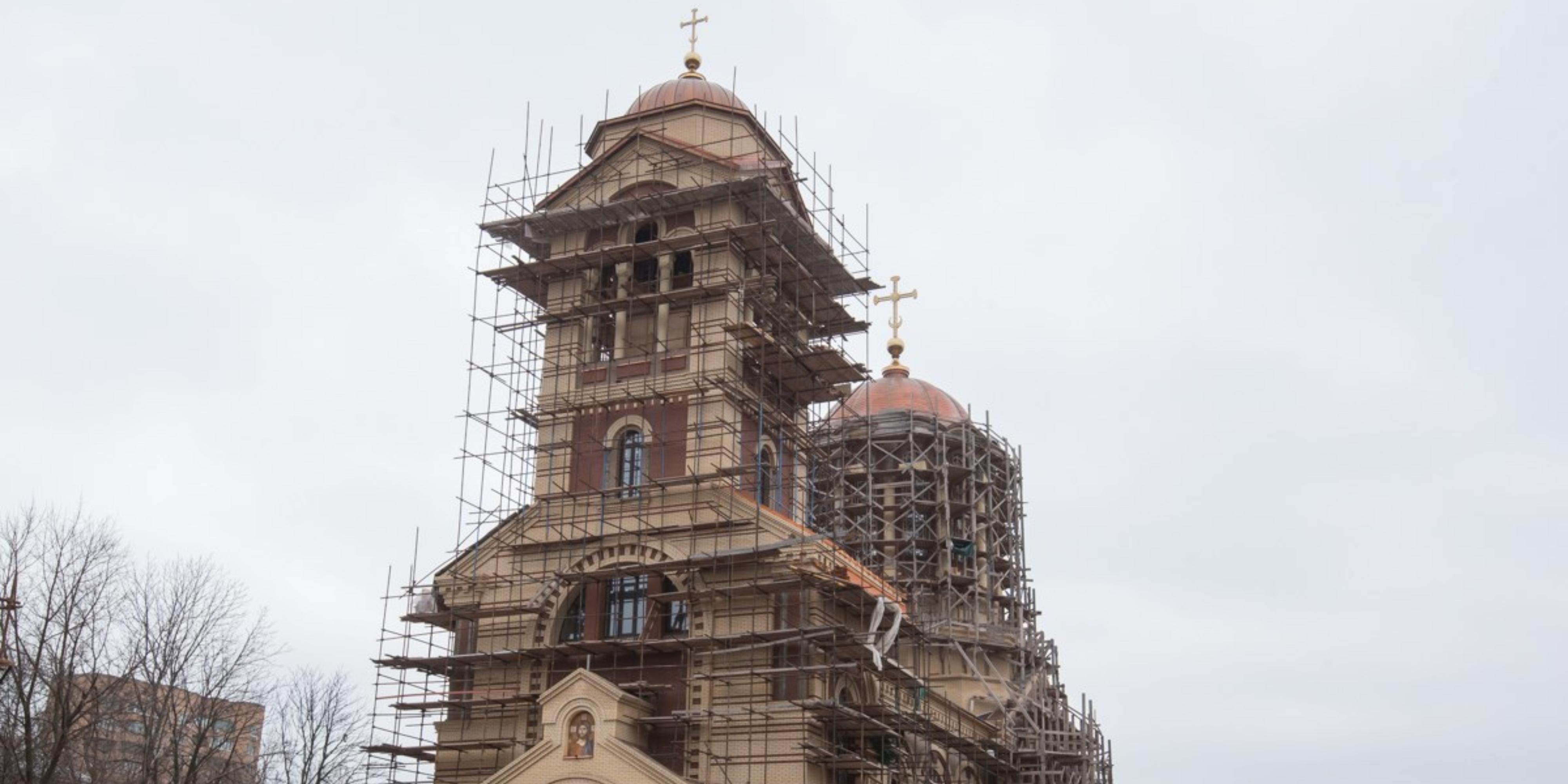
On the occasion of the Day of Slavic Writing and Culture, which is celebrated annually on May 24 and has the status of a state holiday in Russia, the book 'Orthodox Moscow of the XXI century' was published, which tells about the temples built in the capital over the past decade. The publication of the book is timed to coincide with the tenth anniversary of the 'Program-200', the implementation of which began in 2010. The publication is illustrated with a large number of photographs of the facades and interiors of new Moscow churches and chapels.

As part of the most ambitious social project of church and state in the modern history of Russia, which is Program-200, it is planned to build one Orthodox church for every 20,000 residents of the capital, so that the house of prayer for every Muscovite is within walking distance - no more than one kilometer from the place of residence. The program covers all of Moscow with the exception of the Central District, in which there are enough churches and chapels.

The co-authors of the new book, says Interfax, are the curator of Program-200, State Duma deputy Vladimir Resin and the head of the Financial and Economic Department of the Russian Orthodox Church, Metropolitan Ignatius. “This year marks ten years since the launch of the project, and in the same year we expect to build the 100th temple of the program,” Vladimir Resin told the media about the progress of the program.

Temples erected both on the sites of historical churches and chapels, destroyed in the godless era, and in new areas of the Russian capital. If at the beginning of the 90s of the last century in Moscow there were 254 churches and chapels, then by 2000 their number had grown to 519. The launch of Program-200 accelerated the process of temple building: in today's Moscow there are more than 1,100 churches and temples. In parallel with the implementation of the project, large-scale work is being carried out to save the historical shrines of the capital of Russia.

Share:
A book about new Orthodox churches in Moscow has been published A book about new Orthodox churches in Moscow has been published On the occasion of the Day of Slavic Writing and Culture, which is celebrated annually on May 24 and has the status of a state holiday in Russia, the book 'Orthodox Moscow of the XXI century' was published, which tells about the temples built in the capital over the past decade. The publication of the book is timed to coincide with the tenth anniversary of the 'Program-200', the implementation of which began in 2010. The publication is illustrated with a large number of photographs of the facades and interiors of new Moscow churches and chapels. As part of the most ambitious social project of church and state in the modern history of Russia, which is Program-200, it is planned to build one Orthodox church for every 20,000 residents of the capital, so that the house of prayer for every Muscovite is within walking distance - no more than one kilometer from the place of residence. The program covers all of Moscow with the exception of the Central District, in which there are enough churches and chapels. The co-authors of the new book, says Interfax, are the curator of Program-200, State Duma deputy Vladimir Resin and the head of the Financial and Economic Department of the Russian Orthodox Church, Metropolitan Ignatius. “This year marks ten years since the launch of the project, and in the same year we expect to build the 100th temple of the program,” Vladimir Resin told the media about the progress of the program. Temples erected both on the sites of historical churches and chapels, destroyed in the godless era, and in new areas of the Russian capital. If at the beginning of the 90s of the last century in Moscow there were 254 churches and chapels, then by 2000 their number had grown to 519. The launch of Program-200 accelerated the process of temple building: in today's Moscow there are more than 1,100 churches and temples. In parallel with the implementation of the project, large-scale work is being carried out to save the historical shrines of the capital of Russia.
On the occasion of the Day of Slavic Writing and Culture, which is celebrated annually on May 24 and has the status of a state holiday in Russia, the book 'Orthodox Moscow of the XXI century' was published, which tells about the temples built in the capital over the past decade. The publication of the book is timed to coincide with the tenth anniversary of the 'Program-200', the implementation of which began in 2010. The publication is illustrated with a large number of photographs of the facades and interiors of new Moscow churches and chapels. As part of the most ambitious social project of church and state in the modern history of Russia, which is Program-200, it is planned to build one Orthodox church for every 20,000 residents of the capital, so that the house of prayer for every Muscovite is within walking distance - no more than one kilometer from the place of residence. The program covers all of Moscow with the exception of the Central District, in which there are enough churches and chapels. The co-authors of the new book, says Interfax, are the curator of Program-200, State Duma deputy Vladimir Resin and the head of the Financial and Economic Department of the Russian Orthodox Church, Metropolitan Ignatius. “This year marks ten years since the launch of the project, and in the same year we expect to build the 100th temple of the program,” Vladimir Resin told the media about the progress of the program. Temples erected both on the sites of historical churches and chapels, destroyed in the godless era, and in new areas of the Russian capital. If at the beginning of the 90s of the last century in Moscow there were 254 churches and chapels, then by 2000 their number had grown to 519. The launch of Program-200 accelerated the process of temple building: in today's Moscow there are more than 1,100 churches and temples. In parallel with the implementation of the project, large-scale work is being carried out to save the historical shrines of the capital of Russia.