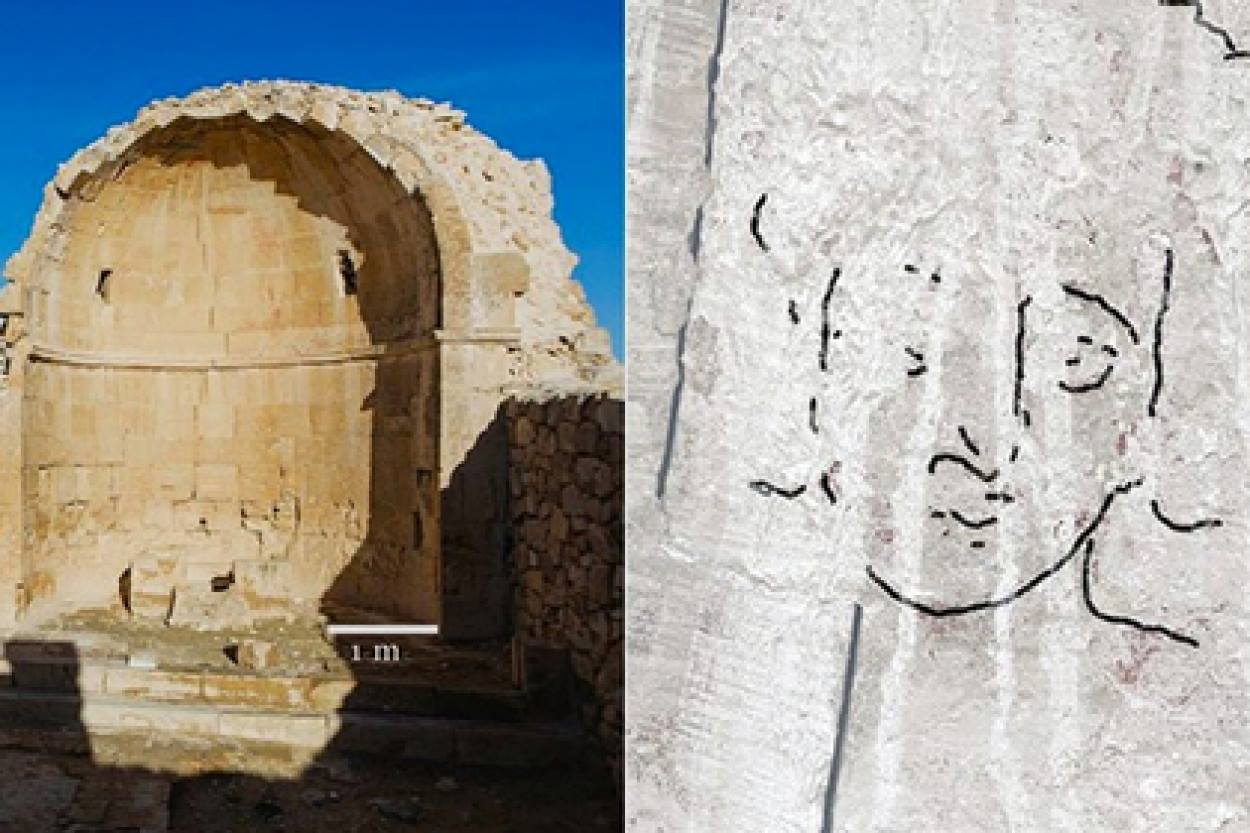
In the ancient city of Shivta, on the wall of a preserved asp of a 6th century Byzantine church, Israeli archaeologists discovered the face of the Savior, which is very different from the traditional iconography of Jesus Christ. The find is reported by lenta.ru with reference to the Antiquity magazine. A fragment of the painting shows the face of a young beardless man with curly hair, a straight, rather long nose and large eyes. Next to him are the remains of another figure, with a head surrounded by a halo. The whole scene was once above a cross-shaped font, which allowed scientists to assume with a high degree of probability that the image conveys the events of the Baptism of the Lord. If this is so, then the almost non-preserved large figure with a halo is John the Baptist, who in that era was traditionally portrayed larger than the Baptized Son of God. The researchers clarify that the images of the Savior, akin to the one found, were quite widespread in the early Byzantine period in Palestine, Egypt and Syria - just at this time there were theological disputes about how exactly the Lord Jesus Christ should be portrayed. Later, the iconographic image familiar to us prevailed.
Share: