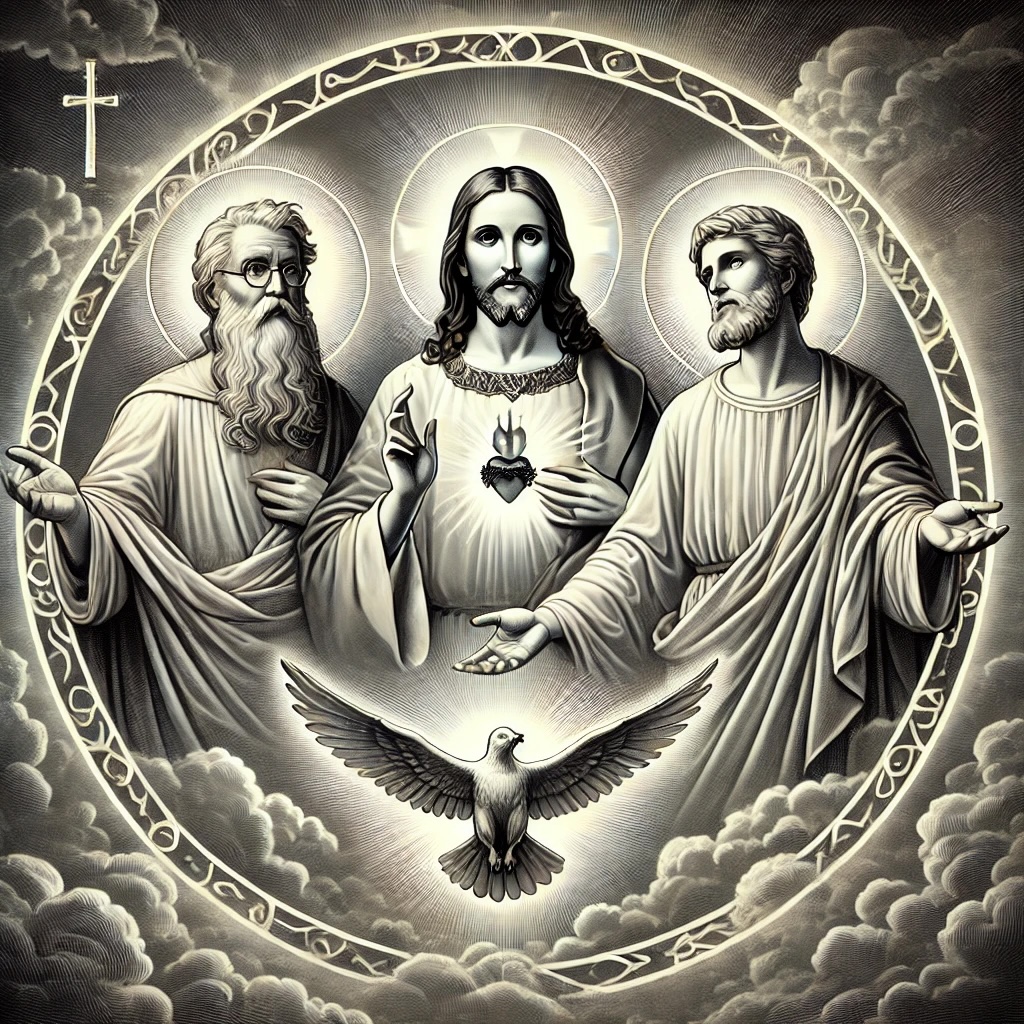
The doctrine of the Holy Trinity holds a central place in the Christian faith and is the foundation of Catholic theology. Despite its depth and complexity, it expresses the key understanding of God as one in three Persons — the Father, the Son, and the Holy Spirit. This mystery was revealed to humanity in Sacred Scripture and affirmed by the teachings of the Church. Let us explore what this means and how this doctrine influences the spiritual life of a Christian.
The Trinity in Sacred Scripture
Although the word "Trinity" is not directly found in the Bible, the foundations of this doctrine were laid in the New Testament. The first signs of God's triune nature can be found as early as the Old Testament, where the Lord speaks in the plural: "Let us make man in our image, after our likeness" (Genesis 1:26). Here we see a foreshadowing of the fullness of the revelation of God.
The full revelation of the Trinity occurs in the New Testament, particularly through the words of Jesus Christ. In the Gospel of Matthew, He says: "Go, therefore, and make disciples of all nations, baptizing them in the name of the Father, and of the Son, and of the Holy Spirit" (Matthew 28:19). This command of Christ contains the core truth of the Christian faith: God is the Father, the Son, and the Holy Spirit — three Persons acting in one divine unity.
The Oneness and Distinction of the Persons
The doctrine of the Trinity confirms that God is one in essence but triune in Persons. These Persons — the Father, the Son, and the Holy Spirit — are not three gods, as it might appear at first glance, but are three manifestations of the one God. God the Father is unbegotten and is the source of all being. The Son, Jesus Christ, is begotten of the Father before all time, and the Holy Spirit proceeds from the Father and the Son.
This distinction and unity of the Trinity is beautifully expressed in the Nicene-Constantinopolitan Creed (325 and 381 AD): "I believe in one God, the Father Almighty, Creator of heaven and earth... and in one Lord Jesus Christ... and in the Holy Spirit, the Lord, the Giver of life."
The Trinity in the Life of the Believer
The doctrine of the Holy Trinity is not merely theoretical. It is directly connected to the life of every believer. The Trinity exemplifies perfect love and mutual self-giving. The Father completely gives Himself to the Son, and the Son to the Father. Their relationship, filled with the Holy Spirit, becomes a model for Christian life, where love and unity with God and neighbor are paramount.
Catholic theology asserts that the Christian is called to participate in the life of the Trinity through prayer, sacraments, and communion with God. Baptism, which is performed "in the name of the Father, and of the Son, and of the Holy Spirit," brings a person into this holy community, making them partakers of divine life. In the Eucharist, believers partake of the Body and Blood of Christ, through which they deepen their communion with God and with one another.
The Holy Trinity and Liturgical Life
The liturgy of the Catholic Church is imbued with Trinitarian symbolism. Every worship service begins and ends with the words "In the name of the Father, and of the Son, and of the Holy Spirit," emphasizing the constant presence of the Trinity in the life of the Church. During the Eucharistic prayer, the priest addresses all three Persons: the prayers are directed to the Father through the Son in the Holy Spirit.
The Feast of the Holy Trinity, celebrated by the Church on the Sunday following Pentecost, also serves as a reminder of the importance of this mystery. The faithful are called to delve deeper into the understanding of the Trinitarian revelation, to seek unity with God, and to learn the love and mutual self-giving that characterize the Divine Persons.
Conclusion
The mystery of the Holy Trinity remains beyond full human comprehension, but this revelation allows us to better understand who God is and how we, being created in His image, are called to live. The revelation of God as Trinity helps Christians grasp the depth of God's love and strive for holiness through unity with Him. Each day, beginning our prayer with the words "In the name of the Father, and of the Son, and of the Holy Spirit," we bear witness to our faith in God, who is Love.