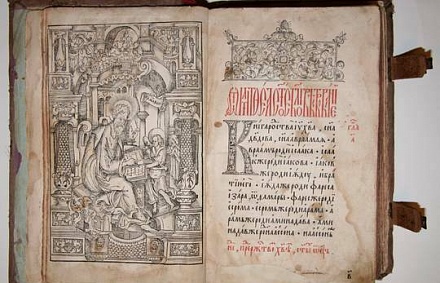
Mark 9: 42–10: 1
But whoever seduces one of these little ones who believe in Me, it would be better for him if they hung a millstone around his neck and threw him into the sea.
And if your hand tempts you, cut it off: it is better for a crippled one to enter life, than to go with two hands into Gehenna, into an unquenchable fire,
where their worm does not die and the fire does not go out.
And if your foot tempts you, cut it off: it is better for you to enter the life of a lame man, than to be thrown into hell with two legs, into an unquenchable fire,
where their worm does not die and the fire does not go out.
And if your eye tempts you, pluck it out: it is better for you to enter the Kingdom of God with one eye, than to be thrown into hell with two eyes,
where their worm does not die and the fire does not go out.
For everyone will be salted with fire, and every sacrifice will be salted.
Salt is a good thing; but if the salt is not salty, how will you straighten it? Have salt in you, and have peace with one another.
Departing from there, he comes to the borders of Judea beyond the Jordanian side. The people gathered to Him again, and, according to His custom, He again taught them.
===========
Theophylact Bulgarian blessed
Interpretation of a group of verses: Mark: 9: 42-42
So if you honor one of the little ones, then you will please God; even if you seduce one of the little ones, you have sinned: it would be better if they hung a millstone of donkeys (millstone) around your neck.
By this it expresses that in this case we will be subjected to the most severe punishment. The Lord pointed out sensual torment in order to terrify us with this visible example.
===========
Iannuariy (Ivliev) archimandrite
Interpretation of a group of verses: Mark: 9: 42-42
The harsh punishment practiced in Rome and Palestine is recalled. And this is said to the apostles! Were the 12 closest disciples, that is, the apostles, in particular danger of seducing “one of these little ones”? And 'seducing the little ones' is very often understood in the sense of seducing minors.
But this is a deep delusion. And here we can be helped by the original Greek text of the Gospel. From it, firstly, it becomes clear that by 'these little ones' do not mean children at all. When it comes to children, the Greek text always uses the word paidion (paidion) without exception. So in this case, Jesus is not talking about 'seducing minors,' as, alas, many people think. By 'small' people are meant inconspicuous, insignificant, unprivileged in the community of Jesus' disciples. The Greek word skandalizein (skandalizein), which we translate as 'seduce', means 'seduce.'
This is the verb of the Greek Bible unknown to the secular ancient Greek language. The Greek language knows only the noun skandalon (skandalon), meaning a trap, a trap. Hence the verb, the literal meaning of which is obtained - to lure into a trap, to deceive, lead to a fall and even to death.
So, Jesus Christ here in the most general sense warns against the 'temptation' of the little ones in the Church. What exactly is meant here, we can clarify the interpretation of the parable of the seed. Let us remember: “In like manner those who are sown on stony ground are those who, when they hear the word, immediately receive it with joy, but have no root in themselves and are inconsistent; then, when sorrow or persecution arises because of the word, they are immediately offended (skandalizontai) ”(Mark 4: 16-17: 4).
Thus, “to seduce someone” means: to bring someone to such a state, to such an attitude, that he will give up faith in Jesus Christ and from following Jesus.
It is against such a possibility that Jesus warns the Twelve. For if this happened, it would be better that the one who gave the reason to leave the Church for its inexperienced, simple member, - “it would be better for him if they hung a millstone around his neck and threw him into the sea”. Here is such a formidable warning.
Prepared by the rector of St. Nicholas Church Archpriest Roman Romanov.
But whoever seduces one of these little ones who believe in Me, it would be better for him if they hung a millstone around his neck and threw him into the sea.
And if your hand tempts you, cut it off: it is better for a crippled one to enter life, than to go with two hands into Gehenna, into an unquenchable fire,
where their worm does not die and the fire does not go out.
And if your foot tempts you, cut it off: it is better for you to enter the life of a lame man, than to be thrown into hell with two legs, into an unquenchable fire,
where their worm does not die and the fire does not go out.
And if your eye tempts you, pluck it out: it is better for you to enter the Kingdom of God with one eye, than to be thrown into hell with two eyes,
where their worm does not die and the fire does not go out.
For everyone will be salted with fire, and every sacrifice will be salted.
Salt is a good thing; but if the salt is not salty, how will you straighten it? Have salt in you, and have peace with one another.
Departing from there, he comes to the borders of Judea beyond the Jordanian side. The people gathered to Him again, and, according to His custom, He again taught them.
===========
Theophylact Bulgarian blessed
Interpretation of a group of verses: Mark: 9: 42-42
So if you honor one of the little ones, then you will please God; even if you seduce one of the little ones, you have sinned: it would be better if they hung a millstone of donkeys (millstone) around your neck.
By this it expresses that in this case we will be subjected to the most severe punishment. The Lord pointed out sensual torment in order to terrify us with this visible example.
===========
Iannuariy (Ivliev) archimandrite
Interpretation of a group of verses: Mark: 9: 42-42
The harsh punishment practiced in Rome and Palestine is recalled. And this is said to the apostles! Were the 12 closest disciples, that is, the apostles, in particular danger of seducing “one of these little ones”? And 'seducing the little ones' is very often understood in the sense of seducing minors.
But this is a deep delusion. And here we can be helped by the original Greek text of the Gospel. From it, firstly, it becomes clear that by 'these little ones' do not mean children at all. When it comes to children, the Greek text always uses the word paidion (paidion) without exception. So in this case, Jesus is not talking about 'seducing minors,' as, alas, many people think. By 'small' people are meant inconspicuous, insignificant, unprivileged in the community of Jesus' disciples. The Greek word skandalizein (skandalizein), which we translate as 'seduce', means 'seduce.'
This is the verb of the Greek Bible unknown to the secular ancient Greek language. The Greek language knows only the noun skandalon (skandalon), meaning a trap, a trap. Hence the verb, the literal meaning of which is obtained - to lure into a trap, to deceive, lead to a fall and even to death.
So, Jesus Christ here in the most general sense warns against the 'temptation' of the little ones in the Church. What exactly is meant here, we can clarify the interpretation of the parable of the seed. Let us remember: “In like manner those who are sown on stony ground are those who, when they hear the word, immediately receive it with joy, but have no root in themselves and are inconsistent; then, when sorrow or persecution arises because of the word, they are immediately offended (skandalizontai) ”(Mark 4: 16-17: 4).
Thus, “to seduce someone” means: to bring someone to such a state, to such an attitude, that he will give up faith in Jesus Christ and from following Jesus.
It is against such a possibility that Jesus warns the Twelve. For if this happened, it would be better that the one who gave the reason to leave the Church for its inexperienced, simple member, - “it would be better for him if they hung a millstone around his neck and threw him into the sea”. Here is such a formidable warning.
Prepared by the rector of St. Nicholas Church Archpriest Roman Romanov.
Share: