According to Holy Scripture, the earthly flora was created on the third day of creation (except for the thorns, which appeared later, as a reminder of man about the Fall). Even not particularly religious people of our time are familiar with the expressions 'slender like a Lebanese cedar', 'sell for a lentil stew', and in many cultures pomegranate is associated primarily with heartfelt feelings ... All these images and allegories go back to the biblical story. However, there are also plants in it that are little familiar to us - and, on the contrary, very familiar ones, but bred under different names. Let's figure it out. In total, the Bible mentions more than one hundred and forty different representatives of the plant world - trees, shrubs, herbs (not counting everything that was obtained from them). Some of them are suitable for eating, others were used for making clothes, and still others were used for the production of incense and medicinal drugs. It is sometimes very difficult to understand all the diversity of the Middle Eastern flora. When translating biblical texts into their native languages, translators often replaced the names of some plants with others, while maintaining context. So instead of a viscous elecampane containing caustic juice and well-known in the Holy Land, nettle appeared in the Russian translation, as a weed plant more familiar to the reader - and a recognizable symbol of oblivion, which covers the places left by people. And under the already mentioned thorns and usually following with them in a pair of thistles, the language of the Bible generally means many different thorny plants, each of which has been given its own name by scientists. To understand all these nuances, the format of the article, and even scientific work is not enough. But we do not set such a goal: it is more important for us to understand the meaning of the most famous, and at the same time, sometimes incomprehensible names of biblical plants.
Lebanese cedar Or, on the contrary, those that seem deceptively understandable at first glance. This is the cedar , traditionally symbolizing glory, greatness and prosperity. The cedar that is mentioned in the Bible under the name of Lebanese and the one that is well known in Russia are relatives, but rather distant. As the connoisseur of biblical flora, candidate of pharmaceutical sciences I. Sokolsky clarifies, in Russia the cedar pine is called the Siberian cedar, to which the name of its Middle Eastern cousin has passed in the popular use. This happened because the cedar boards on which the icons brought from Byzantium were painted were fabulously expensive in Russia: already in the Middle Ages the population Lebanese cedars were significantly reduced, and the delivery of this valuable timber far to the north, by sea and land, through territories inhabited at times by hostile peoples, inflated the price of this material to incredible heights. A local analogue was needed - the same fragrant, noble-looking and durable. It became the cedar pine, which in Russia became the name of the cedar. However, the actual cedar grows not only in Lebanon. There is Atlas cedar, a native of North Africa, and there is Tibetan. The Lebanese variety of this tree is simply more perpetuated by the history of the ancient world than others. Experienced sailors, the Phoenicians used it to build ships - in particular, strong, perfectly straight masts were obtained from cedar. The ancient Egyptian pharaohs preferred to travel to the afterlife in sarcophagi made of Lebanese cedar - and from it ritual boats were made, in which statues of Egyptian deities walked on the water during religious holidays. The commanders of Assyria and Babylon considered the trunks of this tree to be a valuable war booty. And already from the Bible we know that from the wood of this tree, skilled craftsmen sent by King Hiram built a house for the king, prophet and Psalmist David. And his son, Solomon, used the cedar together with the cypress to build the Temple, acquiring them in exchange for grain, wine and oil. The durability and high resistance of the wood of these species to mechanical stress gave rise to a stable comparison of the cedar with the righteous man who stands right before God. How are things today with the cedar in Lebanon, on the flag of which this tree is depicted? He is almost gone here. Only in the north, in the highlands of the country, there are several cedar groves, one hundred to two hundred trees each. Thus, the prophecy of Isaiah came true: 'And the rest of the trees of his forest will be so few in number that the child will be able to make an inventory.'
Cypress The 'gopher tree' that served for the construction of Noah's ark, according to scientists, is nothing more than one of the varieties of cypress. This is indicated by the linguistic closeness of the Hebrew word 'gopher' and the Greek ' cypress ', and the specific properties of its wood: strength, resistance to decay and damage by insects. However, if the cypress tree is familiar to the Russian reader - it grows in the Crimea and on the Black Sea coast of the Krasnodar Territory - then another tree, very important for the Holy Land - olive, it is the olive, is not found in our country. Whereas for the whole Mediterranean For millennia, it has been one of the most important agricultural crops in the region. In the Bible, the olive tree is most often referred to as a symbol of the prosperity of a community or an entire nation. The dove released by Noah brought a fresh olive leaf in its beak as a kind of promise of prosperity for his descendants. The European olive (Olea europaea), which grows along the entire coast of the Mediterranean Sea, is the only one of the sixty types of olives that is of economic importance. It is a subtropical tree 4-12 meters high with leaves that are green above and silvery below. Olive thrives on stony-sandy soil and soils with a sufficient lime content. It is drought-resistant, and also able to withstand short-term frosts down to minus 13-18 degrees Celsius. The flowers of the olive are whitish, small, in paniculate brushes, and its fruits weighing up to 15 grams, thanks to the developed export, are now well known to people all over the world. In ancient times, in the Holy Land, they and their derivatives were one of the main sources of food. The state oil-bearing gardens during the time of King Solomon occupied large areas. The oil obtained from the fruits of the olive tree, as we remember, was even exchanged for valuable wood. However, to be precise, then the ancestor of the current European olive was cultivated, Oleaster, with thorny branches and smaller fruits - over the centuries of cultivation in Palestine and Syria, it was ennobled and acquired the form known today. To understand the significance of the olive tree for the inhabitants of the Holy Land, let us turn to what was said by the prophet Jeremiah, who compares Palestine with 'a green olive tree, full of pleasant fruits.'
Olives Olives Olives and olive oil, oil pomace and spruce were the main products that were obtained from this tree. If everything is more or less clear with the first two, which were used for food, and the third, which went to feed livestock, then the word oil , which is more often used allegorically in Russian, requires clarification. Oil was called olive oil of the highest quality, which even in the Old Testament was offered to God in the form of a sacrifice - as a libation or burning along with fragrant incense. Oil mixed with wine was a remedy for the healing of wounds, as the parable of the Good Samaritan testifies to. In the Christian religious tradition, there is the sacrament of anointing with oil, during which, in accordance with the apostolic word, for the sake of spiritual and physical healing, the forehead, throat and limbs are anointed with consecrated oil. bodies of believers. Oil mixed with grape wine and special aromatic herbs is used to make a sacred product - holy myrrh . A person is anointed with peace immediately after baptism, as well as non-Orthodox priests who are joined to the church; they also wash the relics of the saints during the consecration of the temple - and put it on the throne and walls during the performance of this rite. A century ago, it was with the world that Christian monarchs were anointed for the kingdom, most of whom by that time were in fact “anointed with one world”, being among themselves in a close or more distant degree of kinship.
The Anointing of the Oil This is how many different substances, consecrated by time and tradition, are obtained from the fruit of the olive or olive. The use of olive oil in historical and modern cosmetology due to its antiseptic and nourishing properties is a separate big conversation, which we will not start here. As for the wood of this tree, it is very decorative, heavy and dense, it is still in price today. Due to the special marble-like texture of olive, its wood is used to make furniture, decor details, religious and household items. (for example, rosary), as well as various souvenirs. And, of course, icons are painted on it: an icon, brought from the Holy Land, painted on an olive tree, is reverently accepted as a gift by believers and carefully preserved by them. The Bible also mentions a wild olive tree , from the wood of which the doors and cherubims were made to the Holy of Holies of the first Temple, and somewhat earlier its branches were used to make tabernacles. This plant is not related either to the European olive or to the olive family. It is called a narrow-leaved sucker, and its closest relative, familiar to us, is sea buckthorn. In Russia, it can be found in the south of the country, and in Siberia. Oddly enough, in our country, as in the Bible, this tree also received the popular name 'wild olive'.
Wild olive narrow-leaved oak It is interesting to note that the Bible also mentions substances obtained from plants growing hundreds and even thousands of kilometers from the Holy Land. Probably everyone remembers that moment of the Gospel story, in which a woman, breaking the vessel in which the backgammon was , anointed the Savior's hair with it. Such an act aroused indignation among the audience: they believed that the precious ointment could be sold, and money - to distribute to the poor. The fact is that the plant from which this incense was made, also called musky root, grows only in the Himalayan highlands, at an altitude of 3500 to 5500 meters. From there it was brought to Tarsus - a kind of perfumery center of the ancient East - where skilled craftsmen distilled from its roots and the lower, fleshy part of the stem, nard water, oil and ointment, the most valuable of all three. The vessel with her during the earthly life of Jesus Christ cost more than three hundred denarii, which is comparable to the size of the dowry of a wealthy girl who lived in Judea. In addition to perfumery purposes, amber-colored nard oil was also used in the ancient world for medical purposes. Today, a miniature bottle of backgammon can be purchased in the Christian quarter of Jerusalem and some other places in Israel. Among the imported incense - and, accordingly, plants that do not grow in the Holy Land - is incense , or, in Hebrew, 'lavona'. It is an aromatic resin derived from the incense tree that grows on the Arabian Peninsula in East Africa, in the Horn of Somalia. Even in Old Testament times, incense was part of eleven incense, of which incense consisted - the high priests burned it in Jerusalem Temple. In New Testament times, pure frankincense, together with gold and meek, the Magi brought as a gift to the Infant Christ.
Frankincense Incense is obtained as follows. At the border of winter and spring, cuts are made on the incense tree, from which milky resin flows for a long time. When the cut on the tree is tightened, the darkened resin is collected from the trunk and from the ground, then dividing the frozen drops into two varieties. Selected incense is represented by larger, lighter (pinkish or golden) and geometrically relatively regular pieces (round or oblong). And ordinary incense - all the others; it is darker in color, but has the same pleasant balsamic smell and bitter taste. Frankincense, put on coals, is used for burning incense in the church and is burnt at home, near icons. Consecrated on the Stone of Confirmation in the Church of the Holy Sepulcher in Jerusalem or at other shrines, its particles are worn in an amulet on the chest - it is believed that such incense has a particularly blessed power. Frankincense smoking has a powerful antidepressant effect on the human body. But its effect on animals is paradoxical: in ancient times in the East, a mixture of incense and wine was given to war elephants, to infuriate them before the battle. Not so long ago, incense was used in the manufacture of plasters, toothpastes and elixirs. However, it is still used today, primarily in homeopathy and folk medicine, appreciating its ability to treat suppurations, boils and mastitis as part of ointments. So the Russian expression 'to breathe in incense' originally meant precisely 'to be treated', and not 'to be barely alive.' Another gift of the Magi, myrrh, is also obtained from a tree growing outside the Holy Land. Which is logical: otherwise, what would be the point in offering it by foreigners to the newly born King of Kings? .. With the same incense, mixing it with wine, thirty-three years later, Joseph of Arimathea and Nicodemus will anoint, preparing for burial, the body of the Savior taken from the cross.
Myrrh, commiphora myrrha Smyrna, also known as myrrh (not to be confused with the myrrh we have already talked about), is obtained from the thorny tree Commiphora myrrha growing in Arabia and Africa, which grows from eight to nine feet in height. In the ancient world, its aromatic resin, dissolved in olive oil, was used as a perfume. And in Egypt at that time, women filled with myrrh, but already in a dry form, special bags that carried with them for the same purposes. Beads were often made from the wood of the myrrh tree. If we talk about the medical use of myrrh / myrrh, it was used as a hemostatic agent and as an analgesic, it was believed to promote weight loss, treat diarrhea and dermatosis. It was even claimed that myrrh could cure infertility and leprosy! The bark of the myrrh tree, washed and mixed with salt, was offered as a remedy for the bite of a poisonous snake, and its leaves steamed in milk with millet were offered for toothache. Myrrh, like frankincense, is obtained from cuts in the tree - but its drops have a characteristic red color. The collected pieces of resin are crushed and, if needed in liquid form, distilled. Due to its widespread use in perfumery and the beauty industry, myrrh is still quite expensive today. Its essential oil strengthens hair. In some remote regions of Asia, this substance is still used today to embalm the dead: a body smeared with myrrh dissolved in wine does not undergo decay. For example, in East India, the demand for myrrh imported from Arabia is still quite high. True, the custom of giving it to kings and powerful nobles has long been a thing of the past. In the Holy Land in our time, myrrh can be purchased both in liquid form and in the form of fragments of hardened red resin.
300px '>
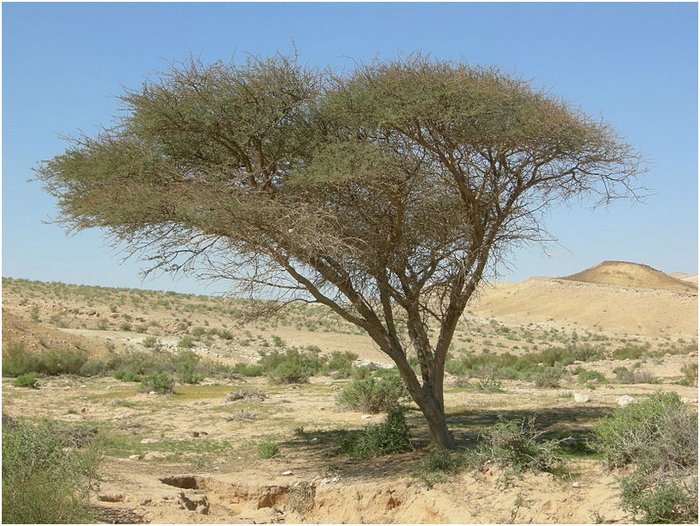
Acacia And what kind of mysterious shittim tree was made from which the Ark of the Covenant and the bars of the Tabernacle - a marching temple built by Moses at the direction of God - were made? This is an acacia , or rather - different varieties of acacia, because the ending of the name of this biblical tree in Hebrew indicates the plural. The varieties are different, but the tree that we used to call acacia - robinia pseudoacacia from the legume family - is not among them. Robinia was brought to the Old World from America only in the seventeenth century, and it is she who is mainly cultivated today in Russian gardens and parks. While the desert species of acacias have a root system that can penetrate tens of meters underground in search of water. Its wood in the desert is used for making fires and cooking, and the leaves for feeding goats, sheep and pack animals. The gum emanating from the cracks in the trunk of this tree has healing properties: anti-inflammatory, hemostatic, astringent. Yes, in fact, there was nothing more to build the tabernacle and the ark in the wilderness, except for various species of acacia. Moreover, its wood is harder than oak, very durable and, polished, forms a beautiful patterned surface. And the already mentioned gum of one of the undersized varieties of acacia - Acacia tortilis - was used by the Egyptians for embalming the bodies of the dead, and by the Jewish high priests - for burning during the divine services. But what about the palm tree, which is repeatedly mentioned in the Bible - the leaves of which the Jerusalemites shouted 'Hosanna' threw at the feet of the apostles and Christ riding on a young colt during His entry into Jerusalem?
Jewish Date Palm The date palm was perhaps one of the main symbols of ancient Judea and the main supplier of food for millions of people who lived at that time in the Middle East and North Africa. Dates are a natural source of sugar: these fruits contain up to seventy percent. One date palm is capable of yielding from several tens of kilograms to a quarter of a ton of dates per year. So its significance in biblical times is difficult to overestimate. The wood of the palm tree was used for construction, its branches covered the roof, from the plant fiber covering the trunk, bags, ropes, mats and hats were made. The dried roots of the date palm were used as a remedy for toothache, and the juice flowing from cuts on the trunk, went to palm wine. Gouging a soft core from the trunk, from the rest of the case, durable water conduits. Continuing the enumeration of the healing properties of this tree, we note that the pulp of its fruits was used to treat gastrointestinal diseases, and the seeds worn down to a powdery state were used as an anti-febrile remedy. Images of a date palm decorated the walls of the Temple in Jerusalem. It is also minted on one of the modern Israeli coins - and it is these trees that are usually planted in front of the entrance to the state institutions of this country. Mentioned in the Russian translation of the Bible and the juniper - sitting under it, the prophet Elijah retired into the desert, pronounces a heartfelt and bitter monologue. However, this plant has never grown in the desert. Scientists are inclined to believe that the Russian translator called a rotem bush (it is he who is mentioned in the Hebrew version of the Old Testament) or a blizzard from the legume family, which got its name due to its resemblance to a broom, as a juniper. This three-meter plant has powerful 20-meter roots that allow it to reach water and survive even in the desert. When the local rainy season is nearing its end, the blizzard blooms with a large number of miniature flowers - white, with purple veins, exuding a strong the smell of almonds. During the day, the blizzard bushes are able to protect the traveler from the scorching heat, at night - from the piercing cold wind. Most likely, that is why the prophet Elijah chose them for his temporary refuge in the desert.
Syrian thorns - one of the representatives of the biblical thistles and thorns Finally, thistles and thorns , repeatedly mentioned in the Holy Scriptures, as already mentioned, represent not one or two, but a whole group of plants that symbolize the futility of efforts and the consequences of disregard of God's will. It was thistles and thorns that overgrown the fields and vineyards of careless owners. The Russian word for weed is not quite suitable for these plants: many of them have been known since ancient times for their beneficial properties. For example, the cockle, which is especially mentioned in this group (“… And instead of barley, the cockle.” Job 31:40), so named for its resemblance to the vestments of the patriarch, although in itself is poisonous, however, an infusion of its seeds and herbs treated toothache and stomach ailments. Of the other plants of this group, which have thorns and are distinguished by the ability to infest agricultural crops, one can single out Syrian thorn is a well-known remedy for the treatment of wounds, bruises and bruises. And also a medicinal cornflower, widespread among cereal crops, helping to treat external inflammations - for this, fresh chopped grass was applied to wounds and rash-covered places, or they were washed with an infusion obtained from a dried plant. Also included in this group is the artichoke sowing, similar to the thistle - its juice was used in ancient times as a means to strengthen hair and stimulate digestion. And, finally, milk thistle, known in Russia as thistle, Mary's thistle and used to treat the liver and gall bladder, and was believed to have the ability to relieve a person of melancholy. Of course, all of the above plants are only a small part of the Middle Eastern flora mentioned in the Holy Scriptures. However, most of it, including oak, cedar, grapes, pomegranate, olive tree, lentils, barley, wheat and many other plants, is well known to the Russian-speaking reader and needs no explanation.
The plant kingdom of the BibleThe plant kingdom of the Bible According to Holy Scripture, the earthly flora was created on the third day of creation (except for the thorns, which appeared later, as a reminder of man about the Fall). Even not particularly religious people of our time are familiar with the expressions 'slender like a Lebanese cedar', 'sell for a lentil stew', and in many cultures pomegranate is associated primarily with heartfelt feelings ... All these images and allegories go back to the biblical story. However, there are also plants in it that are little familiar to us - and, on the contrary, very familiar ones, but bred under different names. Let's figure it out. In total, the Bible mentions more than one hundred and forty different representatives of the plant world - trees, shrubs, herbs (not counting everything that was obtained from them). Some of them are suitable for eating, others were used for making clothes, and still others were used for the production of incense and medicinal drugs. It is sometimes very difficult to understand all the diversity of the Middle Eastern flora. When translating biblical texts into their native languages, translators often replaced the names of some plants with others, while maintaining context. So instead of a viscous elecampane containing caustic juice and well-known in the Holy Land, nettle appeared in the Russian translation, as a weed plant more familiar to the reader - and a recognizable symbol of oblivion, which covers the places left by people. And under the already mentioned thorns and usually following with them in a pair of thistles, the language of the Bible generally means many different thorny plants, each of which has been given its own name by scientists. To understand all these nuances, the format of the article, and even scientific work is not enough. But we do not set such a goal: it is more important for us to understand the meaning of the most famous, and at the same time, sometimes incomprehensible names of biblical plants. Lebanese cedar Or, on the contrary, those that seem deceptively understandable at first glance. This is the cedar , traditionally symbolizing glory, greatness and prosperity. The cedar that is mentioned in the Bible under the name of Lebanese and the one that is well known in Russia are relatives, but rather distant. As the connoisseur of biblical flora, candidate of pharmaceutical sciences I. Sokolsky clarifies, in Russia the cedar pine is called the Siberian cedar, to which the name of its Middle Eastern cousin has passed in the popular use. This happened because the cedar boards on which the icons brought from Byzantium were painted were fabulously expensive in Russia: already in the Middle Ages the population Lebanese cedars were significantly reduced, and the delivery of this valuable timber far to the north, by sea and land, through territories inhabited at times by hostile peoples, inflated the price of this material to incredible heights. A local analogue was needed - the same fragrant, noble-looking and durable. It became the cedar pine, which in Russia became the name of the cedar. However, the actual cedar grows not only in Lebanon. There is Atlas cedar, a native of North Africa, and there is Tibetan. The Lebanese variety of this tree is simply more perpetuated by the history of the ancient world than others. Experienced sailors, the Phoenicians used it to build ships - in particular, strong, perfectly straight masts were obtained from cedar. The ancient Egyptian pharaohs preferred to travel to the afterlife in sarcophagi made of Lebanese cedar - and from it ritual boats were made, in which statues of Egyptian deities walked on the water during religious holidays. The commanders of Assyria and Babylon considered the trunks of this tree to be a valuable war booty. And already from the Bible we know that from the wood of this tree, skilled craftsmen sent by King Hiram built a house for the king, prophet and Psalmist David. And his son, Solomon, used the cedar together with the cypress to build the Temple, acquiring them in exchange for grain, wine and oil. The durability and high resistance of the wood of these species to mechanical stress gave rise to a stable comparison of the cedar with the righteous man who stands right before God. How are things today with the cedar in Lebanon, on the flag of which this tree is depicted? He is almost gone here. Only in the north, in the highlands of the country, there are several cedar groves, one hundred to two hundred trees each. Thus, the prophecy of Isaiah came true: 'And the rest of the trees of his forest will be so few in number that the child will be able to make an inventory.' Cypress The 'gopher tree' that served for the construction of Noah's ark, according to scientists, is nothing more than one of the varieties of cypress. This is indicated by the linguistic closeness of the Hebrew word 'gopher' and the Greek ' cypress ', and the specific properties of its wood: strength, resistance to decay and damage by insects. However, if the cypress tree is familiar to the Russian reader - it grows in the Crimea and on the Black Sea coast of the Krasnodar Territory - then another tree, very important for the Holy Land - olive, it is the olive, is not found in our country. Whereas for the whole Mediterranean For millennia, it has been one of the most important agricultural crops in the region. In the Bible, the olive tree is most often referred to as a symbol of the prosperity of a community or an entire nation. The dove released by Noah brought a fresh olive leaf in its beak as a kind of promise of prosperity for his descendants. The European olive (Olea europaea), which grows along the entire coast of the Mediterranean Sea, is the only one of the sixty types of olives that is of economic importance. It is a subtropical tree 4-12 meters high with leaves that are green above and silvery below. Olive thrives on stony-sandy soil and soils with a sufficient lime content. It is drought-resistant, and also able to withstand short-term frosts down to minus 13-18 degrees Celsius. The flowers of the olive are whitish, small, in paniculate brushes, and its fruits weighing up to 15 grams, thanks to the developed export, are now well known to people all over the world. In ancient times, in the Holy Land, they and their derivatives were one of the main sources of food. The state oil-bearing gardens during the time of King Solomon occupied large areas. The oil obtained from the fruits of the olive tree, as we remember, was even exchanged for valuable wood. However, to be precise, then the ancestor of the current European olive was cultivated, Oleaster, with thorny branches and smaller fruits - over the centuries of cultivation in Palestine and Syria, it was ennobled and acquired the form known today. To understand the significance of the olive tree for the inhabitants of the Holy Land, let us turn to what was said by the prophet Jeremiah, who compares Palestine with 'a green olive tree, full of pleasant fruits.' Olives Olives Olives and olive oil, oil pomace and spruce were the main products that were obtained from this tree. If everything is more or less clear with the first two, which were used for food, and the third, which went to feed livestock, then the word oil , which is more often used allegorically in Russian, requires clarification. Oil was called olive oil of the highest quality, which even in the Old Testament was offered to God in the form of a sacrifice - as a libation or burning along with fragrant incense. Oil mixed with wine was a remedy for the healing of wounds, as the parable of the Good Samaritan testifies to. In the Christian religious tradition, there is the sacrament of anointing with oil, during which, in accordance with the apostolic word, for the sake of spiritual and physical healing, the forehead, throat and limbs are anointed with consecrated oil. bodies of believers. Oil mixed with grape wine and special aromatic herbs is used to make a sacred product - holy myrrh . A person is anointed with peace immediately after baptism, as well as non-Orthodox priests who are joined to the church; they also wash the relics of the saints during the consecration of the temple - and put it on the throne and walls during the performance of this rite. A century ago, it was with the world that Christian monarchs were anointed for the kingdom, most of whom by that time were in fact “anointed with one world”, being among themselves in a close or more distant degree of kinship. The Anointing of the Oil This is how many different substances, consecrated by time and tradition, are obtained from the fruit of the olive or olive. The use of olive oil in historical and modern cosmetology due to its antiseptic and nourishing properties is a separate big conversation, which we will not start here. As for the wood of this tree, it is very decorative, heavy and dense, it is still in price today. Due to the special marble-like texture of olive, its wood is used to make furniture, decor details, religious and household items. (for example, rosary), as well as various souvenirs. And, of course, icons are painted on it: an icon, brought from the Holy Land, painted on an olive tree, is reverently accepted as a gift by believers and carefully preserved by them. The Bible also mentions a wild olive tree , from the wood of which the doors and cherubims were made to the Holy of Holies of the first Temple, and somewhat earlier its branches were used to make tabernacles. This plant is not related either to the European olive or to the olive family. It is called a narrow-leaved sucker, and its closest relative, familiar to us, is sea buckthorn. In Russia, it can be found in the south of the country, and in Siberia. Oddly enough, in our country, as in the Bible, this tree also received the popular name 'wild olive'. Wild olive narrow-leaved oak It is interesting to note that the Bible also mentions substances obtained from plants growing hundreds and even thousands of kilometers from the Holy Land. Probably everyone remembers that moment of the Gospel story, in which a woman, breaking the vessel in which the backgammon was , anointed the Savior's hair with it. Such an act aroused indignation among the audience: they believed that the precious ointment could be sold, and money - to distribute to the poor. The fact is that the plant from which this incense was made, also called musky root, grows only in the Himalayan highlands, at an altitude of 3500 to 5500 meters. From there it was brought to Tarsus - a kind of perfumery center of the ancient East - where skilled craftsmen distilled from its roots and the lower, fleshy part of the stem, nard water, oil and ointment, the most valuable of all three. The vessel with her during the earthly life of Jesus Christ cost more than three hundred denarii, which is comparable to the size of the dowry of a wealthy girl who lived in Judea. In addition to perfumery purposes, amber-colored nard oil was also used in the ancient world for medical purposes. Today, a miniature bottle of backgammon can be purchased in the Christian quarter of Jerusalem and some other places in Israel. Among the imported incense - and, accordingly, plants that do not grow in the Holy Land - is incense , or, in Hebrew, 'lavona'. It is an aromatic resin derived from the incense tree that grows on the Arabian Peninsula in East Africa, in the Horn of Somalia. Even in Old Testament times, incense was part of eleven incense, of which incense consisted - the high priests burned it in Jerusalem Temple. In New Testament times, pure frankincense, together with gold and meek, the Magi brought as a gift to the Infant Christ. Frankincense Incense is obtained as follows. At the border of winter and spring, cuts are made on the incense tree, from which milky resin flows for a long time. When the cut on the tree is tightened, the darkened resin is collected from the trunk and from the ground, then dividing the frozen drops into two varieties. Selected incense is represented by larger, lighter (pinkish or golden) and geometrically relatively regular pieces (round or oblong). And ordinary incense - all the others; it is darker in color, but has the same pleasant balsamic smell and bitter taste. Frankincense, put on coals, is used for burning incense in the church and is burnt at home, near icons. Consecrated on the Stone of Confirmation in the Church of the Holy Sepulcher in Jerusalem or at other shrines, its particles are worn in an amulet on the chest - it is believed that such incense has a particularly blessed power. Frankincense smoking has a powerful antidepressant effect on the human body. But its effect on animals is paradoxical: in ancient times in the East, a mixture of incense and wine was given to war elephants, to infuriate them before the battle. Not so long ago, incense was used in the manufacture of plasters, toothpastes and elixirs. However, it is still used today, primarily in homeopathy and folk medicine, appreciating its ability to treat suppurations, boils and mastitis as part of ointments. So the Russian expression 'to breathe in incense' originally meant precisely 'to be treated', and not 'to be barely alive.' Another gift of the Magi, myrrh, is also obtained from a tree growing outside the Holy Land. Which is logical: otherwise, what would be the point in offering it by foreigners to the newly born King of Kings? .. With the same incense, mixing it with wine, thirty-three years later, Joseph of Arimathea and Nicodemus will anoint, preparing for burial, the body of the Savior taken from the cross. Myrrh, commiphora myrrha Smyrna, also known as myrrh (not to be confused with the myrrh we have already talked about), is obtained from the thorny tree Commiphora myrrha growing in Arabia and Africa, which grows from eight to nine feet in height. In the ancient world, its aromatic resin, dissolved in olive oil, was used as a perfume. And in Egypt at that time, women filled with myrrh, but already in a dry form, special bags that carried with them for the same purposes. Beads were often made from the wood of the myrrh tree. If we talk about the medical use of myrrh / myrrh, it was used as a hemostatic agent and as an analgesic, it was believed to promote weight loss, treat diarrhea and dermatosis. It was even claimed that myrrh could cure infertility and leprosy! The bark of the myrrh tree, washed and mixed with salt, was offered as a remedy for the bite of a poisonous snake, and its leaves steamed in milk with millet were offered for toothache. Myrrh, like frankincense, is obtained from cuts in the tree - but its drops have a characteristic red color. The collected pieces of resin are crushed and, if needed in liquid form, distilled. Due to its widespread use in perfumery and the beauty industry, myrrh is still quite expensive today. Its essential oil strengthens hair. In some remote regions of Asia, this substance is still used today to embalm the dead: a body smeared with myrrh dissolved in wine does not undergo decay. For example, in East India, the demand for myrrh imported from Arabia is still quite high. True, the custom of giving it to kings and powerful nobles has long been a thing of the past. In the Holy Land in our time, myrrh can be purchased both in liquid form and in the form of fragments of hardened red resin. 300px '> Acacia And what kind of mysterious shittim tree was made from which the Ark of the Covenant and the bars of the Tabernacle - a marching temple built by Moses at the direction of God - were made? This is an acacia , or rather - different varieties of acacia, because the ending of the name of this biblical tree in Hebrew indicates the plural. The varieties are different, but the tree that we used to call acacia - robinia pseudoacacia from the legume family - is not among them. Robinia was brought to the Old World from America only in the seventeenth century, and it is she who is mainly cultivated today in Russian gardens and parks. While the desert species of acacias have a root system that can penetrate tens of meters underground in search of water. Its wood in the desert is used for making fires and cooking, and the leaves for feeding goats, sheep and pack animals. The gum emanating from the cracks in the trunk of this tree has healing properties: anti-inflammatory, hemostatic, astringent. Yes, in fact, there was nothing more to build the tabernacle and the ark in the wilderness, except for various species of acacia. Moreover, its wood is harder than oak, very durable and, polished, forms a beautiful patterned surface. And the already mentioned gum of one of the undersized varieties of acacia - Acacia tortilis - was used by the Egyptians for embalming the bodies of the dead, and by the Jewish high priests - for burning during the divine services. But what about the palm tree, which is repeatedly mentioned in the Bible - the leaves of which the Jerusalemites shouted 'Hosanna' threw at the feet of the apostles and Christ riding on a young colt during His entry into Jerusalem? Jewish Date Palm The date palm was perhaps one of the main symbols of ancient Judea and the main supplier of food for millions of people who lived at that time in the Middle East and North Africa. Dates are a natural source of sugar: these fruits contain up to seventy percent. One date palm is capable of yielding from several tens of kilograms to a quarter of a ton of dates per year. So its significance in biblical times is difficult to overestimate. The wood of the palm tree was used for construction, its branches covered the roof, from the plant fiber covering the trunk, bags, ropes, mats and hats were made. The dried roots of the date palm were used as a remedy for toothache, and the juice flowing from cuts on the trunk, went to palm wine. Gouging a soft core from the trunk, from the rest of the case, durable water conduits. Continuing the enumeration of the healing properties of this tree, we note that the pulp of its fruits was used to treat gastrointestinal diseases, and the seeds worn down to a powdery state were used as an anti-febrile remedy. Images of a date palm decorated the walls of the Temple in Jerusalem. It is also minted on one of the modern Israeli coins - and it is these trees that are usually planted in front of the entrance to the state institutions of this country. Mentioned in the Russian translation of the Bible and the juniper - sitting under it, the prophet Elijah retired into the desert, pronounces a heartfelt and bitter monologue. However, this plant has never grown in the desert. Scientists are inclined to believe that the Russian translator called a rotem bush (it is he who is mentioned in the Hebrew version of the Old Testament) or a blizzard from the legume family, which got its name due to its resemblance to a broom, as a juniper. This three-meter plant has powerful 20-meter roots that allow it to reach water and survive even in the desert. When the local rainy season is nearing its end, the blizzard blooms with a large number of miniature flowers - white, with purple veins, exuding a strong the smell of almonds. During the day, the blizzard bushes are able to protect the traveler from the scorching heat, at night - from the piercing cold wind. Most likely, that is why the prophet Elijah chose them for his temporary refuge in the desert. Syrian thorns - one of the representatives of the biblical thistles and thorns Finally, thistles and thorns , repeatedly mentioned in the Holy Scriptures, as already mentioned, represent not one or two, but a whole group of plants that symbolize the futility of efforts and the consequences of disregard of God's will. It was thistles and thorns that overgrown the fields and vineyards of careless owners. The Russian word for weed is not quite suitable for these plants: many of them have been known since ancient times for their beneficial properties. For example, the cockle, which is especially mentioned in this group (“… And instead of barley, the cockle.” Job 31:40), so named for its resemblance to the vestments of the patriarch, although in itself is poisonous, however, an infusion of its seeds and herbs treated toothache and stomach ailments. Of the other plants of this group, which have thorns and are distinguished by the ability to infest agricultural crops, one can single out Syrian thorn is a well-known remedy for the treatment of wounds, bruises and bruises. And also a medicinal cornflower, widespread among cereal crops, helping to treat external inflammations - for this, fresh chopped grass was applied to wounds and rash-covered places, or they were washed with an infusion obtained from a dried plant. Also included in this group is the artichoke sowing, similar to the thistle - its juice was used in ancient times as a means to strengthen hair and stimulate digestion. And, finally, milk thistle, known in Russia as thistle, Mary's thistle and used to treat the liver and gall bladder, and was believed to have the ability to relieve a person of melancholy. Of course, all of the above plants are only a small part of the Middle Eastern flora mentioned in the Holy Scriptures. However, most of it, including oak, cedar, grapes, pomegranate, olive tree, lentils, barley, wheat and many other plants, is well known to the Russian-speaking reader and needs no explanation.Свеча Иерусалима -en
According to Holy Scripture, the earthly flora was created on the third day of creation (except for the thorns, which appeared later, as a reminder of man about the Fall). Even not particularly religious people of our time are familiar with the expressions 'slender like a Lebanese cedar', 'sell for a lentil stew', and in many cultures pomegranate is associated primarily with heartfelt feelings ... All these images and allegories go back to the biblical story. However, there are also plants in it that are little familiar to us - and, on the contrary, very familiar ones, but bred under different names. Let's figure it out. In total, the Bible mentions more than one hundred and forty different representatives of the plant world - trees, shrubs, herbs (not counting everything that was obtained from them). Some of them are suitable for eating, others were used for making clothes, and still others were used for the production of incense and medicinal drugs. It is sometimes very difficult to understand all the diversity of the Middle Eastern flora. When translating biblical texts into their native languages, translators often replaced the names of some plants with others, while maintaining context. So instead of a viscous elecampane containing caustic juice and well-known in the Holy Land, nettle appeared in the Russian translation, as a weed plant more familiar to the reader - and a recognizable symbol of oblivion, which covers the places left by people. And under the already mentioned thorns and usually following with them in a pair of thistles, the language of the Bible generally means many different thorny plants, each of which has been given its own name by scientists. To understand all these nuances, the format of the article, and even scientific work is not enough. But we do not set such a goal: it is more important for us to understand the meaning of the most famous, and at the same time, sometimes incomprehensible names of biblical plants. Lebanese cedar Or, on the contrary, those that seem deceptively understandable at first glance. This is the cedar , traditionally symbolizing glory, greatness and prosperity. The cedar that is mentioned in the Bible under the name of Lebanese and the one that is well known in Russia are relatives, but rather distant. As the connoisseur of biblical flora, candidate of pharmaceutical sciences I. Sokolsky clarifies, in Russia the cedar pine is called the Siberian cedar, to which the name of its Middle Eastern cousin has passed in the popular use. This happened because the cedar boards on which the icons brought from Byzantium were painted were fabulously expensive in Russia: already in the Middle Ages the population Lebanese cedars were significantly reduced, and the delivery of this valuable timber far to the north, by sea and land, through territories inhabited at times by hostile peoples, inflated the price of this material to incredible heights. A local analogue was needed - the same fragrant, noble-looking and durable. It became the cedar pine, which in Russia became the name of the cedar. However, the actual cedar grows not only in Lebanon. There is Atlas cedar, a native of North Africa, and there is Tibetan. The Lebanese variety of this tree is simply more perpetuated by the history of the ancient world than others. Experienced sailors, the Phoenicians used it to build ships - in particular, strong, perfectly straight masts were obtained from cedar. The ancient Egyptian pharaohs preferred to travel to the afterlife in sarcophagi made of Lebanese cedar - and from it ritual boats were made, in which statues of Egyptian deities walked on the water during religious holidays. The commanders of Assyria and Babylon considered the trunks of this tree to be a valuable war booty. And already from the Bible we know that from the wood of this tree, skilled craftsmen sent by King Hiram built a house for the king, prophet and Psalmist David. And his son, Solomon, used the cedar together with the cypress to build the Temple, acquiring them in exchange for grain, wine and oil. The durability and high resistance of the wood of these species to mechanical stress gave rise to a stable comparison of the cedar with the righteous man who stands right before God. How are things today with the cedar in Lebanon, on the flag of which this tree is depicted? He is almost gone here. Only in the north, in the highlands of the country, there are several cedar groves, one hundred to two hundred trees each. Thus, the prophecy of Isaiah came true: 'And the rest of the trees of his forest will be so few in number that the child will be able to make an inventory.' Cypress The 'gopher tree' that served for the construction of Noah's ark, according to scientists, is nothing more than one of the varieties of cypress. This is indicated by the linguistic closeness of the Hebrew word 'gopher' and the Greek ' cypress ', and the specific properties of its wood: strength, resistance to decay and damage by insects. However, if the cypress tree is familiar to the Russian reader - it grows in the Crimea and on the Black Sea coast of the Krasnodar Territory - then another tree, very important for the Holy Land - olive, it is the olive, is not found in our country. Whereas for the whole Mediterranean For millennia, it has been one of the most important agricultural crops in the region. In the Bible, the olive tree is most often referred to as a symbol of the prosperity of a community or an entire nation. The dove released by Noah brought a fresh olive leaf in its beak as a kind of promise of prosperity for his descendants. The European olive (Olea europaea), which grows along the entire coast of the Mediterranean Sea, is the only one of the sixty types of olives that is of economic importance. It is a subtropical tree 4-12 meters high with leaves that are green above and silvery below. Olive thrives on stony-sandy soil and soils with a sufficient lime content. It is drought-resistant, and also able to withstand short-term frosts down to minus 13-18 degrees Celsius. The flowers of the olive are whitish, small, in paniculate brushes, and its fruits weighing up to 15 grams, thanks to the developed export, are now well known to people all over the world. In ancient times, in the Holy Land, they and their derivatives were one of the main sources of food. The state oil-bearing gardens during the time of King Solomon occupied large areas. The oil obtained from the fruits of the olive tree, as we remember, was even exchanged for valuable wood. However, to be precise, then the ancestor of the current European olive was cultivated, Oleaster, with thorny branches and smaller fruits - over the centuries of cultivation in Palestine and Syria, it was ennobled and acquired the form known today. To understand the significance of the olive tree for the inhabitants of the Holy Land, let us turn to what was said by the prophet Jeremiah, who compares Palestine with 'a green olive tree, full of pleasant fruits.' Olives Olives Olives and olive oil, oil pomace and spruce were the main products that were obtained from this tree. If everything is more or less clear with the first two, which were used for food, and the third, which went to feed livestock, then the word oil , which is more often used allegorically in Russian, requires clarification. Oil was called olive oil of the highest quality, which even in the Old Testament was offered to God in the form of a sacrifice - as a libation or burning along with fragrant incense. Oil mixed with wine was a remedy for the healing of wounds, as the parable of the Good Samaritan testifies to. In the Christian religious tradition, there is the sacrament of anointing with oil, during which, in accordance with the apostolic word, for the sake of spiritual and physical healing, the forehead, throat and limbs are anointed with consecrated oil. bodies of believers. Oil mixed with grape wine and special aromatic herbs is used to make a sacred product - holy myrrh . A person is anointed with peace immediately after baptism, as well as non-Orthodox priests who are joined to the church; they also wash the relics of the saints during the consecration of the temple - and put it on the throne and walls during the performance of this rite. A century ago, it was with the world that Christian monarchs were anointed for the kingdom, most of whom by that time were in fact “anointed with one world”, being among themselves in a close or more distant degree of kinship. The Anointing of the Oil This is how many different substances, consecrated by time and tradition, are obtained from the fruit of the olive or olive. The use of olive oil in historical and modern cosmetology due to its antiseptic and nourishing properties is a separate big conversation, which we will not start here. As for the wood of this tree, it is very decorative, heavy and dense, it is still in price today. Due to the special marble-like texture of olive, its wood is used to make furniture, decor details, religious and household items. (for example, rosary), as well as various souvenirs. And, of course, icons are painted on it: an icon, brought from the Holy Land, painted on an olive tree, is reverently accepted as a gift by believers and carefully preserved by them. The Bible also mentions a wild olive tree , from the wood of which the doors and cherubims were made to the Holy of Holies of the first Temple, and somewhat earlier its branches were used to make tabernacles. This plant is not related either to the European olive or to the olive family. It is called a narrow-leaved sucker, and its closest relative, familiar to us, is sea buckthorn. In Russia, it can be found in the south of the country, and in Siberia. Oddly enough, in our country, as in the Bible, this tree also received the popular name 'wild olive'. Wild olive narrow-leaved oak It is interesting to note that the Bible also mentions substances obtained from plants growing hundreds and even thousands of kilometers from the Holy Land. Probably everyone remembers that moment of the Gospel story, in which a woman, breaking the vessel in which the backgammon was , anointed the Savior's hair with it. Such an act aroused indignation among the audience: they believed that the precious ointment could be sold, and money - to distribute to the poor. The fact is that the plant from which this incense was made, also called musky root, grows only in the Himalayan highlands, at an altitude of 3500 to 5500 meters. From there it was brought to Tarsus - a kind of perfumery center of the ancient East - where skilled craftsmen distilled from its roots and the lower, fleshy part of the stem, nard water, oil and ointment, the most valuable of all three. The vessel with her during the earthly life of Jesus Christ cost more than three hundred denarii, which is comparable to the size of the dowry of a wealthy girl who lived in Judea. In addition to perfumery purposes, amber-colored nard oil was also used in the ancient world for medical purposes. Today, a miniature bottle of backgammon can be purchased in the Christian quarter of Jerusalem and some other places in Israel. Among the imported incense - and, accordingly, plants that do not grow in the Holy Land - is incense , or, in Hebrew, 'lavona'. It is an aromatic resin derived from the incense tree that grows on the Arabian Peninsula in East Africa, in the Horn of Somalia. Even in Old Testament times, incense was part of eleven incense, of which incense consisted - the high priests burned it in Jerusalem Temple. In New Testament times, pure frankincense, together with gold and meek, the Magi brought as a gift to the Infant Christ. Frankincense Incense is obtained as follows. At the border of winter and spring, cuts are made on the incense tree, from which milky resin flows for a long time. When the cut on the tree is tightened, the darkened resin is collected from the trunk and from the ground, then dividing the frozen drops into two varieties. Selected incense is represented by larger, lighter (pinkish or golden) and geometrically relatively regular pieces (round or oblong). And ordinary incense - all the others; it is darker in color, but has the same pleasant balsamic smell and bitter taste. Frankincense, put on coals, is used for burning incense in the church and is burnt at home, near icons. Consecrated on the Stone of Confirmation in the Church of the Holy Sepulcher in Jerusalem or at other shrines, its particles are worn in an amulet on the chest - it is believed that such incense has a particularly blessed power. Frankincense smoking has a powerful antidepressant effect on the human body. But its effect on animals is paradoxical: in ancient times in the East, a mixture of incense and wine was given to war elephants, to infuriate them before the battle. Not so long ago, incense was used in the manufacture of plasters, toothpastes and elixirs. However, it is still used today, primarily in homeopathy and folk medicine, appreciating its ability to treat suppurations, boils and mastitis as part of ointments. So the Russian expression 'to breathe in incense' originally meant precisely 'to be treated', and not 'to be barely alive.' Another gift of the Magi, myrrh, is also obtained from a tree growing outside the Holy Land. Which is logical: otherwise, what would be the point in offering it by foreigners to the newly born King of Kings? .. With the same incense, mixing it with wine, thirty-three years later, Joseph of Arimathea and Nicodemus will anoint, preparing for burial, the body of the Savior taken from the cross. Myrrh, commiphora myrrha Smyrna, also known as myrrh (not to be confused with the myrrh we have already talked about), is obtained from the thorny tree Commiphora myrrha growing in Arabia and Africa, which grows from eight to nine feet in height. In the ancient world, its aromatic resin, dissolved in olive oil, was used as a perfume. And in Egypt at that time, women filled with myrrh, but already in a dry form, special bags that carried with them for the same purposes. Beads were often made from the wood of the myrrh tree. If we talk about the medical use of myrrh / myrrh, it was used as a hemostatic agent and as an analgesic, it was believed to promote weight loss, treat diarrhea and dermatosis. It was even claimed that myrrh could cure infertility and leprosy! The bark of the myrrh tree, washed and mixed with salt, was offered as a remedy for the bite of a poisonous snake, and its leaves steamed in milk with millet were offered for toothache. Myrrh, like frankincense, is obtained from cuts in the tree - but its drops have a characteristic red color. The collected pieces of resin are crushed and, if needed in liquid form, distilled. Due to its widespread use in perfumery and the beauty industry, myrrh is still quite expensive today. Its essential oil strengthens hair. In some remote regions of Asia, this substance is still used today to embalm the dead: a body smeared with myrrh dissolved in wine does not undergo decay. For example, in East India, the demand for myrrh imported from Arabia is still quite high. True, the custom of giving it to kings and powerful nobles has long been a thing of the past. In the Holy Land in our time, myrrh can be purchased both in liquid form and in the form of fragments of hardened red resin. 300px '> Acacia And what kind of mysterious shittim tree was made from which the Ark of the Covenant and the bars of the Tabernacle - a marching temple built by Moses at the direction of God - were made? This is an acacia , or rather - different varieties of acacia, because the ending of the name of this biblical tree in Hebrew indicates the plural. The varieties are different, but the tree that we used to call acacia - robinia pseudoacacia from the legume family - is not among them. Robinia was brought to the Old World from America only in the seventeenth century, and it is she who is mainly cultivated today in Russian gardens and parks. While the desert species of acacias have a root system that can penetrate tens of meters underground in search of water. Its wood in the desert is used for making fires and cooking, and the leaves for feeding goats, sheep and pack animals. The gum emanating from the cracks in the trunk of this tree has healing properties: anti-inflammatory, hemostatic, astringent. Yes, in fact, there was nothing more to build the tabernacle and the ark in the wilderness, except for various species of acacia. Moreover, its wood is harder than oak, very durable and, polished, forms a beautiful patterned surface. And the already mentioned gum of one of the undersized varieties of acacia - Acacia tortilis - was used by the Egyptians for embalming the bodies of the dead, and by the Jewish high priests - for burning during the divine services. But what about the palm tree, which is repeatedly mentioned in the Bible - the leaves of which the Jerusalemites shouted 'Hosanna' threw at the feet of the apostles and Christ riding on a young colt during His entry into Jerusalem? Jewish Date Palm The date palm was perhaps one of the main symbols of ancient Judea and the main supplier of food for millions of people who lived at that time in the Middle East and North Africa. Dates are a natural source of sugar: these fruits contain up to seventy percent. One date palm is capable of yielding from several tens of kilograms to a quarter of a ton of dates per year. So its significance in biblical times is difficult to overestimate. The wood of the palm tree was used for construction, its branches covered the roof, from the plant fiber covering the trunk, bags, ropes, mats and hats were made. The dried roots of the date palm were used as a remedy for toothache, and the juice flowing from cuts on the trunk, went to palm wine. Gouging a soft core from the trunk, from the rest of the case, durable water conduits. Continuing the enumeration of the healing properties of this tree, we note that the pulp of its fruits was used to treat gastrointestinal diseases, and the seeds worn down to a powdery state were used as an anti-febrile remedy. Images of a date palm decorated the walls of the Temple in Jerusalem. It is also minted on one of the modern Israeli coins - and it is these trees that are usually planted in front of the entrance to the state institutions of this country. Mentioned in the Russian translation of the Bible and the juniper - sitting under it, the prophet Elijah retired into the desert, pronounces a heartfelt and bitter monologue. However, this plant has never grown in the desert. Scientists are inclined to believe that the Russian translator called a rotem bush (it is he who is mentioned in the Hebrew version of the Old Testament) or a blizzard from the legume family, which got its name due to its resemblance to a broom, as a juniper. This three-meter plant has powerful 20-meter roots that allow it to reach water and survive even in the desert. When the local rainy season is nearing its end, the blizzard blooms with a large number of miniature flowers - white, with purple veins, exuding a strong the smell of almonds. During the day, the blizzard bushes are able to protect the traveler from the scorching heat, at night - from the piercing cold wind. Most likely, that is why the prophet Elijah chose them for his temporary refuge in the desert. Syrian thorns - one of the representatives of the biblical thistles and thorns Finally, thistles and thorns , repeatedly mentioned in the Holy Scriptures, as already mentioned, represent not one or two, but a whole group of plants that symbolize the futility of efforts and the consequences of disregard of God's will. It was thistles and thorns that overgrown the fields and vineyards of careless owners. The Russian word for weed is not quite suitable for these plants: many of them have been known since ancient times for their beneficial properties. For example, the cockle, which is especially mentioned in this group (“… And instead of barley, the cockle.” Job 31:40), so named for its resemblance to the vestments of the patriarch, although in itself is poisonous, however, an infusion of its seeds and herbs treated toothache and stomach ailments. Of the other plants of this group, which have thorns and are distinguished by the ability to infest agricultural crops, one can single out Syrian thorn is a well-known remedy for the treatment of wounds, bruises and bruises. And also a medicinal cornflower, widespread among cereal crops, helping to treat external inflammations - for this, fresh chopped grass was applied to wounds and rash-covered places, or they were washed with an infusion obtained from a dried plant. Also included in this group is the artichoke sowing, similar to the thistle - its juice was used in ancient times as a means to strengthen hair and stimulate digestion. And, finally, milk thistle, known in Russia as thistle, Mary's thistle and used to treat the liver and gall bladder, and was believed to have the ability to relieve a person of melancholy. Of course, all of the above plants are only a small part of the Middle Eastern flora mentioned in the Holy Scriptures. However, most of it, including oak, cedar, grapes, pomegranate, olive tree, lentils, barley, wheat and many other plants, is well known to the Russian-speaking reader and needs no explanation.