Feast of the Nativity of Christ in the visual arts
25 December 2017
On December 25, Christians celebrate one of the brightest holidays - Christmas (Orthodox - January 7). Since ancient times, the theme of Christmas has been one of the most beloved in the visual arts; its iconography is more than one and a half thousand years old. The scene of the birth of Jesus can be found in ancient Russian icons and Byzantine mosaics, medieval European reliefs and monumental fresco cycles of the Renaissance; Great Dutch artists developed this plot in grandiose pictorial altars, and ordinary believers - in the design of simple-minded, but endlessly touching Christmas nativity scenes.
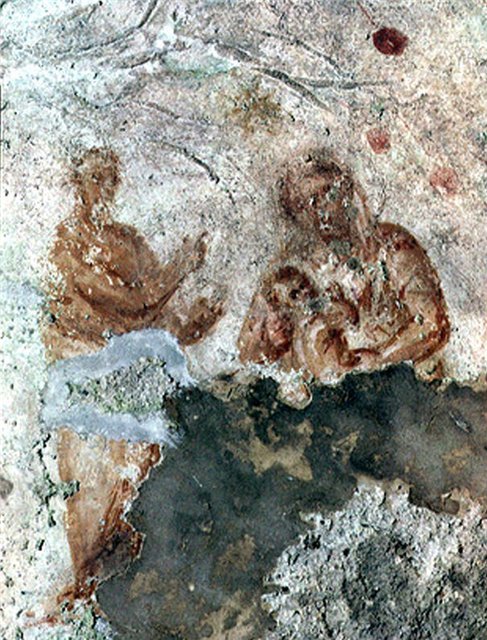
One of the earliest images Nativity of Christ. Fresco in the catacombs of Priscilla. II century. Rome
Magi with gifts. The relief of the sarcophagus. IV century Rome
Meanwhile, not so much is said in the Gospels about the event of the Nativity of Christ. Only two evangelists - Matthew and Luke - describe him, and even then in a rather condensed form. It is possible that it is precisely the brevity of the story and the lack of details in the Gospel texts caused the appearance of a large amount of apocryphal literature, supplementing and developing canonical sources. For example, Matthew's mention of the wise men who brought their gifts over time turned into a colorful story about three eastern kings who came to worship the Child; they had names (Melchior, Caspar and Belshazzar), and the gifts brought acquired a deep symbolic meaning: gold - to the king, incense (sacred incense) - to God, myrrh - to mortal man.
Magi bringing gifts. Mosaic in the church Sant Apollinare Nuovo. VI century Ravenna
Procession of the Magi. Fragment of the fresco by B. Gozzoli. XV century Florence
The most famous apocryphal, to which artists have most often turned over the centuries, are the Proto-Gospel of James, the Legend of Aphrodite the Perseian at Christmas and the Gospel of the Savior's childhood. Let's see how short Gospel texts were supplemented with apocrypha and folk fantasy, as a result of which the symbols and rituals of Christmas acquired those forms familiar to us, without which today it is impossible to imagine the celebration of this great event. The Gospel of Luke says that Mary put the Infant “in a manger, because there was no room for them in the hotel”. That night an angel appeared to the shepherds with the good news of the birth of the Savior, the shepherds followed him and found the Baby in the manger, Mary and Joseph. The Apocrypha greatly complements this humble story. First of all, the place of birth of Jesus is specified - a cave (or a nativity scene in the Old Church Slavonic tradition). It was first mentioned in the apocryphal Proto-Gospel of James: “ And (Joseph) found a cave there, and brought her (Mary) ... and a shining cloud appeared in the cave ... and such a light shone in the cave that they could not bear it, but a little time later the light disappeared and the Infant appeared, came out and took the breast of his mother Mary .
Evangelism to the Shepherds. Etching by Rembrandt. XVII century
Christmas (Holy Night). Fragment of a painting by Correggio. XVI century
In the apocryphal Gospel of pseudo-Matthew, which was formed no earlier than the 8th century, the will and the donkey are first mentioned: “ On the third day, Mary left the cave and entered the stable and put the Baby in a manger, and the ox and donkey bowed to him .” It is interesting that in ancient Russian icons one of the animals at the manger with Jesus is almost always depicted as snow-white , as a sign of the Divine origin of the Child.
Christmas. Old Russian icon. XV century
Christmas. Fragment of an icon of the 15th century.
Another important symbol, often present in the composition of the Nativity, is a dilapidated building, against which the action develops. It is a symbol of the Old Testament, which is now 'canceled' with the birth of the Savior. In the paintings of some Renaissance artists, attention is drawn to the unusual shape of the manger, similar to the shape of the antique sarcophagus - the prototype of the Holy Sepulcher. This is not surprising, because Christ was born into the world to die for it and be resurrected for it.
Adoration of the Magi. A. Durer. XVI century Germany
Adoration of the shepherds. D. Ghirlandaio. XV century Italy
An interesting detail of the scene of the Nativity of Christ in Byzantine and Old Russian icons is the scene of the washing of the Child by two midwives. Nothing is said about her in the canonical gospels, but it is described in detail in the Proto Gospel of James. The midwife who helped the Mother of God in childbirth, named Salome, doubted that the Virgin could give birth, and touched her with her hand. “ And as soon as Salome held out her finger, she cried out and said:“ Woe to my unbelief, for I dared to tempt God. And now my hand is taken away, as in fire ... 'And then the Angel of the Lord appeared before her, and said to her' Salome, Salome, the Lord listened to you, bring your hand to the Baby and hold Him, and healing and joy will come for you. ' And Salome came up and took the Child, saying: “I will worship Him, for the great King of Israel was born. And Salome was immediately healed ... ”. In the middle of the XVI century. this plot was condemned by the Council of Trent, after which it completely disappeared from Western European painting.
Christmas with a scene ablution of the Infant. Old Russian icon. XV century
Scene of the Ablution of the Infant. Fragment of an icon of the 15th century.
Adoration of the Christ Child. J. da Fabriano. XV century Italy By the end of the Middle Ages, such an interpretation of the plot of Christmas became widespread in European art, in which the Virgin Mary was depicted kneeling before the Child, worshiping him. This image of the Most Holy Theotokos goes back to the story of the founder of one of the women's monastic orders, Brigitte of Sweden, who made a pilgrimage to Bethlehem in 1370 and wrote Revelations about her visions of the Virgin Mary: “ When the time came for her to give birth, she took off her shoes and a white cloak, took off her veil, and her golden hair fell on her shoulders ... When everything was ready, she knelt down and began to pray. While she was praying in this way, raising her hands, the Baby was born in such a bright radiance that it completely absorbed the faint light of Joseph's candle . ' Renaissance art has given us a large number of masterpieces on the theme of Christmas. Interestingly, when referring to this plot, Italian artists most often used the story of the Evangelist Matthew - about the arrival of the Magi with gifts, and the Dutch masters were more fond of depicting the worship of the shepherds described by Luke. Life-loving For the Italians, the first plot provided an excellent opportunity to show the crowded processions of their richly dressed contemporaries, to give portraits of rulers and noble townspeople. The Magi, who by this time had turned into Eastern kings, have a magnificent retinue - camels, horses, loaded with gifts. Over time, the artists increased this retinue more and more, filling the entire field of the picture, so that the Christ Child and the Mother of God were often barely noticeable. This is exactly what happened in the grandiose fresco of Benozzo Gozzoli, where a cavalcade of luxuriously dressed noble townspeople, led by the then ruler of Florence, Cosimo Medici, march among the mountainous Italian landscape to worship the divine Child. Probably, it was from the Renaissance and with the light hand of the Italians that the abundance of all kinds of manifestations of the material world became an indispensable attribute of the Christmas holiday: elegant Christmas trees, dazzling fireworks, beautiful clothes, a richly laid festive table, merry balls.
Fragment of the fresco by B. Gozzoli 'Procession of the Magi' from the Capella of the Magi at the Palazzo Medici Riccardi. XV century Italy
Adoration of the Magi. J. da Fabriano. XV century Italy
By contrast, Dutch artists were more attracted to the theme of the worship of the shepherds. In contrast to the lush and pompous Italian scenes, the Netherlandish 'Worship' is imbued with a sincere and deep religious feeling. In the famous Portinari Altar, an unsettling, pinching feeling of hope and sorrow unites all the characters, among which Maria stands out. Her meek face strikes with a sense of helplessness and loneliness. A newborn baby lies on an armful of hay (in one of the medieval works entitled 'Reflections on the Life of Christ' says the following: ' Joseph brought a candle to the barn and a sheaf of hay, which he put on the ground. The Son of God, coming out of the womb, without causing her no pain, instantly transferred to the hay at the feet of the Virgin Mary '). The impending martyrdom of Jesus is symbolized by the white and orange lilies, iris, and a cut sheaf of wheat, painted with great accuracy.
Altar of Portinari. Adoration of the shepherds. XV century Netherlands
Altarpiece of Portinari
And yet in In Western European art of the Renaissance, the Nativity of Christ was most often depicted as an emphatically bright, festive event. The feeling of joy is largely created by the presence of angels soaring in the sky. They dance hand in hand, play flutes or lutes.
Christmas. Piero della Francesca. XV century Italy
Christmas. Fragment of the picture S. Botticelli. XV century Italy
This motive is associated with an old Catholic tradition - to play the Christmas holiday on a pipe in front of the image of Jesus. In the paintings of the 15th-16th centuries. in the hands of angels, you can often see not only musical instruments, but also unfolded ribbons with notes or words of Christmas carols.
Christmas. R. Kampen. XV century Netherlands
Singing angels. Fragment of the painting by R. Kampen
Ark with fragments of Christ's manger ('Holy cradle') in the church of Santa Maria Maggiore. Rome Several relics associated with the event of the Nativity of Christ have survived to this day. In the Roman basilica of Santa Maria Maggiore from the 7th century. there are five olive wood planks brought from Palestine, revered as the manger of Christ. A precious reliquary made of crystal, silver and gold is installed in the crypt under the main altar of the basilica. According to a long-standing tradition, on Christmas Eve, a procession of the cross is performed with this manger. Another relic revered by Christians - the Mother of God Plate, in which, according to legend, she was on the night of Christmas - is kept in Chartres Cathedral (France). The plate came to Europe from Constantinople, where it was kept for a long time in the church in Blachernae, and then was transferred by the Byzantine empress Irene to Charle the Great, the unifier of Western Europe.
Ark with Fee Holy Mother of God in Chartres. France
Cathedral in Chartres
Cathedral in Aachen. Germany The Aachen Cathedral (Germany) houses such Christmas shrines as the veil of Christ and the robe of the Mother of God, the clothes in which she traveled to Bethlehem. A magnificent ark with these relics is located in the heart of the city's cathedral. Once every seven years, the shrines are opened for worship by believers from all over the world. However, the main place that keeps the memory of the Birth of the Savior is the Nativity Basilica in Bethlehem, erected here by order of the Holy Equal-to-the-Apostles Queen Helena .
Basilica of the Nativity in Bethlehem. Central nave
Silver Star in the Cave of the Nativity
In the crypt under the pulpit of the temple is the cave of the Nativity. Here you can see another relic associated with the manger of Christ: a depression in the floor in the form of a cradle, lined with white marble. The birthplace of Jesus, located in the eastern part of the cave, is marked with a silver star with fourteen rays and the glow of unquenchable lamps.
Feast of the Nativity of Christ in the visual artsFeast of the Nativity of Christ in the visual arts On December 25, Christians celebrate one of the brightest holidays - Christmas (Orthodox - January 7). Since ancient times, the theme of Christmas has been one of the most beloved in the visual arts; its iconography is more than one and a half thousand years old. The scene of the birth of Jesus can be found in ancient Russian icons and Byzantine mosaics, medieval European reliefs and monumental fresco cycles of the Renaissance; Great Dutch artists developed this plot in grandiose pictorial altars, and ordinary believers - in the design of simple-minded, but endlessly touching Christmas nativity scenes. One of the earliest images Nativity of Christ. Fresco in the catacombs of Priscilla. II century. Rome Magi with gifts. The relief of the sarcophagus. IV century Rome Meanwhile, not so much is said in the Gospels about the event of the Nativity of Christ. Only two evangelists - Matthew and Luke - describe him, and even then in a rather condensed form. It is possible that it is precisely the brevity of the story and the lack of details in the Gospel texts caused the appearance of a large amount of apocryphal literature, supplementing and developing canonical sources. For example, Matthew's mention of the wise men who brought their gifts over time turned into a colorful story about three eastern kings who came to worship the Child; they had names (Melchior, Caspar and Belshazzar), and the gifts brought acquired a deep symbolic meaning: gold - to the king, incense (sacred incense) - to God, myrrh - to mortal man. Magi bringing gifts. Mosaic in the church Sant Apollinare Nuovo. VI century Ravenna Procession of the Magi. Fragment of the fresco by B. Gozzoli. XV century Florence The most famous apocryphal, to which artists have most often turned over the centuries, are the Proto-Gospel of James, the Legend of Aphrodite the Perseian at Christmas and the Gospel of the Savior's childhood. Let's see how short Gospel texts were supplemented with apocrypha and folk fantasy, as a result of which the symbols and rituals of Christmas acquired those forms familiar to us, without which today it is impossible to imagine the celebration of this great event. The Gospel of Luke says that Mary put the Infant “in a manger, because there was no room for them in the hotel”. That night an angel appeared to the shepherds with the good news of the birth of the Savior, the shepherds followed him and found the Baby in the manger, Mary and Joseph. The Apocrypha greatly complements this humble story. First of all, the place of birth of Jesus is specified - a cave (or a nativity scene in the Old Church Slavonic tradition). It was first mentioned in the apocryphal Proto-Gospel of James: “ And (Joseph) found a cave there, and brought her (Mary) ... and a shining cloud appeared in the cave ... and such a light shone in the cave that they could not bear it, but a little time later the light disappeared and the Infant appeared, came out and took the breast of his mother Mary . Evangelism to the Shepherds. Etching by Rembrandt. XVII century Christmas (Holy Night). Fragment of a painting by Correggio. XVI century In the apocryphal Gospel of pseudo-Matthew, which was formed no earlier than the 8th century, the will and the donkey are first mentioned: “ On the third day, Mary left the cave and entered the stable and put the Baby in a manger, and the ox and donkey bowed to him .” It is interesting that in ancient Russian icons one of the animals at the manger with Jesus is almost always depicted as snow-white , as a sign of the Divine origin of the Child. Christmas. Old Russian icon. XV century Christmas. Fragment of an icon of the 15th century. Another important symbol, often present in the composition of the Nativity, is a dilapidated building, against which the action develops. It is a symbol of the Old Testament, which is now 'canceled' with the birth of the Savior. In the paintings of some Renaissance artists, attention is drawn to the unusual shape of the manger, similar to the shape of the antique sarcophagus - the prototype of the Holy Sepulcher. This is not surprising, because Christ was born into the world to die for it and be resurrected for it. Adoration of the Magi. A. Durer. XVI century Germany Adoration of the shepherds. D. Ghirlandaio. XV century Italy An interesting detail of the scene of the Nativity of Christ in Byzantine and Old Russian icons is the scene of the washing of the Child by two midwives. Nothing is said about her in the canonical gospels, but it is described in detail in the Proto Gospel of James. The midwife who helped the Mother of God in childbirth, named Salome, doubted that the Virgin could give birth, and touched her with her hand. “ And as soon as Salome held out her finger, she cried out and said:“ Woe to my unbelief, for I dared to tempt God. And now my hand is taken away, as in fire ... 'And then the Angel of the Lord appeared before her, and said to her' Salome, Salome, the Lord listened to you, bring your hand to the Baby and hold Him, and healing and joy will come for you. ' And Salome came up and took the Child, saying: “I will worship Him, for the great King of Israel was born. And Salome was immediately healed ... ”. In the middle of the XVI century. this plot was condemned by the Council of Trent, after which it completely disappeared from Western European painting. Christmas with a scene ablution of the Infant. Old Russian icon. XV century Scene of the Ablution of the Infant. Fragment of an icon of the 15th century. Adoration of the Christ Child. J. da Fabriano. XV century Italy By the end of the Middle Ages, such an interpretation of the plot of Christmas became widespread in European art, in which the Virgin Mary was depicted kneeling before the Child, worshiping him. This image of the Most Holy Theotokos goes back to the story of the founder of one of the women's monastic orders, Brigitte of Sweden, who made a pilgrimage to Bethlehem in 1370 and wrote Revelations about her visions of the Virgin Mary: “ When the time came for her to give birth, she took off her shoes and a white cloak, took off her veil, and her golden hair fell on her shoulders ... When everything was ready, she knelt down and began to pray. While she was praying in this way, raising her hands, the Baby was born in such a bright radiance that it completely absorbed the faint light of Joseph's candle . ' Renaissance art has given us a large number of masterpieces on the theme of Christmas. Interestingly, when referring to this plot, Italian artists most often used the story of the Evangelist Matthew - about the arrival of the Magi with gifts, and the Dutch masters were more fond of depicting the worship of the shepherds described by Luke. Life-loving For the Italians, the first plot provided an excellent opportunity to show the crowded processions of their richly dressed contemporaries, to give portraits of rulers and noble townspeople. The Magi, who by this time had turned into Eastern kings, have a magnificent retinue - camels, horses, loaded with gifts. Over time, the artists increased this retinue more and more, filling the entire field of the picture, so that the Christ Child and the Mother of God were often barely noticeable. This is exactly what happened in the grandiose fresco of Benozzo Gozzoli, where a cavalcade of luxuriously dressed noble townspeople, led by the then ruler of Florence, Cosimo Medici, march among the mountainous Italian landscape to worship the divine Child. Probably, it was from the Renaissance and with the light hand of the Italians that the abundance of all kinds of manifestations of the material world became an indispensable attribute of the Christmas holiday: elegant Christmas trees, dazzling fireworks, beautiful clothes, a richly laid festive table, merry balls. Fragment of the fresco by B. Gozzoli 'Procession of the Magi' from the Capella of the Magi at the Palazzo Medici Riccardi. XV century Italy Adoration of the Magi. J. da Fabriano. XV century Italy By contrast, Dutch artists were more attracted to the theme of the worship of the shepherds. In contrast to the lush and pompous Italian scenes, the Netherlandish 'Worship' is imbued with a sincere and deep religious feeling. In the famous Portinari Altar, an unsettling, pinching feeling of hope and sorrow unites all the characters, among which Maria stands out. Her meek face strikes with a sense of helplessness and loneliness. A newborn baby lies on an armful of hay (in one of the medieval works entitled 'Reflections on the Life of Christ' says the following: ' Joseph brought a candle to the barn and a sheaf of hay, which he put on the ground. The Son of God, coming out of the womb, without causing her no pain, instantly transferred to the hay at the feet of the Virgin Mary '). The impending martyrdom of Jesus is symbolized by the white and orange lilies, iris, and a cut sheaf of wheat, painted with great accuracy. Altar of Portinari. Adoration of the shepherds. XV century Netherlands Altarpiece of Portinari And yet in In Western European art of the Renaissance, the Nativity of Christ was most often depicted as an emphatically bright, festive event. The feeling of joy is largely created by the presence of angels soaring in the sky. They dance hand in hand, play flutes or lutes. Christmas. Piero della Francesca. XV century Italy Christmas. Fragment of the picture S. Botticelli. XV century Italy This motive is associated with an old Catholic tradition - to play the Christmas holiday on a pipe in front of the image of Jesus. In the paintings of the 15th-16th centuries. in the hands of angels, you can often see not only musical instruments, but also unfolded ribbons with notes or words of Christmas carols. Christmas. R. Kampen. XV century Netherlands Singing angels. Fragment of the painting by R. Kampen Ark with fragments of Christ's manger ('Holy cradle') in the church of Santa Maria Maggiore. Rome Several relics associated with the event of the Nativity of Christ have survived to this day. In the Roman basilica of Santa Maria Maggiore from the 7th century. there are five olive wood planks brought from Palestine, revered as the manger of Christ. A precious reliquary made of crystal, silver and gold is installed in the crypt under the main altar of the basilica. According to a long-standing tradition, on Christmas Eve, a procession of the cross is performed with this manger. Another relic revered by Christians - the Mother of God Plate, in which, according to legend, she was on the night of Christmas - is kept in Chartres Cathedral (France). The plate came to Europe from Constantinople, where it was kept for a long time in the church in Blachernae, and then was transferred by the Byzantine empress Irene to Charle the Great, the unifier of Western Europe. Ark with Fee Holy Mother of God in Chartres. France Cathedral in Chartres Cathedral in Aachen. Germany The Aachen Cathedral (Germany) houses such Christmas shrines as the veil of Christ and the robe of the Mother of God, the clothes in which she traveled to Bethlehem. A magnificent ark with these relics is located in the heart of the city's cathedral. Once every seven years, the shrines are opened for worship by believers from all over the world. However, the main place that keeps the memory of the Birth of the Savior is the Nativity Basilica in Bethlehem, erected here by order of the Holy Equal-to-the-Apostles Queen Helena . Basilica of the Nativity in Bethlehem. Central nave Silver Star in the Cave of the Nativity In the crypt under the pulpit of the temple is the cave of the Nativity. Here you can see another relic associated with the manger of Christ: a depression in the floor in the form of a cradle, lined with white marble. The birthplace of Jesus, located in the eastern part of the cave, is marked with a silver star with fourteen rays and the glow of unquenchable lamps.Свеча Иерусалима -en
On December 25, Christians celebrate one of the brightest holidays - Christmas (Orthodox - January 7). Since ancient times, the theme of Christmas has been one of the most beloved in the visual arts; its iconography is more than one and a half thousand years old. The scene of the birth of Jesus can be found in ancient Russian icons and Byzantine mosaics, medieval European reliefs and monumental fresco cycles of the Renaissance; Great Dutch artists developed this plot in grandiose pictorial altars, and ordinary believers - in the design of simple-minded, but endlessly touching Christmas nativity scenes. One of the earliest images Nativity of Christ. Fresco in the catacombs of Priscilla. II century. Rome Magi with gifts. The relief of the sarcophagus. IV century Rome Meanwhile, not so much is said in the Gospels about the event of the Nativity of Christ. Only two evangelists - Matthew and Luke - describe him, and even then in a rather condensed form. It is possible that it is precisely the brevity of the story and the lack of details in the Gospel texts caused the appearance of a large amount of apocryphal literature, supplementing and developing canonical sources. For example, Matthew's mention of the wise men who brought their gifts over time turned into a colorful story about three eastern kings who came to worship the Child; they had names (Melchior, Caspar and Belshazzar), and the gifts brought acquired a deep symbolic meaning: gold - to the king, incense (sacred incense) - to God, myrrh - to mortal man. Magi bringing gifts. Mosaic in the church Sant Apollinare Nuovo. VI century Ravenna Procession of the Magi. Fragment of the fresco by B. Gozzoli. XV century Florence The most famous apocryphal, to which artists have most often turned over the centuries, are the Proto-Gospel of James, the Legend of Aphrodite the Perseian at Christmas and the Gospel of the Savior's childhood. Let's see how short Gospel texts were supplemented with apocrypha and folk fantasy, as a result of which the symbols and rituals of Christmas acquired those forms familiar to us, without which today it is impossible to imagine the celebration of this great event. The Gospel of Luke says that Mary put the Infant “in a manger, because there was no room for them in the hotel”. That night an angel appeared to the shepherds with the good news of the birth of the Savior, the shepherds followed him and found the Baby in the manger, Mary and Joseph. The Apocrypha greatly complements this humble story. First of all, the place of birth of Jesus is specified - a cave (or a nativity scene in the Old Church Slavonic tradition). It was first mentioned in the apocryphal Proto-Gospel of James: “ And (Joseph) found a cave there, and brought her (Mary) ... and a shining cloud appeared in the cave ... and such a light shone in the cave that they could not bear it, but a little time later the light disappeared and the Infant appeared, came out and took the breast of his mother Mary . Evangelism to the Shepherds. Etching by Rembrandt. XVII century Christmas (Holy Night). Fragment of a painting by Correggio. XVI century In the apocryphal Gospel of pseudo-Matthew, which was formed no earlier than the 8th century, the will and the donkey are first mentioned: “ On the third day, Mary left the cave and entered the stable and put the Baby in a manger, and the ox and donkey bowed to him .” It is interesting that in ancient Russian icons one of the animals at the manger with Jesus is almost always depicted as snow-white , as a sign of the Divine origin of the Child. Christmas. Old Russian icon. XV century Christmas. Fragment of an icon of the 15th century. Another important symbol, often present in the composition of the Nativity, is a dilapidated building, against which the action develops. It is a symbol of the Old Testament, which is now 'canceled' with the birth of the Savior. In the paintings of some Renaissance artists, attention is drawn to the unusual shape of the manger, similar to the shape of the antique sarcophagus - the prototype of the Holy Sepulcher. This is not surprising, because Christ was born into the world to die for it and be resurrected for it. Adoration of the Magi. A. Durer. XVI century Germany Adoration of the shepherds. D. Ghirlandaio. XV century Italy An interesting detail of the scene of the Nativity of Christ in Byzantine and Old Russian icons is the scene of the washing of the Child by two midwives. Nothing is said about her in the canonical gospels, but it is described in detail in the Proto Gospel of James. The midwife who helped the Mother of God in childbirth, named Salome, doubted that the Virgin could give birth, and touched her with her hand. “ And as soon as Salome held out her finger, she cried out and said:“ Woe to my unbelief, for I dared to tempt God. And now my hand is taken away, as in fire ... 'And then the Angel of the Lord appeared before her, and said to her' Salome, Salome, the Lord listened to you, bring your hand to the Baby and hold Him, and healing and joy will come for you. ' And Salome came up and took the Child, saying: “I will worship Him, for the great King of Israel was born. And Salome was immediately healed ... ”. In the middle of the XVI century. this plot was condemned by the Council of Trent, after which it completely disappeared from Western European painting. Christmas with a scene ablution of the Infant. Old Russian icon. XV century Scene of the Ablution of the Infant. Fragment of an icon of the 15th century. Adoration of the Christ Child. J. da Fabriano. XV century Italy By the end of the Middle Ages, such an interpretation of the plot of Christmas became widespread in European art, in which the Virgin Mary was depicted kneeling before the Child, worshiping him. This image of the Most Holy Theotokos goes back to the story of the founder of one of the women's monastic orders, Brigitte of Sweden, who made a pilgrimage to Bethlehem in 1370 and wrote Revelations about her visions of the Virgin Mary: “ When the time came for her to give birth, she took off her shoes and a white cloak, took off her veil, and her golden hair fell on her shoulders ... When everything was ready, she knelt down and began to pray. While she was praying in this way, raising her hands, the Baby was born in such a bright radiance that it completely absorbed the faint light of Joseph's candle . ' Renaissance art has given us a large number of masterpieces on the theme of Christmas. Interestingly, when referring to this plot, Italian artists most often used the story of the Evangelist Matthew - about the arrival of the Magi with gifts, and the Dutch masters were more fond of depicting the worship of the shepherds described by Luke. Life-loving For the Italians, the first plot provided an excellent opportunity to show the crowded processions of their richly dressed contemporaries, to give portraits of rulers and noble townspeople. The Magi, who by this time had turned into Eastern kings, have a magnificent retinue - camels, horses, loaded with gifts. Over time, the artists increased this retinue more and more, filling the entire field of the picture, so that the Christ Child and the Mother of God were often barely noticeable. This is exactly what happened in the grandiose fresco of Benozzo Gozzoli, where a cavalcade of luxuriously dressed noble townspeople, led by the then ruler of Florence, Cosimo Medici, march among the mountainous Italian landscape to worship the divine Child. Probably, it was from the Renaissance and with the light hand of the Italians that the abundance of all kinds of manifestations of the material world became an indispensable attribute of the Christmas holiday: elegant Christmas trees, dazzling fireworks, beautiful clothes, a richly laid festive table, merry balls. Fragment of the fresco by B. Gozzoli 'Procession of the Magi' from the Capella of the Magi at the Palazzo Medici Riccardi. XV century Italy Adoration of the Magi. J. da Fabriano. XV century Italy By contrast, Dutch artists were more attracted to the theme of the worship of the shepherds. In contrast to the lush and pompous Italian scenes, the Netherlandish 'Worship' is imbued with a sincere and deep religious feeling. In the famous Portinari Altar, an unsettling, pinching feeling of hope and sorrow unites all the characters, among which Maria stands out. Her meek face strikes with a sense of helplessness and loneliness. A newborn baby lies on an armful of hay (in one of the medieval works entitled 'Reflections on the Life of Christ' says the following: ' Joseph brought a candle to the barn and a sheaf of hay, which he put on the ground. The Son of God, coming out of the womb, without causing her no pain, instantly transferred to the hay at the feet of the Virgin Mary '). The impending martyrdom of Jesus is symbolized by the white and orange lilies, iris, and a cut sheaf of wheat, painted with great accuracy. Altar of Portinari. Adoration of the shepherds. XV century Netherlands Altarpiece of Portinari And yet in In Western European art of the Renaissance, the Nativity of Christ was most often depicted as an emphatically bright, festive event. The feeling of joy is largely created by the presence of angels soaring in the sky. They dance hand in hand, play flutes or lutes. Christmas. Piero della Francesca. XV century Italy Christmas. Fragment of the picture S. Botticelli. XV century Italy This motive is associated with an old Catholic tradition - to play the Christmas holiday on a pipe in front of the image of Jesus. In the paintings of the 15th-16th centuries. in the hands of angels, you can often see not only musical instruments, but also unfolded ribbons with notes or words of Christmas carols. Christmas. R. Kampen. XV century Netherlands Singing angels. Fragment of the painting by R. Kampen Ark with fragments of Christ's manger ('Holy cradle') in the church of Santa Maria Maggiore. Rome Several relics associated with the event of the Nativity of Christ have survived to this day. In the Roman basilica of Santa Maria Maggiore from the 7th century. there are five olive wood planks brought from Palestine, revered as the manger of Christ. A precious reliquary made of crystal, silver and gold is installed in the crypt under the main altar of the basilica. According to a long-standing tradition, on Christmas Eve, a procession of the cross is performed with this manger. Another relic revered by Christians - the Mother of God Plate, in which, according to legend, she was on the night of Christmas - is kept in Chartres Cathedral (France). The plate came to Europe from Constantinople, where it was kept for a long time in the church in Blachernae, and then was transferred by the Byzantine empress Irene to Charle the Great, the unifier of Western Europe. Ark with Fee Holy Mother of God in Chartres. France Cathedral in Chartres Cathedral in Aachen. Germany The Aachen Cathedral (Germany) houses such Christmas shrines as the veil of Christ and the robe of the Mother of God, the clothes in which she traveled to Bethlehem. A magnificent ark with these relics is located in the heart of the city's cathedral. Once every seven years, the shrines are opened for worship by believers from all over the world. However, the main place that keeps the memory of the Birth of the Savior is the Nativity Basilica in Bethlehem, erected here by order of the Holy Equal-to-the-Apostles Queen Helena . Basilica of the Nativity in Bethlehem. Central nave Silver Star in the Cave of the Nativity In the crypt under the pulpit of the temple is the cave of the Nativity. Here you can see another relic associated with the manger of Christ: a depression in the floor in the form of a cradle, lined with white marble. The birthplace of Jesus, located in the eastern part of the cave, is marked with a silver star with fourteen rays and the glow of unquenchable lamps.