There is no gold or silver ore in the Holy Land; until recently, it was believed that there are no deposits of precious stones here either. With all this, jewelry made in Israel diverges from this small Middle Eastern country all over the world - primarily because the art of working with gold and silver has been honed here for centuries. Based on its own traditions and absorbing all the best that was characteristic of the jewelry schools of several neighboring countries, the Israeli jewelry industry over time has formed its current unique style. One of the reasons for the great popularity of jewelry from Israel is their relatively low price. This became possible thanks to the comprehensive government support of the industry (jewelry in the country is not taxed, and this is just one example), which quickly bore fruit. Although the country does not have its own industrial production of diamonds and other precious stones (we emphasize: not yet, but more on that at the very end), the Israeli Diamond Exchange is one of the five largest in the world. The price of precious metals is also low here: for example, silver costs an average of $ 0.55 per gram, of course, excluding the work of the master.
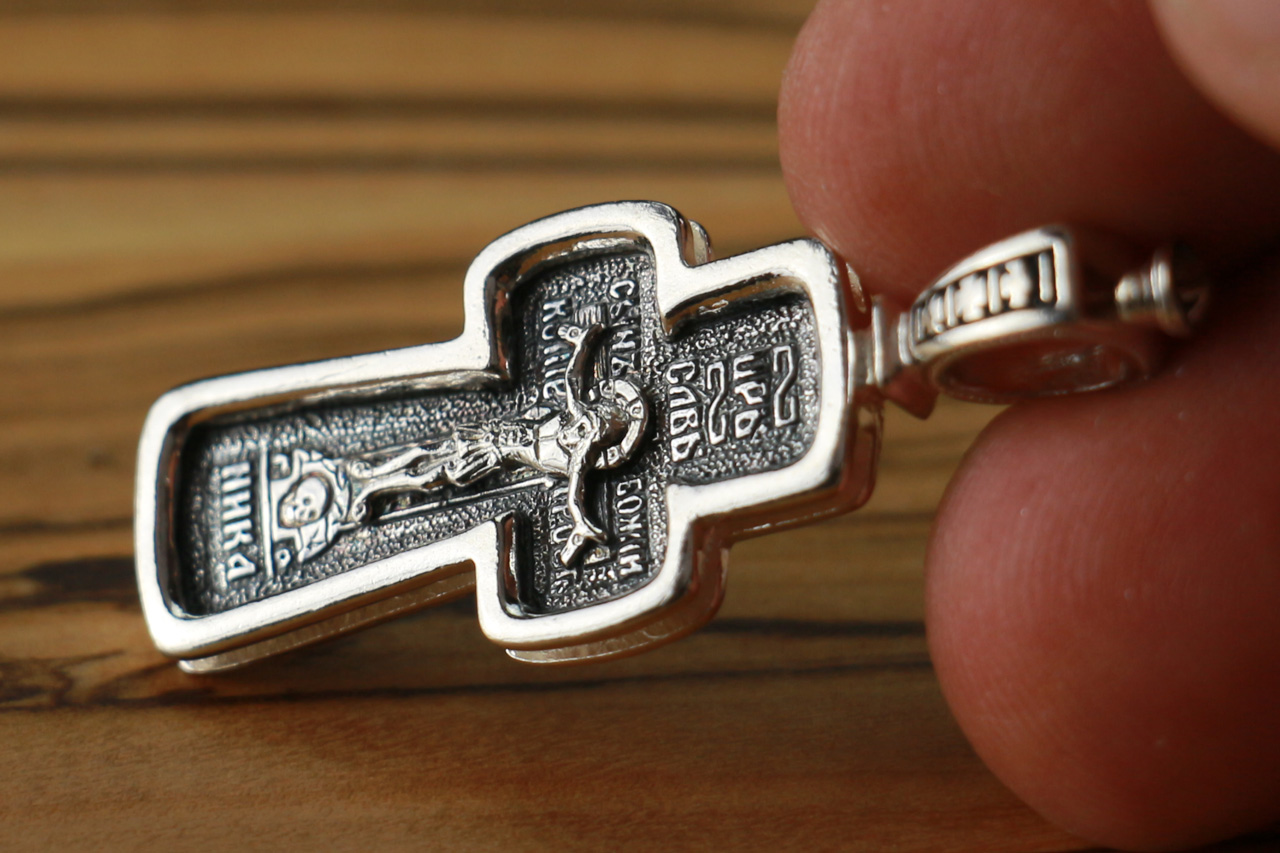
Silver cross with a crucifix But, of course, not only the democratic price attracts tourists who buy gold and silver items, with or without stones, in shops and countless shops in Jerusalem and other cities of the country. The local style plays an important role here, characterized by a special oriental charm and sophistication. In addition to the Israelis themselves, students of famous master jewelers who belonged to the schools of Iran, Syria and Yemen work in the country - such a mixture of cultures has given rise over time to a unique local design. Since we started with silver, we will mention several Israeli companies whose products are known not only in their homeland, but also in other countries. This is Grass !, offering romantic jewelry for every taste and budget, from mass-produced to piece. Another globally recognized brand is DEN'O; he specializes in the production of status items, often with inserts of pearls, turquoise, garnet, artificial opal. They use precious stones (garnet, agate, amethyst, rauch-topaz, quartz) in their products, and in Tamir Zuman, this enterprise is focused on the production of small-scale and exclusive products. And, perhaps, the most famous of all the others is Magnolia, whose stores are located in Jerusalem, Bat Yam, Tel Aviv, as well as in cities in Europe and North America. It is interesting that in different cities the range of silver products from Magnolia is at least half individual: every second piece - polished, matte or gilded - you will find only in this boutique and will not find in others. In addition to jewelry, the company's stores also present silverware, dishes, candlesticks and other decorative items.
Jerusalem Jeweler Although modern technologies have entered the silver segment of the jewelry field today, greatly increasing the capabilities of craftsmen, the production of such products is often a family business, spanning up to three or four generations of one kind or another. The very same traditions of processing silver in the Holy Land are rooted in antiquity. The Israelites attributed supernatural properties to products made of this metal, for example, they gave them to babies as a talisman against misfortune, illness and the evil eye. The latter, most likely, belongs to the area of superstition - but, be that as it may, wealthy Israelis of biblical times, as evidenced by the finds of archaeologists, more often preferred to wear it silver, not gold. Indeed, in Old Testament times, silver had a symbolic meaning for the Israelites - for example, a ring made of this metal was associated with them with infinity, continuity and unity. And today silver is highly valued here for the diversity of its shades, a kind of shine, the ability to fit into the traditional and modern style, to be combined with a variety of precious and semi-precious stones - diamonds, pearls, garnet, artificial opal, amethyst, mother of pearl, black onyx and turquoise ... Jewelers will most likely cite its ductility as the most useful property of this metal. In the Holy Land, as well as in other countries, sterling silver is the most widespread - an alloy containing 92.5% pure silver and 7.5% alloying metal - copper, nickel, zinc. Master jewelers in Israel make the surface of silver matte or glossy, iridescent in a wide range, from dull shimmer to bright shine. In addition to a relatively small number of modern design solutions, most of the jewelry made from the metal of interest to us in Israel is stylized as old oriental silver: deliberately uneven edges, hand-chasing, patterns with patterned embossing ... Sometimes imitation of old samples reaches such heights that a ring or pendant taken in hand leaves the feeling of touching an ancient artifact that has been stored under the buried earth for hundreds of years. Of course, this applies specifically to piece samples, and not to products released in a series, even if it is small. Although serial products of local production - be it the Jerusalem cross or the crucifix, which are effectively decorated with mother-of-pearl or enamels of different colors - are also quite impressive.
Jerusalem Cross Pendant Despite the fact that a significant part of silver jewelry in Israel has a pronounced local flavor, everyone will find something among them that will suit their personal tastes and religious preferences. For followers of the faith of Christ, jewelry stores and shops in Jerusalem offer the widest selection of crosses, images, bracelets, pendants and pendants with Christian symbols; separately it is necessary to mention handmade icons in skillfully made silver frames, which are made by local Arab-Christians. Many pilgrims and tourists, purchasing such products in the Old City, rush to consecrate them on the Anointing Stone in the temple. The Holy Sepulcher is the only place in the world where you can do it yourself. However, it is necessary to say at least briefly about another precious metal - gold, products from which, made in the Holy Land, are also famous all over the world. Gold is traded on the local Diamond Exchange - however, to purchase it here, the purchase budget must be at least three thousand dollars; the corresponding certificate will be ready after five days. But it is not at all necessary to spend so much money and time - it is much more interesting to visit local salons, among which there are both large and very miniature ones. In Jerusalem, the Danny Eliav Jewelry store is famous, located at number 19 on King David Street. The local owner is a representative of a famous dynasty of jewelers in the fourth generation, and his mother creates designs for all products: yellow and white gold, pearls and diamonds. There are also many salons in Tel Aviv, which display original jewelry made of gold, precious and semi-precious stones. Some of the best are Ronit Cohen Jewelry, Rotem Jewelry and Stones Jewelry. Most of the items offered here are very individual and carry a local flavor - although there are some that are personally selected by the owners at the world's leading jewelry exhibitions and brought to Israel.
Pearl bracelet rosary
Ring with Eilat stone
It would be unfair to pass by stones, precious and semiprecious, which, as already mentioned, are presented in great variety in the jewelry stores of the Holy Land. Without doubt, the most famous of the local stones is Eilat. It is rightly called the national stone of Israel, as well as the stone of King Solomon. And sometimes - briefly and without false modesty - just a 'wise man': after all, he is believed here to bring good luck, protect from life's upheavals, divert from unhappy love, and also contribute to creative problem solving. If we digress from local beliefs, it should be noted that the Eilat stone, also known as “Even Eilat” in Hebrew, is mined in one single place on the planet - in the southernmost point of Israel, at the Timna mine, where, according to one version, and the legendary mines of King Solomon were located. The Eilat stone is an indescribable mixture of blue and green colors, and speaking in detail - “heterogeneous a mixture of several secondary copper minerals, including malachite, azurite, turquoise, pseudomalachite, chrysocolla and others ”; its main mass is nonmetallic material feldspar and, in part, quartz. Whether or not the stories about the ability of the Eilat stone to harmonize space, relieve stress, and even cure some diseases is unknown to science; but in the production of jewelry it is used very widely. Here is what V.P. Petrov in his 'Tales of Gems': ' In the areas adjacent to the Red Sea, they sell a lot of jewelry with green, but very variegated, with black, blue, and sometimes white spots with the so-called Eilat stone, named after the city of Eilat. Eilat stone is used for inserts into rings and signet rings, usually cut in cabochon; inserts into bracelets, pendants; various beads are made of Eilat stone ... 'We will venture to add to the connoisseur: he is also often decorated with hamsa - one of the recognizable local symbols, representing a stylized palm, which is also called' God's hand 'or' Miriam's hand '. In jewelry made in Israel, the theme of hamsa with an insert of Eilat stone is played out in a huge variety of shapes and proportions.
Holy Mother of God
Hamsa - Hand of Miriam
But what about real precious stones - diamonds, sapphires, rubies and others? Are they in the bowels of the Holy Land? Until relatively recently, it was believed that there were no such deposits in the country that deserved to start commercial production. But this statement was questioned by the world-famous Australian geologist, Professor William Griffin; Moreover, he is convinced that Israel has vast deposits of various precious stones, including diamonds. The scientist's confidence is based on his personal impressions of a trip to the Holy Land, during which he got acquainted with the activities of the 'Shefa Yashim' ('Abundance of Days') company. Specialists of this enterprise, which received permission for geological surveys from the Ministry of Natural Resources of Israel, found a ruby weighing 1.7 carats and measuring 8.26 millimeters, and several other smaller stones of the same size. The company is currently searching in the Carmel region, the Jezreel Valley and Ramot Menashe. In addition to rubies, the employees of 'Chef Yashim' were also discovered sapphires and diamonds. According to the director of the enterprise, Abraham Taub, over the past several years, five geological delegations have visited Israel in connection with the finds, including representatives of the De Beers corporation, who helped the leadership of Chef Yashim decide on a further search plan. So it is possible that in the coming decades, jewelry made in Israel will show off not only imported precious stones, but also local diamonds, rubies and sapphires mined in the bowels of the Holy Land. V. Sergienko
Memory of the Holy Land: Jewelry from IsraelMemory of the Holy Land: Jewelry from Israel There is no gold or silver ore in the Holy Land; until recently, it was believed that there are no deposits of precious stones here either. With all this, jewelry made in Israel diverges from this small Middle Eastern country all over the world - primarily because the art of working with gold and silver has been honed here for centuries. Based on its own traditions and absorbing all the best that was characteristic of the jewelry schools of several neighboring countries, the Israeli jewelry industry over time has formed its current unique style. One of the reasons for the great popularity of jewelry from Israel is their relatively low price. This became possible thanks to the comprehensive government support of the industry (jewelry in the country is not taxed, and this is just one example), which quickly bore fruit. Although the country does not have its own industrial production of diamonds and other precious stones (we emphasize: not yet, but more on that at the very end), the Israeli Diamond Exchange is one of the five largest in the world. The price of precious metals is also low here: for example, silver costs an average of $ 0.55 per gram, of course, excluding the work of the master. Silver cross with a crucifix But, of course, not only the democratic price attracts tourists who buy gold and silver items, with or without stones, in shops and countless shops in Jerusalem and other cities of the country. The local style plays an important role here, characterized by a special oriental charm and sophistication. In addition to the Israelis themselves, students of famous master jewelers who belonged to the schools of Iran, Syria and Yemen work in the country - such a mixture of cultures has given rise over time to a unique local design. Since we started with silver, we will mention several Israeli companies whose products are known not only in their homeland, but also in other countries. This is Grass !, offering romantic jewelry for every taste and budget, from mass-produced to piece. Another globally recognized brand is DEN'O; he specializes in the production of status items, often with inserts of pearls, turquoise, garnet, artificial opal. They use precious stones (garnet, agate, amethyst, rauch-topaz, quartz) in their products, and in Tamir Zuman, this enterprise is focused on the production of small-scale and exclusive products. And, perhaps, the most famous of all the others is Magnolia, whose stores are located in Jerusalem, Bat Yam, Tel Aviv, as well as in cities in Europe and North America. It is interesting that in different cities the range of silver products from Magnolia is at least half individual: every second piece - polished, matte or gilded - you will find only in this boutique and will not find in others. In addition to jewelry, the company's stores also present silverware, dishes, candlesticks and other decorative items. Jerusalem Jeweler Although modern technologies have entered the silver segment of the jewelry field today, greatly increasing the capabilities of craftsmen, the production of such products is often a family business, spanning up to three or four generations of one kind or another. The very same traditions of processing silver in the Holy Land are rooted in antiquity. The Israelites attributed supernatural properties to products made of this metal, for example, they gave them to babies as a talisman against misfortune, illness and the evil eye. The latter, most likely, belongs to the area of superstition - but, be that as it may, wealthy Israelis of biblical times, as evidenced by the finds of archaeologists, more often preferred to wear it silver, not gold. Indeed, in Old Testament times, silver had a symbolic meaning for the Israelites - for example, a ring made of this metal was associated with them with infinity, continuity and unity. And today silver is highly valued here for the diversity of its shades, a kind of shine, the ability to fit into the traditional and modern style, to be combined with a variety of precious and semi-precious stones - diamonds, pearls, garnet, artificial opal, amethyst, mother of pearl, black onyx and turquoise ... Jewelers will most likely cite its ductility as the most useful property of this metal. In the Holy Land, as well as in other countries, sterling silver is the most widespread - an alloy containing 92.5% pure silver and 7.5% alloying metal - copper, nickel, zinc. Master jewelers in Israel make the surface of silver matte or glossy, iridescent in a wide range, from dull shimmer to bright shine. In addition to a relatively small number of modern design solutions, most of the jewelry made from the metal of interest to us in Israel is stylized as old oriental silver: deliberately uneven edges, hand-chasing, patterns with patterned embossing ... Sometimes imitation of old samples reaches such heights that a ring or pendant taken in hand leaves the feeling of touching an ancient artifact that has been stored under the buried earth for hundreds of years. Of course, this applies specifically to piece samples, and not to products released in a series, even if it is small. Although serial products of local production - be it the Jerusalem cross or the crucifix, which are effectively decorated with mother-of-pearl or enamels of different colors - are also quite impressive. Jerusalem Cross Pendant Despite the fact that a significant part of silver jewelry in Israel has a pronounced local flavor, everyone will find something among them that will suit their personal tastes and religious preferences. For followers of the faith of Christ, jewelry stores and shops in Jerusalem offer the widest selection of crosses, images, bracelets, pendants and pendants with Christian symbols; separately it is necessary to mention handmade icons in skillfully made silver frames, which are made by local Arab-Christians. Many pilgrims and tourists, purchasing such products in the Old City, rush to consecrate them on the Anointing Stone in the temple. The Holy Sepulcher is the only place in the world where you can do it yourself. However, it is necessary to say at least briefly about another precious metal - gold, products from which, made in the Holy Land, are also famous all over the world. Gold is traded on the local Diamond Exchange - however, to purchase it here, the purchase budget must be at least three thousand dollars; the corresponding certificate will be ready after five days. But it is not at all necessary to spend so much money and time - it is much more interesting to visit local salons, among which there are both large and very miniature ones. In Jerusalem, the Danny Eliav Jewelry store is famous, located at number 19 on King David Street. The local owner is a representative of a famous dynasty of jewelers in the fourth generation, and his mother creates designs for all products: yellow and white gold, pearls and diamonds. There are also many salons in Tel Aviv, which display original jewelry made of gold, precious and semi-precious stones. Some of the best are Ronit Cohen Jewelry, Rotem Jewelry and Stones Jewelry. Most of the items offered here are very individual and carry a local flavor - although there are some that are personally selected by the owners at the world's leading jewelry exhibitions and brought to Israel. Pearl bracelet rosary Ring with Eilat stone It would be unfair to pass by stones, precious and semiprecious, which, as already mentioned, are presented in great variety in the jewelry stores of the Holy Land. Without doubt, the most famous of the local stones is Eilat. It is rightly called the national stone of Israel, as well as the stone of King Solomon. And sometimes - briefly and without false modesty - just a 'wise man': after all, he is believed here to bring good luck, protect from life's upheavals, divert from unhappy love, and also contribute to creative problem solving. If we digress from local beliefs, it should be noted that the Eilat stone, also known as “Even Eilat” in Hebrew, is mined in one single place on the planet - in the southernmost point of Israel, at the Timna mine, where, according to one version, and the legendary mines of King Solomon were located. The Eilat stone is an indescribable mixture of blue and green colors, and speaking in detail - “heterogeneous a mixture of several secondary copper minerals, including malachite, azurite, turquoise, pseudomalachite, chrysocolla and others ”; its main mass is nonmetallic material feldspar and, in part, quartz. Whether or not the stories about the ability of the Eilat stone to harmonize space, relieve stress, and even cure some diseases is unknown to science; but in the production of jewelry it is used very widely. Here is what V.P. Petrov in his 'Tales of Gems': ' In the areas adjacent to the Red Sea, they sell a lot of jewelry with green, but very variegated, with black, blue, and sometimes white spots with the so-called Eilat stone, named after the city of Eilat. Eilat stone is used for inserts into rings and signet rings, usually cut in cabochon; inserts into bracelets, pendants; various beads are made of Eilat stone ... 'We will venture to add to the connoisseur: he is also often decorated with hamsa - one of the recognizable local symbols, representing a stylized palm, which is also called' God's hand 'or' Miriam's hand '. In jewelry made in Israel, the theme of hamsa with an insert of Eilat stone is played out in a huge variety of shapes and proportions. Holy Mother of God Hamsa - Hand of Miriam But what about real precious stones - diamonds, sapphires, rubies and others? Are they in the bowels of the Holy Land? Until relatively recently, it was believed that there were no such deposits in the country that deserved to start commercial production. But this statement was questioned by the world-famous Australian geologist, Professor William Griffin; Moreover, he is convinced that Israel has vast deposits of various precious stones, including diamonds. The scientist's confidence is based on his personal impressions of a trip to the Holy Land, during which he got acquainted with the activities of the 'Shefa Yashim' ('Abundance of Days') company. Specialists of this enterprise, which received permission for geological surveys from the Ministry of Natural Resources of Israel, found a ruby weighing 1.7 carats and measuring 8.26 millimeters, and several other smaller stones of the same size. The company is currently searching in the Carmel region, the Jezreel Valley and Ramot Menashe. In addition to rubies, the employees of 'Chef Yashim' were also discovered sapphires and diamonds. According to the director of the enterprise, Abraham Taub, over the past several years, five geological delegations have visited Israel in connection with the finds, including representatives of the De Beers corporation, who helped the leadership of Chef Yashim decide on a further search plan. So it is possible that in the coming decades, jewelry made in Israel will show off not only imported precious stones, but also local diamonds, rubies and sapphires mined in the bowels of the Holy Land. V. SergienkoСвеча Иерусалима -en
There is no gold or silver ore in the Holy Land; until recently, it was believed that there are no deposits of precious stones here either. With all this, jewelry made in Israel diverges from this small Middle Eastern country all over the world - primarily because the art of working with gold and silver has been honed here for centuries. Based on its own traditions and absorbing all the best that was characteristic of the jewelry schools of several neighboring countries, the Israeli jewelry industry over time has formed its current unique style. One of the reasons for the great popularity of jewelry from Israel is their relatively low price. This became possible thanks to the comprehensive government support of the industry (jewelry in the country is not taxed, and this is just one example), which quickly bore fruit. Although the country does not have its own industrial production of diamonds and other precious stones (we emphasize: not yet, but more on that at the very end), the Israeli Diamond Exchange is one of the five largest in the world. The price of precious metals is also low here: for example, silver costs an average of $ 0.55 per gram, of course, excluding the work of the master. Silver cross with a crucifix But, of course, not only the democratic price attracts tourists who buy gold and silver items, with or without stones, in shops and countless shops in Jerusalem and other cities of the country. The local style plays an important role here, characterized by a special oriental charm and sophistication. In addition to the Israelis themselves, students of famous master jewelers who belonged to the schools of Iran, Syria and Yemen work in the country - such a mixture of cultures has given rise over time to a unique local design. Since we started with silver, we will mention several Israeli companies whose products are known not only in their homeland, but also in other countries. This is Grass !, offering romantic jewelry for every taste and budget, from mass-produced to piece. Another globally recognized brand is DEN'O; he specializes in the production of status items, often with inserts of pearls, turquoise, garnet, artificial opal. They use precious stones (garnet, agate, amethyst, rauch-topaz, quartz) in their products, and in Tamir Zuman, this enterprise is focused on the production of small-scale and exclusive products. And, perhaps, the most famous of all the others is Magnolia, whose stores are located in Jerusalem, Bat Yam, Tel Aviv, as well as in cities in Europe and North America. It is interesting that in different cities the range of silver products from Magnolia is at least half individual: every second piece - polished, matte or gilded - you will find only in this boutique and will not find in others. In addition to jewelry, the company's stores also present silverware, dishes, candlesticks and other decorative items. Jerusalem Jeweler Although modern technologies have entered the silver segment of the jewelry field today, greatly increasing the capabilities of craftsmen, the production of such products is often a family business, spanning up to three or four generations of one kind or another. The very same traditions of processing silver in the Holy Land are rooted in antiquity. The Israelites attributed supernatural properties to products made of this metal, for example, they gave them to babies as a talisman against misfortune, illness and the evil eye. The latter, most likely, belongs to the area of superstition - but, be that as it may, wealthy Israelis of biblical times, as evidenced by the finds of archaeologists, more often preferred to wear it silver, not gold. Indeed, in Old Testament times, silver had a symbolic meaning for the Israelites - for example, a ring made of this metal was associated with them with infinity, continuity and unity. And today silver is highly valued here for the diversity of its shades, a kind of shine, the ability to fit into the traditional and modern style, to be combined with a variety of precious and semi-precious stones - diamonds, pearls, garnet, artificial opal, amethyst, mother of pearl, black onyx and turquoise ... Jewelers will most likely cite its ductility as the most useful property of this metal. In the Holy Land, as well as in other countries, sterling silver is the most widespread - an alloy containing 92.5% pure silver and 7.5% alloying metal - copper, nickel, zinc. Master jewelers in Israel make the surface of silver matte or glossy, iridescent in a wide range, from dull shimmer to bright shine. In addition to a relatively small number of modern design solutions, most of the jewelry made from the metal of interest to us in Israel is stylized as old oriental silver: deliberately uneven edges, hand-chasing, patterns with patterned embossing ... Sometimes imitation of old samples reaches such heights that a ring or pendant taken in hand leaves the feeling of touching an ancient artifact that has been stored under the buried earth for hundreds of years. Of course, this applies specifically to piece samples, and not to products released in a series, even if it is small. Although serial products of local production - be it the Jerusalem cross or the crucifix, which are effectively decorated with mother-of-pearl or enamels of different colors - are also quite impressive. Jerusalem Cross Pendant Despite the fact that a significant part of silver jewelry in Israel has a pronounced local flavor, everyone will find something among them that will suit their personal tastes and religious preferences. For followers of the faith of Christ, jewelry stores and shops in Jerusalem offer the widest selection of crosses, images, bracelets, pendants and pendants with Christian symbols; separately it is necessary to mention handmade icons in skillfully made silver frames, which are made by local Arab-Christians. Many pilgrims and tourists, purchasing such products in the Old City, rush to consecrate them on the Anointing Stone in the temple. The Holy Sepulcher is the only place in the world where you can do it yourself. However, it is necessary to say at least briefly about another precious metal - gold, products from which, made in the Holy Land, are also famous all over the world. Gold is traded on the local Diamond Exchange - however, to purchase it here, the purchase budget must be at least three thousand dollars; the corresponding certificate will be ready after five days. But it is not at all necessary to spend so much money and time - it is much more interesting to visit local salons, among which there are both large and very miniature ones. In Jerusalem, the Danny Eliav Jewelry store is famous, located at number 19 on King David Street. The local owner is a representative of a famous dynasty of jewelers in the fourth generation, and his mother creates designs for all products: yellow and white gold, pearls and diamonds. There are also many salons in Tel Aviv, which display original jewelry made of gold, precious and semi-precious stones. Some of the best are Ronit Cohen Jewelry, Rotem Jewelry and Stones Jewelry. Most of the items offered here are very individual and carry a local flavor - although there are some that are personally selected by the owners at the world's leading jewelry exhibitions and brought to Israel. Pearl bracelet rosary Ring with Eilat stone It would be unfair to pass by stones, precious and semiprecious, which, as already mentioned, are presented in great variety in the jewelry stores of the Holy Land. Without doubt, the most famous of the local stones is Eilat. It is rightly called the national stone of Israel, as well as the stone of King Solomon. And sometimes - briefly and without false modesty - just a 'wise man': after all, he is believed here to bring good luck, protect from life's upheavals, divert from unhappy love, and also contribute to creative problem solving. If we digress from local beliefs, it should be noted that the Eilat stone, also known as “Even Eilat” in Hebrew, is mined in one single place on the planet - in the southernmost point of Israel, at the Timna mine, where, according to one version, and the legendary mines of King Solomon were located. The Eilat stone is an indescribable mixture of blue and green colors, and speaking in detail - “heterogeneous a mixture of several secondary copper minerals, including malachite, azurite, turquoise, pseudomalachite, chrysocolla and others ”; its main mass is nonmetallic material feldspar and, in part, quartz. Whether or not the stories about the ability of the Eilat stone to harmonize space, relieve stress, and even cure some diseases is unknown to science; but in the production of jewelry it is used very widely. Here is what V.P. Petrov in his 'Tales of Gems': ' In the areas adjacent to the Red Sea, they sell a lot of jewelry with green, but very variegated, with black, blue, and sometimes white spots with the so-called Eilat stone, named after the city of Eilat. Eilat stone is used for inserts into rings and signet rings, usually cut in cabochon; inserts into bracelets, pendants; various beads are made of Eilat stone ... 'We will venture to add to the connoisseur: he is also often decorated with hamsa - one of the recognizable local symbols, representing a stylized palm, which is also called' God's hand 'or' Miriam's hand '. In jewelry made in Israel, the theme of hamsa with an insert of Eilat stone is played out in a huge variety of shapes and proportions. Holy Mother of God Hamsa - Hand of Miriam But what about real precious stones - diamonds, sapphires, rubies and others? Are they in the bowels of the Holy Land? Until relatively recently, it was believed that there were no such deposits in the country that deserved to start commercial production. But this statement was questioned by the world-famous Australian geologist, Professor William Griffin; Moreover, he is convinced that Israel has vast deposits of various precious stones, including diamonds. The scientist's confidence is based on his personal impressions of a trip to the Holy Land, during which he got acquainted with the activities of the 'Shefa Yashim' ('Abundance of Days') company. Specialists of this enterprise, which received permission for geological surveys from the Ministry of Natural Resources of Israel, found a ruby weighing 1.7 carats and measuring 8.26 millimeters, and several other smaller stones of the same size. The company is currently searching in the Carmel region, the Jezreel Valley and Ramot Menashe. In addition to rubies, the employees of 'Chef Yashim' were also discovered sapphires and diamonds. According to the director of the enterprise, Abraham Taub, over the past several years, five geological delegations have visited Israel in connection with the finds, including representatives of the De Beers corporation, who helped the leadership of Chef Yashim decide on a further search plan. So it is possible that in the coming decades, jewelry made in Israel will show off not only imported precious stones, but also local diamonds, rubies and sapphires mined in the bowels of the Holy Land. V. Sergienko