Egyptian papyrus contains an alternative version of the sacrifice described in the Bible

Египетский папирус содержит альтернативную версию описанного в Библии жертвоприношения
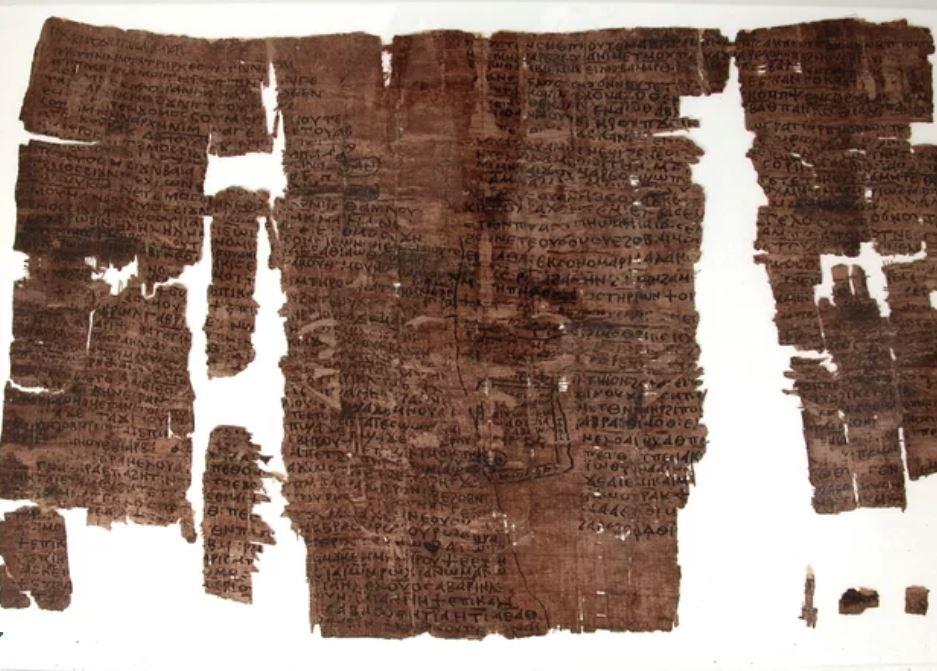
Michael Zellmann-Rohrerr, a scholar at Oxford University, discovered a new interpretation of the biblical episode of the sacrifice of Isaac in a 6th century Coptic papyrus. This is reported by Newsweek with reference to the scientific publication Zeitschrift für Ägyptische Sprache und Altertumskunde. If in the classical interpretation of the Book of Genesis God at the last moment cancels the order of the sacrifice of Isaac on Mount Moriah and replaces him with a sacrificial lamb, then in the Egyptian papyrus Abraham still sacrifices his son. An Egyptian papyrus of one and a half thousand years ago was discovered not far from the pyramid of Pharaoh Senusret I back in 1934, but it has been thoroughly deciphered only now. Who its author was is not known for certain. It is only clear that he lived in the Christian era, used the Coptic language that was widespread at that time, was a very educated person and, possibly, was an adherent of the teachings of the Gnostics. Most of the text of the manuscript is devoted to how to properly turn to God with a prayer for help. The scientific value of the discovery of the British scientist is undeniable, because it sheds light on the fact that as early as the 6th century there were various interpretations of biblical subjects, including those different from those stated in the canonical text. This allows modern scholars to look at Sacred history from a slightly different angle.
Share:
Egyptian papyrus contains an alternative version of the sacrifice described in the Bible Egyptian papyrus contains an alternative version of the sacrifice described in the Bible Michael Zellmann-Rohrerr, a scholar at Oxford University, discovered a new interpretation of the biblical episode of the sacrifice of Isaac in a 6th century Coptic papyrus. This is reported by Newsweek with reference to the scientific publication Zeitschrift für Ägyptische Sprache und Altertumskunde. If in the classical interpretation of the Book of Genesis God at the last moment cancels the order of the sacrifice of Isaac on Mount Moriah and replaces him with a sacrificial lamb, then in the Egyptian papyrus Abraham still sacrifices his son. An Egyptian papyrus of one and a half thousand years ago was discovered not far from the pyramid of Pharaoh Senusret I back in 1934, but it has been thoroughly deciphered only now. Who its author was is not known for certain. It is only clear that he lived in the Christian era, used the Coptic language that was widespread at that time, was a very educated person and, possibly, was an adherent of the teachings of the Gnostics. Most of the text of the manuscript is devoted to how to properly turn to God with a prayer for help. The scientific value of the discovery of the British scientist is undeniable, because it sheds light on the fact that as early as the 6th century there were various interpretations of biblical subjects, including those different from those stated in the canonical text. This allows modern scholars to look at Sacred history from a slightly different angle.
Michael Zellmann-Rohrerr, a scholar at Oxford University, discovered a new interpretation of the biblical episode of the sacrifice of Isaac in a 6th century Coptic papyrus. This is reported by Newsweek with reference to the scientific publication Zeitschrift für Ägyptische Sprache und Altertumskunde. If in the classical interpretation of the Book of Genesis God at the last moment cancels the order of the sacrifice of Isaac on Mount Moriah and replaces him with a sacrificial lamb, then in the Egyptian papyrus Abraham still sacrifices his son. An Egyptian papyrus of one and a half thousand years ago was discovered not far from the pyramid of Pharaoh Senusret I back in 1934, but it has been thoroughly deciphered only now. Who its author was is not known for certain. It is only clear that he lived in the Christian era, used the Coptic language that was widespread at that time, was a very educated person and, possibly, was an adherent of the teachings of the Gnostics. Most of the text of the manuscript is devoted to how to properly turn to God with a prayer for help. The scientific value of the discovery of the British scientist is undeniable, because it sheds light on the fact that as early as the 6th century there were various interpretations of biblical subjects, including those different from those stated in the canonical text. This allows modern scholars to look at Sacred history from a slightly different angle.