A half-hour drive from the Holy City there is a place that, although you cannot call a Christian shrine, is nevertheless related to the events described in the Old Testament. Direct or indirect - this is the question: the answer to it depends on from the point of view of which of the world religions to look at this place ... We are talking about the Nabi Musa complex - the place where the prophet Moses was allegedly buried. Located on the lands of the Palestinian Authority, fifteen kilometers from Jerusalem and seven from Jericho, the complex of the tomb of Nabi Musa is one of those sights of the Holy Land, to which the flow of pilgrims and tourists does not rush, but which are nevertheless connected with the events of Holy history. It is located far from the main thoroughfares of Israel, in the middle of the Judean Desert. However, before looking at it up close, let's take a short excursion into history.
The great ruler of the East, Saladin, who defeated the crusaders in 1187 and returned Jerusalem to the Muslims, was distinguished not only by his generosity, but also by unheard-of tolerance for his time. He allowed Christians to hold services and visit the Holy City on holidays. As the legend says, once in a dream the prophet Moses (Musa) appeared to Saladin - he discovered the exact the place of his burial, ordered to perpetuate it for posterity and establish an appropriate festival on the specified day. Which the defender of the faithful did with reverence. Whether this is true or not is not known for certain, but every year, when Christians flocked to Jerusalem to celebrate Easter, there were always many Muslims nearby who made their pilgrimage to Nabi Musa. Such a 'coincidence' excluded the possibility of a revolt, which the eastern rulers, due to the large Christian population in the Holy Land, naturally feared. Looking ahead, we will say that the Muslim custom of making the pilgrimage to Nabi Musa survived until the twentieth century and for security reasons was prohibited only during the British Mandate. But back to the Middle Ages. The Nabi Musa complex itself, which includes a grave, a mosque and a caravan with premises for pilgrims, appeared here a little later, already under the Mamluks, who established themselves in the Holy Land in the 13th century. The building, crowned with many domes, as in the tales of 'A Thousand and One Nights', was finally completed with the device here, as they would say today, a hospice - and in the second half of the 15th century it acquired its present appearance. Pilgrims who died during the trip were buried near the shrine - numerous Muslim graves around the complex survived to this day.
In clear sunny weather, from Nabi Musa, you can see Mount Nebo, from which, according to the Scriptures, Moses had a view of the Promised Land, soon after which he died. But where exactly the great prophet was buried is a big question: the Bible does not indicate the exact place. “And there Moses, the servant of the Lord, died in the land of Moab, according to the word of the Lord; and was buried in the valley of the Land of Moab opposite Beth-Phagoras, and no one knows the place of his burial even to this day, ”says the book of Deuteronomy (34, 5-6). Where the Moabite city of Beth Fagor was located is unknown, so the only hint from the Bible that could help localize the burial place of Moses is useless. Therefore, the followers of Judaism do not recognize the Nabi Musa complex as the tomb of Moses. However, according to their opponents, the Scripture speaks of the very area - the exact place was indicated by the prophet Moses to Saladin in a dream. And the words 'to this day' must be understood as the time when the book of Deuteronomy was written. Be that as it may, you can hardly meet the followers of Judaism in Nabi Musa, and neither do Christian pilgrims - but you may well meet European tourists who are recommended to visit this place in groups of two people, so that women at the same time have a decent to local standards, the appearance (in other words, loose clothing that covers everything except the face and hands is still a Muslim shrine). By the way, since the middle of the last century, a rehabilitation center for people undergoing drug addiction treatment has been located at Nabi Musa - but tourists who come here are unlikely to meet with its inhabitants.
As mentioned above, the heyday of Nabi Musa fell on the times of the Mamluks - namely, during the reign of their ruler Baybars. (Actually, Saladin's prophetic dream is also known from his words.) It was under Baybars that a mosque and walls were built over the gravestone of Nabi Musa, as well as a caravan for travelers. Since then, this place has long been the first stop for everyone who made the way from Jerusalem to Mecca. The fact that there was already a Christian church in the name of St. Euthymius, one of the pillars of hermitage and monastic life, did not change Baybars' intentions. He, like other Mamluk rulers, consistently uprooted the traces of any other religions in the Holy Land. However, after the fall of the Mamluk dynasty, the Nabi Musa complex began to slowly fall into desolation. The green draperies with Arabic script that adorned the grave faded, and the travelers in the deserted the caravan stopped less and less. Only at the beginning of the nineteenth century did the Turks thoroughly restore the Nabi Musa complex and appointed the influential Husseini family as its guardians. Under the Ottoman rule, the tradition of the pilgrimage procession from Jerusalem to Nabi Musa, which coincides with Christian Easter according to the Eastern calendar, was renewed. A hundred years ago, such processions numbered up to fifteen thousand people, including both Turkish officials who served in Jerusalem and ordinary Muslims, who throughout the journey were 'entertained by dancing dervishes, snake charmers, magicians and eaters of hot coals,' as he describes the picture of the multitude people going to Nabi Musa, an eyewitness of one of these pilgrimages, the English priest John Whaley.
The Turks either incited pilgrims against local Christians, then, fearing the reaction of the stronger European powers, on the contrary, kept them in check: the Ottomans were masterly able to manage a crowd of co-religionists falling into religious ecstasy. But with the fall of the Ottoman Empire and the departure of the Turks from the Holy Land, this fire burst out. In 1920, Amin Husseini, the Jerusalem mufti and guardian of Nabi Musa, appealed to the pilgrims who had gathered at the final point of the journey, with an appeal to go to Jerusalem to beat the Jews. Many of those who heard these words, armed with stones, sticks and other improvised means, rushed to the Holy City - to carry out the instructions of their spiritual leader. Thus began a series of pogroms, which peaked in 1929, when 67 Jews were killed in Hebron and hundreds of others were expelled and forced to flee. As a result, in 1937, the British colonial administration was forced to ban the annual procession in Nabi Musa. The government of Jordan later adhered to the same policy, in whose jurisdiction these places were from 1948 to 1967. Today, Muslim Arabs periodically hear calls to resume the interrupted tradition, but things go no further than joint gatherings in Nabi Musa, accompanied by shouting slogans and waving Palestinian flags.
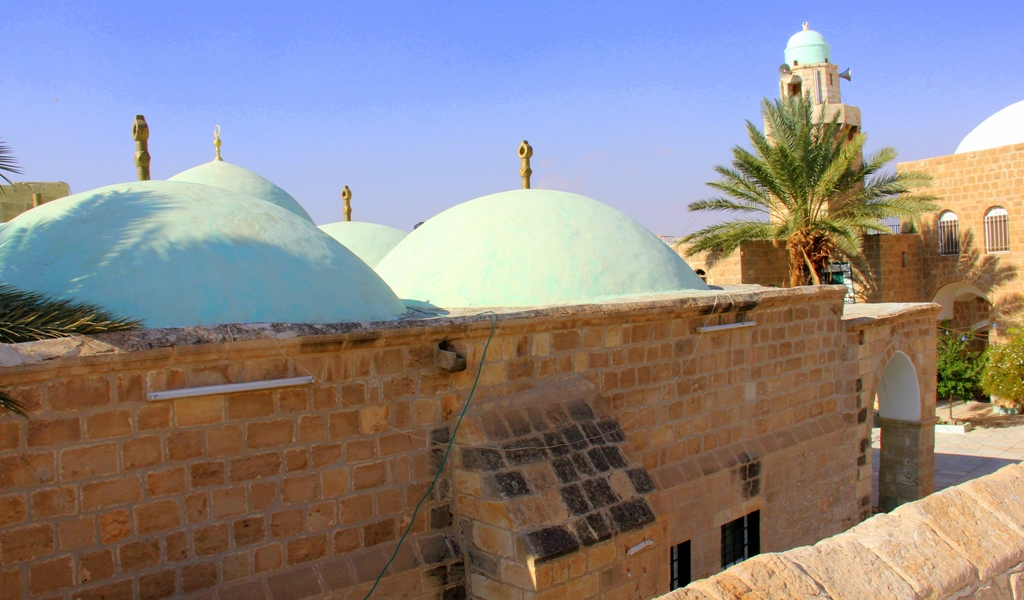
Whether the tomb of the Prophet Moses in Nabi Musa is true or not, the place itself is truly special. In the days of the Moabites, a pagan temple was located nearby. According to the ancient belief, it stood on a place that literally radiated fertility: local shepherds brought livestock here so that they would better reproduce - this custom has been preserved for many centuries and has survived to this day. The place is (again, in the Muslim interpretation, starting from the time of Baybars) now it is considered the tomb of Makam el-Roi - the father-in-law of Moses, the prince of the Midian tribe and the chief shepherd of Ytro. Another characteristic feature of this place is the abundance of rare geological rock containing bituminous shale stones, which the Bedouins attribute to supernatural properties. Locals throw them into the fire - burning, the stones turn into ash, which, as they believe, has miraculous powers. This ash from local healers goes to the production of amulets and is used for many other useful purposes. Interestingly, the shale from which it is obtained is called by the locals “the stones of Moses”. Regardless of whether you believe in the truth of the theory of the burial of Moses in Nabi Musa or not, it is still worth a visit. A cozy courtyard with two wells and many cats living here, Scheherazade-style buildings with picturesque domes of white and a pleasant shade of green, several slender palms that cast shadows on a hot day - all this, taken together, is very conducive to spending here at least a couple of hours. And who knows: maybe some of those who have come here will be able to find the answer to the riddle about the place of the true burial of Moses in their own hearts?
Nabi Musa: the alleged tomb of the prophet MosesNabi Musa: the alleged tomb of the prophet Moses A half-hour drive from the Holy City there is a place that, although you cannot call a Christian shrine, is nevertheless related to the events described in the Old Testament. Direct or indirect - this is the question: the answer to it depends on from the point of view of which of the world religions to look at this place ... We are talking about the Nabi Musa complex - the place where the prophet Moses was allegedly buried. Located on the lands of the Palestinian Authority, fifteen kilometers from Jerusalem and seven from Jericho, the complex of the tomb of Nabi Musa is one of those sights of the Holy Land, to which the flow of pilgrims and tourists does not rush, but which are nevertheless connected with the events of Holy history. It is located far from the main thoroughfares of Israel, in the middle of the Judean Desert. However, before looking at it up close, let's take a short excursion into history. The great ruler of the East, Saladin, who defeated the crusaders in 1187 and returned Jerusalem to the Muslims, was distinguished not only by his generosity, but also by unheard-of tolerance for his time. He allowed Christians to hold services and visit the Holy City on holidays. As the legend says, once in a dream the prophet Moses (Musa) appeared to Saladin - he discovered the exact the place of his burial, ordered to perpetuate it for posterity and establish an appropriate festival on the specified day. Which the defender of the faithful did with reverence. Whether this is true or not is not known for certain, but every year, when Christians flocked to Jerusalem to celebrate Easter, there were always many Muslims nearby who made their pilgrimage to Nabi Musa. Such a 'coincidence' excluded the possibility of a revolt, which the eastern rulers, due to the large Christian population in the Holy Land, naturally feared. Looking ahead, we will say that the Muslim custom of making the pilgrimage to Nabi Musa survived until the twentieth century and for security reasons was prohibited only during the British Mandate. But back to the Middle Ages. The Nabi Musa complex itself, which includes a grave, a mosque and a caravan with premises for pilgrims, appeared here a little later, already under the Mamluks, who established themselves in the Holy Land in the 13th century. The building, crowned with many domes, as in the tales of 'A Thousand and One Nights', was finally completed with the device here, as they would say today, a hospice - and in the second half of the 15th century it acquired its present appearance. Pilgrims who died during the trip were buried near the shrine - numerous Muslim graves around the complex survived to this day. In clear sunny weather, from Nabi Musa, you can see Mount Nebo, from which, according to the Scriptures, Moses had a view of the Promised Land, soon after which he died. But where exactly the great prophet was buried is a big question: the Bible does not indicate the exact place. “And there Moses, the servant of the Lord, died in the land of Moab, according to the word of the Lord; and was buried in the valley of the Land of Moab opposite Beth-Phagoras, and no one knows the place of his burial even to this day, ”says the book of Deuteronomy (34, 5-6). Where the Moabite city of Beth Fagor was located is unknown, so the only hint from the Bible that could help localize the burial place of Moses is useless. Therefore, the followers of Judaism do not recognize the Nabi Musa complex as the tomb of Moses. However, according to their opponents, the Scripture speaks of the very area - the exact place was indicated by the prophet Moses to Saladin in a dream. And the words 'to this day' must be understood as the time when the book of Deuteronomy was written. Be that as it may, you can hardly meet the followers of Judaism in Nabi Musa, and neither do Christian pilgrims - but you may well meet European tourists who are recommended to visit this place in groups of two people, so that women at the same time have a decent to local standards, the appearance (in other words, loose clothing that covers everything except the face and hands is still a Muslim shrine). By the way, since the middle of the last century, a rehabilitation center for people undergoing drug addiction treatment has been located at Nabi Musa - but tourists who come here are unlikely to meet with its inhabitants. As mentioned above, the heyday of Nabi Musa fell on the times of the Mamluks - namely, during the reign of their ruler Baybars. (Actually, Saladin's prophetic dream is also known from his words.) It was under Baybars that a mosque and walls were built over the gravestone of Nabi Musa, as well as a caravan for travelers. Since then, this place has long been the first stop for everyone who made the way from Jerusalem to Mecca. The fact that there was already a Christian church in the name of St. Euthymius, one of the pillars of hermitage and monastic life, did not change Baybars' intentions. He, like other Mamluk rulers, consistently uprooted the traces of any other religions in the Holy Land. However, after the fall of the Mamluk dynasty, the Nabi Musa complex began to slowly fall into desolation. The green draperies with Arabic script that adorned the grave faded, and the travelers in the deserted the caravan stopped less and less. Only at the beginning of the nineteenth century did the Turks thoroughly restore the Nabi Musa complex and appointed the influential Husseini family as its guardians. Under the Ottoman rule, the tradition of the pilgrimage procession from Jerusalem to Nabi Musa, which coincides with Christian Easter according to the Eastern calendar, was renewed. A hundred years ago, such processions numbered up to fifteen thousand people, including both Turkish officials who served in Jerusalem and ordinary Muslims, who throughout the journey were 'entertained by dancing dervishes, snake charmers, magicians and eaters of hot coals,' as he describes the picture of the multitude people going to Nabi Musa, an eyewitness of one of these pilgrimages, the English priest John Whaley. The Turks either incited pilgrims against local Christians, then, fearing the reaction of the stronger European powers, on the contrary, kept them in check: the Ottomans were masterly able to manage a crowd of co-religionists falling into religious ecstasy. But with the fall of the Ottoman Empire and the departure of the Turks from the Holy Land, this fire burst out. In 1920, Amin Husseini, the Jerusalem mufti and guardian of Nabi Musa, appealed to the pilgrims who had gathered at the final point of the journey, with an appeal to go to Jerusalem to beat the Jews. Many of those who heard these words, armed with stones, sticks and other improvised means, rushed to the Holy City - to carry out the instructions of their spiritual leader. Thus began a series of pogroms, which peaked in 1929, when 67 Jews were killed in Hebron and hundreds of others were expelled and forced to flee. As a result, in 1937, the British colonial administration was forced to ban the annual procession in Nabi Musa. The government of Jordan later adhered to the same policy, in whose jurisdiction these places were from 1948 to 1967. Today, Muslim Arabs periodically hear calls to resume the interrupted tradition, but things go no further than joint gatherings in Nabi Musa, accompanied by shouting slogans and waving Palestinian flags. Whether the tomb of the Prophet Moses in Nabi Musa is true or not, the place itself is truly special. In the days of the Moabites, a pagan temple was located nearby. According to the ancient belief, it stood on a place that literally radiated fertility: local shepherds brought livestock here so that they would better reproduce - this custom has been preserved for many centuries and has survived to this day. The place is (again, in the Muslim interpretation, starting from the time of Baybars) now it is considered the tomb of Makam el-Roi - the father-in-law of Moses, the prince of the Midian tribe and the chief shepherd of Ytro. Another characteristic feature of this place is the abundance of rare geological rock containing bituminous shale stones, which the Bedouins attribute to supernatural properties. Locals throw them into the fire - burning, the stones turn into ash, which, as they believe, has miraculous powers. This ash from local healers goes to the production of amulets and is used for many other useful purposes. Interestingly, the shale from which it is obtained is called by the locals “the stones of Moses”. Regardless of whether you believe in the truth of the theory of the burial of Moses in Nabi Musa or not, it is still worth a visit. A cozy courtyard with two wells and many cats living here, Scheherazade-style buildings with picturesque domes of white and a pleasant shade of green, several slender palms that cast shadows on a hot day - all this, taken together, is very conducive to spending here at least a couple of hours. And who knows: maybe some of those who have come here will be able to find the answer to the riddle about the place of the true burial of Moses in their own hearts?Свеча Иерусалима -en
A half-hour drive from the Holy City there is a place that, although you cannot call a Christian shrine, is nevertheless related to the events described in the Old Testament. Direct or indirect - this is the question: the answer to it depends on from the point of view of which of the world religions to look at this place ... We are talking about the Nabi Musa complex - the place where the prophet Moses was allegedly buried. Located on the lands of the Palestinian Authority, fifteen kilometers from Jerusalem and seven from Jericho, the complex of the tomb of Nabi Musa is one of those sights of the Holy Land, to which the flow of pilgrims and tourists does not rush, but which are nevertheless connected with the events of Holy history. It is located far from the main thoroughfares of Israel, in the middle of the Judean Desert. However, before looking at it up close, let's take a short excursion into history. The great ruler of the East, Saladin, who defeated the crusaders in 1187 and returned Jerusalem to the Muslims, was distinguished not only by his generosity, but also by unheard-of tolerance for his time. He allowed Christians to hold services and visit the Holy City on holidays. As the legend says, once in a dream the prophet Moses (Musa) appeared to Saladin - he discovered the exact the place of his burial, ordered to perpetuate it for posterity and establish an appropriate festival on the specified day. Which the defender of the faithful did with reverence. Whether this is true or not is not known for certain, but every year, when Christians flocked to Jerusalem to celebrate Easter, there were always many Muslims nearby who made their pilgrimage to Nabi Musa. Such a 'coincidence' excluded the possibility of a revolt, which the eastern rulers, due to the large Christian population in the Holy Land, naturally feared. Looking ahead, we will say that the Muslim custom of making the pilgrimage to Nabi Musa survived until the twentieth century and for security reasons was prohibited only during the British Mandate. But back to the Middle Ages. The Nabi Musa complex itself, which includes a grave, a mosque and a caravan with premises for pilgrims, appeared here a little later, already under the Mamluks, who established themselves in the Holy Land in the 13th century. The building, crowned with many domes, as in the tales of 'A Thousand and One Nights', was finally completed with the device here, as they would say today, a hospice - and in the second half of the 15th century it acquired its present appearance. Pilgrims who died during the trip were buried near the shrine - numerous Muslim graves around the complex survived to this day. In clear sunny weather, from Nabi Musa, you can see Mount Nebo, from which, according to the Scriptures, Moses had a view of the Promised Land, soon after which he died. But where exactly the great prophet was buried is a big question: the Bible does not indicate the exact place. “And there Moses, the servant of the Lord, died in the land of Moab, according to the word of the Lord; and was buried in the valley of the Land of Moab opposite Beth-Phagoras, and no one knows the place of his burial even to this day, ”says the book of Deuteronomy (34, 5-6). Where the Moabite city of Beth Fagor was located is unknown, so the only hint from the Bible that could help localize the burial place of Moses is useless. Therefore, the followers of Judaism do not recognize the Nabi Musa complex as the tomb of Moses. However, according to their opponents, the Scripture speaks of the very area - the exact place was indicated by the prophet Moses to Saladin in a dream. And the words 'to this day' must be understood as the time when the book of Deuteronomy was written. Be that as it may, you can hardly meet the followers of Judaism in Nabi Musa, and neither do Christian pilgrims - but you may well meet European tourists who are recommended to visit this place in groups of two people, so that women at the same time have a decent to local standards, the appearance (in other words, loose clothing that covers everything except the face and hands is still a Muslim shrine). By the way, since the middle of the last century, a rehabilitation center for people undergoing drug addiction treatment has been located at Nabi Musa - but tourists who come here are unlikely to meet with its inhabitants. As mentioned above, the heyday of Nabi Musa fell on the times of the Mamluks - namely, during the reign of their ruler Baybars. (Actually, Saladin's prophetic dream is also known from his words.) It was under Baybars that a mosque and walls were built over the gravestone of Nabi Musa, as well as a caravan for travelers. Since then, this place has long been the first stop for everyone who made the way from Jerusalem to Mecca. The fact that there was already a Christian church in the name of St. Euthymius, one of the pillars of hermitage and monastic life, did not change Baybars' intentions. He, like other Mamluk rulers, consistently uprooted the traces of any other religions in the Holy Land. However, after the fall of the Mamluk dynasty, the Nabi Musa complex began to slowly fall into desolation. The green draperies with Arabic script that adorned the grave faded, and the travelers in the deserted the caravan stopped less and less. Only at the beginning of the nineteenth century did the Turks thoroughly restore the Nabi Musa complex and appointed the influential Husseini family as its guardians. Under the Ottoman rule, the tradition of the pilgrimage procession from Jerusalem to Nabi Musa, which coincides with Christian Easter according to the Eastern calendar, was renewed. A hundred years ago, such processions numbered up to fifteen thousand people, including both Turkish officials who served in Jerusalem and ordinary Muslims, who throughout the journey were 'entertained by dancing dervishes, snake charmers, magicians and eaters of hot coals,' as he describes the picture of the multitude people going to Nabi Musa, an eyewitness of one of these pilgrimages, the English priest John Whaley. The Turks either incited pilgrims against local Christians, then, fearing the reaction of the stronger European powers, on the contrary, kept them in check: the Ottomans were masterly able to manage a crowd of co-religionists falling into religious ecstasy. But with the fall of the Ottoman Empire and the departure of the Turks from the Holy Land, this fire burst out. In 1920, Amin Husseini, the Jerusalem mufti and guardian of Nabi Musa, appealed to the pilgrims who had gathered at the final point of the journey, with an appeal to go to Jerusalem to beat the Jews. Many of those who heard these words, armed with stones, sticks and other improvised means, rushed to the Holy City - to carry out the instructions of their spiritual leader. Thus began a series of pogroms, which peaked in 1929, when 67 Jews were killed in Hebron and hundreds of others were expelled and forced to flee. As a result, in 1937, the British colonial administration was forced to ban the annual procession in Nabi Musa. The government of Jordan later adhered to the same policy, in whose jurisdiction these places were from 1948 to 1967. Today, Muslim Arabs periodically hear calls to resume the interrupted tradition, but things go no further than joint gatherings in Nabi Musa, accompanied by shouting slogans and waving Palestinian flags. Whether the tomb of the Prophet Moses in Nabi Musa is true or not, the place itself is truly special. In the days of the Moabites, a pagan temple was located nearby. According to the ancient belief, it stood on a place that literally radiated fertility: local shepherds brought livestock here so that they would better reproduce - this custom has been preserved for many centuries and has survived to this day. The place is (again, in the Muslim interpretation, starting from the time of Baybars) now it is considered the tomb of Makam el-Roi - the father-in-law of Moses, the prince of the Midian tribe and the chief shepherd of Ytro. Another characteristic feature of this place is the abundance of rare geological rock containing bituminous shale stones, which the Bedouins attribute to supernatural properties. Locals throw them into the fire - burning, the stones turn into ash, which, as they believe, has miraculous powers. This ash from local healers goes to the production of amulets and is used for many other useful purposes. Interestingly, the shale from which it is obtained is called by the locals “the stones of Moses”. Regardless of whether you believe in the truth of the theory of the burial of Moses in Nabi Musa or not, it is still worth a visit. A cozy courtyard with two wells and many cats living here, Scheherazade-style buildings with picturesque domes of white and a pleasant shade of green, several slender palms that cast shadows on a hot day - all this, taken together, is very conducive to spending here at least a couple of hours. And who knows: maybe some of those who have come here will be able to find the answer to the riddle about the place of the true burial of Moses in their own hearts?