Perhaps, in the entire Middle East region there is no other religious building as large as this: a monastery in the depths of Mount Mukattam can accommodate up to twenty thousand people! And yet, its main feature is not in size: the walls and ceiling for the holy monastery belonging to the Coptic Church are the vaults of a huge cave. About the monastery of St. Simeon the Shoemaker or the Tanner (St. Simon the Tanner) it would not be entirely correct to say 'built': the word 'arranged' is more appropriate in this case. Although the facade of the building is the creation of human hands, most of the monastery is hidden in the thickness of the rock, located in a cave of grandiose dimensions and several others, smaller. All this miracle was arranged by the Zabbalins - a social group in Egypt engaged in the collection and disposal of garbage. The area they occupy in the Egyptian capital is called the City of Scavengers.
Although Egypt is a Muslim country, its indigenous population, Copts are descendants of the ancient Egyptians, most of them are Christians. And the Coptic Church is one of the ancient Eastern churches; strictly speaking, chronologically she is the first of them. After all, it was the Egyptians who were the first to accept Christianity as a whole, as a people: the image of the Risen God, the cult of the Mother and Her Divine Child - all this echoed with their ancients beliefs and in many ways was understandable and close to them. However, after the conquest of Egypt by the Muslim Arabs, the indigenous Egyptians became a minority in their country, both national and religious, deprived of their rights and often persecuted. This is how things stand today, and this was also the case in the 10th century, when the great Christian ascetic, Simeon the Shoemaker, lived in Egypt. For his faith and righteousness, he was marked by many gifts from the Lord, and among others, the gift of working miracles. As the legend tells, once the ruler of Egypt, Khalif-al-Muitz, gathered the spiritual leaders of the country, let's say, for a theological discussion (of course, the way the ruler understood it). Among those invited was the Coptic patriarch Abraham, who at a certain point in the dispute began to prevail over him. At that moment, one of those present quoted the words from the Gospel of the holy Apostle Matthew: “Truly I say to you: if you have faith the size of a mustard seed and say to this mountain:“ go from here to there, ”and it will go over” (Matthew 17:20 ).
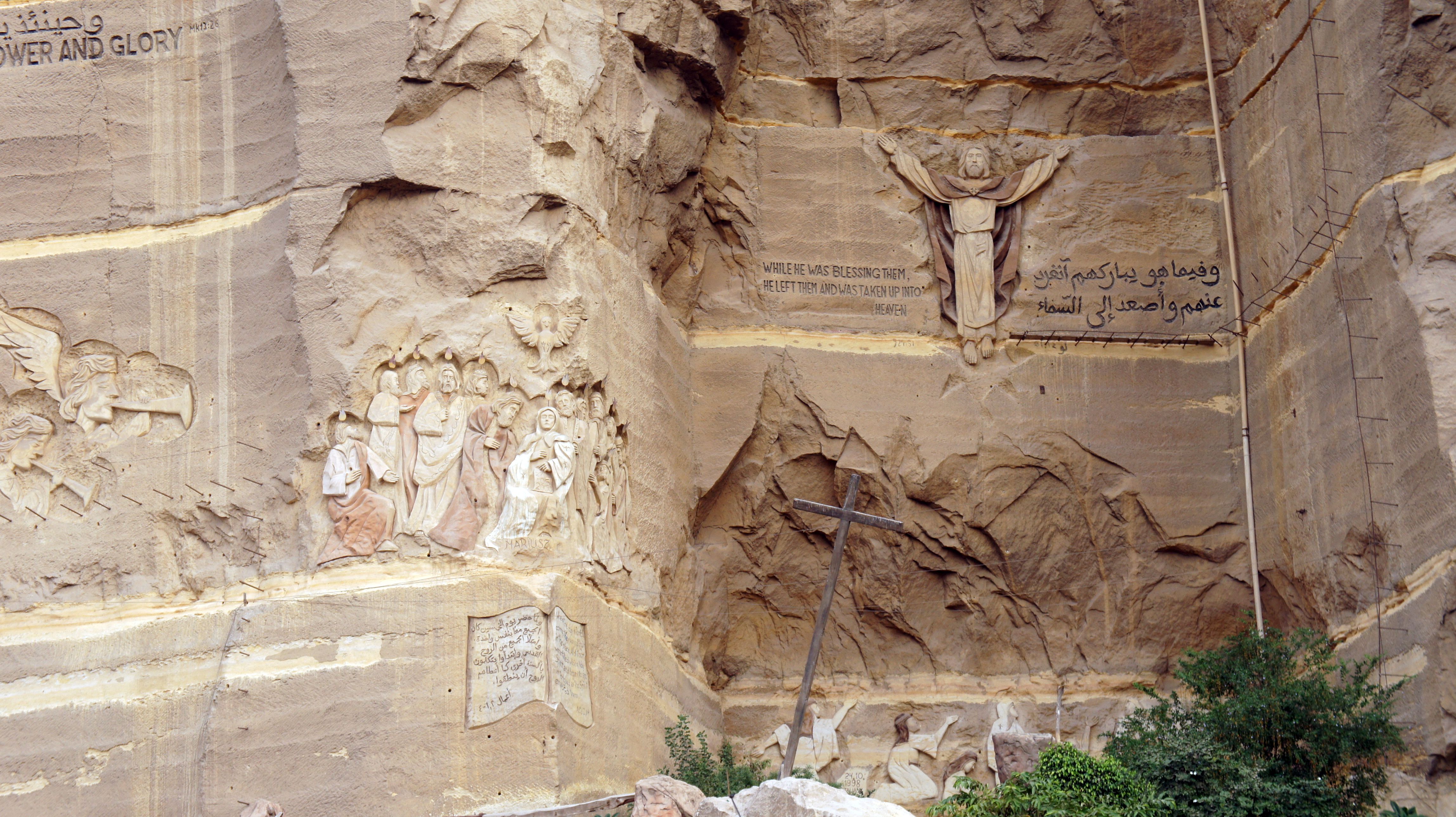
The Caliph, clinging to the quote like a straw in a dispute unfavorable for him, demanded from the patriarch to prove the truth of his religion, fulfilling what was said literally; otherwise, he added, all Copts would be killed by the sword. That would have ended the theological dispute on Muslim way, do not come to the aid of Abraham Simeon the Shoemaker. He led the caliph, patriarch and other participants in the discussion into the mountains. There he told Abraham to shout three times 'Lord, have mercy!', Each time making the sign of the cross over the mountain. When the Coptic patriarch fulfilled what was said, a miracle happened: the mountain moved from one place to another. When the amazement of those present had passed, the caliph turned with Simeon, he had already disappeared. Saint Simeon is jealously venerated by the Copts, including the Zabbelin scavengers who moved to the capital of the country from Upper Egypt in the forties of the last century. They began to breed goats and chickens, as in their former place of residence, but it turned out to be unprofitable. Then they began to collect garbage from the townspeople, including food waste. The latter, after sorting, went to feed the animals, the rest was burned, and the remains were buried. The non-prestigious business soon began to bring in a good income. The Zabbalins, who previously hid from the local authorities (in 1970 they were evicted from Giza) and did not build houses for themselves, felt much more confident when they moved closer to Mount Mukattam - the same one that the Lord once moved from place to place through the prayer of the Coptic patriarch .. . The number of 'scavengers' began to grow: if in the eighties of the last century there were no more than eight thousand, today - more than thirty. The Zabbalins began to build brick houses for themselves - and in 1975 they also built their own temple. True, it burned down during a fire. Then, at the foot of Mount Mukattam, the Zabbalins built a new one, in the name of Saint Simeon the Shoemaker, with an area of one thousand square meters. And they set up several smaller ones in the caves. All of them are combined into a grandiose monastery complex, which is visited not only by Coptic pilgrims, but also thousands of people from all over the world. Bas-reliefs of the Nativity of Christ, the travels of the Holy Family to Egypt and other topics understandable to any Christian are carved right in the rock at the entrance to the temple. They were made by the Polish artist Mario, who thus gave the facade of the temple a unique look. Like the frontal annex with two high bell towers, the local bas-reliefs are a kind of visiting card of the monastery. By the way, Mario continues to work in the monastery of St. Simeon the Shoemaker in our time.
The relics of the patron saint, in whose name the main temple of the monastery complex was consecrated, found incorruptible in 1991 in one of the Cairo temples, now rest in the altar. Around it, in a quarter of a circle, there are seats that can simultaneously accommodate up to five thousand people. In order for the services to take place comfortable and accessible for all who came, the temple is equipped with powerful fans, sound speakers and huge screens on which everything that happens during the service of the clergy is broadcast. Here, in the main church, whose inner space is organized more like an organ hall, from time to time grandiose concerts of sacred music are held.
On the upper tier is the St. Simeon Hall, which is used for spiritual festivities and solemn gatherings. Its capacity is two thousand people. The walls of the meeting room are decorated with biblical scenes carved into the rock. The icons of bright and peculiar writing, arranged vertically, are placed in wooden frames in the form of an arch with a pointed top.
In addition to the main temple in the monastery complex, there are six others, smaller in size. The largest of them are consecrated in the name of the Mother of God and the holy Apostle Mark, who brought the light of the Christian faith to the ancient land of Egypt.
In the life of the Zabbelin quarter - the City of Scavengers - the monastery of St. Simeon the Shoemaker plays not only a spiritual, but also an important social role. A school and a kindergarten are located on its territory. And in addition, there is also a charitable organization that provides support to Christian Copts, helping them to find material stable - and if you're lucky, prosperity. There are many such examples in the life of the local Christian community. For example, a wealthy Coptic family is the main trustee of the monastery complex.
Although Egypt is a Muslim country, its indigenous population, Copts are descendants of the ancient Egyptians, most of them are Christians. And the Coptic Church is one of the ancient Eastern churches; strictly speaking, chronologically she is the first of them. After all, it was the Egyptians who were the first to accept Christianity as a whole, as a people: the image of the Risen God, the cult of the Mother and Her Divine Child - all this echoed with their ancients beliefs and in many ways was understandable and close to them. However, after the conquest of Egypt by the Muslim Arabs, the indigenous Egyptians became a minority in their country, both national and religious, deprived of their rights and often persecuted. This is how things stand today, and this was also the case in the 10th century, when the great Christian ascetic, Simeon the Shoemaker, lived in Egypt. For his faith and righteousness, he was marked by many gifts from the Lord, and among others, the gift of working miracles. As the legend tells, once the ruler of Egypt, Khalif-al-Muitz, gathered the spiritual leaders of the country, let's say, for a theological discussion (of course, the way the ruler understood it). Among those invited was the Coptic patriarch Abraham, who at a certain point in the dispute began to prevail over him. At that moment, one of those present quoted the words from the Gospel of the holy Apostle Matthew: “Truly I say to you: if you have faith the size of a mustard seed and say to this mountain:“ go from here to there, ”and it will go over” (Matthew 17:20 ).
The Caliph, clinging to the quote like a straw in a dispute unfavorable for him, demanded from the patriarch to prove the truth of his religion, fulfilling what was said literally; otherwise, he added, all Copts would be killed by the sword. That would have ended the theological dispute on Muslim way, do not come to the aid of Abraham Simeon the Shoemaker. He led the caliph, patriarch and other participants in the discussion into the mountains. There he told Abraham to shout three times 'Lord, have mercy!', Each time making the sign of the cross over the mountain. When the Coptic patriarch fulfilled what was said, a miracle happened: the mountain moved from one place to another. When the amazement of those present had passed, the caliph turned with Simeon, he had already disappeared. Saint Simeon is jealously venerated by the Copts, including the Zabbelin scavengers who moved to the capital of the country from Upper Egypt in the forties of the last century. They began to breed goats and chickens, as in their former place of residence, but it turned out to be unprofitable. Then they began to collect garbage from the townspeople, including food waste. The latter, after sorting, went to feed the animals, the rest was burned, and the remains were buried. The non-prestigious business soon began to bring in a good income. The Zabbalins, who previously hid from the local authorities (in 1970 they were evicted from Giza) and did not build houses for themselves, felt much more confident when they moved closer to Mount Mukattam - the same one that the Lord once moved from place to place through the prayer of the Coptic patriarch .. . The number of 'scavengers' began to grow: if in the eighties of the last century there were no more than eight thousand, today - more than thirty. The Zabbalins began to build brick houses for themselves - and in 1975 they also built their own temple. True, it burned down during a fire. Then, at the foot of Mount Mukattam, the Zabbalins built a new one, in the name of Saint Simeon the Shoemaker, with an area of one thousand square meters. And they set up several smaller ones in the caves. All of them are combined into a grandiose monastery complex, which is visited not only by Coptic pilgrims, but also thousands of people from all over the world. Bas-reliefs of the Nativity of Christ, the travels of the Holy Family to Egypt and other topics understandable to any Christian are carved right in the rock at the entrance to the temple. They were made by the Polish artist Mario, who thus gave the facade of the temple a unique look. Like the frontal annex with two high bell towers, the local bas-reliefs are a kind of visiting card of the monastery. By the way, Mario continues to work in the monastery of St. Simeon the Shoemaker in our time.
The relics of the patron saint, in whose name the main temple of the monastery complex was consecrated, found incorruptible in 1991 in one of the Cairo temples, now rest in the altar. Around it, in a quarter of a circle, there are seats that can simultaneously accommodate up to five thousand people. In order for the services to take place comfortable and accessible for all who came, the temple is equipped with powerful fans, sound speakers and huge screens on which everything that happens during the service of the clergy is broadcast. Here, in the main church, whose inner space is organized more like an organ hall, from time to time grandiose concerts of sacred music are held.
On the upper tier is the St. Simeon Hall, which is used for spiritual festivities and solemn gatherings. Its capacity is two thousand people. The walls of the meeting room are decorated with biblical scenes carved into the rock. The icons of bright and peculiar writing, arranged vertically, are placed in wooden frames in the form of an arch with a pointed top.
In addition to the main temple in the monastery complex, there are six others, smaller in size. The largest of them are consecrated in the name of the Mother of God and the holy Apostle Mark, who brought the light of the Christian faith to the ancient land of Egypt.
In the life of the Zabbelin quarter - the City of Scavengers - the monastery of St. Simeon the Shoemaker plays not only a spiritual, but also an important social role. A school and a kindergarten are located on its territory. And in addition, there is also a charitable organization that provides support to Christian Copts, helping them to find material stable - and if you're lucky, prosperity. There are many such examples in the life of the local Christian community. For example, a wealthy Coptic family is the main trustee of the monastery complex.
Share: