Among the items that pilgrims and tourists bring from the Holy Land, along with pectoral crosses, incense and damask silk scarves, there are traditionally many icons. Which is completely understandable: it is absurd if only trinkets remain in memory from visiting the main shrines of the Christian world! But what kind of icons are best to bring for yourself and your loved ones from a spiritual journey to Jerusalem, Bethlehem or Nazareth? Let's figure it out. If you are looking for a specific icon in the Holy Land, everything mentioned below is unlikely to be useful to you; here everything is simple - you either find it or not. Well, if you are faced with a choice, and you simply do not have enough information about what exactly is more expedient to bring home from a trip, then this small article is for you. So, speaking very briefly, it is best to acquire an icon associated with the Holy Land - either an image that is difficult or impossible to find in your homeland. Sometimes, however, these two conditions coincide. The third option is a holy image, which is widely known, but in an unusual design. However, let's move from generalizations to specifics and consider several icons that correspond to the listed features.
family prayer
Icon of the Holy Family. Holy Family. The talk that this icon is exclusively Catholic is nothing more than a fiction. This image was originally created by Byzantine icon painters. And after that it spread throughout the baptized world - somewhere more, somewhere less. For example, it is very rare to meet him in Russia. What this is connected with is not completely clear; perhaps because the figure of Joseph the Betrothed is not so revered in our country - the Russian Church remembers this saint only on the first Sunday after Christmas, on the same day with the king and prophet David and the apostle James, the brother of the Lord. There are different writing options for the Sagrada Familia icon. The most famous of them is the one on which the young Savior raises his hand in a gesture of blessing, and behind him the Mother of God and the righteous Joseph the Betrothed bow reverently. This image is filled with a deep meaning of family unity, the feeling of which many people carry throughout their lives, drawing strength from it. Before the image of the Holy Family, Christians pray for peace and understanding in the family, for the preservation of the home, the safety and well-being of children and all relatives. By the way, a version of this icon depicting the Ever-Virgin Mary, Saint Joseph and the youth of Christ, stretching out both hands in blessing, is also common in the Holy Land and is an exact copy of the original Byzantine image.
icons of the savior jesus christ icon of jesus christ
Savior Almighty Savior Almighty (Pantokrator) . This is one of the most famous icons in Orthodoxy - in Russia you rarely find a church where the image of the Savior in Forces would not be present under the dome or in the iconostasis. And yet there are variants of writing this icon, which are more common in the Holy Land or in Greece than in other countries; among them - 'Soul Savior' (Psychososter) and 'Merciful' (Eleemon). The earliest images of this type are found in the Roman catacombs and date back to the 3rd-4th centuries. In Byzantium, the image of the Savior at the age when he came out to preach, sitting on the throne with his hand raised in a gesture of blessing, was developed in the 4th-6th centuries. The icon known as the 'Savior of Manuil' was written by the Byzantine emperor Manuel the First - on it the Savior points with his folded hand in a special gesture to the Holy Gospel. In other versions of the icon, Christ is surrounded by a host of heavenly hosts. Since the icon of the Savior the Almighty in church history has become a symbol of victory over the heresy of iconoclasm, believers pray before her for deliverance from schisms, spiritual delusions and empty debates on the topic of faith. But, of course, not only about that. Before the icon of the Almighty Savior, they pray to avoid sinful thoughts, spiritual and physical trauma; ask Him for protection from troubles, disappointments and deception. At home, this holy image contributes to the establishment of harmony and peace, the preservation of the family and mutual understanding between the family. Spas the true Vine. This rather rare, and, at the same time, having many variants of writing, the image has been known since a relatively late time - namely, from the 15th century. In the version in which this icon is most often found in the Holy Land, the Savior is depicted against the background of a tree trunk, and the holy apostles are depicted on the branches extending from it. The symbolism of this image goes back to the Gospel text, in which the Savior likens Himself to a vine, the Heavenly Father to a vine-grower, and wine to His own blood. In the Greek tradition, this icon is called Ampelos, which literally means 'vine'. There is even a special kind of pectoral cross with an ornate ornament in the form of a grape cross sprouting from the tree, which is called the 'Crucifixion of the Prosperous Cross'. There is a version of this icon in which the vine grows from the body of the Savior, and from one ripe bunches He squeezes the juice into a bowl; the inscription 'Drink from her all' clearly refers to the sacrament of the Sacrament.
symbol of faith prayer nicholas the miracle worker prayer
Set with the icon of the True Vine of the Savior Another famous image of the “ Tree of Life ” ascends to the icon “The Savior Vine of Life”, in the center of which is the Savior, and on the branches, along with the apostles, the Mother of God, John the Baptist and other saints. The branches of a tree, shoots and leaves allegorically designate people united with Christ and the saints into one Church. Before the icon 'Savior Vine True' and other holy images that originate from it, prayers are offered for deliverance from fear and oppressive thoughts, for deliverance from evil wishes, enemies and enemies, as well as for good health, strengthening in faith and peace of mind, and about the multiplication of kind, sincere thoughts, words and deeds. In addition, this is a family icon: in front of it they pray for well-being in the family, for the health and peace of mind of all household members.
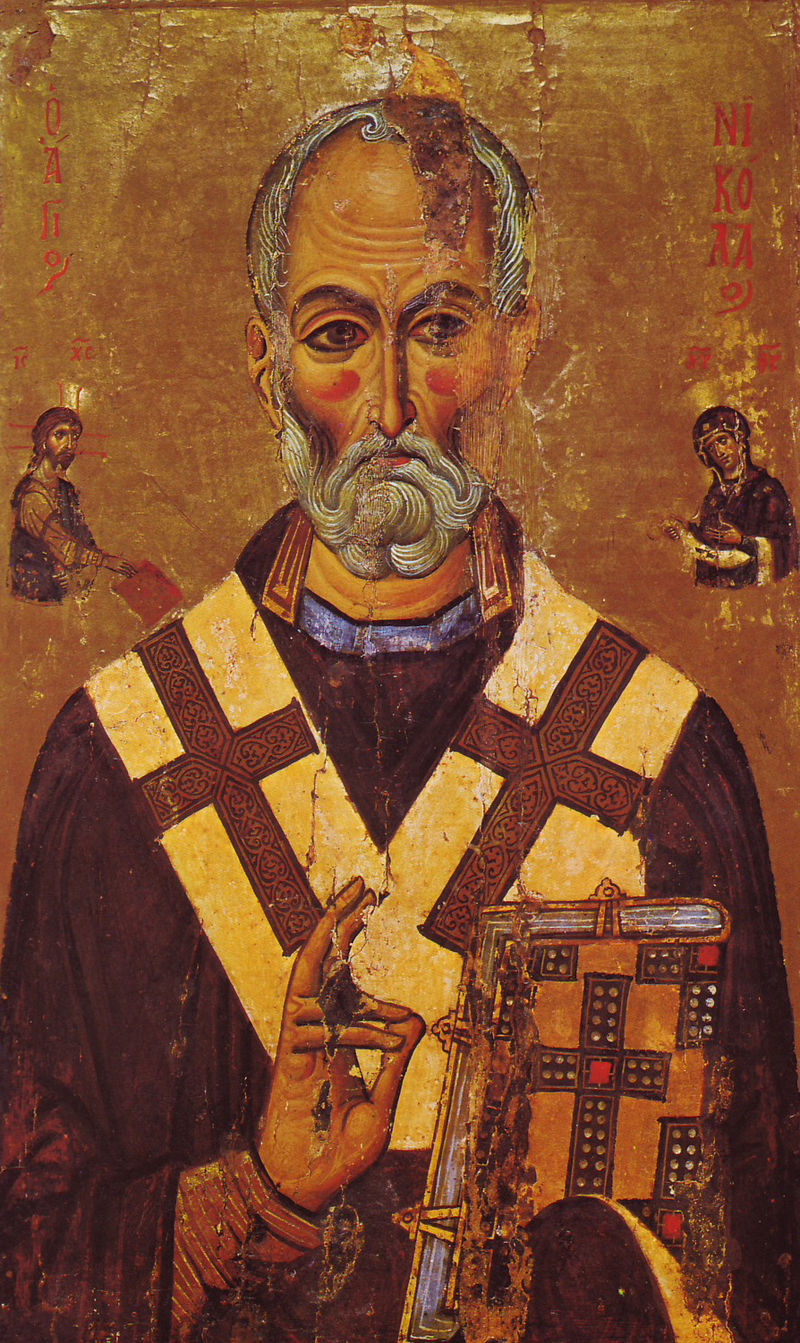
Nicholas the Wonderworker. Icon from the monastery of St. Catherine, XIII century St. Nicholas the Wonderworker . This one of the most revered Christians of the saints of God spent three years in Palestine: visiting holy places, spending time in solitary prayer and spiritual meditation, and, of course, helping people. A priceless relic is kept in the funds of the Jerusalem Patriarchate: a scroll with a text written by the hand of Nicholas the Wonderworker; the holy saint also devoted a lot of time to spiritual writings. There is a town of Beit Jala on the territory of the Palestinian Authority. It stands in the very place where Saint Nicholas once lived - the locals, most of whom are Christian Arabs, consider him their heavenly patron and hold an annual festival in his honor, bringing together zealots of the saint of God from all over the world. You can read more about this amazing place and the stories of the yoke of the inhabitants in the article posted on the website 'The Jerusalem Candle'. Saint Nicholas is known as a firm defender of the Orthodox doctrine - and as a secret benefactor, whose actions saved many people from death, shame, hunger and disease. After the death of the saint, the miracles manifested by the Lord through his ascetic multiplied many times over. With faith, those who flowed to the relics of the saint of God received what they needed: the oppressed - protection, suffering from ailments - recovery, travelers - a peaceful way and a safe arrival. And today examples of help given Nicholas the Wonderworker, no less than five hundred, one thousand or one and a half thousand years ago. To the pleasing of God Nicholas, modern Christians pray, asking for protection in travel, assistance in business, avoidance of disasters and hunger - and according to their faith they receive what they ask for.
Jerusalem icon of the Mother of God
Icon of the Mother of God 'Jerusalem'. Jerusalem icon of the Mother of God. This image, revered by Christians all over the world, was painted by the Apostle and Evangelist Luke fifteen years after the Ascension of the Lord. In total, the brush of the first Christian icon painter belongs to seventy icons of the Mother of God (three of them were painted during her lifetime), Jerusalem among them is one of the most famous and highly revered. For a long time, this image was the main shrine of the Jerusalem community of Christians. During its centuries-old history, the icon was for a long time in Constantinople, Novgorod the Great, Moscow - and everywhere its stay was marked by healings of diseases and other miraculous events. During the Patriotic War of 1812, the Jerusalem icon disappeared without a trace - according to some sources, it is secretly kept in the Notre Dame Cathedral to this day. It is known a lot honored lists in this image, also possessing especially grace-filled power. Before the icon of the Mother of God 'Jerusalem' they pray in anxiety, grief or despondency. Prayers are raised before her for the preservation of the family hearth, for help in conceiving a child, for healing from mental ailments, and also going on a journey. Addressing the Ever-Virgin Mary with requests for family well-being, the akathist to the Jerusalem Icon of the Mother of God is read in front of the venerated image.
icon of the mother of god of bethlehem icon of bethlehem prayer of the mother of god
The Bethlehem icon of the Mother of God The Bethlehem icon of the Mother of God . This icon is known to believers as the only image on which the Ever-Virgin smiles. It was also written by the holy Apostle Luke - and, as they believe, most reliably conveys exactly how the Mother of God looked during her lifetime. The original of the Icon of Bethlehem resides in the Basilica of the Nativity of Christ in Bethlehem, at the very place where the Savior of the world was born. To return to the Holy Land, this icon has come a long way, thousands and thousands of kilometers long and many centuries long. For a long time she was in Constantinople, where her stay was marked by many miraculous events. Then the holy image was transported by sea to Korsun and transferred to the future baptist of Russia, the Kiev prince Vladimir, who with the greatest respect transported it to the St. Sophia Cathedral in Novgorod. Thanks to the many healings associated with the icon, its veneration quickly spread throughout the Russian lands. The holy image remained in Russia until the revolutionary events of 1917, and then with the greatest precautions was returned to Bethlehem through the efforts of the Great Martyr Elizabeth Romanova, part of whose dress today adorns the robe of the icon. This icon, like others, on which the Mother of God points with her hand to the infant Christ, is customarily attributed to the type of 'Hodegetria' (guidebook). Healing of children and adults, heavenly patronage of relatives and friends, the conception of children - the Bethlehem icon of the Mother of God is associated with the fulfillment of such requests of the worshipers. Of course, all the icons mentioned above are only the most famous of those brought by believers from the Holy Land. There are others - but we would not want to deprive you of an exciting experience: to find them on your own and discover their blessed power. But what we must certainly remind here of is that every icon must be consecrated. Indeed, in the same Old City of Jerusalem, icons are sold not only at churches and monasteries, where they are performed over them. the corresponding church rank, but also in numerous shops and shops. Their owners, of course, will assure you that everything they sell is sanctified. Believe them or not is your personal choice. However, it is better to buy an icon where only consecrated objects are offered - in a temple, a holy monastery, a church shop or on a specialized portal, the conscientious approach of the owners of which you have every reason to trust.
Icons from the Holy Land: which one to choose?Icons from the Holy Land: which one to choose? Among the items that pilgrims and tourists bring from the Holy Land, along with pectoral crosses, incense and damask silk scarves, there are traditionally many icons. Which is completely understandable: it is absurd if only trinkets remain in memory from visiting the main shrines of the Christian world! But what kind of icons are best to bring for yourself and your loved ones from a spiritual journey to Jerusalem, Bethlehem or Nazareth? Let's figure it out. If you are looking for a specific icon in the Holy Land, everything mentioned below is unlikely to be useful to you; here everything is simple - you either find it or not. Well, if you are faced with a choice, and you simply do not have enough information about what exactly is more expedient to bring home from a trip, then this small article is for you. So, speaking very briefly, it is best to acquire an icon associated with the Holy Land - either an image that is difficult or impossible to find in your homeland. Sometimes, however, these two conditions coincide. The third option is a holy image, which is widely known, but in an unusual design. However, let's move from generalizations to specifics and consider several icons that correspond to the listed features. family prayer Icon of the Holy Family. Holy Family. The talk that this icon is exclusively Catholic is nothing more than a fiction. This image was originally created by Byzantine icon painters. And after that it spread throughout the baptized world - somewhere more, somewhere less. For example, it is very rare to meet him in Russia. What this is connected with is not completely clear; perhaps because the figure of Joseph the Betrothed is not so revered in our country - the Russian Church remembers this saint only on the first Sunday after Christmas, on the same day with the king and prophet David and the apostle James, the brother of the Lord. There are different writing options for the Sagrada Familia icon. The most famous of them is the one on which the young Savior raises his hand in a gesture of blessing, and behind him the Mother of God and the righteous Joseph the Betrothed bow reverently. This image is filled with a deep meaning of family unity, the feeling of which many people carry throughout their lives, drawing strength from it. Before the image of the Holy Family, Christians pray for peace and understanding in the family, for the preservation of the home, the safety and well-being of children and all relatives. By the way, a version of this icon depicting the Ever-Virgin Mary, Saint Joseph and the youth of Christ, stretching out both hands in blessing, is also common in the Holy Land and is an exact copy of the original Byzantine image. icons of the savior jesus christ icon of jesus christ Savior Almighty Savior Almighty (Pantokrator) . This is one of the most famous icons in Orthodoxy - in Russia you rarely find a church where the image of the Savior in Forces would not be present under the dome or in the iconostasis. And yet there are variants of writing this icon, which are more common in the Holy Land or in Greece than in other countries; among them - 'Soul Savior' (Psychososter) and 'Merciful' (Eleemon). The earliest images of this type are found in the Roman catacombs and date back to the 3rd-4th centuries. In Byzantium, the image of the Savior at the age when he came out to preach, sitting on the throne with his hand raised in a gesture of blessing, was developed in the 4th-6th centuries. The icon known as the 'Savior of Manuil' was written by the Byzantine emperor Manuel the First - on it the Savior points with his folded hand in a special gesture to the Holy Gospel. In other versions of the icon, Christ is surrounded by a host of heavenly hosts. Since the icon of the Savior the Almighty in church history has become a symbol of victory over the heresy of iconoclasm, believers pray before her for deliverance from schisms, spiritual delusions and empty debates on the topic of faith. But, of course, not only about that. Before the icon of the Almighty Savior, they pray to avoid sinful thoughts, spiritual and physical trauma; ask Him for protection from troubles, disappointments and deception. At home, this holy image contributes to the establishment of harmony and peace, the preservation of the family and mutual understanding between the family. Spas the true Vine. This rather rare, and, at the same time, having many variants of writing, the image has been known since a relatively late time - namely, from the 15th century. In the version in which this icon is most often found in the Holy Land, the Savior is depicted against the background of a tree trunk, and the holy apostles are depicted on the branches extending from it. The symbolism of this image goes back to the Gospel text, in which the Savior likens Himself to a vine, the Heavenly Father to a vine-grower, and wine to His own blood. In the Greek tradition, this icon is called Ampelos, which literally means 'vine'. There is even a special kind of pectoral cross with an ornate ornament in the form of a grape cross sprouting from the tree, which is called the 'Crucifixion of the Prosperous Cross'. There is a version of this icon in which the vine grows from the body of the Savior, and from one ripe bunches He squeezes the juice into a bowl; the inscription 'Drink from her all' clearly refers to the sacrament of the Sacrament. symbol of faith prayer nicholas the miracle worker prayer Set with the icon of the True Vine of the Savior Another famous image of the “ Tree of Life ” ascends to the icon “The Savior Vine of Life”, in the center of which is the Savior, and on the branches, along with the apostles, the Mother of God, John the Baptist and other saints. The branches of a tree, shoots and leaves allegorically designate people united with Christ and the saints into one Church. Before the icon 'Savior Vine True' and other holy images that originate from it, prayers are offered for deliverance from fear and oppressive thoughts, for deliverance from evil wishes, enemies and enemies, as well as for good health, strengthening in faith and peace of mind, and about the multiplication of kind, sincere thoughts, words and deeds. In addition, this is a family icon: in front of it they pray for well-being in the family, for the health and peace of mind of all household members. Nicholas the Wonderworker. Icon from the monastery of St. Catherine, XIII century St. Nicholas the Wonderworker . This one of the most revered Christians of the saints of God spent three years in Palestine: visiting holy places, spending time in solitary prayer and spiritual meditation, and, of course, helping people. A priceless relic is kept in the funds of the Jerusalem Patriarchate: a scroll with a text written by the hand of Nicholas the Wonderworker; the holy saint also devoted a lot of time to spiritual writings. There is a town of Beit Jala on the territory of the Palestinian Authority. It stands in the very place where Saint Nicholas once lived - the locals, most of whom are Christian Arabs, consider him their heavenly patron and hold an annual festival in his honor, bringing together zealots of the saint of God from all over the world. You can read more about this amazing place and the stories of the yoke of the inhabitants in the article posted on the website 'The Jerusalem Candle'. Saint Nicholas is known as a firm defender of the Orthodox doctrine - and as a secret benefactor, whose actions saved many people from death, shame, hunger and disease. After the death of the saint, the miracles manifested by the Lord through his ascetic multiplied many times over. With faith, those who flowed to the relics of the saint of God received what they needed: the oppressed - protection, suffering from ailments - recovery, travelers - a peaceful way and a safe arrival. And today examples of help given Nicholas the Wonderworker, no less than five hundred, one thousand or one and a half thousand years ago. To the pleasing of God Nicholas, modern Christians pray, asking for protection in travel, assistance in business, avoidance of disasters and hunger - and according to their faith they receive what they ask for. Jerusalem icon of the Mother of God Icon of the Mother of God 'Jerusalem'. Jerusalem icon of the Mother of God. This image, revered by Christians all over the world, was painted by the Apostle and Evangelist Luke fifteen years after the Ascension of the Lord. In total, the brush of the first Christian icon painter belongs to seventy icons of the Mother of God (three of them were painted during her lifetime), Jerusalem among them is one of the most famous and highly revered. For a long time, this image was the main shrine of the Jerusalem community of Christians. During its centuries-old history, the icon was for a long time in Constantinople, Novgorod the Great, Moscow - and everywhere its stay was marked by healings of diseases and other miraculous events. During the Patriotic War of 1812, the Jerusalem icon disappeared without a trace - according to some sources, it is secretly kept in the Notre Dame Cathedral to this day. It is known a lot honored lists in this image, also possessing especially grace-filled power. Before the icon of the Mother of God 'Jerusalem' they pray in anxiety, grief or despondency. Prayers are raised before her for the preservation of the family hearth, for help in conceiving a child, for healing from mental ailments, and also going on a journey. Addressing the Ever-Virgin Mary with requests for family well-being, the akathist to the Jerusalem Icon of the Mother of God is read in front of the venerated image. icon of the mother of god of bethlehem icon of bethlehem prayer of the mother of god The Bethlehem icon of the Mother of God The Bethlehem icon of the Mother of God . This icon is known to believers as the only image on which the Ever-Virgin smiles. It was also written by the holy Apostle Luke - and, as they believe, most reliably conveys exactly how the Mother of God looked during her lifetime. The original of the Icon of Bethlehem resides in the Basilica of the Nativity of Christ in Bethlehem, at the very place where the Savior of the world was born. To return to the Holy Land, this icon has come a long way, thousands and thousands of kilometers long and many centuries long. For a long time she was in Constantinople, where her stay was marked by many miraculous events. Then the holy image was transported by sea to Korsun and transferred to the future baptist of Russia, the Kiev prince Vladimir, who with the greatest respect transported it to the St. Sophia Cathedral in Novgorod. Thanks to the many healings associated with the icon, its veneration quickly spread throughout the Russian lands. The holy image remained in Russia until the revolutionary events of 1917, and then with the greatest precautions was returned to Bethlehem through the efforts of the Great Martyr Elizabeth Romanova, part of whose dress today adorns the robe of the icon. This icon, like others, on which the Mother of God points with her hand to the infant Christ, is customarily attributed to the type of 'Hodegetria' (guidebook). Healing of children and adults, heavenly patronage of relatives and friends, the conception of children - the Bethlehem icon of the Mother of God is associated with the fulfillment of such requests of the worshipers. Of course, all the icons mentioned above are only the most famous of those brought by believers from the Holy Land. There are others - but we would not want to deprive you of an exciting experience: to find them on your own and discover their blessed power. But what we must certainly remind here of is that every icon must be consecrated. Indeed, in the same Old City of Jerusalem, icons are sold not only at churches and monasteries, where they are performed over them. the corresponding church rank, but also in numerous shops and shops. Their owners, of course, will assure you that everything they sell is sanctified. Believe them or not is your personal choice. However, it is better to buy an icon where only consecrated objects are offered - in a temple, a holy monastery, a church shop or on a specialized portal, the conscientious approach of the owners of which you have every reason to trust.Свеча Иерусалима -en
Among the items that pilgrims and tourists bring from the Holy Land, along with pectoral crosses, incense and damask silk scarves, there are traditionally many icons. Which is completely understandable: it is absurd if only trinkets remain in memory from visiting the main shrines of the Christian world! But what kind of icons are best to bring for yourself and your loved ones from a spiritual journey to Jerusalem, Bethlehem or Nazareth? Let's figure it out. If you are looking for a specific icon in the Holy Land, everything mentioned below is unlikely to be useful to you; here everything is simple - you either find it or not. Well, if you are faced with a choice, and you simply do not have enough information about what exactly is more expedient to bring home from a trip, then this small article is for you. So, speaking very briefly, it is best to acquire an icon associated with the Holy Land - either an image that is difficult or impossible to find in your homeland. Sometimes, however, these two conditions coincide. The third option is a holy image, which is widely known, but in an unusual design. However, let's move from generalizations to specifics and consider several icons that correspond to the listed features. family prayer Icon of the Holy Family. Holy Family. The talk that this icon is exclusively Catholic is nothing more than a fiction. This image was originally created by Byzantine icon painters. And after that it spread throughout the baptized world - somewhere more, somewhere less. For example, it is very rare to meet him in Russia. What this is connected with is not completely clear; perhaps because the figure of Joseph the Betrothed is not so revered in our country - the Russian Church remembers this saint only on the first Sunday after Christmas, on the same day with the king and prophet David and the apostle James, the brother of the Lord. There are different writing options for the Sagrada Familia icon. The most famous of them is the one on which the young Savior raises his hand in a gesture of blessing, and behind him the Mother of God and the righteous Joseph the Betrothed bow reverently. This image is filled with a deep meaning of family unity, the feeling of which many people carry throughout their lives, drawing strength from it. Before the image of the Holy Family, Christians pray for peace and understanding in the family, for the preservation of the home, the safety and well-being of children and all relatives. By the way, a version of this icon depicting the Ever-Virgin Mary, Saint Joseph and the youth of Christ, stretching out both hands in blessing, is also common in the Holy Land and is an exact copy of the original Byzantine image. icons of the savior jesus christ icon of jesus christ Savior Almighty Savior Almighty (Pantokrator) . This is one of the most famous icons in Orthodoxy - in Russia you rarely find a church where the image of the Savior in Forces would not be present under the dome or in the iconostasis. And yet there are variants of writing this icon, which are more common in the Holy Land or in Greece than in other countries; among them - 'Soul Savior' (Psychososter) and 'Merciful' (Eleemon). The earliest images of this type are found in the Roman catacombs and date back to the 3rd-4th centuries. In Byzantium, the image of the Savior at the age when he came out to preach, sitting on the throne with his hand raised in a gesture of blessing, was developed in the 4th-6th centuries. The icon known as the 'Savior of Manuil' was written by the Byzantine emperor Manuel the First - on it the Savior points with his folded hand in a special gesture to the Holy Gospel. In other versions of the icon, Christ is surrounded by a host of heavenly hosts. Since the icon of the Savior the Almighty in church history has become a symbol of victory over the heresy of iconoclasm, believers pray before her for deliverance from schisms, spiritual delusions and empty debates on the topic of faith. But, of course, not only about that. Before the icon of the Almighty Savior, they pray to avoid sinful thoughts, spiritual and physical trauma; ask Him for protection from troubles, disappointments and deception. At home, this holy image contributes to the establishment of harmony and peace, the preservation of the family and mutual understanding between the family. Spas the true Vine. This rather rare, and, at the same time, having many variants of writing, the image has been known since a relatively late time - namely, from the 15th century. In the version in which this icon is most often found in the Holy Land, the Savior is depicted against the background of a tree trunk, and the holy apostles are depicted on the branches extending from it. The symbolism of this image goes back to the Gospel text, in which the Savior likens Himself to a vine, the Heavenly Father to a vine-grower, and wine to His own blood. In the Greek tradition, this icon is called Ampelos, which literally means 'vine'. There is even a special kind of pectoral cross with an ornate ornament in the form of a grape cross sprouting from the tree, which is called the 'Crucifixion of the Prosperous Cross'. There is a version of this icon in which the vine grows from the body of the Savior, and from one ripe bunches He squeezes the juice into a bowl; the inscription 'Drink from her all' clearly refers to the sacrament of the Sacrament. symbol of faith prayer nicholas the miracle worker prayer Set with the icon of the True Vine of the Savior Another famous image of the “ Tree of Life ” ascends to the icon “The Savior Vine of Life”, in the center of which is the Savior, and on the branches, along with the apostles, the Mother of God, John the Baptist and other saints. The branches of a tree, shoots and leaves allegorically designate people united with Christ and the saints into one Church. Before the icon 'Savior Vine True' and other holy images that originate from it, prayers are offered for deliverance from fear and oppressive thoughts, for deliverance from evil wishes, enemies and enemies, as well as for good health, strengthening in faith and peace of mind, and about the multiplication of kind, sincere thoughts, words and deeds. In addition, this is a family icon: in front of it they pray for well-being in the family, for the health and peace of mind of all household members. Nicholas the Wonderworker. Icon from the monastery of St. Catherine, XIII century St. Nicholas the Wonderworker . This one of the most revered Christians of the saints of God spent three years in Palestine: visiting holy places, spending time in solitary prayer and spiritual meditation, and, of course, helping people. A priceless relic is kept in the funds of the Jerusalem Patriarchate: a scroll with a text written by the hand of Nicholas the Wonderworker; the holy saint also devoted a lot of time to spiritual writings. There is a town of Beit Jala on the territory of the Palestinian Authority. It stands in the very place where Saint Nicholas once lived - the locals, most of whom are Christian Arabs, consider him their heavenly patron and hold an annual festival in his honor, bringing together zealots of the saint of God from all over the world. You can read more about this amazing place and the stories of the yoke of the inhabitants in the article posted on the website 'The Jerusalem Candle'. Saint Nicholas is known as a firm defender of the Orthodox doctrine - and as a secret benefactor, whose actions saved many people from death, shame, hunger and disease. After the death of the saint, the miracles manifested by the Lord through his ascetic multiplied many times over. With faith, those who flowed to the relics of the saint of God received what they needed: the oppressed - protection, suffering from ailments - recovery, travelers - a peaceful way and a safe arrival. And today examples of help given Nicholas the Wonderworker, no less than five hundred, one thousand or one and a half thousand years ago. To the pleasing of God Nicholas, modern Christians pray, asking for protection in travel, assistance in business, avoidance of disasters and hunger - and according to their faith they receive what they ask for. Jerusalem icon of the Mother of God Icon of the Mother of God 'Jerusalem'. Jerusalem icon of the Mother of God. This image, revered by Christians all over the world, was painted by the Apostle and Evangelist Luke fifteen years after the Ascension of the Lord. In total, the brush of the first Christian icon painter belongs to seventy icons of the Mother of God (three of them were painted during her lifetime), Jerusalem among them is one of the most famous and highly revered. For a long time, this image was the main shrine of the Jerusalem community of Christians. During its centuries-old history, the icon was for a long time in Constantinople, Novgorod the Great, Moscow - and everywhere its stay was marked by healings of diseases and other miraculous events. During the Patriotic War of 1812, the Jerusalem icon disappeared without a trace - according to some sources, it is secretly kept in the Notre Dame Cathedral to this day. It is known a lot honored lists in this image, also possessing especially grace-filled power. Before the icon of the Mother of God 'Jerusalem' they pray in anxiety, grief or despondency. Prayers are raised before her for the preservation of the family hearth, for help in conceiving a child, for healing from mental ailments, and also going on a journey. Addressing the Ever-Virgin Mary with requests for family well-being, the akathist to the Jerusalem Icon of the Mother of God is read in front of the venerated image. icon of the mother of god of bethlehem icon of bethlehem prayer of the mother of god The Bethlehem icon of the Mother of God The Bethlehem icon of the Mother of God . This icon is known to believers as the only image on which the Ever-Virgin smiles. It was also written by the holy Apostle Luke - and, as they believe, most reliably conveys exactly how the Mother of God looked during her lifetime. The original of the Icon of Bethlehem resides in the Basilica of the Nativity of Christ in Bethlehem, at the very place where the Savior of the world was born. To return to the Holy Land, this icon has come a long way, thousands and thousands of kilometers long and many centuries long. For a long time she was in Constantinople, where her stay was marked by many miraculous events. Then the holy image was transported by sea to Korsun and transferred to the future baptist of Russia, the Kiev prince Vladimir, who with the greatest respect transported it to the St. Sophia Cathedral in Novgorod. Thanks to the many healings associated with the icon, its veneration quickly spread throughout the Russian lands. The holy image remained in Russia until the revolutionary events of 1917, and then with the greatest precautions was returned to Bethlehem through the efforts of the Great Martyr Elizabeth Romanova, part of whose dress today adorns the robe of the icon. This icon, like others, on which the Mother of God points with her hand to the infant Christ, is customarily attributed to the type of 'Hodegetria' (guidebook). Healing of children and adults, heavenly patronage of relatives and friends, the conception of children - the Bethlehem icon of the Mother of God is associated with the fulfillment of such requests of the worshipers. Of course, all the icons mentioned above are only the most famous of those brought by believers from the Holy Land. There are others - but we would not want to deprive you of an exciting experience: to find them on your own and discover their blessed power. But what we must certainly remind here of is that every icon must be consecrated. Indeed, in the same Old City of Jerusalem, icons are sold not only at churches and monasteries, where they are performed over them. the corresponding church rank, but also in numerous shops and shops. Their owners, of course, will assure you that everything they sell is sanctified. Believe them or not is your personal choice. However, it is better to buy an icon where only consecrated objects are offered - in a temple, a holy monastery, a church shop or on a specialized portal, the conscientious approach of the owners of which you have every reason to trust.