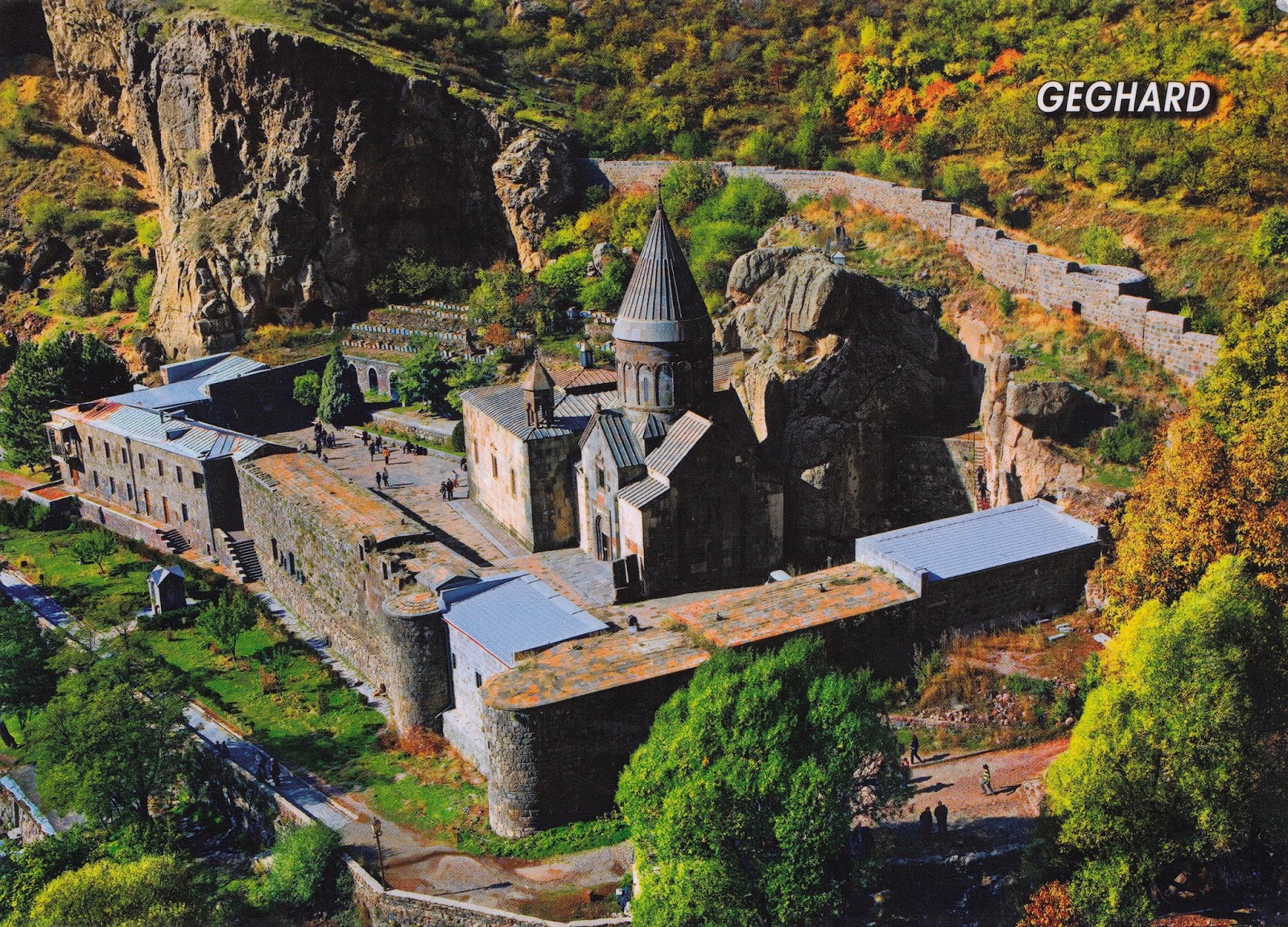
The monastery complex Geghard (Geghardavank, truly: 'the monastery of the spear') in Armenia is located in the gorge of the Goght River, forty kilometers southeast of the capital of the country, Yerevan. The monastic cloister, which dates back to the 4th century, is included in the list of UNESCO World Heritage Sites. The monastery was awarded such an honor not only because of its antiquity: some of the temples of Geghard are carved right in the rock massif, the other part combines the rooms carved into the cliff with other enclosed walls. On the territory of the monastery complex there are many ancient khachkars - memorial steles with crosses - dating back to different eras. What kind of spear is mentioned in the name of the holy monastery? The very one that, according to Church Tradition, belonged to the Roman centurion Longinus and pierced the body of the Son of God, crucified on the cross. It is believed that the spear itself with many other relics was brought to Armenia by the Apostle Thaddeus and is now in the Echmiadzin Museum, where you can see it.
The road to Geghard is not easy for a pilgrim or tourist. Zigzags of the road, sometimes passing over cliffs, ups and downs, and finally - a sign on the way to the holy monastery: a stone figure of a lioness on a pedestal at a turn, behind which suddenly a view of the monastery opens. The abode is located on the slope of an almost closed rocky amphitheater in the middle of a picturesque but harsh landscape. As often happens, the monastery arose at a source, the waters of which were considered sacred. Then the monastic shelter was called Ayrivank - a cave monastery. But it got its current name in the thirteenth century, when the spear of Longinus the centurion was transferred here.
For centuries, Geghard was not only a spiritual, but also a scientific center: the monastery complex had libraries, educational buildings, living quarters and outbuildings. In 923, the governor of the Arab caliph in Armenia named Nasr plundered the holy monastery - in particular, he took out unique manuscripts from it, and set on fire everything that could burn. The holy monastery suffered from earthquakes more than once. Most of the architectural complex that can be seen in Geghard today belongs to the XII-XIII centuries, the heyday of Armenian culture - and national architecture in particular. The main church with a narthex, the cave church and the chapel of St. Gregory the Illuminator were built under the princes Zakhar and Ivan. In the second half of the XIIIth the monastery was owned by the princes of Proshyan - at this time a family crypt appeared in Geghard, a second cave church, a general meeting hall and many residential cells. An outstanding historian of Armenia, Mkhitar Ayrivanetsi, lived in one of these at that time.
The monastery courtyard is surrounded on three sides by walls, over which medieval towers rise, and on the fourth - by a sheer cliff, in which rooms for various purposes are carved. A few tens of meters from the entrance to the monastery is the chapel of St. Gregory the Illuminator (built later than 1177), which also belongs to the single architectural ensemble of Geghard. Towering above the road, it is partially carved into the rock. Remains of ancient painting have been preserved on the vaults of the chapel. The appearance of the chapel and the space next to it are decorated with khachkars with various ornaments. However, the heart of the monastery is its main temple, built in 1215. It is sustained in the architectural tradition that prevailed in Armenia from the tenth to the fourteenth centuries: rectangular in plan and cross-domed inside. Three-dimensional images of animals are harmoniously inscribed in the interior of the temple, which coexist with a variety of decorative elements. The sculptural group on the southern facade - the lion attacking the calf - symbolizes the princely power. By the same time buildings, as the temple itself, is also the vestibule located to the west of it, adjacent to the rock. A series of masterpieces appear before the man who first came to the monastery, the underground premises of the monastery. The first cave temple - Azavan, which means 'spring' in Armenian, was the work of the architect Galdzag, who carved it in the middle of the 13th century where there was an ancient church with a spring. A little later - in 1283 - the second cave church in the name of the Mother of God was built; the family tomb of the Proshyan princes dates back to the same time. In the underground rooms of the monastery, the light is dim, so the reliefs on their walls have a strong profiling. One of the high reliefs depicts a bull's head - in its mouth it holds the ends of chains, on which are set two lions, turning their muzzles to the beholder. At the ends of their tails, lions have dragon heads turned up. And between the lions - the heraldic eagle of the Proshyan princes with a lamb in its claws.
The entrances to the chapel and the miniature Astvatsatsin church have rectangular frames, united by two relief crosses. In the ornament decorating the prayer house, one can see images of the Sirin bird with a female head crowned with a crown (very common in Armenian art of the 13th century), and in the church there are figures of people in long vestments and with halos around their heads and arms bent at the elbows. Whether they represent saints or members of a princely family involved in the construction of the monastery's cave structures - it is impossible to say exactly. The crypt of the prince's son, Papak, and his wife, Ruzukan, located in the second tier, to the north of the tomb of the Proshyans, belongs to 1288. You can enter it by climbing a steep outer staircase and then following a narrow corridor in the rock, decorated with numerous crosses carved into the rock. In addition to the main rocky rooms of Geghard, carved into the rock bordering the monastery from the west, there are two dozen smaller caves - most of them were originally intended for household needs. Geghard Monastery is one of the main attractions of Armenia and its historical shrines. Tourists who come here, as a rule, also visit the temple in Garni, which is located nearby, downstream of the Azat River. V. Sergienko
Geghard (Geghardavank) - 'monastery of the spear'Geghard (Geghardavank) - 'monastery of the spear' The monastery complex Geghard (Geghardavank, truly: 'the monastery of the spear') in Armenia is located in the gorge of the Goght River, forty kilometers southeast of the capital of the country, Yerevan. The monastic cloister, which dates back to the 4th century, is included in the list of UNESCO World Heritage Sites. The monastery was awarded such an honor not only because of its antiquity: some of the temples of Geghard are carved right in the rock massif, the other part combines the rooms carved into the cliff with other enclosed walls. On the territory of the monastery complex there are many ancient khachkars - memorial steles with crosses - dating back to different eras. What kind of spear is mentioned in the name of the holy monastery? The very one that, according to Church Tradition, belonged to the Roman centurion Longinus and pierced the body of the Son of God, crucified on the cross. It is believed that the spear itself with many other relics was brought to Armenia by the Apostle Thaddeus and is now in the Echmiadzin Museum, where you can see it. The road to Geghard is not easy for a pilgrim or tourist. Zigzags of the road, sometimes passing over cliffs, ups and downs, and finally - a sign on the way to the holy monastery: a stone figure of a lioness on a pedestal at a turn, behind which suddenly a view of the monastery opens. The abode is located on the slope of an almost closed rocky amphitheater in the middle of a picturesque but harsh landscape. As often happens, the monastery arose at a source, the waters of which were considered sacred. Then the monastic shelter was called Ayrivank - a cave monastery. But it got its current name in the thirteenth century, when the spear of Longinus the centurion was transferred here. For centuries, Geghard was not only a spiritual, but also a scientific center: the monastery complex had libraries, educational buildings, living quarters and outbuildings. In 923, the governor of the Arab caliph in Armenia named Nasr plundered the holy monastery - in particular, he took out unique manuscripts from it, and set on fire everything that could burn. The holy monastery suffered from earthquakes more than once. Most of the architectural complex that can be seen in Geghard today belongs to the XII-XIII centuries, the heyday of Armenian culture - and national architecture in particular. The main church with a narthex, the cave church and the chapel of St. Gregory the Illuminator were built under the princes Zakhar and Ivan. In the second half of the XIIIth the monastery was owned by the princes of Proshyan - at this time a family crypt appeared in Geghard, a second cave church, a general meeting hall and many residential cells. An outstanding historian of Armenia, Mkhitar Ayrivanetsi, lived in one of these at that time. The monastery courtyard is surrounded on three sides by walls, over which medieval towers rise, and on the fourth - by a sheer cliff, in which rooms for various purposes are carved. A few tens of meters from the entrance to the monastery is the chapel of St. Gregory the Illuminator (built later than 1177), which also belongs to the single architectural ensemble of Geghard. Towering above the road, it is partially carved into the rock. Remains of ancient painting have been preserved on the vaults of the chapel. The appearance of the chapel and the space next to it are decorated with khachkars with various ornaments. However, the heart of the monastery is its main temple, built in 1215. It is sustained in the architectural tradition that prevailed in Armenia from the tenth to the fourteenth centuries: rectangular in plan and cross-domed inside. Three-dimensional images of animals are harmoniously inscribed in the interior of the temple, which coexist with a variety of decorative elements. The sculptural group on the southern facade - the lion attacking the calf - symbolizes the princely power. By the same time buildings, as the temple itself, is also the vestibule located to the west of it, adjacent to the rock. A series of masterpieces appear before the man who first came to the monastery, the underground premises of the monastery. The first cave temple - Azavan, which means 'spring' in Armenian, was the work of the architect Galdzag, who carved it in the middle of the 13th century where there was an ancient church with a spring. A little later - in 1283 - the second cave church in the name of the Mother of God was built; the family tomb of the Proshyan princes dates back to the same time. In the underground rooms of the monastery, the light is dim, so the reliefs on their walls have a strong profiling. One of the high reliefs depicts a bull's head - in its mouth it holds the ends of chains, on which are set two lions, turning their muzzles to the beholder. At the ends of their tails, lions have dragon heads turned up. And between the lions - the heraldic eagle of the Proshyan princes with a lamb in its claws. The entrances to the chapel and the miniature Astvatsatsin church have rectangular frames, united by two relief crosses. In the ornament decorating the prayer house, one can see images of the Sirin bird with a female head crowned with a crown (very common in Armenian art of the 13th century), and in the church there are figures of people in long vestments and with halos around their heads and arms bent at the elbows. Whether they represent saints or members of a princely family involved in the construction of the monastery's cave structures - it is impossible to say exactly. The crypt of the prince's son, Papak, and his wife, Ruzukan, located in the second tier, to the north of the tomb of the Proshyans, belongs to 1288. You can enter it by climbing a steep outer staircase and then following a narrow corridor in the rock, decorated with numerous crosses carved into the rock. In addition to the main rocky rooms of Geghard, carved into the rock bordering the monastery from the west, there are two dozen smaller caves - most of them were originally intended for household needs. Geghard Monastery is one of the main attractions of Armenia and its historical shrines. Tourists who come here, as a rule, also visit the temple in Garni, which is located nearby, downstream of the Azat River. V. SergienkoСвеча Иерусалима -en
The monastery complex Geghard (Geghardavank, truly: 'the monastery of the spear') in Armenia is located in the gorge of the Goght River, forty kilometers southeast of the capital of the country, Yerevan. The monastic cloister, which dates back to the 4th century, is included in the list of UNESCO World Heritage Sites. The monastery was awarded such an honor not only because of its antiquity: some of the temples of Geghard are carved right in the rock massif, the other part combines the rooms carved into the cliff with other enclosed walls. On the territory of the monastery complex there are many ancient khachkars - memorial steles with crosses - dating back to different eras. What kind of spear is mentioned in the name of the holy monastery? The very one that, according to Church Tradition, belonged to the Roman centurion Longinus and pierced the body of the Son of God, crucified on the cross. It is believed that the spear itself with many other relics was brought to Armenia by the Apostle Thaddeus and is now in the Echmiadzin Museum, where you can see it. The road to Geghard is not easy for a pilgrim or tourist. Zigzags of the road, sometimes passing over cliffs, ups and downs, and finally - a sign on the way to the holy monastery: a stone figure of a lioness on a pedestal at a turn, behind which suddenly a view of the monastery opens. The abode is located on the slope of an almost closed rocky amphitheater in the middle of a picturesque but harsh landscape. As often happens, the monastery arose at a source, the waters of which were considered sacred. Then the monastic shelter was called Ayrivank - a cave monastery. But it got its current name in the thirteenth century, when the spear of Longinus the centurion was transferred here. For centuries, Geghard was not only a spiritual, but also a scientific center: the monastery complex had libraries, educational buildings, living quarters and outbuildings. In 923, the governor of the Arab caliph in Armenia named Nasr plundered the holy monastery - in particular, he took out unique manuscripts from it, and set on fire everything that could burn. The holy monastery suffered from earthquakes more than once. Most of the architectural complex that can be seen in Geghard today belongs to the XII-XIII centuries, the heyday of Armenian culture - and national architecture in particular. The main church with a narthex, the cave church and the chapel of St. Gregory the Illuminator were built under the princes Zakhar and Ivan. In the second half of the XIIIth the monastery was owned by the princes of Proshyan - at this time a family crypt appeared in Geghard, a second cave church, a general meeting hall and many residential cells. An outstanding historian of Armenia, Mkhitar Ayrivanetsi, lived in one of these at that time. The monastery courtyard is surrounded on three sides by walls, over which medieval towers rise, and on the fourth - by a sheer cliff, in which rooms for various purposes are carved. A few tens of meters from the entrance to the monastery is the chapel of St. Gregory the Illuminator (built later than 1177), which also belongs to the single architectural ensemble of Geghard. Towering above the road, it is partially carved into the rock. Remains of ancient painting have been preserved on the vaults of the chapel. The appearance of the chapel and the space next to it are decorated with khachkars with various ornaments. However, the heart of the monastery is its main temple, built in 1215. It is sustained in the architectural tradition that prevailed in Armenia from the tenth to the fourteenth centuries: rectangular in plan and cross-domed inside. Three-dimensional images of animals are harmoniously inscribed in the interior of the temple, which coexist with a variety of decorative elements. The sculptural group on the southern facade - the lion attacking the calf - symbolizes the princely power. By the same time buildings, as the temple itself, is also the vestibule located to the west of it, adjacent to the rock. A series of masterpieces appear before the man who first came to the monastery, the underground premises of the monastery. The first cave temple - Azavan, which means 'spring' in Armenian, was the work of the architect Galdzag, who carved it in the middle of the 13th century where there was an ancient church with a spring. A little later - in 1283 - the second cave church in the name of the Mother of God was built; the family tomb of the Proshyan princes dates back to the same time. In the underground rooms of the monastery, the light is dim, so the reliefs on their walls have a strong profiling. One of the high reliefs depicts a bull's head - in its mouth it holds the ends of chains, on which are set two lions, turning their muzzles to the beholder. At the ends of their tails, lions have dragon heads turned up. And between the lions - the heraldic eagle of the Proshyan princes with a lamb in its claws. The entrances to the chapel and the miniature Astvatsatsin church have rectangular frames, united by two relief crosses. In the ornament decorating the prayer house, one can see images of the Sirin bird with a female head crowned with a crown (very common in Armenian art of the 13th century), and in the church there are figures of people in long vestments and with halos around their heads and arms bent at the elbows. Whether they represent saints or members of a princely family involved in the construction of the monastery's cave structures - it is impossible to say exactly. The crypt of the prince's son, Papak, and his wife, Ruzukan, located in the second tier, to the north of the tomb of the Proshyans, belongs to 1288. You can enter it by climbing a steep outer staircase and then following a narrow corridor in the rock, decorated with numerous crosses carved into the rock. In addition to the main rocky rooms of Geghard, carved into the rock bordering the monastery from the west, there are two dozen smaller caves - most of them were originally intended for household needs. Geghard Monastery is one of the main attractions of Armenia and its historical shrines. Tourists who come here, as a rule, also visit the temple in Garni, which is located nearby, downstream of the Azat River. V. Sergienko