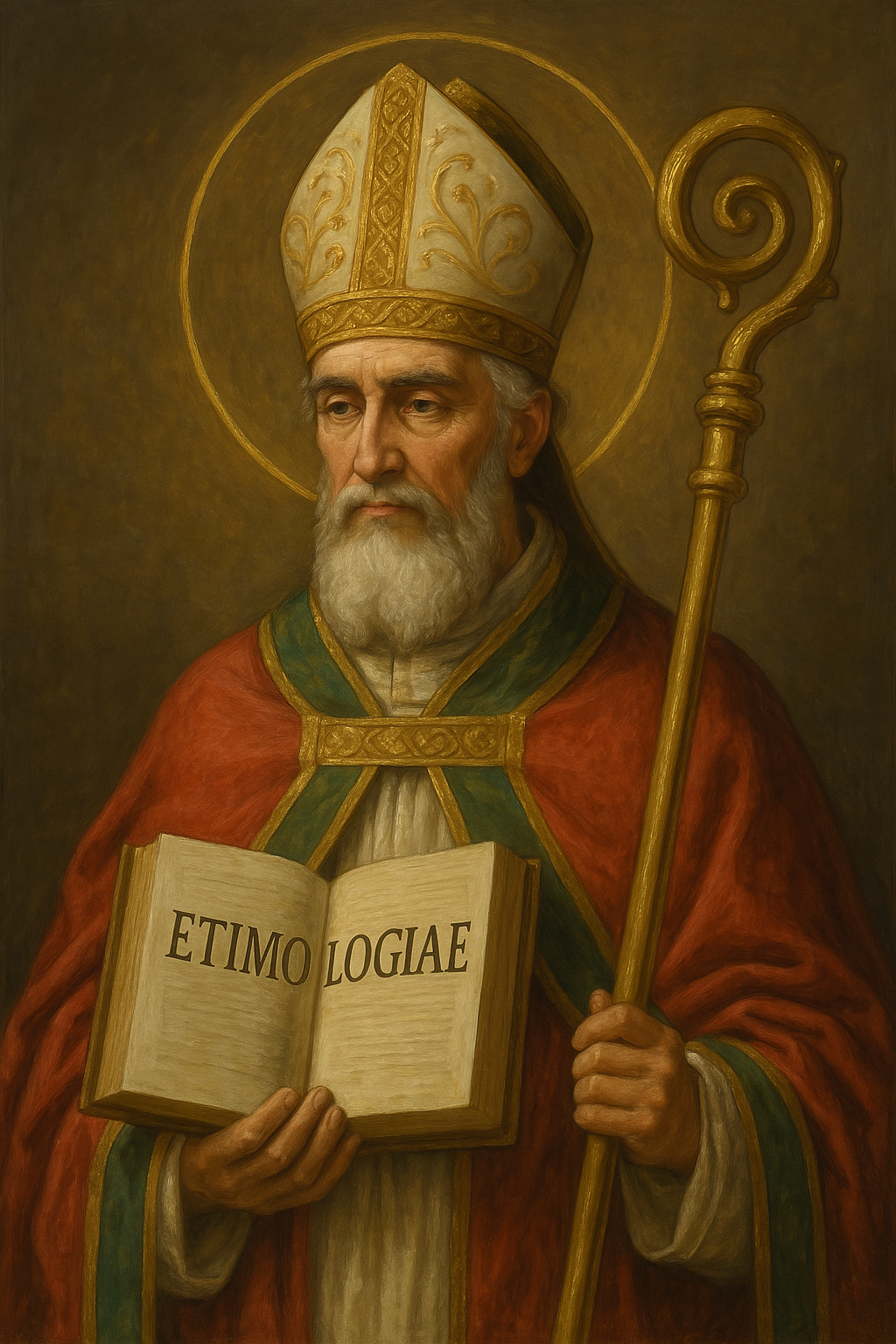
On April 4, the Catholic Church honors Saint Isidore of Seville, a renowned 7th-century bishop, theologian, scholar, and educator. He is known as the last of the Latin Church Fathers and one of the most learned men of his era.
Life and Ministry
Isidore was born around 560 in Seville, Spain, into a noble and devout family. His siblings—Leander, Fulgentius, and Florentina—are also recognized as saints. From a young age, Isidore showed extraordinary intellect and devotion to study, mastering Latin, grammar, rhetoric, philosophy, theology, and law.
After his brother Leander's death, Isidore became the Bishop of Seville, a position he held for nearly 40 years. He played a vital role in organizing the Church and promoting Christian education in the Visigothic Kingdom.
Legacy and Works
His most famous work, the "Etymologiae" (Etymologies or Origins), is considered the first Christian encyclopedia. In 20 volumes, Isidore compiled knowledge from various fields: theology, philosophy, medicine, grammar, mathematics, astronomy, history, and more.
This monumental work influenced European education for centuries and became a key reference in medieval learning.
Reform and Vision
Saint Isidore sought to harmonize classical knowledge with Christian thought. He reformed the clergy, encouraged monastic education, fought heresies, and contributed significantly to Church councils.
Death and Patronage
He died on April 4, 636 and was later canonized. In 1722, Pope Innocent XIII declared him a Doctor of the Church. In 1997, Pope John Paul II proposed Isidore as the patron saint of the internet and computer users, recognizing his role in preserving and organizing human knowledge.