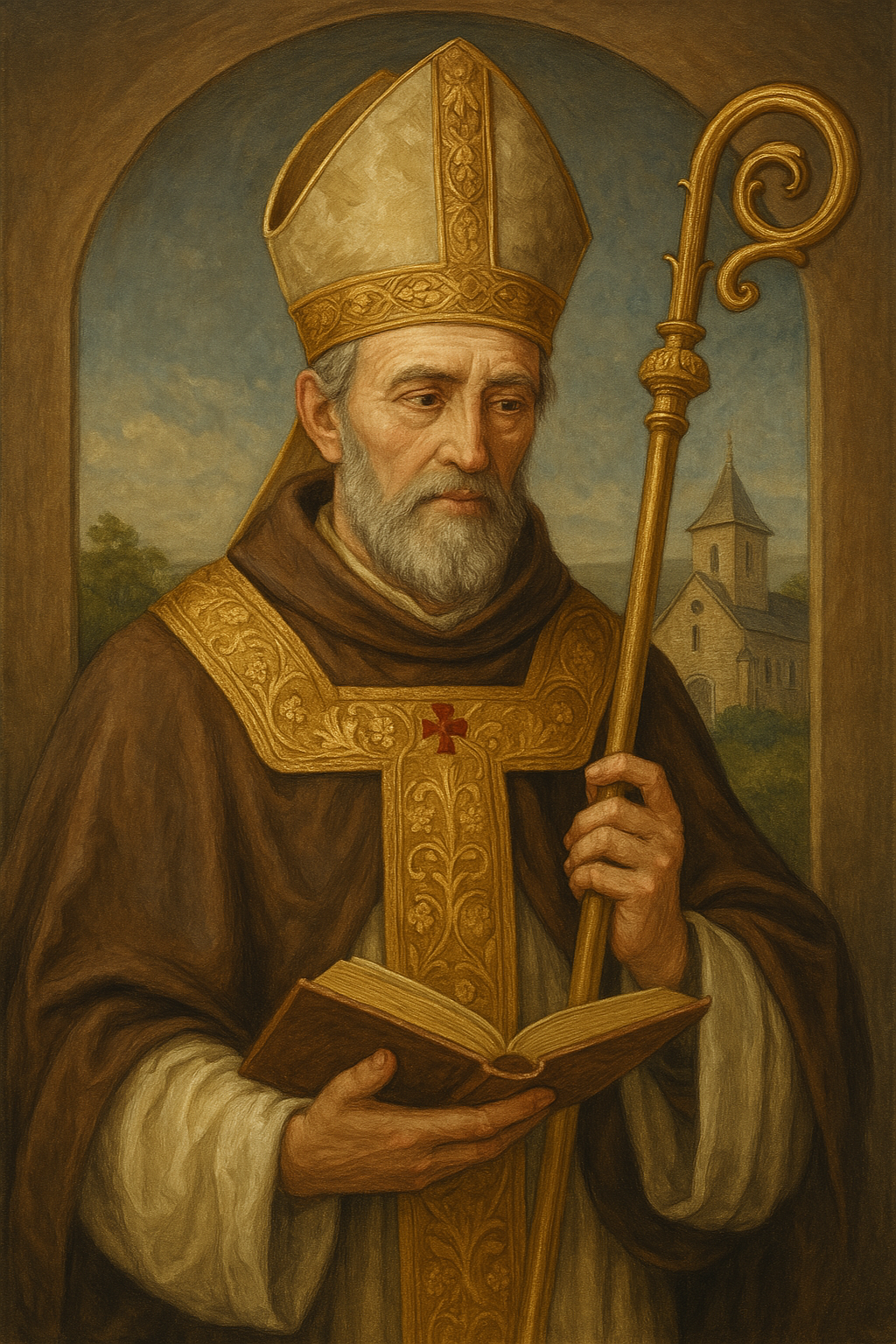
On April 1, the Catholic Church commemorates Saint Hugh of Grenoble, a bishop who lived in 11th–12th century France. He became one of the leading figures of Church reform, spiritual father of the Carthusian Order, and a model of pastoral wisdom.
Life and Ministry
Hugh was born in 1053 into a noble and devout family in France. From an early age, he showed a deep desire for holiness and learning. At the age of 27, he was appointed bishop of Grenoble, a city suffering from moral decline and ecclesiastical disorder.
Despite his youth and the opposition of local authorities, Hugh courageously undertook Church reform: he fought simony (the selling of Church offices), restored clerical discipline, cared for the poor, and oversaw the building of churches.
Connection with the Carthusian Order
Saint Hugh is best known for supporting Saint Bruno, who with his companions founded the Grande Chartreuse monastery in 1084 — the origin of the Carthusian Order. Hugh personally helped them find a secluded place in the Alps and remained a lifelong supporter and friend.
A Humble Shepherd
Despite his high rank, Hugh never sought honors. Twice he tried to resign and retire to monastic life, but Pope Gregory VII commanded him to remain bishop. Hugh served the Church for 52 years — in prayer, fasting, acts of mercy, and pastoral care.
Canonization and Legacy
Saint Hugh was canonized in 1134, only two years after his death. Though his relics were destroyed during the French Revolution, his name lives on, especially in the history of the Carthusian tradition and monastic renewal.