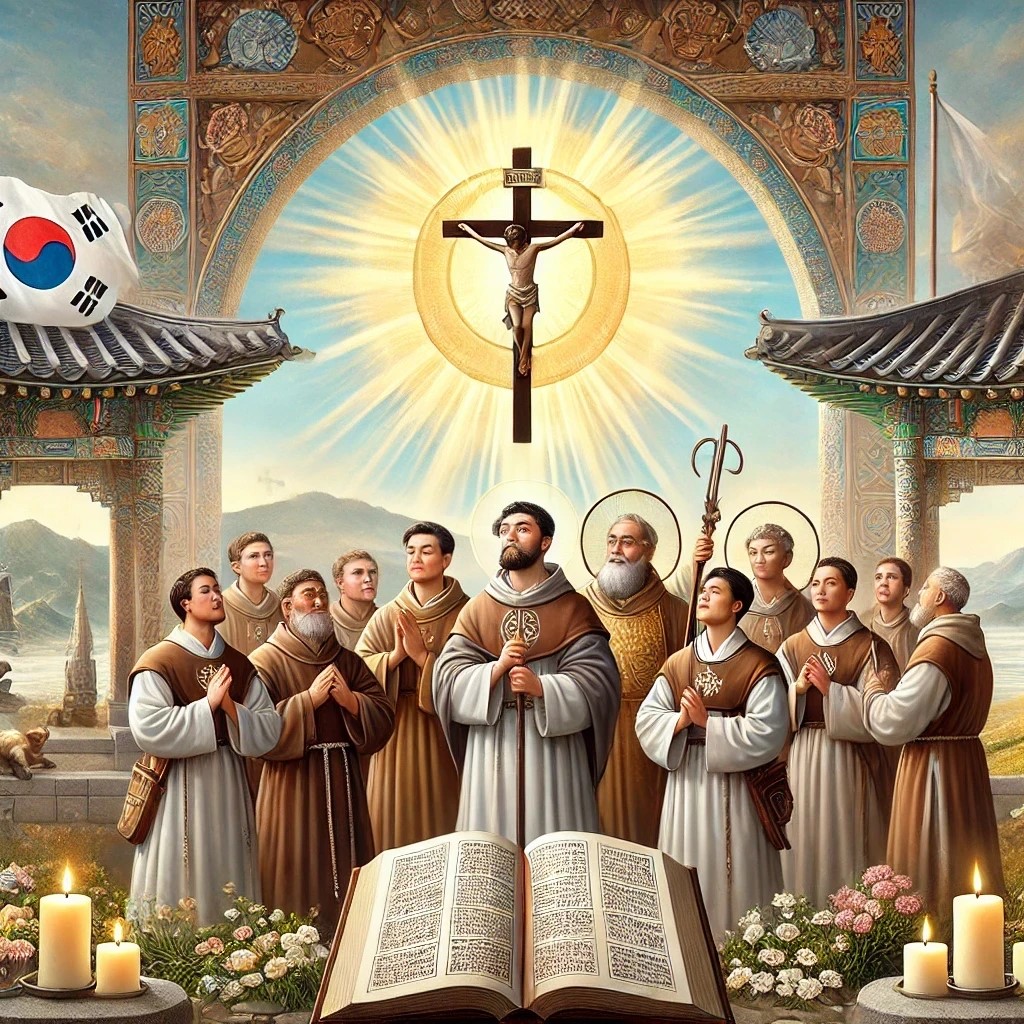
On September 20th, the Catholic Church commemorates the 103 Korean martyrs, including Saint Andrew Kim Taegon, the first Korean Catholic priest, and his companions. This feast highlights the depth and strength of the faith of the first Korean Christians, who gave their lives for Christ during severe persecutions.
The Korean martyrs are significant not only for the Catholic Church in Korea but for the universal Church. Their sacrifice and dedication to Christ have become a symbol of courage and resilience, inspiring Christians worldwide.
The History of Catholicism in Korea
Catholicism began spreading in Korea in the late 18th century through Korean scholars and diplomats who were introduced to Christian ideas via Chinese literature. Unlike in many other countries, where Catholicism spread through missionaries, Korea’s first Catholic community was formed by Koreans themselves, without external influence.
In 1784, Yi Seung-hun became the first Korean baptized in Beijing, and upon returning to Korea, he established a small Catholic community. However, severe persecutions soon followed, as Korean authorities saw Catholicism as a threat to the traditional Confucian social structure.
Andrew Kim Taegon — The First Korean Priest
Saint Andrew Kim Taegon was born in 1821 into a Catholic family. His father was one of the early martyrs for the faith, which profoundly influenced Andrew and inspired him to serve God. In 1836, at the age of 15, he traveled to Macau to study theology and prepare for ordination. In 1845, after many years of study, he became the first Korean Catholic priest.
Andrew Kim Taegon actively preached among Koreans and helped smuggle foreign missionaries into the country. However, he was soon arrested and executed for his faith in 1846 at the age of 25. Despite his young age, Andrew Kim Taegon left a lasting legacy in the Church’s history.
The Korean Martyrs
In addition to Andrew Kim Taegon, the Korean martyrs included laypeople, women, men, and children who did not renounce their faith despite the threat of death. Among them was Paul Chong Hasang, a prominent catechist, and many others who, despite threats, continued to openly profess the Christian faith.
Persecutions lasted for several decades, and between 1839 and 1866, thousands of Catholics were killed. These martyrs demonstrated incredible faithfulness to Christ, and their witness became the foundation for the growth and flourishing of the Catholic Church in Korea, which today is one of the most dynamic Catholic communities in the world.
The Significance of the Feast
The feast of the Korean martyrs reminds us of the cost of faith and the importance of being loyal to Christ, even in the most challenging circumstances. The martyrs exemplified courage, love, and sacrifice, showing that spiritual strength can overcome any trial.
Today, this day is celebrated in Catholic churches worldwide. Believers ask for the intercession and prayerful help of the Korean saints in overcoming trials and temptations in their own lives.
Conclusion
The memory of the Korean martyrs serves as a reminder to every Christian that faith requires courage and constant dedication to Christ. Their example inspires us to persevere through difficulties and calls for deep spiritual reflection. May their sacrifice inspire us to be faithful to God in all situations.