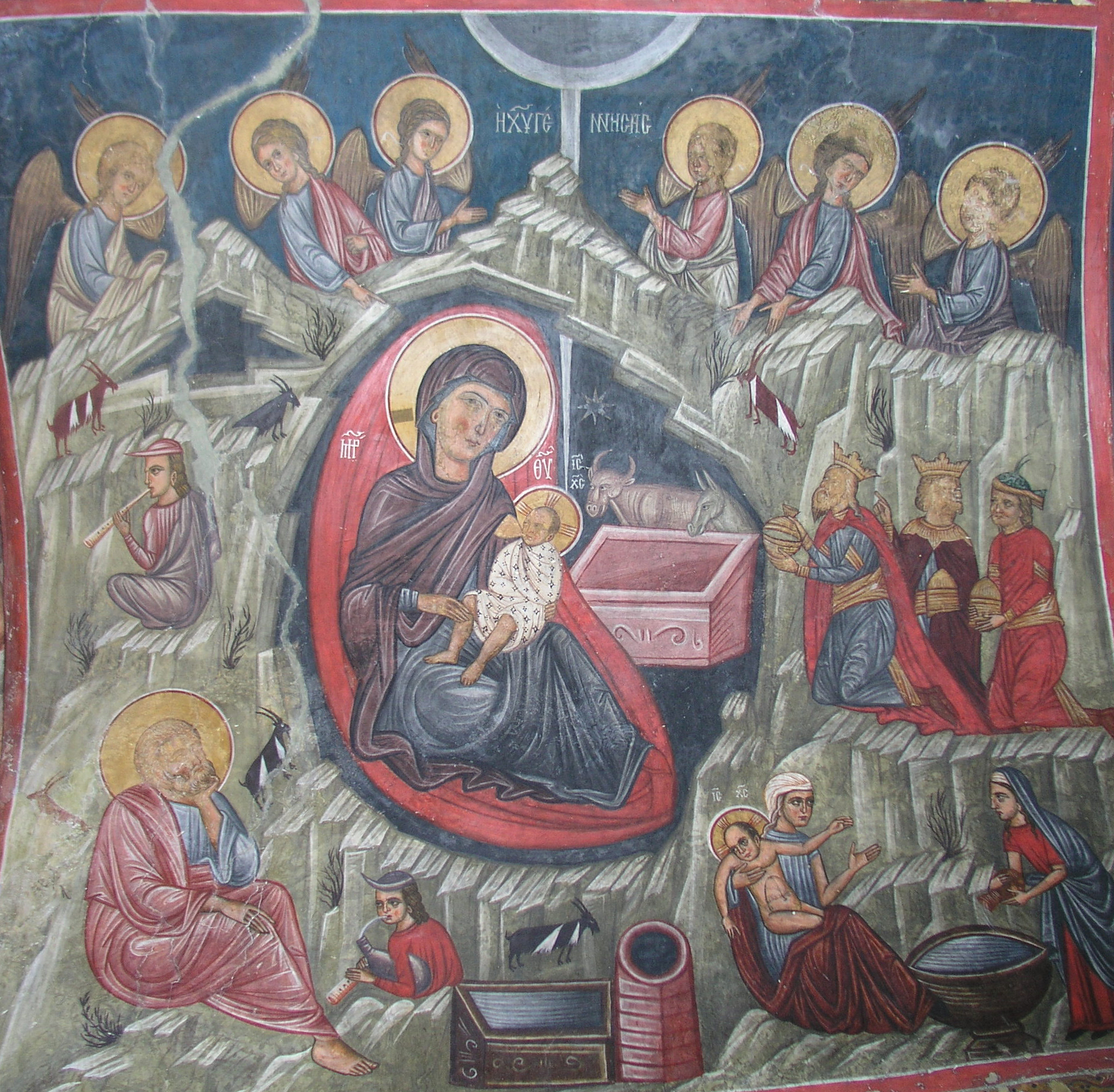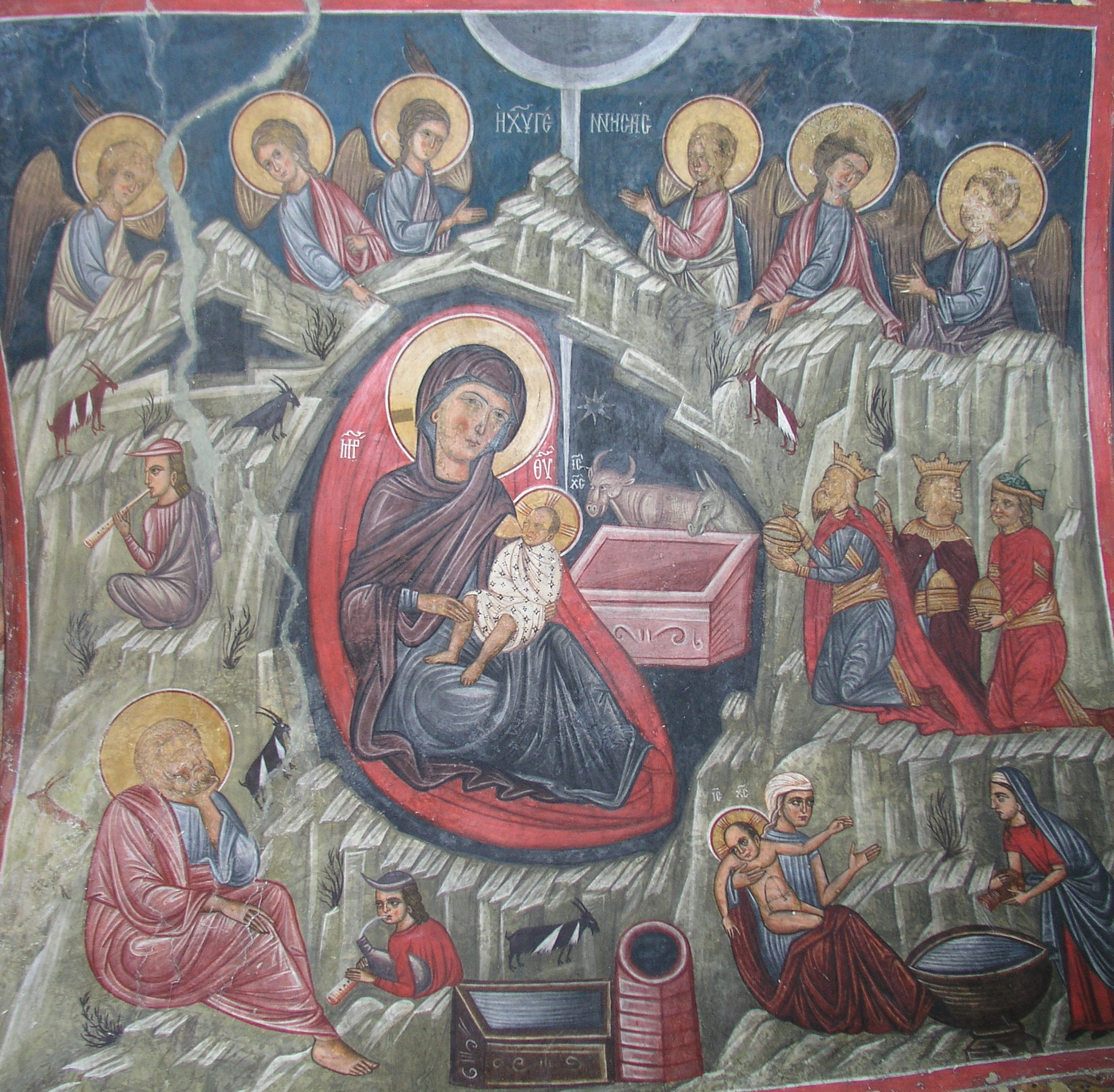
Every time we stand before the Nativity, we feel our language become confused and logic finds itself unable to include and explain what is not up to its standards.
The Son of God, who met our world for the first time in humanity in a manger and said goodbye to it on the cross, makes man kneel and paralyzes his senses before the great mystery of God's love and omniscience.
It is true that in our days Christmas is an event difficult to understand for another reason. The barrier to our logic is not only the insurmountable mystery. It is also the banality and boring nature of our culture, which leave no room for understanding the event we celebrate. How can we speak to a world given to earth about the Christ who came to take us to heaven? How to speak to a man who has become insensitive to other people's pain, to Christ who voluntarily took on the poverty of the human race? How can one speak to a mass society that exhausts the purpose of life with entertainment and the acquisition of as many material goods as possible, to Christ, who calls for a constant spiritual struggle, a strenuous struggle against all kinds of exploitation? How can one even speak to the disadvantaged man of today's age, if his goal is nothing less than the return of the of lost material wealth?
In the yardstick by which we measure our lives, the meaning of Christmas sadly eludes us. That is why each of us retains from the celebration what we can internalize. For merchants and shopkeepers, the meaning of Christmas is exhausted by financial gain. To employees, on a second paycheck. To students, in a few days off. For the faithful, an opportunity to change the hymns sung in church. Without dismissing all of this, the meaning of Christmas is much deeper than all of the above, and the messages it sends are much more fundamental to our lives. To name the main ones:
a) The birth of Christ from a woman, the Virgin Mary, shows first of all the possibilities of human nature. God's creation, man, if he is not corrupted by sin, comes to the point of containing God himself. The ancient Greek philosophers said that God cannot mingle with men. "God does not mix with men," said Plato. However, with the birth of Christ on earth, we are guessing how God not only communicates with people, but also dwells in them. Each of us now knows how, through Christian and sacramental life, we can imitate the Virgin Mary, receive Christ into ourselves, and become a "land of the untouchables."
b) The later incarnation of Christ annihilates man's physical existence. That is, he imparts the human body the value it deserves. The pre-Christian philosophers, influenced by the vicissitudes of the spirit, devalued the body, considered it the prison of the soul. They thought that demonic forces dwelt in it. However, since this body is accepted by God Himself, it means that it is not opposed by the spirit. It was impossible for God to dwell in the dwelling of demons. The body is a means of transportation of the soul, "a means given to the soul in the direction of life", according to M. Vassilios, it is a necessary means by which man enters into communication and relationships with others, creates, moves, lives.
Before the incarnation of God, matter and all phenomena were considered deified or demonized. Winds were attributed to Eilos, storms to Poseidon. Thus lightning was made by Phaistos and released by Zeus. These perceptions were also obstacles to the development of the sciences. How would people, for example, regard research into the invention of a means of neutralizing lightning if they were thus in conflict with Zeus? How would they operate on a patient or how would they analyze a substance in a chemical laboratory if they feared that a moon of demonic forces would be provoked? With the incarnation of God, the message was given that matter is neither satanic nor mysterious. God Himself employs it and sanctifies it. It is for this reason. positive sciences developed in Europe in a predominantly Christian area.
c) Christmas is also a message of peace. Peace, however, has an appropriate infrastructure, is based on principles and ideals. The concept of peace is one of the most misunderstood today. For most, it means the period between two wars, i.e., endurance, noting that it is most often the result of compromise and betrayal of principles and ideals. Others impersonate it, seeking to hide their true goals under its illustrious name. Thus, even this barbaric invasion of Cyprus by the Turks has been characterized as a "peacekeeping operation". Some have again labeled their unwillingness to defend their homeland and fight for its liberation as an obsession with peace processes.
This is not the peace announced by the angels on that unique night. The peace that Christ brought has a corresponding infrastructure. It is inextricably linked to justice and freedom. It also has the meaning of inner peace, the tranquility one feels from a quiet conscience, reconciliation with God and one's fellow men. Christ's coming to earth also had this purpose. He removed the "middle wall of the barrier," the wall that separated men from God and from their fellow men. He realized the indwelling of God, people and people among themselves. This state is enjoyed by those who accept Christ and his teachings unconditionally. When this peace reigns for all, the simple consequence will be another, external peace, the absence of wars.
r) The Incarnation of God thus gives a message of the unity of human nature, the unity of all men. Christ, the Son and Word of God, the second person of the Holy Trinity, when He came to earth, did not unite with a particular person to become the God-man Jesus Christ. If that were the case, only that particular person would have been saved. Christ assumed a general human nature in his divine existence. A human nature common to white and black, yellow and Eskimo, male and female. He raised this universal human nature from the grave, deified it, took it with Himself at His ascension into heaven, made it co-partaker of the Godhead. Thus, in the person of Christ, who was born a man on earth, all men are connected, they are brothers. Thus, Christmas is a message against all racial discrimination and all racism. Christ became flesh for all people, regardless of race and language, even unbelievers. He gave unbelievers and his opponents the opportunity for salvation if they wanted it.
e) Finally, the great message of Christmas is the message of the deification of man. Christ came into the world, to enable us, to provide the means for us to perfect ourselves and become like God. Many think that the purpose of Christ's birth ends in redeeming man from sin and the devil. They put the fact of God's incarnation as a counterbalance to the fall of the firstborn. But if this were true, then the greatest event of the ages would be the result of the devil's victory over man. It would be like admitting that the devil, by luring Adam and Eve into sin, caused God to become man. However, Christ is not the result of Satan's action. Christ's birth on earth occurred because it was God's eternal will. It was in God's plan even before the creation of the world. We say that God created man "in His image and likeness." "In His image" means that He gave him the attributes of His image, such as reason and free will. "Likewise" was the goal. Man should strive to be like God. Man, however, even if he had not yet sinned, could not on his own, no matter how hard he tried, achieve the "likeness" to God for which he was created. At some stage he would need the direct help of God, who would become man for this purpose. Christ, by His incarnation, certainly redeemed man from slavery to sin, the devil, and death, but He also accomplished a work that Adam did not, and could not, accomplish. He united man with God. Christ is the salvation of man not only negatively, redeeming him from the effects of original sin, but also positively, completing his pre-existent state. The message of Christmas is to appropriate and utilize this opportunity. Let us move beyond the present and move toward deification.
Thus, behind the emotional decoration, commercial exploitation, and superficial religiosity, the birth of Christ brings great messages to man. We are called to listen to those messages and apply them. Otherwise, the "profit" of the celebration will prove to be a great void in our souls. When the lights of the streets and the decorated trees go out, we will return to the thick darkness enveloping our souls. Let us strive to let Christ dwell in our hearts and eternally illuminate our existence and our path.
The Son of God, who met our world for the first time in humanity in a manger and said goodbye to it on the cross, makes man kneel and paralyzes his senses before the great mystery of God's love and omniscience.
It is true that in our days Christmas is an event difficult to understand for another reason. The barrier to our logic is not only the insurmountable mystery. It is also the banality and boring nature of our culture, which leave no room for understanding the event we celebrate. How can we speak to a world given to earth about the Christ who came to take us to heaven? How to speak to a man who has become insensitive to other people's pain, to Christ who voluntarily took on the poverty of the human race? How can one speak to a mass society that exhausts the purpose of life with entertainment and the acquisition of as many material goods as possible, to Christ, who calls for a constant spiritual struggle, a strenuous struggle against all kinds of exploitation? How can one even speak to the disadvantaged man of today's age, if his goal is nothing less than the return of the of lost material wealth?
In the yardstick by which we measure our lives, the meaning of Christmas sadly eludes us. That is why each of us retains from the celebration what we can internalize. For merchants and shopkeepers, the meaning of Christmas is exhausted by financial gain. To employees, on a second paycheck. To students, in a few days off. For the faithful, an opportunity to change the hymns sung in church. Without dismissing all of this, the meaning of Christmas is much deeper than all of the above, and the messages it sends are much more fundamental to our lives. To name the main ones:
a) The birth of Christ from a woman, the Virgin Mary, shows first of all the possibilities of human nature. God's creation, man, if he is not corrupted by sin, comes to the point of containing God himself. The ancient Greek philosophers said that God cannot mingle with men. "God does not mix with men," said Plato. However, with the birth of Christ on earth, we are guessing how God not only communicates with people, but also dwells in them. Each of us now knows how, through Christian and sacramental life, we can imitate the Virgin Mary, receive Christ into ourselves, and become a "land of the untouchables."
b) The later incarnation of Christ annihilates man's physical existence. That is, he imparts the human body the value it deserves. The pre-Christian philosophers, influenced by the vicissitudes of the spirit, devalued the body, considered it the prison of the soul. They thought that demonic forces dwelt in it. However, since this body is accepted by God Himself, it means that it is not opposed by the spirit. It was impossible for God to dwell in the dwelling of demons. The body is a means of transportation of the soul, "a means given to the soul in the direction of life", according to M. Vassilios, it is a necessary means by which man enters into communication and relationships with others, creates, moves, lives.
Before the incarnation of God, matter and all phenomena were considered deified or demonized. Winds were attributed to Eilos, storms to Poseidon. Thus lightning was made by Phaistos and released by Zeus. These perceptions were also obstacles to the development of the sciences. How would people, for example, regard research into the invention of a means of neutralizing lightning if they were thus in conflict with Zeus? How would they operate on a patient or how would they analyze a substance in a chemical laboratory if they feared that a moon of demonic forces would be provoked? With the incarnation of God, the message was given that matter is neither satanic nor mysterious. God Himself employs it and sanctifies it. It is for this reason. positive sciences developed in Europe in a predominantly Christian area.
c) Christmas is also a message of peace. Peace, however, has an appropriate infrastructure, is based on principles and ideals. The concept of peace is one of the most misunderstood today. For most, it means the period between two wars, i.e., endurance, noting that it is most often the result of compromise and betrayal of principles and ideals. Others impersonate it, seeking to hide their true goals under its illustrious name. Thus, even this barbaric invasion of Cyprus by the Turks has been characterized as a "peacekeeping operation". Some have again labeled their unwillingness to defend their homeland and fight for its liberation as an obsession with peace processes.
This is not the peace announced by the angels on that unique night. The peace that Christ brought has a corresponding infrastructure. It is inextricably linked to justice and freedom. It also has the meaning of inner peace, the tranquility one feels from a quiet conscience, reconciliation with God and one's fellow men. Christ's coming to earth also had this purpose. He removed the "middle wall of the barrier," the wall that separated men from God and from their fellow men. He realized the indwelling of God, people and people among themselves. This state is enjoyed by those who accept Christ and his teachings unconditionally. When this peace reigns for all, the simple consequence will be another, external peace, the absence of wars.
r) The Incarnation of God thus gives a message of the unity of human nature, the unity of all men. Christ, the Son and Word of God, the second person of the Holy Trinity, when He came to earth, did not unite with a particular person to become the God-man Jesus Christ. If that were the case, only that particular person would have been saved. Christ assumed a general human nature in his divine existence. A human nature common to white and black, yellow and Eskimo, male and female. He raised this universal human nature from the grave, deified it, took it with Himself at His ascension into heaven, made it co-partaker of the Godhead. Thus, in the person of Christ, who was born a man on earth, all men are connected, they are brothers. Thus, Christmas is a message against all racial discrimination and all racism. Christ became flesh for all people, regardless of race and language, even unbelievers. He gave unbelievers and his opponents the opportunity for salvation if they wanted it.
e) Finally, the great message of Christmas is the message of the deification of man. Christ came into the world, to enable us, to provide the means for us to perfect ourselves and become like God. Many think that the purpose of Christ's birth ends in redeeming man from sin and the devil. They put the fact of God's incarnation as a counterbalance to the fall of the firstborn. But if this were true, then the greatest event of the ages would be the result of the devil's victory over man. It would be like admitting that the devil, by luring Adam and Eve into sin, caused God to become man. However, Christ is not the result of Satan's action. Christ's birth on earth occurred because it was God's eternal will. It was in God's plan even before the creation of the world. We say that God created man "in His image and likeness." "In His image" means that He gave him the attributes of His image, such as reason and free will. "Likewise" was the goal. Man should strive to be like God. Man, however, even if he had not yet sinned, could not on his own, no matter how hard he tried, achieve the "likeness" to God for which he was created. At some stage he would need the direct help of God, who would become man for this purpose. Christ, by His incarnation, certainly redeemed man from slavery to sin, the devil, and death, but He also accomplished a work that Adam did not, and could not, accomplish. He united man with God. Christ is the salvation of man not only negatively, redeeming him from the effects of original sin, but also positively, completing his pre-existent state. The message of Christmas is to appropriate and utilize this opportunity. Let us move beyond the present and move toward deification.
Thus, behind the emotional decoration, commercial exploitation, and superficial religiosity, the birth of Christ brings great messages to man. We are called to listen to those messages and apply them. Otherwise, the "profit" of the celebration will prove to be a great void in our souls. When the lights of the streets and the decorated trees go out, we will return to the thick darkness enveloping our souls. Let us strive to let Christ dwell in our hearts and eternally illuminate our existence and our path.
Share: