The presentation of V.A. Shchipkov's book "Genealogy of Secular Discourse" took place in the Department for External Church Relations

В Отделе внешних церковных связей состоялась презентация книги В.А. Щипкова «Генеалогия секулярного дискурса»

On November 11, 2024, the Department for External Church Relations of the Moscow Patriarchate, chaired by Metropolitan Anthony of Volokolamsk presided over the presentation of a scientific study by V.A. Shchipkov, Associate Professor of the Moscow State Institute of International Relations of the Ministry of Foreign Affairs of Russia, Doctor of Philosophy «Genealogy of secular discourse» which tells about the origin of the concept «secular society».

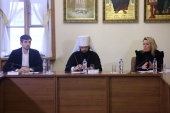
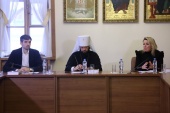
The presidium of the meeting included: Metropolitan Anthony of Volokolamsk, Chairman of the Russian Orthodox Church, M.V. Zakharova, Director of the Information and Press Department of the Russian Foreign Ministry, and the author of the monograph, V.A. Shchipkov. 

V.A. Shchipkov's scientific monograph «Genealogy of secular discourse» was published by the MGIMO Publishing House of the Russian Foreign Ministry in 2024. The monograph reveals the philosophical and theological ways of the emergence of secular way of thinking, secular culture, secular type of society and state. The problem of secularism has become particularly acute in recent decades, when it has become obvious that religious factors retain a great weight in the world and that, at the same time, distrust of secular ideology's attempts to claim monopoly and universality is growing. Secular centers of power are no longer mediators in religious dialogue, nor do they have a neutral The secular way of thinking is revealed by the author of the book as a historical form of distorted Christianity, in fact as a heretical doctrine that originated in Western Christian theology a thousand years ago. The author of the book reveals the secular way of thinking as a historical form of distorted Christianity, in fact as a heretical doctrine that originated in Western Christian theology a thousand years ago.

The volume of the monograph — 755 pages, it consists of 51 chapters and a summary. V.A. Shchipkov consistently tells about the perception of the problem of «secularism» in modern social sciences, about the increased attempts of modern Western scientists to explain its origin, about the intuitive perception of Russian religious and philosophical thought of secularism as a spiritual problem. Then, in three parts, the ways in which secular thought (secular discourse) emerged in the periods of early Christian theological disputes, scholasticism, the Reformation and the New Age, in the postmodernism of the twentieth century, and in different periods of Russian history are outlined. The book consistently unfolds the theological and philosophical-cultural panorama of this process in historical retrospect — from the Nativity of Christ to the present day, shows the logic of the development of Western culture and demonstrates the essential differences from it the culture of Orthodox Russia.

Presentation was opened by Metropolitan Anthony of Volokolamsk, who welcomed the author and guests and, in particular, pointed out the significance of the scientific work for the theological and philosophical understanding of modern secular trends in the world that oppose the Christian worldview.

V.A. Shchipkov then familiarized those present with the range of issues and problems addressed in the monograph. «The purpose of this book — explanation of secularism. Today secularism is becoming a rather aggressive ideology that is beginning to impose itself. At the same time, secularism emerged as an attempt to rethink Christianity» — the author noted. V.A. Shchipkov emphasized that secular ideas came to Russia as political projects. «Since the beginning of the crisis of secular ideas in the West, we are entering a new phase: the gradual weakening of the influence of secular language will lead to the fact that political discourse will begin to use concepts from religious systems. This also opens up new opportunities for interreligious dialog: it will be easier for religions to agree with each other if there is no secularist mediator between them, says V. A. Shchipkov.

Director of the Information and Press Department of the Russian Foreign Ministry M.V. Zakharova noted that the emergence of such a study «epitomizes the return of the Russian Foreign Ministry's "new" and "new" approach to the issue. to our worldview origins, our way home». Turning to the international context, she noted that the past elections in the United States clearly illustrated the thesis of the author of the monograph that modern Western society is increasingly trying to provide answers to political questions through the prism of a religious worldview. M.V. Zakharova spoke about the need to translate the monograph «Genealogy of secular discourse» into English and other foreign languages.

Dean of the Faculty of International Journalism of MGIMO Ya.L. Skvortsov noted that «Genealogy of Secular Discourse» has become not only a deep philosophical study, but also a serious philological work. 

Dean of the Faculty of History, Political Science and Law of the State University of Enlightenment V.E. Baghdasaryan noted that the explanation of the concept of secularism presented in the monograph opens the way to the consistent correction of the provisions of key laws reflecting this principle at the legislative level. 

Deputy of the State Duma of the Federal Assembly of the Russian Federation N.P. Nikolaev expressed the hope that the nature of secularism considered in the monograph will allow to translate the basic principles of traditional religions of Russia into the language of the legislation, primarily related to the protection of religious freedom. of human life before birth.

The discussion was also addressed by: Director of the Russian Research Institute of Cultural and Natural Heritage named after D.S. Likhachev V.V. Aristarkhov. Aristarkhov, Head of the Department of Theological Disciplines at Sretensky Theological Academy Archpriest Vadim Leonov, Senior Researcher of the Department of Modern History of the Russian Orthodox Church I.V. Vorontsova of the Orthodox Svyato-Tikhonovsky University for the Humanities, A.B. Shafran, head of the directorate of analytical radio programs of the TV and radio company «Zvezda» and political scientist S.A. Mikheev. Among those who attended the event were the head of the theology department of the theological faculty of Russian Orthodox University of St. John the Theologian, the rector of the university church of the Russian Orthodox University of St. John the Theologian in honor of the Apostle John the Theologian at Elm in Moscow, Archpriest Mikhail Dudko, editor-in-chief of the magazine «International Life» A.G. Oganesyan, and invited guests.

The participants of the presentation noted the fundamental nature of the monograph, its relevance in the context of the development of modern cultural processes and international situation. 

At the end of the event Metropolitan Anthony thanked the author for an important scientific study of the topic of secularism. «Without knowing history, it is difficult to understand the present and, even more so, to predict what awaits us in the future. I am sure that the discussion of the problems raised by the author of the monograph should be popularized. I hope it will be expressed in new scientific articles and books available to the widest circle of our compatriots»  — concluded Metropolitan Anthony.

Patriarchy.ru 
Share:
The presentation of V.A. Shchipkov's book "Genealogy of Secular Discourse" took place in the Department for External Church Relations The presentation of V.A. Shchipkov's book "Genealogy of Secular Discourse" took place in the Department for External Church Relations On November 11, 2024, the Department for External Church Relations of the Moscow Patriarchate, chaired by Metropolitan Anthony of Volokolamsk presided over the presentation of a scientific study by V.A. Shchipkov, Associate Professor of the Moscow State Institute of International Relations of the Ministry of Foreign Affairs of Russia, Doctor of Philosophy «Genealogy of secular discourse» which tells about the origin of the concept «secular society». The presidium of the meeting included: Metropolitan Anthony of Volokolamsk, Chairman of the Russian Orthodox Church, M.V. Zakharova, Director of the Information and Press Department of the Russian Foreign Ministry, and the author of the monograph, V.A. Shchipkov.  V.A. Shchipkov's scientific monograph «Genealogy of secular discourse» was published by the MGIMO Publishing House of the Russian Foreign Ministry in 2024. The monograph reveals the philosophical and theological ways of the emergence of secular way of thinking, secular culture, secular type of society and state. The problem of secularism has become particularly acute in recent decades, when it has become obvious that religious factors retain a great weight in the world and that, at the same time, distrust of secular ideology's attempts to claim monopoly and universality is growing. Secular centers of power are no longer mediators in religious dialogue, nor do they have a neutral The secular way of thinking is revealed by the author of the book as a historical form of distorted Christianity, in fact as a heretical doctrine that originated in Western Christian theology a thousand years ago. The author of the book reveals the secular way of thinking as a historical form of distorted Christianity, in fact as a heretical doctrine that originated in Western Christian theology a thousand years ago. The volume of the monograph — 755 pages, it consists of 51 chapters and a summary. V.A. Shchipkov consistently tells about the perception of the problem of «secularism» in modern social sciences, about the increased attempts of modern Western scientists to explain its origin, about the intuitive perception of Russian religious and philosophical thought of secularism as a spiritual problem. Then, in three parts, the ways in which secular thought (secular discourse) emerged in the periods of early Christian theological disputes, scholasticism, the Reformation and the New Age, in the postmodernism of the twentieth century, and in different periods of Russian history are outlined. The book consistently unfolds the theological and philosophical-cultural panorama of this process in historical retrospect — from the Nativity of Christ to the present day, shows the logic of the development of Western culture and demonstrates the essential differences from it the culture of Orthodox Russia. Presentation was opened by Metropolitan Anthony of Volokolamsk, who welcomed the author and guests and, in particular, pointed out the significance of the scientific work for the theological and philosophical understanding of modern secular trends in the world that oppose the Christian worldview. V.A. Shchipkov then familiarized those present with the range of issues and problems addressed in the monograph. «The purpose of this book — explanation of secularism. Today secularism is becoming a rather aggressive ideology that is beginning to impose itself. At the same time, secularism emerged as an attempt to rethink Christianity» — the author noted. V.A. Shchipkov emphasized that secular ideas came to Russia as political projects. «Since the beginning of the crisis of secular ideas in the West, we are entering a new phase: the gradual weakening of the influence of secular language will lead to the fact that political discourse will begin to use concepts from religious systems. This also opens up new opportunities for interreligious dialog: it will be easier for religions to agree with each other if there is no secularist mediator between them, says V. A. Shchipkov. Director of the Information and Press Department of the Russian Foreign Ministry M.V. Zakharova noted that the emergence of such a study «epitomizes the return of the Russian Foreign Ministry's "new" and "new" approach to the issue. to our worldview origins, our way home». Turning to the international context, she noted that the past elections in the United States clearly illustrated the thesis of the author of the monograph that modern Western society is increasingly trying to provide answers to political questions through the prism of a religious worldview. M.V. Zakharova spoke about the need to translate the monograph «Genealogy of secular discourse» into English and other foreign languages. Dean of the Faculty of International Journalism of MGIMO Ya.L. Skvortsov noted that «Genealogy of Secular Discourse» has become not only a deep philosophical study, but also a serious philological work.  Dean of the Faculty of History, Political Science and Law of the State University of Enlightenment V.E. Baghdasaryan noted that the explanation of the concept of secularism presented in the monograph opens the way to the consistent correction of the provisions of key laws reflecting this principle at the legislative level.  Deputy of the State Duma of the Federal Assembly of the Russian Federation N.P. Nikolaev expressed the hope that the nature of secularism considered in the monograph will allow to translate the basic principles of traditional religions of Russia into the language of the legislation, primarily related to the protection of religious freedom. of human life before birth. The discussion was also addressed by: Director of the Russian Research Institute of Cultural and Natural Heritage named after D.S. Likhachev V.V. Aristarkhov. Aristarkhov, Head of the Department of Theological Disciplines at Sretensky Theological Academy Archpriest Vadim Leonov, Senior Researcher of the Department of Modern History of the Russian Orthodox Church I.V. Vorontsova of the Orthodox Svyato-Tikhonovsky University for the Humanities, A.B. Shafran, head of the directorate of analytical radio programs of the TV and radio company «Zvezda» and political scientist S.A. Mikheev. Among those who attended the event were the head of the theology department of the theological faculty of Russian Orthodox University of St. John the Theologian, the rector of the university church of the Russian Orthodox University of St. John the Theologian in honor of the Apostle John the Theologian at Elm in Moscow, Archpriest Mikhail Dudko, editor-in-chief of the magazine «International Life» A.G. Oganesyan, and invited guests. The participants of the presentation noted the fundamental nature of the monograph, its relevance in the context of the development of modern cultural processes and international situation.  At the end of the event Metropolitan Anthony thanked the author for an important scientific study of the topic of secularism. «Without knowing history, it is difficult to understand the present and, even more so, to predict what awaits us in the future. I am sure that the discussion of the problems raised by the author of the monograph should be popularized. I hope it will be expressed in new scientific articles and books available to the widest circle of our compatriots»  — concluded Metropolitan Anthony. Patriarchy.ru 
On November 11, 2024, the Department for External Church Relations of the Moscow Patriarchate, chaired by Metropolitan Anthony of Volokolamsk presided over the presentation of a scientific study by V.A. Shchipkov, Associate Professor of the Moscow State Institute of International Relations of the Ministry of Foreign Affairs of Russia, Doctor of Philosophy «Genealogy of secular discourse» which tells about the origin of the concept «secular society». The presidium of the meeting included: Metropolitan Anthony of Volokolamsk, Chairman of the Russian Orthodox Church, M.V. Zakharova, Director of the Information and Press Department of the Russian Foreign Ministry, and the author of the monograph, V.A. Shchipkov.  V.A. Shchipkov's scientific monograph «Genealogy of secular discourse» was published by the MGIMO Publishing House of the Russian Foreign Ministry in 2024. The monograph reveals the philosophical and theological ways of the emergence of secular way of thinking, secular culture, secular type of society and state. The problem of secularism has become particularly acute in recent decades, when it has become obvious that religious factors retain a great weight in the world and that, at the same time, distrust of secular ideology's attempts to claim monopoly and universality is growing. Secular centers of power are no longer mediators in religious dialogue, nor do they have a neutral The secular way of thinking is revealed by the author of the book as a historical form of distorted Christianity, in fact as a heretical doctrine that originated in Western Christian theology a thousand years ago. The author of the book reveals the secular way of thinking as a historical form of distorted Christianity, in fact as a heretical doctrine that originated in Western Christian theology a thousand years ago. The volume of the monograph — 755 pages, it consists of 51 chapters and a summary. V.A. Shchipkov consistently tells about the perception of the problem of «secularism» in modern social sciences, about the increased attempts of modern Western scientists to explain its origin, about the intuitive perception of Russian religious and philosophical thought of secularism as a spiritual problem. Then, in three parts, the ways in which secular thought (secular discourse) emerged in the periods of early Christian theological disputes, scholasticism, the Reformation and the New Age, in the postmodernism of the twentieth century, and in different periods of Russian history are outlined. The book consistently unfolds the theological and philosophical-cultural panorama of this process in historical retrospect — from the Nativity of Christ to the present day, shows the logic of the development of Western culture and demonstrates the essential differences from it the culture of Orthodox Russia. Presentation was opened by Metropolitan Anthony of Volokolamsk, who welcomed the author and guests and, in particular, pointed out the significance of the scientific work for the theological and philosophical understanding of modern secular trends in the world that oppose the Christian worldview. V.A. Shchipkov then familiarized those present with the range of issues and problems addressed in the monograph. «The purpose of this book — explanation of secularism. Today secularism is becoming a rather aggressive ideology that is beginning to impose itself. At the same time, secularism emerged as an attempt to rethink Christianity» — the author noted. V.A. Shchipkov emphasized that secular ideas came to Russia as political projects. «Since the beginning of the crisis of secular ideas in the West, we are entering a new phase: the gradual weakening of the influence of secular language will lead to the fact that political discourse will begin to use concepts from religious systems. This also opens up new opportunities for interreligious dialog: it will be easier for religions to agree with each other if there is no secularist mediator between them, says V. A. Shchipkov. Director of the Information and Press Department of the Russian Foreign Ministry M.V. Zakharova noted that the emergence of such a study «epitomizes the return of the Russian Foreign Ministry's "new" and "new" approach to the issue. to our worldview origins, our way home». Turning to the international context, she noted that the past elections in the United States clearly illustrated the thesis of the author of the monograph that modern Western society is increasingly trying to provide answers to political questions through the prism of a religious worldview. M.V. Zakharova spoke about the need to translate the monograph «Genealogy of secular discourse» into English and other foreign languages. Dean of the Faculty of International Journalism of MGIMO Ya.L. Skvortsov noted that «Genealogy of Secular Discourse» has become not only a deep philosophical study, but also a serious philological work.  Dean of the Faculty of History, Political Science and Law of the State University of Enlightenment V.E. Baghdasaryan noted that the explanation of the concept of secularism presented in the monograph opens the way to the consistent correction of the provisions of key laws reflecting this principle at the legislative level.  Deputy of the State Duma of the Federal Assembly of the Russian Federation N.P. Nikolaev expressed the hope that the nature of secularism considered in the monograph will allow to translate the basic principles of traditional religions of Russia into the language of the legislation, primarily related to the protection of religious freedom. of human life before birth. The discussion was also addressed by: Director of the Russian Research Institute of Cultural and Natural Heritage named after D.S. Likhachev V.V. Aristarkhov. Aristarkhov, Head of the Department of Theological Disciplines at Sretensky Theological Academy Archpriest Vadim Leonov, Senior Researcher of the Department of Modern History of the Russian Orthodox Church I.V. Vorontsova of the Orthodox Svyato-Tikhonovsky University for the Humanities, A.B. Shafran, head of the directorate of analytical radio programs of the TV and radio company «Zvezda» and political scientist S.A. Mikheev. Among those who attended the event were the head of the theology department of the theological faculty of Russian Orthodox University of St. John the Theologian, the rector of the university church of the Russian Orthodox University of St. John the Theologian in honor of the Apostle John the Theologian at Elm in Moscow, Archpriest Mikhail Dudko, editor-in-chief of the magazine «International Life» A.G. Oganesyan, and invited guests. The participants of the presentation noted the fundamental nature of the monograph, its relevance in the context of the development of modern cultural processes and international situation.  At the end of the event Metropolitan Anthony thanked the author for an important scientific study of the topic of secularism. «Without knowing history, it is difficult to understand the present and, even more so, to predict what awaits us in the future. I am sure that the discussion of the problems raised by the author of the monograph should be popularized. I hope it will be expressed in new scientific articles and books available to the widest circle of our compatriots»  — concluded Metropolitan Anthony. Patriarchy.ru