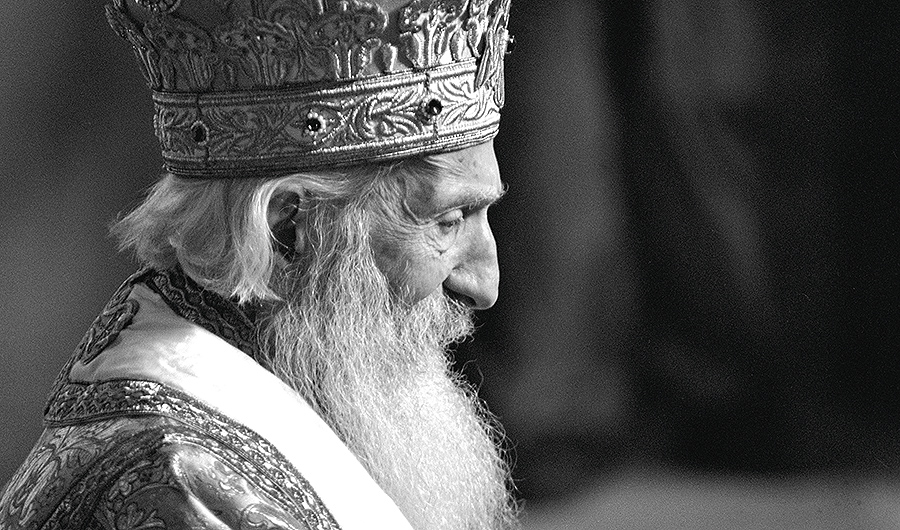
St. Porphyrios: Patriarch Paul fulfilled every word of the Apostles of Christ and adopted every feat of the Church of Christ
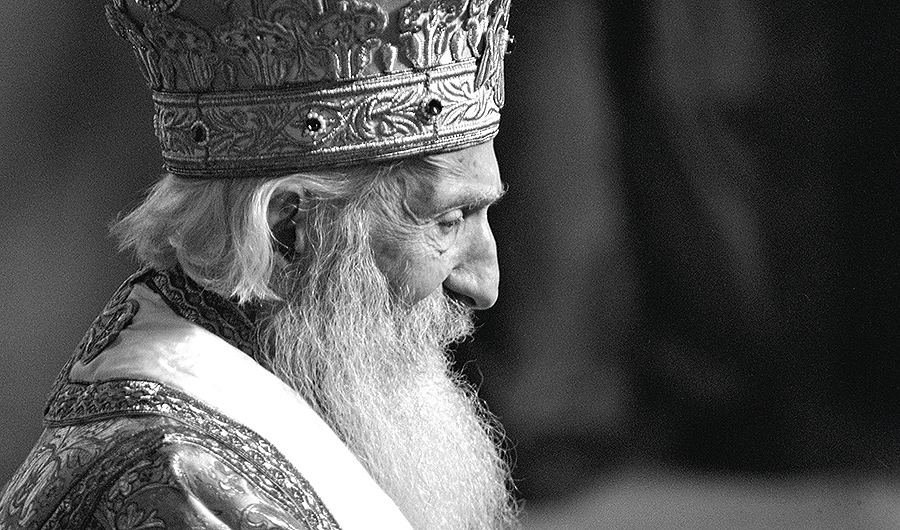
Under the presidency of His Holiness Patriarch of Serbia, Msgr. Porphyrios, the regular meeting of the Holy Synod of Bishops of the Serbian Orthodox Church was held on November 15, 2024 at the Patriarchal Palace in Belgrade. The meeting began with a memorial service on the occasion of the fifteenth anniversary of the death of Serbian Patriarch Pavle. On this occasion, His Holiness Patriarch Mr. Porphyrios said:
Blessed is he whom You have chosen and accepted, O Lord, and
his memory from generation to generation! (Ps 64, 5)
Today at the beginning of the session, together with the members of the Holy Synod of Bishops, I prayed for the blessed passing of my predecessor and teacher, the unforgettable Serbian Patriarch Paul, who on this day fifteen years ago embarked on the path that leads from death to life (1 John 3:14). Fully conforming his life to the word of the Lord written in the Gospel, he also fulfilled every word of the Apostles of Christ and adopted every feat of the eternal experience of the living tradition of the Church of Christ, thus leaving an indelible mark in the heart of every person who had the opportunity to meet him, to hear him preach, to read some thoughts about him. I am sure that Patriarch Paul is still praying for his people today, and for the following Because of his modesty and humility, because he did not say one thing and do another, because he was a witness of the love of Christ, I deeply believe that the Lord hears and accepts his prayer for his people.
Eternal memory and Kingdom of Heaven to him!
Fifteen years ago on this day, Serbian Patriarch Pavel rested in the Lord.
Patriarch Pavel was born on September 11, 1914 under the name Gojko Stojcevic in the Slavic village of Kucanci near Donji Miholc. He lost his parents early. From the age of three, little Gojko was taken care of by his aunt. He graduated from the secondary school in Tuzla and the higher secondary school in Belgrade. After graduating from the Sarajevo Theological Seminary in 1936, he entered the theological faculty in Belgrade, graduating in 1942. During World War II, he was a religious teacher at the orphanage for refugee children in Banja Koviljaca. In August 1944, Gojko fell ill with tuberculosis. Doctors predicted that he had three months to live. He was healed by prayer in the Vujneni monastery. In gratitude to God for the health granted to him, he carved a cross, which is still kept in the monastery today. After a probationary period in 1948, he was ordained a monk at the Annunciation Monastery in Ochar-Kablar, receiving the monastic name Paul in honor of the Apostle of Love. From 1949 to 1955 he was an abbot of the monastery of Rache. The school year 1950/1951. he spent the year as a teacher at the Theological Seminary of Saints Cyril and Methodius in Prizren. In 1954 he was ordained a hieromonk. From 1955 to 1957, he attended graduate school at the Faculty of Theology in Athens. In May 1957, he was elected Bishop of Raško-Prizren. Serbian Patriarch Vikentije ordained him in September of the same year at the Belgrade Cathedral. On October 13, 1957, he was enthroned Bishop of Raško-Prizren.
In the Diocese of Raško-Prizren he restored old and ruined churches and built new ones. He worked hard for young priests and monks. He constantly traveled and served in all places of his diocese, and especially took care of the seminary in Prizren, where he taught church singing and Church Slavonic. As bishop and professor, he brought a large number of new workers to the Lord's Field. He spent more than 33 years as Archbishop in Kosovo and Metohija, at a very difficult time for the Serbs and the Serbian Church. The Holy Synod of Bishops and the Assembly, as well as the state government, were regularly informed of the Arbanas' attacks on the property of the Church, monks, priests and the Serbian people who emigrated under this pressure. He himself bore the insults and physical attacks with Christian calmness and patience. He testified in United Nations before numerous statesmen on the suffering of the Serbian people in Kosovo and Metohija.
On December 1, 1990, the Holy Synod of Bishops of the Serbian Orthodox Church elected him as the forty-fourth First Hierarch of the Serbian Orthodox Church. On Sunday, December 2, 1990, in the Cathedral of Belgrade, he was enthroned Archbishop of Pec, Metropolitan of Belgrade-Karlovica and Patriarch of Serbia, and on May 22, 1994, he was enthroned to the ancient patriarchal throne of the Patriarchate of Pec. Under Patriarch Pavle, several dioceses were restored and founded. In 1992, the Seminary of St. Peter of Cetinje in Cetinje was renovated. The following year, the Academy of the Serbian Orthodox Church of Arts and Preservation began its work. The Theological Faculty of St. Basil of Ostrog in Foča was opened in 1994, and the Theological Seminary of St. John Chrysostom in Kragujevac in 1997. The Information Service of the Serbian Orthodox Church was founded at the end of 1998. Religious education was returned to the public education system of the Republic of Serbia in 2001, and the Faculty of Theology was returned to the University of Belgrade in 2004. Patriarch Paul paid special attention to the construction of the sacred temple of the Serbian people, the St. Sava Monument Church of St. Sava in Vrachara, which under him was fully completed.
Patriarch Paul made a great contribution to the unity of the Orthodox Church. He met with Patriarch Bartholomew I of Constantinople, Patriarch Alexy II of Moscow and All Russia, Archbishop Christodoulos of Athens and All Hellas, Patriarch Peter VII of Alexandria and All Africa, and other heads of the Local Orthodox Churches. Inspired by Christ's words, "May they all be one, just as you are one, Father, for you are in me and I in you," in September 2006 he opened a meeting of the Joint Commission for Theological Dialogue between the Orthodox Church and the Church of Rome. Catholic Church, which was hosted by Belgrade. On the Purification of the Lord on February 15, 1992, with the Parliamentary Holy Liturgy celebrated by Patriarch Paul of Serbia and Metropolitan Irinej of Novogračan, the full liturgical and canonical unity of the dispersed Serbian Orthodox Church was established after several decades. He made a special effort to overcome the schism in the former FYR Macedonia. In meetings with Catholic and Muslim religious leaders, as well as in direct and written addresses to political leaders of the country and the world, during the tragic wars in the former Yugoslavia and the NATO aggression against Serbia, Patriarch Paul evangelized for peaceful and just resolution of conflicts. He was the chairman of the Commission of the Holy Synod of Bishops for the translation of the Holy Scriptures of the New Testament, the translation of which was published in 1984, and also the chairman of the Commission of the Holy Synod of Bishops for the translation of the Holy Scriptures of the New Testament. preparation of the Ministry in Serbian. In "Glasnik" , the official newspaper of the Serbian Patriarchate, since 1972 he has been publishing articles in the form of questions and answers, which resulted in 1998 in a three-volume work "Let us clarify some questions of our faith". In 1989 he published the monograph "Devich, Monastery of St. Joannikia Devichka". He prepared several liturgical books: Srbljak, Trebnik, Prayer Book, Additional Trebnik, Great Trebnik and others. He bears great responsibility for the publication of the main materials of the Kosovo Foundation, probably the best and most comprehensive work on our holy places, people in Kosovo and Metohija and their suffering. For his great contribution to theological science, the Theological Faculty of the Serbian Orthodox Church in Belgrade awarded him the title of honorary doctor of theology in 1998.
Patriarch Pavel was treated for two years at the Military Medical Academy in Belgrade, where he passed away on November 15, 2009. Intoxication in front of the Church of St. Sava in Vračar at the supreme In the presence of the heads or high representatives of all Orthodox Churches and the high delegations of the Roman Catholic Church, the Armenian Church, the Churches of the Reformation, the World Council of Churches and the Conference of European Churches, as well as the Islamic Community and the Jewish community, he was buried on November 19, 2009, in the Rakovica Monastery near Belgrade.
Under the presidency of His Holiness Patriarch of Serbia, Msgr. Porphyrios, the regular meeting of the Holy Synod of Bishops of the Serbian Orthodox Church was held on November 15, 2024 at the Patriarchal Palace in Belgrade. The meeting began with a memorial service on the occasion of the fifteenth anniversary of the death of Serbian Patriarch Pavle. On this occasion, His Holiness Patriarch Mr. Porphyrios said:
Blessed is he whom You have chosen and accepted, O Lord, and
his memory from generation to generation! (Ps 64, 5)
Today at the beginning of the session, together with the members of the Holy Synod of Bishops, I prayed for the blessed passing of my predecessor and teacher, the unforgettable Serbian Patriarch Paul, who on this day fifteen years ago embarked on the path that leads from death to life (1 John 3:14). Fully conforming his life to the word of the Lord written in the Gospel, he also fulfilled every word of the Apostles of Christ and adopted every feat of the eternal experience of the living tradition of the Church of Christ, thus leaving an indelible mark in the heart of every person who had the opportunity to meet him, to hear him preach, to read some thoughts about him. I am sure that Patriarch Paul is still praying for his people today, and for the following Because of his modesty and humility, because he did not say one thing and do another, because he was a witness of the love of Christ, I deeply believe that the Lord hears and accepts his prayer for his people.
Eternal memory and Kingdom of Heaven to him!
Fifteen years ago on this day, Serbian Patriarch Pavel rested in the Lord.
Patriarch Pavel was born on September 11, 1914 under the name Gojko Stojcevic in the Slavic village of Kucanci near Donji Miholc. He lost his parents early. From the age of three, little Gojko was taken care of by his aunt. He graduated from the secondary school in Tuzla and the higher secondary school in Belgrade. After graduating from the Sarajevo Theological Seminary in 1936, he entered the theological faculty in Belgrade, graduating in 1942. During World War II, he was a religious teacher at the orphanage for refugee children in Banja Koviljaca. In August 1944, Gojko fell ill with tuberculosis. Doctors predicted that he had three months to live. He was healed by prayer in the Vujneni monastery. In gratitude to God for the health granted to him, he carved a cross, which is still kept in the monastery today. After a probationary period in 1948, he was ordained a monk at the Annunciation Monastery in Ochar-Kablar, receiving the monastic name Paul in honor of the Apostle of Love. From 1949 to 1955 he was an abbot of the monastery of Rache. The school year 1950/1951. he spent the year as a teacher at the Theological Seminary of Saints Cyril and Methodius in Prizren. In 1954 he was ordained a hieromonk. From 1955 to 1957, he attended graduate school at the Faculty of Theology in Athens. In May 1957, he was elected Bishop of Raško-Prizren. Serbian Patriarch Vikentije ordained him in September of the same year at the Belgrade Cathedral. On October 13, 1957, he was enthroned Bishop of Raško-Prizren.
In the Diocese of Raško-Prizren he restored old and ruined churches and built new ones. He worked hard for young priests and monks. He constantly traveled and served in all places of his diocese, and especially took care of the seminary in Prizren, where he taught church singing and Church Slavonic. As bishop and professor, he brought a large number of new workers to the Lord's Field. He spent more than 33 years as Archbishop in Kosovo and Metohija, at a very difficult time for the Serbs and the Serbian Church. The Holy Synod of Bishops and the Assembly, as well as the state government, were regularly informed of the Arbanas' attacks on the property of the Church, monks, priests and the Serbian people who emigrated under this pressure. He himself bore the insults and physical attacks with Christian calmness and patience. He testified in United Nations before numerous statesmen on the suffering of the Serbian people in Kosovo and Metohija.
On December 1, 1990, the Holy Synod of Bishops of the Serbian Orthodox Church elected him as the forty-fourth First Hierarch of the Serbian Orthodox Church. On Sunday, December 2, 1990, in the Cathedral of Belgrade, he was enthroned Archbishop of Pec, Metropolitan of Belgrade-Karlovica and Patriarch of Serbia, and on May 22, 1994, he was enthroned to the ancient patriarchal throne of the Patriarchate of Pec. Under Patriarch Pavle, several dioceses were restored and founded. In 1992, the Seminary of St. Peter of Cetinje in Cetinje was renovated. The following year, the Academy of the Serbian Orthodox Church of Arts and Preservation began its work. The Theological Faculty of St. Basil of Ostrog in Foča was opened in 1994, and the Theological Seminary of St. John Chrysostom in Kragujevac in 1997. The Information Service of the Serbian Orthodox Church was founded at the end of 1998. Religious education was returned to the public education system of the Republic of Serbia in 2001, and the Faculty of Theology was returned to the University of Belgrade in 2004. Patriarch Paul paid special attention to the construction of the sacred temple of the Serbian people, the St. Sava Monument Church of St. Sava in Vrachara, which under him was fully completed.
Patriarch Paul made a great contribution to the unity of the Orthodox Church. He met with Patriarch Bartholomew I of Constantinople, Patriarch Alexy II of Moscow and All Russia, Archbishop Christodoulos of Athens and All Hellas, Patriarch Peter VII of Alexandria and All Africa, and other heads of the Local Orthodox Churches. Inspired by Christ's words, "May they all be one, just as you are one, Father, for you are in me and I in you," in September 2006 he opened a meeting of the Joint Commission for Theological Dialogue between the Orthodox Church and the Church of Rome. Catholic Church, which was hosted by Belgrade. On the Purification of the Lord on February 15, 1992, with the Parliamentary Holy Liturgy celebrated by Patriarch Paul of Serbia and Metropolitan Irinej of Novogračan, the full liturgical and canonical unity of the dispersed Serbian Orthodox Church was established after several decades. He made a special effort to overcome the schism in the former FYR Macedonia. In meetings with Catholic and Muslim religious leaders, as well as in direct and written addresses to political leaders of the country and the world, during the tragic wars in the former Yugoslavia and the NATO aggression against Serbia, Patriarch Paul evangelized for peaceful and just resolution of conflicts. He was the chairman of the Commission of the Holy Synod of Bishops for the translation of the Holy Scriptures of the New Testament, the translation of which was published in 1984, and also the chairman of the Commission of the Holy Synod of Bishops for the translation of the Holy Scriptures of the New Testament. preparation of the Ministry in Serbian. In "Glasnik" , the official newspaper of the Serbian Patriarchate, since 1972 he has been publishing articles in the form of questions and answers, which resulted in 1998 in a three-volume work "Let us clarify some questions of our faith". In 1989 he published the monograph "Devich, Monastery of St. Joannikia Devichka". He prepared several liturgical books: Srbljak, Trebnik, Prayer Book, Additional Trebnik, Great Trebnik and others. He bears great responsibility for the publication of the main materials of the Kosovo Foundation, probably the best and most comprehensive work on our holy places, people in Kosovo and Metohija and their suffering. For his great contribution to theological science, the Theological Faculty of the Serbian Orthodox Church in Belgrade awarded him the title of honorary doctor of theology in 1998.
Patriarch Pavel was treated for two years at the Military Medical Academy in Belgrade, where he passed away on November 15, 2009. Intoxication in front of the Church of St. Sava in Vračar at the supreme In the presence of the heads or high representatives of all Orthodox Churches and the high delegations of the Roman Catholic Church, the Armenian Church, the Churches of the Reformation, the World Council of Churches and the Conference of European Churches, as well as the Islamic Community and the Jewish community, he was buried on November 19, 2009, in the Rakovica Monastery near Belgrade.
Share: