Representatives of the Moscow Patriarchate, the Assyrian Church of the East and the Armenian Apostolic Church held a round table in honor of the Day of National Unity

Представители Московского Патриархата, Ассирийской Церкви Востока и Армянской Апостольской Церкви провели круглый стол в честь Дня народного единства

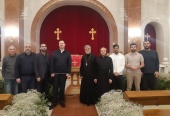
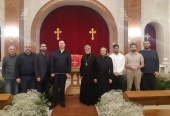
On November 1, 2024, a round table «Russian, Assyrian and Armenian peoples in the history of the Russian state — eternal glory and sacred memory of ancestors»

was held in the Assyrian temple of the Blessed Virgin Mary (Mat Maryam) in Moscow under the chairmanship of its rector, the representative of the Assyrian Church of the East in Russia, Chorebishop Samano Odisho.

The event, timed to coincide with the celebrations of the Day of National Unity, was organized in the context of the course «Ancient Eastern Churches» — a joint project of the Department for External Church Relations of the Moscow Patriarchate and the Saint Cyril and Methodius Postgraduate School and Doctoral School.

The round table was attended by: assistant co-chair of the Commission for Dialogue between the Russian Orthodox Church and the Assyrian Church of the East Bishop of Krasnoslobodsk and Temnikovsky Kliment Hierodeacon Agafangel (Kishkin); an employee of the Russian Orthodox Church, a teacher of the OCAD S. G. Alferov; a specialist of the Commission for Dialogue between the Russian Orthodox Church and the Assyrian Church of the East.G. Alferov; a specialist in the sphere of interethnic and interreligious relations of the Novo-Nakhichevan and Russian Diocese of the Armenian Apostolic Church. Subdeacon Vartan Poghosyan; Director of the Museum of Armenian Church Art «Tapan» of the New Nakhchivan and Russian Diocese D.R. Baghdasaryan; Head of the parish youth association of Mat Maryam Temple A.G. Mezhdo.

While congratulating the gathered on the coming holiday, Bishop Samano Odisho noted that the active multifaceted cooperation between the Russian Orthodox Church, the Armenian Apostolic Church and the Assyrian Church of the East, which has been established in Moscow today, has deep roots and is based on the centuries-old friendship between Assyrians, Armenians and the peoples of historical Russia.

«It has pleased the Most High to bring our destinies closer together, to unite us under the cover of God-protected Russia, — one of the earthly appanages of the Pure Mother of the Lord Jesus Christ. Russian civilization, to which belong many peoples belonging to different religious traditions, is basically an integral part of the Eastern Christian civilization. In Russia, the Russian, Assyrian and Armenian Churches have always been the guardian Churches of the world of Eastern Christianity. Today it is widely known that in the last two centuries our ancestors together worked peacefully for the good of Russia and together heroically defended it with arms in their hands, inspired by the immortal feat of the People's Militia of 1612. But few people know that the history of our

A.G. Mezhdo, who spoke next, pointed out that the ties between the three Churches began long before the beginning of the 19th century, when the Armenian and Assyrian populated area was inhabited by Armenians and Assyrians.

A.G. Mezhdo, who spoke next, pointed out that the ties between the three Churches began long before the beginning of the 19th century, when Eastern Armenia, populated by Armenians and Assyrians, became part of the Russian Empire: «Interestingly, it was the Assyrian Church of the East that became the Church that contributed to the formation of the great Armenian tradition at the dawn of the Christian era. Later, in the Middle Ages, it was the Assyrian preachers who first brought the foundations of Christian doctrine and culture to many lands that would later become part of the canonical space of the Russian Orthodox Church — the territories of the North and South Caucasus, the Lower Volga region, Central Asia, Siberia and the Far East. The rapprochement of our Churches and peoples was deeply providential»

.

S.G. Alferov in his speech drew attention to the fact that the first reliably documented meeting of Russian Orthodox people and Assyrian Christians took place in 1248 in the capital of the Mongol Empire, Karakorum, where at that time there was a temple of the Church of the East. It is especially noteworthy that the Russian embassy that visited Mongolia at that time was headed by the holy prince Alexander Nevsky.

«Though briefly, Russian chronicle sources confirm that the embassy of St. Prince Alexander included our Orthodox clergy. Moreover, there is indirect evidence indicating that Russian clerics and monks met with Christian clergy of the Syriac tradition even earlier — in the Lower Volga region, where the center of the Golden Horde was the city of Sarai. Like Russians, Assyrians suffered a lot from Mongol-Tatar enslavers and fought with them — and for their personal freedom, and for the right to confess the Christian faith. All this allows us to say that the historical ties not only between Russians and Assyrians, but between the Russian Orthodox Church and the Assyrian Church of the East have almost eight centuries», — emphasized the representative of the Russian Orthodox Church.

S.G. Alferov also noted that the ties between the Russian Orthodox Church and the Armenian Apostolic Church, which in the person of its clergy and ordinary believers was represented in Kievan Rus» are even more ancient.

As a follow-up to this thesis, Subdeacon Vartan Poghosyan emphasized that contacts between the peoples of Armenia and Rus were established in very ancient times. The appearance of the first Armenian settlement, including church and parish community in Kiev dates back to the XI century, in Moscow — to the XIV century. It is difficult to overestimate the contribution of the Armenian of the people in the creation and development of the Russian state.

«In 1380, Armenians took part in the fateful for Russia battle of Kulikovo on the side of the united Russian army under the leadership of Prince Dimitri Donskoy. Our ancestors, brought up in the bosom of Russian Orthodox culture, showed many feats for the glory of their earthly Fatherland. They distinguished themselves in a number of other military campaigns, including those of the pre-Petrine era, — for example, in the Kazan campaign of 1552. In memory of Tsar Ioann the Terrible's gratitude to Armenian cannoneers, with the help of whom Russian troops took Kazan, one of the thrones of the world-famous St. Basil's Cathedral was consecrated in honor of St. Gregory the Equal-to-the-Apostles, the enlightener of Armenia. For the Armenian people, the magnificent cathedral on Red Square is a sacred memory and a visible symbol of our brotherhood with the Russian world. As well as the monument standing in front of this cathedral today, depicting our common eternal gratitude to the saviors of Russia — citizen Minin and Prince Pozharsky», — said in his speech the representative of the New Nakhichevan and Russian Diocese.

After the round table, a festive reception was given in the parish house of Mat Maryam temple. The participants of the meeting also discussed plans to implement on the basis of the course «Ancient Orientals. Church» a number of projects in the scientific, educational, cultural and youth spheres in the period until the end of 2025.

EVCS Communication Service/Patriarchy.ru
Share:
Representatives of the Moscow Patriarchate, the Assyrian Church of the East and the Armenian Apostolic Church held a round table in honor of the Day of National Unity Representatives of the Moscow Patriarchate, the Assyrian Church of the East and the Armenian Apostolic Church held a round table in honor of the Day of National Unity On November 1, 2024, a round table «Russian, Assyrian and Armenian peoples in the history of the Russian state — eternal glory and sacred memory of ancestors» was held in the Assyrian temple of the Blessed Virgin Mary (Mat Maryam) in Moscow under the chairmanship of its rector, the representative of the Assyrian Church of the East in Russia, Chorebishop Samano Odisho. The event, timed to coincide with the celebrations of the Day of National Unity, was organized in the context of the course «Ancient Eastern Churches» — a joint project of the Department for External Church Relations of the Moscow Patriarchate and the Saint Cyril and Methodius Postgraduate School and Doctoral School. The round table was attended by: assistant co-chair of the Commission for Dialogue between the Russian Orthodox Church and the Assyrian Church of the East Bishop of Krasnoslobodsk and Temnikovsky Kliment Hierodeacon Agafangel (Kishkin); an employee of the Russian Orthodox Church, a teacher of the OCAD S. G. Alferov; a specialist of the Commission for Dialogue between the Russian Orthodox Church and the Assyrian Church of the East.G. Alferov; a specialist in the sphere of interethnic and interreligious relations of the Novo-Nakhichevan and Russian Diocese of the Armenian Apostolic Church. Subdeacon Vartan Poghosyan; Director of the Museum of Armenian Church Art «Tapan» of the New Nakhchivan and Russian Diocese D.R. Baghdasaryan; Head of the parish youth association of Mat Maryam Temple A.G. Mezhdo. While congratulating the gathered on the coming holiday, Bishop Samano Odisho noted that the active multifaceted cooperation between the Russian Orthodox Church, the Armenian Apostolic Church and the Assyrian Church of the East, which has been established in Moscow today, has deep roots and is based on the centuries-old friendship between Assyrians, Armenians and the peoples of historical Russia. «It has pleased the Most High to bring our destinies closer together, to unite us under the cover of God-protected Russia, — one of the earthly appanages of the Pure Mother of the Lord Jesus Christ. Russian civilization, to which belong many peoples belonging to different religious traditions, is basically an integral part of the Eastern Christian civilization. In Russia, the Russian, Assyrian and Armenian Churches have always been the guardian Churches of the world of Eastern Christianity. Today it is widely known that in the last two centuries our ancestors together worked peacefully for the good of Russia and together heroically defended it with arms in their hands, inspired by the immortal feat of the People's Militia of 1612. But few people know that the history of our A.G. Mezhdo, who spoke next, pointed out that the ties between the three Churches began long before the beginning of the 19th century, when the Armenian and Assyrian populated area was inhabited by Armenians and Assyrians. A.G. Mezhdo, who spoke next, pointed out that the ties between the three Churches began long before the beginning of the 19th century, when Eastern Armenia, populated by Armenians and Assyrians, became part of the Russian Empire: «Interestingly, it was the Assyrian Church of the East that became the Church that contributed to the formation of the great Armenian tradition at the dawn of the Christian era. Later, in the Middle Ages, it was the Assyrian preachers who first brought the foundations of Christian doctrine and culture to many lands that would later become part of the canonical space of the Russian Orthodox Church — the territories of the North and South Caucasus, the Lower Volga region, Central Asia, Siberia and the Far East. The rapprochement of our Churches and peoples was deeply providential» . S.G. Alferov in his speech drew attention to the fact that the first reliably documented meeting of Russian Orthodox people and Assyrian Christians took place in 1248 in the capital of the Mongol Empire, Karakorum, where at that time there was a temple of the Church of the East. It is especially noteworthy that the Russian embassy that visited Mongolia at that time was headed by the holy prince Alexander Nevsky. «Though briefly, Russian chronicle sources confirm that the embassy of St. Prince Alexander included our Orthodox clergy. Moreover, there is indirect evidence indicating that Russian clerics and monks met with Christian clergy of the Syriac tradition even earlier — in the Lower Volga region, where the center of the Golden Horde was the city of Sarai. Like Russians, Assyrians suffered a lot from Mongol-Tatar enslavers and fought with them — and for their personal freedom, and for the right to confess the Christian faith. All this allows us to say that the historical ties not only between Russians and Assyrians, but between the Russian Orthodox Church and the Assyrian Church of the East have almost eight centuries», — emphasized the representative of the Russian Orthodox Church. S.G. Alferov also noted that the ties between the Russian Orthodox Church and the Armenian Apostolic Church, which in the person of its clergy and ordinary believers was represented in Kievan Rus» are even more ancient. As a follow-up to this thesis, Subdeacon Vartan Poghosyan emphasized that contacts between the peoples of Armenia and Rus were established in very ancient times. The appearance of the first Armenian settlement, including church and parish community in Kiev dates back to the XI century, in Moscow — to the XIV century. It is difficult to overestimate the contribution of the Armenian of the people in the creation and development of the Russian state. «In 1380, Armenians took part in the fateful for Russia battle of Kulikovo on the side of the united Russian army under the leadership of Prince Dimitri Donskoy. Our ancestors, brought up in the bosom of Russian Orthodox culture, showed many feats for the glory of their earthly Fatherland. They distinguished themselves in a number of other military campaigns, including those of the pre-Petrine era, — for example, in the Kazan campaign of 1552. In memory of Tsar Ioann the Terrible's gratitude to Armenian cannoneers, with the help of whom Russian troops took Kazan, one of the thrones of the world-famous St. Basil's Cathedral was consecrated in honor of St. Gregory the Equal-to-the-Apostles, the enlightener of Armenia. For the Armenian people, the magnificent cathedral on Red Square is a sacred memory and a visible symbol of our brotherhood with the Russian world. As well as the monument standing in front of this cathedral today, depicting our common eternal gratitude to the saviors of Russia — citizen Minin and Prince Pozharsky», — said in his speech the representative of the New Nakhichevan and Russian Diocese. After the round table, a festive reception was given in the parish house of Mat Maryam temple. The participants of the meeting also discussed plans to implement on the basis of the course «Ancient Orientals. Church» a number of projects in the scientific, educational, cultural and youth spheres in the period until the end of 2025. EVCS Communication Service/Patriarchy.ru
On November 1, 2024, a round table «Russian, Assyrian and Armenian peoples in the history of the Russian state — eternal glory and sacred memory of ancestors» was held in the Assyrian temple of the Blessed Virgin Mary (Mat Maryam) in Moscow under the chairmanship of its rector, the representative of the Assyrian Church of the East in Russia, Chorebishop Samano Odisho. The event, timed to coincide with the celebrations of the Day of National Unity, was organized in the context of the course «Ancient Eastern Churches» — a joint project of the Department for External Church Relations of the Moscow Patriarchate and the Saint Cyril and Methodius Postgraduate School and Doctoral School. The round table was attended by: assistant co-chair of the Commission for Dialogue between the Russian Orthodox Church and the Assyrian Church of the East Bishop of Krasnoslobodsk and Temnikovsky Kliment Hierodeacon Agafangel (Kishkin); an employee of the Russian Orthodox Church, a teacher of the OCAD S. G. Alferov; a specialist of the Commission for Dialogue between the Russian Orthodox Church and the Assyrian Church of the East.G. Alferov; a specialist in the sphere of interethnic and interreligious relations of the Novo-Nakhichevan and Russian Diocese of the Armenian Apostolic Church. Subdeacon Vartan Poghosyan; Director of the Museum of Armenian Church Art «Tapan» of the New Nakhchivan and Russian Diocese D.R. Baghdasaryan; Head of the parish youth association of Mat Maryam Temple A.G. Mezhdo. While congratulating the gathered on the coming holiday, Bishop Samano Odisho noted that the active multifaceted cooperation between the Russian Orthodox Church, the Armenian Apostolic Church and the Assyrian Church of the East, which has been established in Moscow today, has deep roots and is based on the centuries-old friendship between Assyrians, Armenians and the peoples of historical Russia. «It has pleased the Most High to bring our destinies closer together, to unite us under the cover of God-protected Russia, — one of the earthly appanages of the Pure Mother of the Lord Jesus Christ. Russian civilization, to which belong many peoples belonging to different religious traditions, is basically an integral part of the Eastern Christian civilization. In Russia, the Russian, Assyrian and Armenian Churches have always been the guardian Churches of the world of Eastern Christianity. Today it is widely known that in the last two centuries our ancestors together worked peacefully for the good of Russia and together heroically defended it with arms in their hands, inspired by the immortal feat of the People's Militia of 1612. But few people know that the history of our A.G. Mezhdo, who spoke next, pointed out that the ties between the three Churches began long before the beginning of the 19th century, when the Armenian and Assyrian populated area was inhabited by Armenians and Assyrians. A.G. Mezhdo, who spoke next, pointed out that the ties between the three Churches began long before the beginning of the 19th century, when Eastern Armenia, populated by Armenians and Assyrians, became part of the Russian Empire: «Interestingly, it was the Assyrian Church of the East that became the Church that contributed to the formation of the great Armenian tradition at the dawn of the Christian era. Later, in the Middle Ages, it was the Assyrian preachers who first brought the foundations of Christian doctrine and culture to many lands that would later become part of the canonical space of the Russian Orthodox Church — the territories of the North and South Caucasus, the Lower Volga region, Central Asia, Siberia and the Far East. The rapprochement of our Churches and peoples was deeply providential» . S.G. Alferov in his speech drew attention to the fact that the first reliably documented meeting of Russian Orthodox people and Assyrian Christians took place in 1248 in the capital of the Mongol Empire, Karakorum, where at that time there was a temple of the Church of the East. It is especially noteworthy that the Russian embassy that visited Mongolia at that time was headed by the holy prince Alexander Nevsky. «Though briefly, Russian chronicle sources confirm that the embassy of St. Prince Alexander included our Orthodox clergy. Moreover, there is indirect evidence indicating that Russian clerics and monks met with Christian clergy of the Syriac tradition even earlier — in the Lower Volga region, where the center of the Golden Horde was the city of Sarai. Like Russians, Assyrians suffered a lot from Mongol-Tatar enslavers and fought with them — and for their personal freedom, and for the right to confess the Christian faith. All this allows us to say that the historical ties not only between Russians and Assyrians, but between the Russian Orthodox Church and the Assyrian Church of the East have almost eight centuries», — emphasized the representative of the Russian Orthodox Church. S.G. Alferov also noted that the ties between the Russian Orthodox Church and the Armenian Apostolic Church, which in the person of its clergy and ordinary believers was represented in Kievan Rus» are even more ancient. As a follow-up to this thesis, Subdeacon Vartan Poghosyan emphasized that contacts between the peoples of Armenia and Rus were established in very ancient times. The appearance of the first Armenian settlement, including church and parish community in Kiev dates back to the XI century, in Moscow — to the XIV century. It is difficult to overestimate the contribution of the Armenian of the people in the creation and development of the Russian state. «In 1380, Armenians took part in the fateful for Russia battle of Kulikovo on the side of the united Russian army under the leadership of Prince Dimitri Donskoy. Our ancestors, brought up in the bosom of Russian Orthodox culture, showed many feats for the glory of their earthly Fatherland. They distinguished themselves in a number of other military campaigns, including those of the pre-Petrine era, — for example, in the Kazan campaign of 1552. In memory of Tsar Ioann the Terrible's gratitude to Armenian cannoneers, with the help of whom Russian troops took Kazan, one of the thrones of the world-famous St. Basil's Cathedral was consecrated in honor of St. Gregory the Equal-to-the-Apostles, the enlightener of Armenia. For the Armenian people, the magnificent cathedral on Red Square is a sacred memory and a visible symbol of our brotherhood with the Russian world. As well as the monument standing in front of this cathedral today, depicting our common eternal gratitude to the saviors of Russia — citizen Minin and Prince Pozharsky», — said in his speech the representative of the New Nakhichevan and Russian Diocese. After the round table, a festive reception was given in the parish house of Mat Maryam temple. The participants of the meeting also discussed plans to implement on the basis of the course «Ancient Orientals. Church» a number of projects in the scientific, educational, cultural and youth spheres in the period until the end of 2025. EVCS Communication Service/Patriarchy.ru