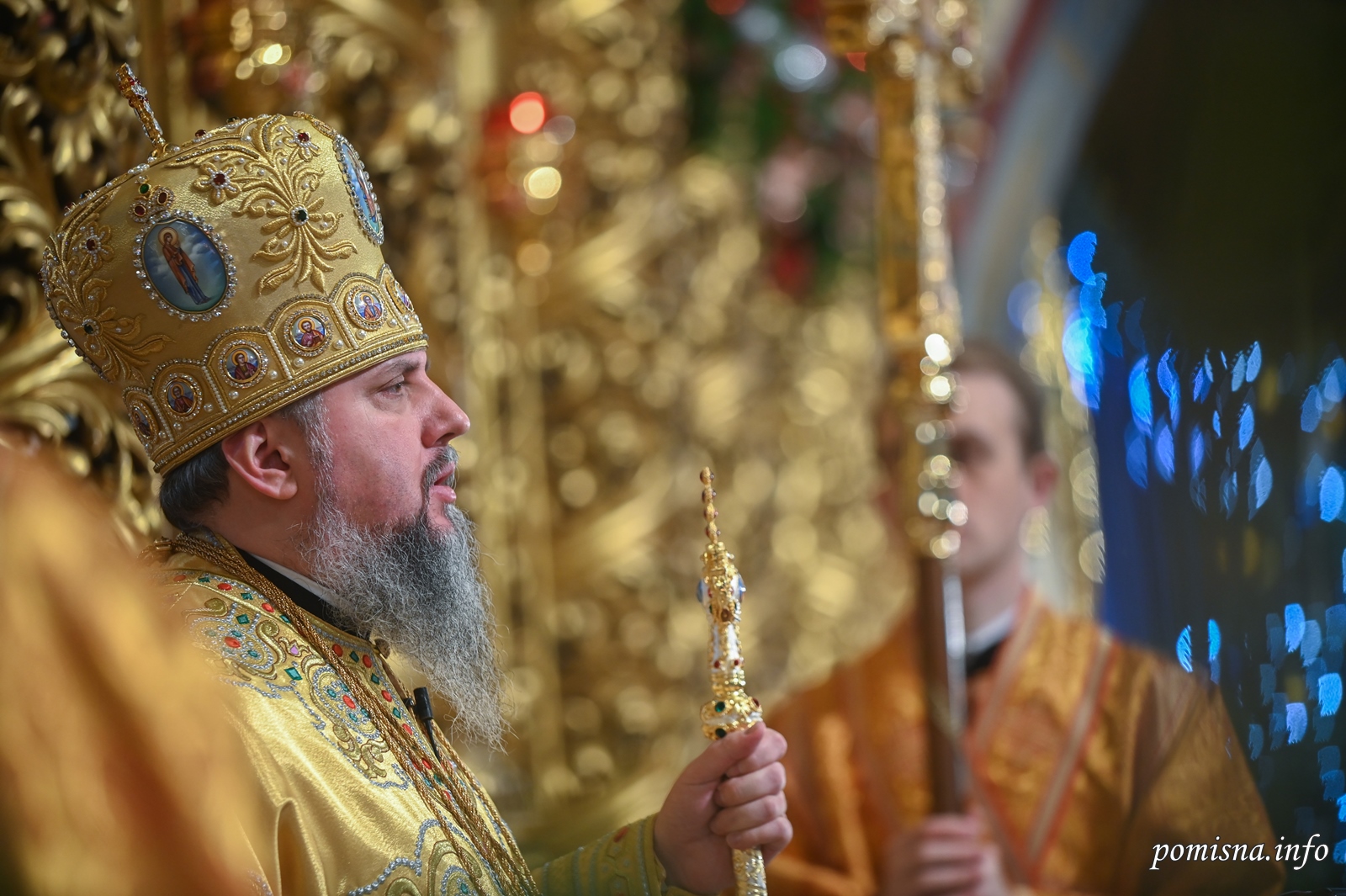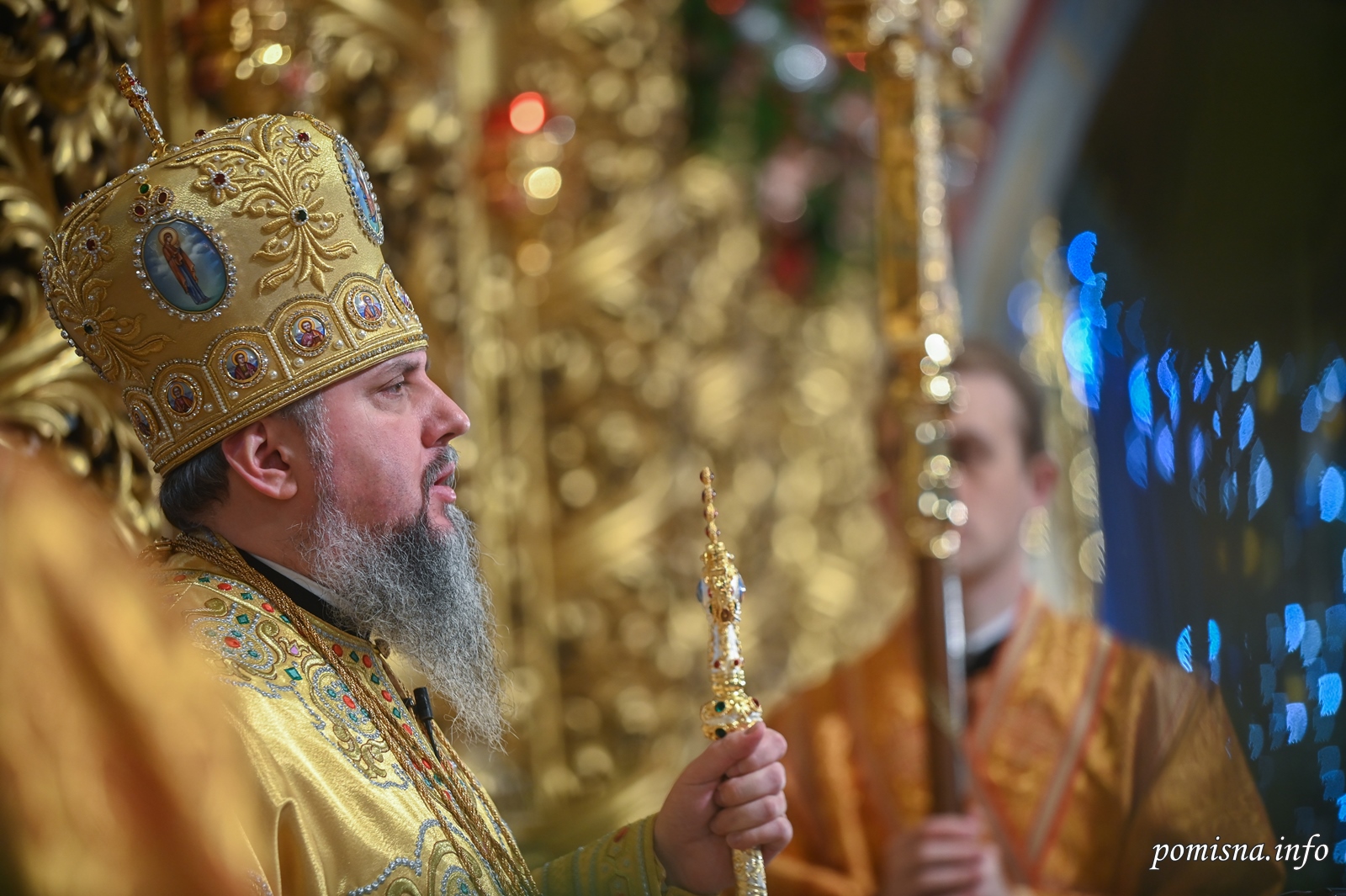
Sermon by His Beatitude Metropolitan Epiphanius of Kyiv and All Ukraine
on the Feast of the Circumcision of the Lord
Dear brothers and sisters! Glory to Jesus Christ!
I cordially congratulate everyone on the Feast of the Circumcision of the Lord, on St. Basil the Great Memorial Day, and on the Civil New Year!
According to the Old Testament law, on the eighth day after the birth of a male child among the people of Israel, the child was circumcised and given a personal name. In this way a new generation and a new person entered into the covenant with God, made between the Most High and the forefather Abraham and his descendants.
The newborn Savior was also subject to this law, therefore on the eighth day after the Nativity circumcision was performed on Him and a name was given to Him - the name that had been communicated to Joseph the Betrothed in advance through the angel. This name is Jesus, which means "God is salvation" in the ancient Hebrew language.
Why do we Christians remember this event, moreover, celebrate it? First of all, because it is mentioned in the Gospel and has a significant meaning in the earthly life of the Savior. What is this significance? It is that the newborn Lord, as the Son of Man, takes upon Himself the obligation of the covenant, He joins the Church of the Old Testament and receives the testimony of belonging to it. to the descendants of Abraham, from whom, according to prophecy, the Messiah was to come and did come.
This also affirms once again the reality of the Incarnation of God. For Christ was not born phantomically, or imaginary, or a vision or an image, but He was born truly as a man, having assumed from Mary the Virgin through conception by the Holy Spirit a true human nature.
Through the giving of a name, the mystery of God's Providence is also fulfilled. For the name as such affirms the uniqueness of the person. By its name one person is distinguished from another. The child, in receiving the name Jesus, did not merely receive a trait by which he is distinguished from others. Usually parents, or those with parental authority, give a person a name. But the name Jesus, as has already been said, was announced beforehand through an angel from God Himself. This witnessed the fulfillment of the prophecies - the child born receives a name that points to Him as the Divine Savior.
In addition to all these aspects of our celebration, we have one more that concerns each of us directly. We know from the Gospel and the teaching of the Church that the Old Testament circumcision was the prototype of our sacrament of baptism. It is also in connection with baptism that a Christian name is given to a newborn child. Therefore, as we celebrate now, we should remember not only the an ancient biblical event, but also about our own baptism.
Because through our baptism we have entered into a covenant with God and become members of the Church. This covenant means not only the obligation that God takes before us, promising us deliverance from the power of sin and eternal blissful life in His kingdom. The covenant also means our commitment to believe in God, to acknowledge Christ the Savior, to obey the commandments proclaimed through Revelation, the most important of which is the commandment to love God and neighbor.
Today we celebrate the civil New Year. And the beginning of the new year is a good occasion for each of us to renew our awareness of our baptismal vows before the Lord and the Church to renounce Satan, to renounce all his works and to serve him, to unite with Christ and to believe in Him as King and God. Each of us has made these vows personally or through the testimony of godparents. Through this confession we have entered into a personal covenant with God. This should be remembered as our daily duty. After all, the eternity we will inherit depends on our keeping our promises - whether we will have the bliss God has prepared for the righteous or the suffering prepared for the devil and his servants.
Dear brothers and sisters!
Today we, in addition to We recall St. Basil the Great, Archbishop of Caesarea. He belongs among the most outstanding hierarchs of the Church and theologians. Although he lived a relatively short life, his contribution to the development of Orthodox theology and the overcoming of heresies, to the development of monastic tradition and canon law, his liturgical legacy, which we have in the form of the special rite of the Eucharist - all this is difficult to overestimate.
Therefore, the Church glorifies St. Basil with special solemnity today, thus recalling not only his exemplary life, but also his teaching. This teaching rejects the wicked Arian heresy, which denied the Trinitarian God and reduced the Son of God to the level of only one of the creatures. Instead, it affirms the equality and consubstantiality of the Persons of the Blessed Trinity - Father, Son and Holy Spirit.
Dear brothers and sisters!
Heartily congratulating everyone on the holidays we are now honoring, I wish everyone God's blessing in the year that has begun, and I wish our Ukraine victory over the Russian evil empire and the establishment of a just peace. I wish that we never forget the vows we have made before God, but that every day we make efforts to fulfill them. I wish to preserve and increase the Christian Orthodox faith that we have adopted from preaching the gospel through the doctrine of the church of Christ, for through this we shall have eternal life.
We thank the Lord for all the favors we have had from Him in the past year, and may the year that begins be a year of God's mercy and power!
Amen.
Share: