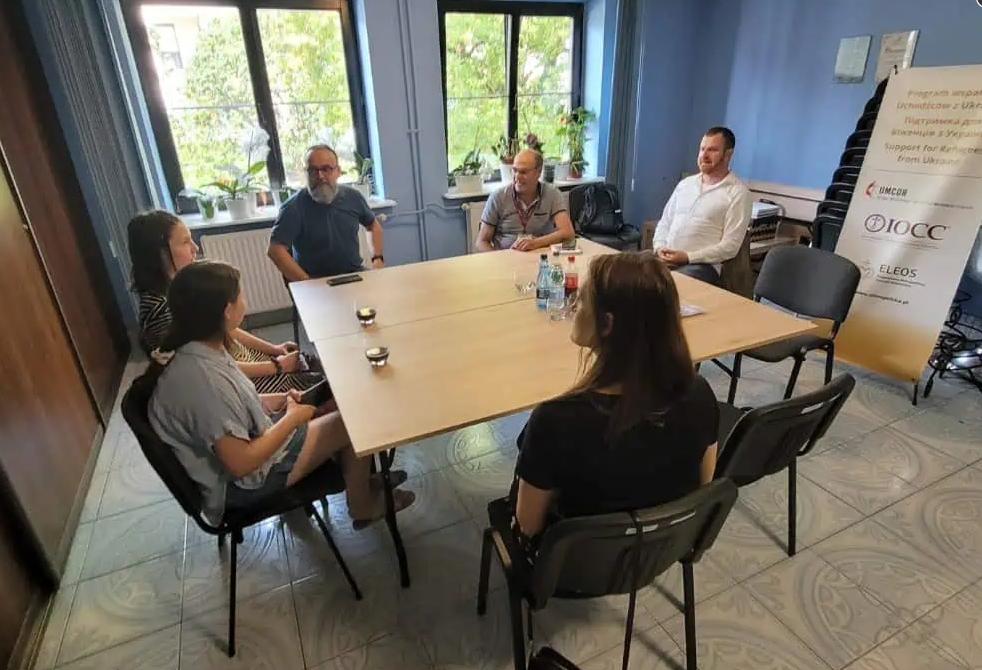
On July 18-19, 2024, a delegation from ELEOS Polska together with representatives of International Orthodox Christian Charities (IOCC) visited support projects for communities with migration experience in the Diocese of Lublin-Chelm.
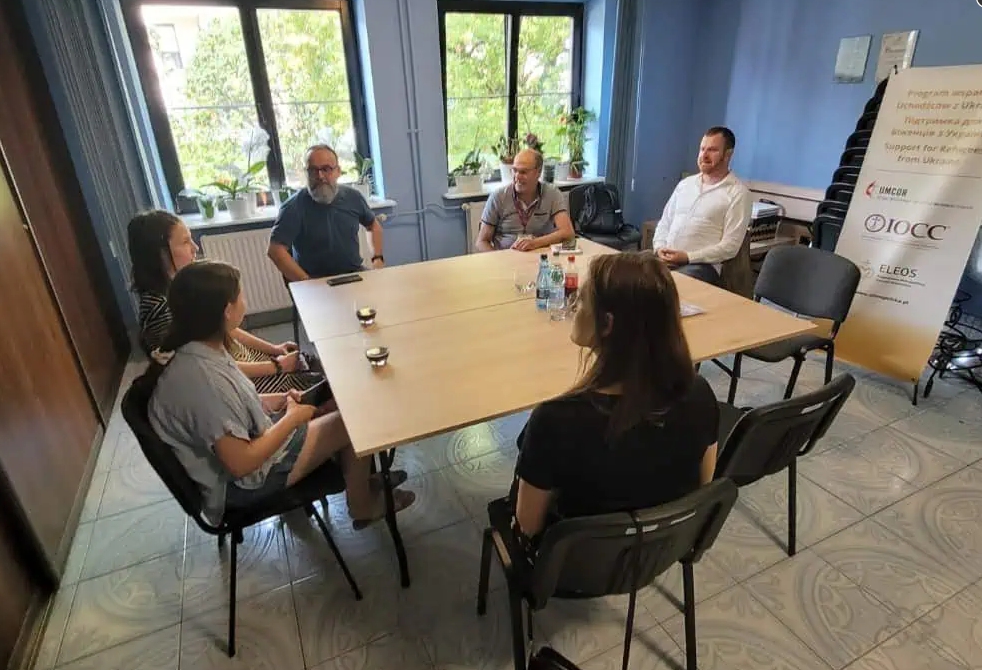
On the first day, the delegation traveled to Biala Podlaska, where they met with the Orthodox Youth Fellowship of the Lublin-Chelm Diocese, a project led by Fr. Marcin Goscik. The purpose of the meeting was to evaluate the progress of the project, which effectively integrated the local community with refugees from Ukraine. The participants discussed integration needs and the daily challenges of living in Poland. The result of the meeting was a stronger community and a better understanding of each other's needs.
After a busy day of work, the guests spent the night in Janów Podlaski and visited Lublin the next day. There they visited three community centers within the framework of the project "Organization, equipment and online educational workshops for refugee children from Ukraine". These projects are implemented with the support of the UCUC and UMCOR by the Orthodox House of Social Welfare, the Orthodox Parish of St. Metr. Peter (Graves) and the Lublin Institute of Orthodox Culture. The guests also met with representatives of the residents of Lublin, visited local monuments and Orthodox sites temples.
The visit culminated with a meeting with the ordinariate of the diocese, Archbishop Abel, who got acquainted with the activities of the UCC and the partner organization ELEOS Polska. The meeting focused on sharing experiences and the needs of communities experiencing military migration.
The visit of the delegation was not only an opportunity to follow the progress of the projects, but also to build bridges of understanding and support between different cultural and social groups. The meetings in Biala Podlaska and Lublin showed that such initiatives are crucial for the integration and support of people migrating in a new environment.
On the first day, the delegation traveled to Biala Podlaska, where they met with the Orthodox Youth Fellowship of the Lublin-Chelm Diocese, a project led by Fr. Marcin Goscik. The purpose of the meeting was to evaluate the progress of the project, which effectively integrated the local community with refugees from Ukraine. The participants discussed integration needs and the daily challenges of living in Poland. The result of the meeting was a stronger community and a better understanding of each other's needs.
After a busy day of work, the guests spent the night in Janów Podlaski and visited Lublin the next day. There they visited three community centers within the framework of the project "Organization, equipment and online educational workshops for refugee children from Ukraine". These projects are implemented with the support of the UCUC and UMCOR by the Orthodox House of Social Welfare, the Orthodox Parish of St. Metr. Peter (Graves) and the Lublin Institute of Orthodox Culture. The guests also met with representatives of the residents of Lublin, visited local monuments and Orthodox sites temples.
The visit culminated with a meeting with the ordinariate of the diocese, Archbishop Abel, who got acquainted with the activities of the UCC and the partner organization ELEOS Polska. The meeting focused on sharing experiences and the needs of communities experiencing military migration.
The visit of the delegation was not only an opportunity to follow the progress of the projects, but also to build bridges of understanding and support between different cultural and social groups. The meetings in Biala Podlaska and Lublin showed that such initiatives are crucial for the integration and support of people migrating in a new environment.
Share: