In Europe, attitudes towards death are changing

В Европе отношение к смерти меняется
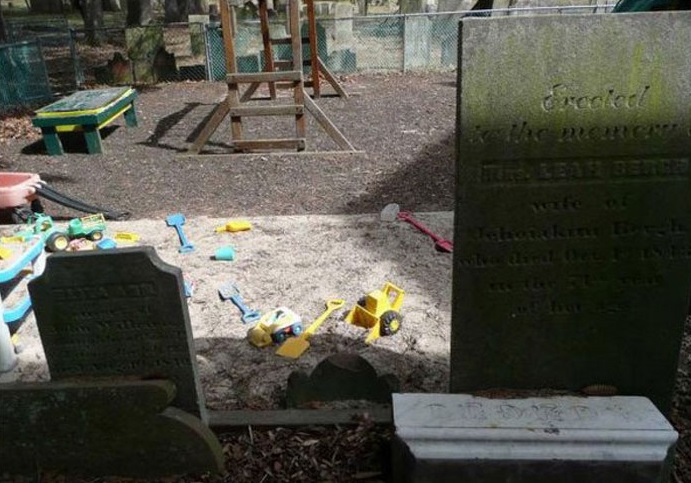
Modern European civilization is often called post-Christian, as one of its features, highlighting the taboo of the topic of death in everyday communication. People simply avoid talking about life beyond the line, and the interlocutor who nevertheless raises this topic is considered 'difficult' or 'inconvenient.' While for a person with a Christian consciousness, death is a mournful but majestic moment, and the constant memory of it is a trait of a spiritually mature person. However, attitudes towards death in the Old World seem to be beginning to change. The question is - in the wrong direction? For example, the Union of German funeral organizations (Bund Deutscher Bestatter) has taken the initiative to place cafes, restaurants and even playgrounds in cemeteries. According to Bild, the Strauss Café is already functioning at the Friedrichswerder Cemetery in Berlin-Kreuzberg, and a playground has been set up in Karlsruhe. The chairman of the union, Oliver Wirtmann, seriously counts on the support of the new initiative by the German society. The goal of the project, according to Wirtmann, is to remind young people that death is present in one way or another in the life of every person. Here are just playgrounds and eateries surrounded by crosses and tombstones, perhaps not the most successful way to return people an important Christian virtue - 'the memory of death.'
Share:
In Europe, attitudes towards death are changing In Europe, attitudes towards death are changing Modern European civilization is often called post-Christian, as one of its features, highlighting the taboo of the topic of death in everyday communication. People simply avoid talking about life beyond the line, and the interlocutor who nevertheless raises this topic is considered 'difficult' or 'inconvenient.' While for a person with a Christian consciousness, death is a mournful but majestic moment, and the constant memory of it is a trait of a spiritually mature person. However, attitudes towards death in the Old World seem to be beginning to change. The question is - in the wrong direction? For example, the Union of German funeral organizations (Bund Deutscher Bestatter) has taken the initiative to place cafes, restaurants and even playgrounds in cemeteries. According to Bild, the Strauss Café is already functioning at the Friedrichswerder Cemetery in Berlin-Kreuzberg, and a playground has been set up in Karlsruhe. The chairman of the union, Oliver Wirtmann, seriously counts on the support of the new initiative by the German society. The goal of the project, according to Wirtmann, is to remind young people that death is present in one way or another in the life of every person. Here are just playgrounds and eateries surrounded by crosses and tombstones, perhaps not the most successful way to return people an important Christian virtue - 'the memory of death.'
Modern European civilization is often called post-Christian, as one of its features, highlighting the taboo of the topic of death in everyday communication. People simply avoid talking about life beyond the line, and the interlocutor who nevertheless raises this topic is considered 'difficult' or 'inconvenient.' While for a person with a Christian consciousness, death is a mournful but majestic moment, and the constant memory of it is a trait of a spiritually mature person. However, attitudes towards death in the Old World seem to be beginning to change. The question is - in the wrong direction? For example, the Union of German funeral organizations (Bund Deutscher Bestatter) has taken the initiative to place cafes, restaurants and even playgrounds in cemeteries. According to Bild, the Strauss Café is already functioning at the Friedrichswerder Cemetery in Berlin-Kreuzberg, and a playground has been set up in Karlsruhe. The chairman of the union, Oliver Wirtmann, seriously counts on the support of the new initiative by the German society. The goal of the project, according to Wirtmann, is to remind young people that death is present in one way or another in the life of every person. Here are just playgrounds and eateries surrounded by crosses and tombstones, perhaps not the most successful way to return people an important Christian virtue - 'the memory of death.'