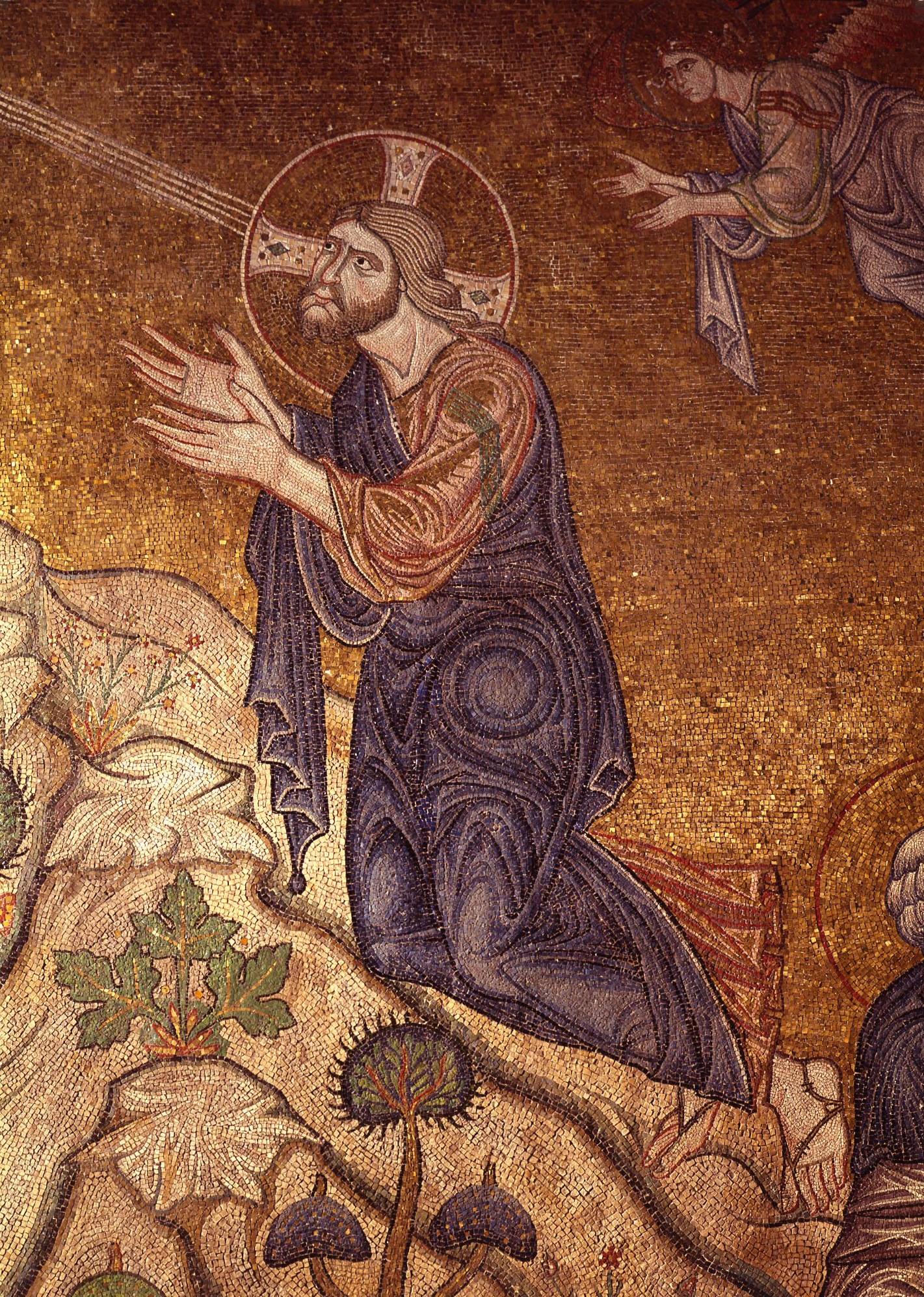
One of the most important and dramatic themes in Christian art is the cycle of the Passion of Christ (from Orthodoxy. Strastь - 'suffering'). Its iconography developed relatively late - in the second half of the 14th century, when the art of the Byzantine Empire, which was in a deep crisis, was especially prone to tragic and psychologically tense themes. Being under the strong influence of Byzantium, Ancient Russia adopted and developed its icon-painting canon. The Passion Cycle includes the plots of the final chapters of all four Gospels, telling about the last days and hours of the earthly life of Jesus Christ. Chronologically, the events of the Passion Cycle begin after the Last Supper, during which Jesus announced to his disciples that one of them would betray him. The main themes of the Passion of Christ are the Prayer for the Chalice, the Judgment of Pilate, the Way of the Cross and the Crucifixion - the culmination of the Passion. The cycle is complemented by events that took place after the earthly life of Jesus ended - these are the Entombment (Lamentation) and the Descent into Hell. The time when the church remembers the most tragic pages from the life of Christ is Passion Week - the last week before Easter. Prayer for the Cup At the end of the supper, Jesus and his disciples went to Jerusalem on the Mount of Olives in the Garden of Gethsemane. Leaving the disciples at the entrance, he withdrew inland with Peter, James and John and began to grieve and yearn for the coming Suffering. Three times he stood up to prayer: the first time Jesus asked for the Chalice of suffering to be turned away from him, the second and third expressed direct obedience to the will of the Father. Despite the fact that he asked his disciples to stay awake with him, each time Jesus returned from prayer, Jesus found the apostles asleep. Approaching them for the third time, he said: “You are still sleeping and resting; now the hour has come, and the Son of Man is betrayed into the hands of sinners. ' In the compositions on this plot, according to the story, the apostles asleep at the Mount of Olives and Christ praying and addressing them are represented.
Christ at Judgment with Pilate, the high priests, having condemned Jesus to death, could not carry out their sentence without the approval of the Roman governor in Judea, Pontius Pilate. He did not find the guilt of Christ and wanted to release him, but the members of the Sanhedrin stirred up the people to demand the death of Jesus: even after the scourging and reproach of Christ, the crowd did not want his release: 'May he be crucified!' Seeing the confusion among the people, Pilate washed his hands with the words: 'I am not guilty of the blood of this righteous man.' At the request of the Jews, Pilate betrayed Christ to be crucified. A very remarkable detail is often repeated in the icons of this plot: the leg of the throne on which Pilate sits is depicted in an unstable position, as if hanging from a step, which, of course, has a symbolic meaning.
Procession to Golgotha (Leading to the Cross) “When they laughed at him, they took off his purple robe, clothed him into his own garments, and they led him out to crucify him. ' Those condemned to be crucified were supposed to carry their cross themselves, but Christ, as three of the four evangelists (Matthew, Mark and Luke) testify, was so exhausted that he was not able to do this. John says that Christ himself bore his cross. Therefore, in Byzantine art, two iconographic types of this plot developed: one depicts Jesus independently carrying the cross, in the other, Simon of Cyrene is carrying the cross, and Christ, accompanied by Roman soldiers, follows them. The second composition is often complemented by figures of two robbers sentenced to crucifixion with crosses on their shoulders, and images of holy women “who wept and wept” for the Savior.
Crucifixion Death by crucifixion in Rome was considered shameful, and according to the custom of the Jews, hanging from a tree was considered cursed. It is noteworthy that the first Christians never depicted scenes of the Crucifixion. The veneration of this event was established only after the abolition of the death penalty by crucifixion (usually applied to slaves), which was done only in the 5th century. And the image of the cross with the figure of the crucified Jesus became widespread even later - after the decisions of the Ecumenical Council of 692, Christ is depicted crucified on the cross with a bandage on his loins, above his head to the cross there is a plaque with the inscription “INRI” (“Iesus Nazarenus Rex Ivdæorum - Jesus Nazarene King of the Jews '). In the Orthodox tradition, the body of Christ is always depicted nailed with four nails, in contrast to the Western, where the legs are nailed with one nail. To the right of the cross is the Mother of God in great sorrow and tearful prayer. Next to her is one (Mary Kleopova, Magdalene), or several holy wives.
The composition of the Crucifixion can have several iconographic variants. For example, on the icon of the early 16th century, belonging to the brush of Dionysius, depicts a black seven-pointed cross with a crucified Jesus. On the left of the cross stands the Mother of God and three wives, on the right - the Apostle John and a Roman soldier in armor with a shield in his hands. This is the centurion (centurion) Longinus. According to some legends, it was he who dealt a fatal blow to Christ with a spear in the side, but soon after that he believed in him. The Christian Church considers Longinus a saint and canonize him as a martyr, but in the scene of the Crucifixion he is depicted without a halo: Christ is still dead, the centurion is still a pagan.
Weeping angels soar above the cross, and under its central crossbar are depicted two figures floating in the air and the angels following them: this is the personification of the Moon (in purple-blue clothes) and the Sun (in red and gold garments), and the angels who control the running of the stars, hurry to bring them down from heaven. The Gospel tells us that before Christ gave up the ghost, “darkness became over all the earth and the sun darkened. ' In the black mouth of the cave at the foot of Golgotha, you can see a skull that has turned yellow from time to time. It belongs to Adam, the first man on earth to commit the first sin in the world. This original sin from that time gravitated over all mankind and was removed only by the atoning sacrifice of Christ. Christ was crucified on Calvary, over the place where the tomb of Adam was. The blood from the side pierced by the spear spilled onto the bones of Adam and thereby washed away the original sin. From the early Byzantine period, images of robbers executed together with Christ, who were not nailed, but more often tied to the cross, were sometimes introduced into the composition of the Crucifixion. In the apocryphal text of Nicodemus, their names are mentioned: the one crucified on the left was called Gestas, on the right - Dismas. In this more verbose version, one can see soldiers offering Christ a sponge with vinegar, dividing his clothes and killing the thieves' legs. Descent from the Cross and Entombment (Lamentation) According to the texts of the Gospels, Joseph of Arimathea (the secret disciple of Christ), together with Nicodemus, removed the body of the Savior from the cross, anointed it with incense, wrapped it in a shroud and laid it in a coffin in a cave near Calvary. Those close to him said goodbye to him, mourning. The event image can be found in different versions. Most often in a stone tomb, Jesus is presented lying, to to whose head the Mother of God falls; John the Theologian (the young disciple of Christ) and the elder Joseph are bending over the body, the myrrh-bearing wives and Nicodemus are standing nearby.
Descent into Hell (Resurrection) The iconography of this plot was formed under the influence of both the Gospel narrative and the apocryphal stories. The image is based on the idea of the Holy Scriptures that after the Savior has atoned for human sins, he will be resurrected from the dead. Christ descended into hell and freed the souls of the Old Testament righteous, overthrowing Satan. In images of this type, Christ is depicted as descending through the gates of hell, destroyed and laid crosswise. With his right hand, he leads Adam out of hell, with his left hand, Eve. On either side of it are two groups of figures of the forefathers and Old Testament prophets: kings David and Solomon in crowns, Moses with a book of tablets in his hands. Adam and Eve are dressed in green and red robes: these are earthly colors, symbolizing resurrection and renewal; on the Christ - the golden cloak of the winner. In the black open pit, the angels conquer the hellish forces, next to which their names are written: enmity, grief, madness, sorrow, despair, decay and, finally, death.
The passionate cycle in Orthodox churches was given a special place: in the ensemble of the high Russian iconostasis, icons with these most dramatic events were singled out in a separate row, located above the festive rite (or at the very top of the iconostasis). In large temples, the theme of the Passion was expanded and supplemented. In addition to those mentioned, such plots as 'The Tradition of Judas', 'The Desecration of Christ' and 'The Scourging of Christ' were introduced (in early Christian and Byzantine art, images of the scene of the Savior's suffering were avoided, and only in the XIII-XIV centuries this topic became quite widespread), ' Christ before Kaifa and Anna ',' Peter's Denial ',' The Confirmation of the Cross 'and others. Sacred places for any Christian associated with the last days of earthly life You can see the Savior with your own eyes right now by taking a virtual tour on our website . Walking along the Way of the Cross of Jesus ( Via Dolorosa ), you will make all nine stops associated with the suffering of the Savior, enter the Church of the Scourging, the Chapel of Condemnation, the Basilica of Ecce Homo, and in the main shrine of the entire Christian world - the Church of the Holy Sepulcher - touch the rock with the place crucifixion and the stone of chrismation, on which the body of Jesus was anointed with fragrant oils before burial, you will look into the chapels of Stabat Mater and the Holy Sepulcher, and in the chapel of Adam you will see a crevice in Calvary, through which the blood of the Savior spilled on the skull of the first man, him and from his descendants the seal of original sin.
 Praying for the cup. Old Russian icon. XVI century |  Fresco in the church John the Baptist, Yaroslavl. XVII century |  Praying for the cup. Fragment of Byzantine mosaic in the cathedral of San Marco, Venice. XIV century. |
Christ at Judgment with Pilate, the high priests, having condemned Jesus to death, could not carry out their sentence without the approval of the Roman governor in Judea, Pontius Pilate. He did not find the guilt of Christ and wanted to release him, but the members of the Sanhedrin stirred up the people to demand the death of Jesus: even after the scourging and reproach of Christ, the crowd did not want his release: 'May he be crucified!' Seeing the confusion among the people, Pilate washed his hands with the words: 'I am not guilty of the blood of this righteous man.' At the request of the Jews, Pilate betrayed Christ to be crucified. A very remarkable detail is often repeated in the icons of this plot: the leg of the throne on which Pilate sits is depicted in an unstable position, as if hanging from a step, which, of course, has a symbolic meaning.
 Christ at Pilate's Judgment. Old Russian icon. End of the 15th century |  Christ before Pilate (Pilate washes his hands). Fresco in the monastery Dionysios, Athos, Greece. XVI century |
Procession to Golgotha (Leading to the Cross) “When they laughed at him, they took off his purple robe, clothed him into his own garments, and they led him out to crucify him. ' Those condemned to be crucified were supposed to carry their cross themselves, but Christ, as three of the four evangelists (Matthew, Mark and Luke) testify, was so exhausted that he was not able to do this. John says that Christ himself bore his cross. Therefore, in Byzantine art, two iconographic types of this plot developed: one depicts Jesus independently carrying the cross, in the other, Simon of Cyrene is carrying the cross, and Christ, accompanied by Roman soldiers, follows them. The second composition is often complemented by figures of two robbers sentenced to crucifixion with crosses on their shoulders, and images of holy women “who wept and wept” for the Savior.
 Procession to Calvary. Fresco of the Church of St. Nicholas the Wet, Yaroslavl. XVII century |  Procession to Calvary. Old Russian icon. End of the 15th century |
Crucifixion Death by crucifixion in Rome was considered shameful, and according to the custom of the Jews, hanging from a tree was considered cursed. It is noteworthy that the first Christians never depicted scenes of the Crucifixion. The veneration of this event was established only after the abolition of the death penalty by crucifixion (usually applied to slaves), which was done only in the 5th century. And the image of the cross with the figure of the crucified Jesus became widespread even later - after the decisions of the Ecumenical Council of 692, Christ is depicted crucified on the cross with a bandage on his loins, above his head to the cross there is a plaque with the inscription “INRI” (“Iesus Nazarenus Rex Ivdæorum - Jesus Nazarene King of the Jews '). In the Orthodox tradition, the body of Christ is always depicted nailed with four nails, in contrast to the Western, where the legs are nailed with one nail. To the right of the cross is the Mother of God in great sorrow and tearful prayer. Next to her is one (Mary Kleopova, Magdalene), or several holy wives.
 Crucifixion. Byzantine mosaic in the church of St. Luke in Phocis, Greece. Beginning XI century |  Crucifixion. Old Russian icon. The beginning of the XVI century. |
The composition of the Crucifixion can have several iconographic variants. For example, on the icon of the early 16th century, belonging to the brush of Dionysius, depicts a black seven-pointed cross with a crucified Jesus. On the left of the cross stands the Mother of God and three wives, on the right - the Apostle John and a Roman soldier in armor with a shield in his hands. This is the centurion (centurion) Longinus. According to some legends, it was he who dealt a fatal blow to Christ with a spear in the side, but soon after that he believed in him. The Christian Church considers Longinus a saint and canonize him as a martyr, but in the scene of the Crucifixion he is depicted without a halo: Christ is still dead, the centurion is still a pagan.
 Crucifixion. Old Russian icon. Dionysius. The beginning of the XVI century. |  Crucifixion with robbers. The stamp of the icon 'Resurrection'. XVI century |
Weeping angels soar above the cross, and under its central crossbar are depicted two figures floating in the air and the angels following them: this is the personification of the Moon (in purple-blue clothes) and the Sun (in red and gold garments), and the angels who control the running of the stars, hurry to bring them down from heaven. The Gospel tells us that before Christ gave up the ghost, “darkness became over all the earth and the sun darkened. ' In the black mouth of the cave at the foot of Golgotha, you can see a skull that has turned yellow from time to time. It belongs to Adam, the first man on earth to commit the first sin in the world. This original sin from that time gravitated over all mankind and was removed only by the atoning sacrifice of Christ. Christ was crucified on Calvary, over the place where the tomb of Adam was. The blood from the side pierced by the spear spilled onto the bones of Adam and thereby washed away the original sin. From the early Byzantine period, images of robbers executed together with Christ, who were not nailed, but more often tied to the cross, were sometimes introduced into the composition of the Crucifixion. In the apocryphal text of Nicodemus, their names are mentioned: the one crucified on the left was called Gestas, on the right - Dismas. In this more verbose version, one can see soldiers offering Christ a sponge with vinegar, dividing his clothes and killing the thieves' legs. Descent from the Cross and Entombment (Lamentation) According to the texts of the Gospels, Joseph of Arimathea (the secret disciple of Christ), together with Nicodemus, removed the body of the Savior from the cross, anointed it with incense, wrapped it in a shroud and laid it in a coffin in a cave near Calvary. Those close to him said goodbye to him, mourning. The event image can be found in different versions. Most often in a stone tomb, Jesus is presented lying, to to whose head the Mother of God falls; John the Theologian (the young disciple of Christ) and the elder Joseph are bending over the body, the myrrh-bearing wives and Nicodemus are standing nearby.
 Descent from the cross. Mosaic in the Church of the Holy Sepulcher in Jerusalem. XIX century. |  Mourning. Mosaic in the Church of the Holy Sepulcher in Jerusalem. XIX century. |
Descent into Hell (Resurrection) The iconography of this plot was formed under the influence of both the Gospel narrative and the apocryphal stories. The image is based on the idea of the Holy Scriptures that after the Savior has atoned for human sins, he will be resurrected from the dead. Christ descended into hell and freed the souls of the Old Testament righteous, overthrowing Satan. In images of this type, Christ is depicted as descending through the gates of hell, destroyed and laid crosswise. With his right hand, he leads Adam out of hell, with his left hand, Eve. On either side of it are two groups of figures of the forefathers and Old Testament prophets: kings David and Solomon in crowns, Moses with a book of tablets in his hands. Adam and Eve are dressed in green and red robes: these are earthly colors, symbolizing resurrection and renewal; on the Christ - the golden cloak of the winner. In the black open pit, the angels conquer the hellish forces, next to which their names are written: enmity, grief, madness, sorrow, despair, decay and, finally, death.
 Descent into Hell (Resurrection). Dionysius. Icon of the 16th century |  Descent into Hell. Byzantine mosaics in the Cathedral of San Marco, Venice. XIV century. |
The passionate cycle in Orthodox churches was given a special place: in the ensemble of the high Russian iconostasis, icons with these most dramatic events were singled out in a separate row, located above the festive rite (or at the very top of the iconostasis). In large temples, the theme of the Passion was expanded and supplemented. In addition to those mentioned, such plots as 'The Tradition of Judas', 'The Desecration of Christ' and 'The Scourging of Christ' were introduced (in early Christian and Byzantine art, images of the scene of the Savior's suffering were avoided, and only in the XIII-XIV centuries this topic became quite widespread), ' Christ before Kaifa and Anna ',' Peter's Denial ',' The Confirmation of the Cross 'and others. Sacred places for any Christian associated with the last days of earthly life You can see the Savior with your own eyes right now by taking a virtual tour on our website . Walking along the Way of the Cross of Jesus ( Via Dolorosa ), you will make all nine stops associated with the suffering of the Savior, enter the Church of the Scourging, the Chapel of Condemnation, the Basilica of Ecce Homo, and in the main shrine of the entire Christian world - the Church of the Holy Sepulcher - touch the rock with the place crucifixion and the stone of chrismation, on which the body of Jesus was anointed with fragrant oils before burial, you will look into the chapels of Stabat Mater and the Holy Sepulcher, and in the chapel of Adam you will see a crevice in Calvary, through which the blood of the Savior spilled on the skull of the first man, him and from his descendants the seal of original sin.
Share: