Outside the walls of the Old City, not far from the Shechem (Damascus) Gate, there is a place that is revered by Protestant Christians as a true Calvary and the true Sepulcher of the Lord - of course, in their understanding. What exactly made a group of people look at the end of the19thcentury for a different - relatively generally accepted - place where the Lord Jesus Christ was allegedly crucified, laid in a tomb and resurrected?
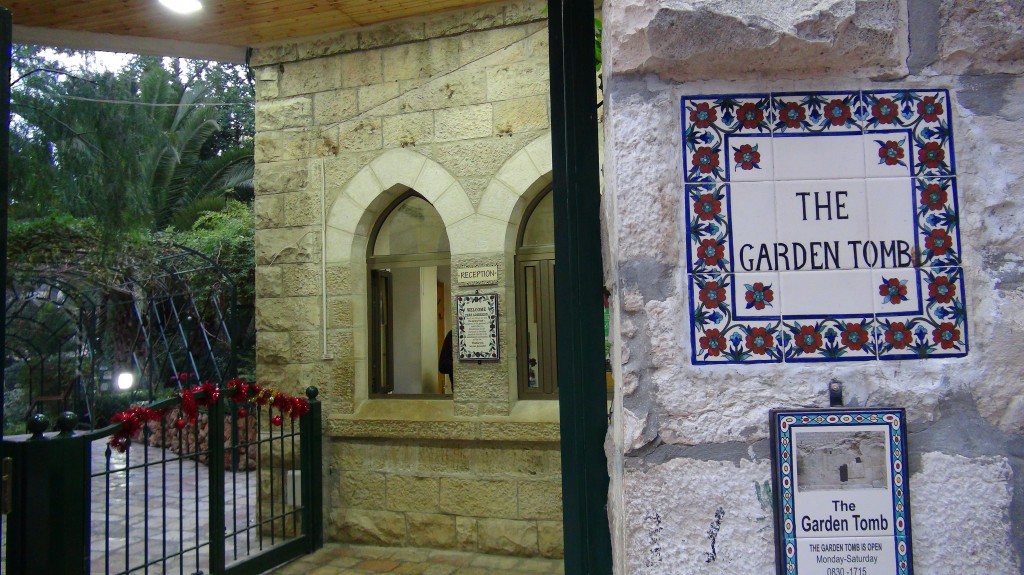
If you leave the Damascus Gate of the Old City, cross the square in front of them, go up the stairs, and then cross the road at the first traffic light and then pass the Arab market, then after two hundred meters you can see on the right side a sign with the inscription in English: “The Garden Tomb '. There is a garden here - a very well-groomed, cozy and picturesque place. At the entrance, the visitor will certainly be greeted by the guardians and offered a tour in his native language. For those who refuse it, they will simply hand over a booklet and remind them that the Garden Tomb is open every day except Sunday, and admission to its territory is always free ... It was here, in the minds of Protestant Christians, that he was crucified, buried and then resurrected on the third day Savior of the world. However, let's talk about everything in order. One day in the summer of 1882, an English missionary and an outstanding military leader of his time. General Charles Gordon, from the walls of Old Jerusalem, scrutinized the surroundings through binoculars. One of the rocks that he saw strikingly resembled a human skull, and the crevices in it were empty eye sockets and a nasal opening. The general, as befits an English military man, was an informed person and knew that the toponym Golgotha comes from the Hebrew word meaning a skull. Thus, being a man with a mystical attitude, by means of simple inferences, he came to the conclusion that he had discovered the place of the Savior's death on the cross - the true Golgotha, and not the one that Catholics give out as a shrine. Soon after that, the Garden Tomb Society was created in England, which in 1894 bought the territory that interested General Gordon and began excavations here. Looking ahead, we note that this place belongs to the Garden Tomb Society to this day - it collects donations for which it maintains the local territory in exemplary order.
So, General Gordon, with a group of like-minded people united in society and convinced, like him, of the authenticity of the discovery (in a letter to his sister, he wrote: 'I am more than ever sure that the mountain near Damascus Gate is Calvary'), attracts the famous architect Konrad Schick and initiates the beginning excavations. By 1893, ancient burials were discovered here - at first they are mistakenly attributed to the first century AD, but then it turns out that they are much older and belong to the era of the First Temple. In addition to them, they find a huge - with a volume of about ninety thousand liters - a reservoir for water, as well as oil presses and wine presses, which date back to the first century. And most importantly, the participants in the excavations find a tomb, hand-carved into the rock - a hall and three burial chambers. A groove leads to the entrance to the cave, along which, as it was supposed, the stone that covered the entrance was rolled up. It was here, according to the opinion of the Protestants, that Jesus Christ was laid and resurrected on the third day. However, the type of burial cave discovered by the participants of archaeological research is completely alien to the first century - it belongs to a much earlier time. This is indirectly confirmed by the many ancient graves found here and on the territory of the nearby Dominican monastery of Saint-Etienne - but the burials of the times of the Second Temple were not found either there or there at all. Which is quite understandable: during the earthly life of Jesus Christ, economic life was in full swing here, as evidenced by the remains of olive trees, details of oil mills and wine-making equipment.
By the way, this place is also important for adherents of Islam. Rather, at the Garden Tomb itself, and the respectable Muslim cemetery above it - every year, according to tradition, a cannon is fired from here, the shot of which marks the end of the month of fasting Ramadan. Muslims believe that the resurrection before the Last Judgment will begin from here. Well, under the Garden Tomb there is a more mundane object - the East Jerusalem Palestinian Bus Station. However, we are somewhat distracted.
Supporters of the Garden Tomb as the true Calvary point to a moment in the Gospel where it is said that there was a garden at the place of the Savior's burial (“At the place where He was crucified, there was a garden, and in the garden there was a new tomb, in which no one had yet been laid. they laid Jesus down for the Friday of the Jews, because the tomb was near. ”(John 19: 41-42)) - while in the Christian quarter, on the site of the Church of the Holy Sepulcher, there is no garden. And in general, they note, the Lord was crucified outside the city, and not within its boundaries ... But, firstly, no one knows where the walls of Jerusalem were two thousand years ago, and secondly, how much the city has changed during this time. landscape. For the specified period of time, you can manage to grow a garden more than once - and uproot it several times, if necessary. Already in the second half of the twentieth century, research on the territory of the Garden Tomb was carried out by Israeli scientists from the Hebrew University of Jerusalem. They came to the conclusion that a number of structures in the garden date back to the times of the Jerusalem kingdom of the Crusaders - in particular, the notorious trough, from which donkeys and mules were most likely to be watered, they dated from the twelfth to thirteenth centuries. Also, according to Israeli experts, the water reservoir dates back to the time of the Crusaders, which was previously correlated with a much earlier era. This tank, the Israelis assumed, was part of a cattle paddock.
But the tomb, as established by archaeologists from the team of the professor of biblical archeology Gabriel Barcae, is really ancient - its interior is typical for burials of the 8th-7th centuries BC. (Therefore, the opinion of the English archaeologist Kathleen Canyon, who dated the tomb to the first century AD, is most likely mistaken.) At the same time, the Gospel indicates that the body of Jesus Christ was laid in a completely new grave, which Joseph of Arimathea prepared for himself (John 19:41, Matthew 27:60) - it is obvious that the seven hundred years old tomb could not be empty. But what, then, proves that the death of the cross, the burial and the Resurrection of Jesus Christ really took place where the Church of the Holy Sepulcher is located? A number of arguments support this statement. On the site of the Church of the Holy Sepulcher during the earthly life of the Savior, there were abandoned quarries - graves for the dead were arranged in caves left there by stonecutters. Therefore, even when this area entered the city limits in the middle of the first century, nothing was built here for a long time.
According to the testimony of Eusebius of Caesarea, the author of 'Church History' who lived in the third-fourth centuries and the Byzantine historian Socrates Scholasticus (fourth-fifth century), who wrote a seven-volume 'Church History', the first Christians performed divine services in this place until 66. And it was here that the emperor Hadrian, the persecutor of the followers of the faith of Christ, built in 135 the pagan sanctuary of Venus and Jupiter - apparently, trying in this way to erase the memory of the Christian history of this place. Later in 326, when it was decided to build the Church of the Holy Sepulcher, the bulky structures of this sanctuary and other structures had to be dismantled - which was very expensive and time consuming. Although, it would seem, a little to the south, on the open part of the Hadrian's Forum, there was a free space - but they did not use it for the construction of the temple. And, finally, during the construction of the Church of the Holy Sepulcher, as is known from sacred history, many genuine relics related to the events described in the Gospels were wrapped around. The already mentioned Eusebius of Caesarea testifies to the same (Life of Constantine, 3:28).
Thus, both the tradition of successive Christian churches and common sense itself indicate that the true place of the crucifixion, burial and Resurrection of the Savior was exactly where the temple of the Holy Sepulcher was later erected. As for the Garden Tomb, which the followers of Protestantism revered as the true Golgotha, there is simply no convincing evidence in favor of the connection of this place with the events of the death on the cross, the burial and the Resurrection of Jesus Christ. Although the heroic General Gordon, a follower of mystical Christianity, sincerely believed that he had found the true Golgotha, subsequent archaeological research showed that his assumption was absolutely groundless. Except for the external resemblance of a rock in the Arab quarter of Sheikh Jahar with a skull, of course - but you never know in Jerusalem and its environs rocks of various shapes, which the human imagination will add, if necessary, any missing features? Nevertheless, visiting Jerusalem, it is still worth visiting the Garden Tomb - if only to get acquainted with the collection of antiquities available here, relax on a bench amid the tranquility of a picturesque garden and look into the local souvenir shop. V. Sergienko
Garden Tomb in Jerusalem: 'Alternative Calvary'?Garden Tomb in Jerusalem: 'Alternative Calvary'? Outside the walls of the Old City, not far from the Shechem (Damascus) Gate, there is a place that is revered by Protestant Christians as a true Calvary and the true Sepulcher of the Lord - of course, in their understanding. What exactly made a group of people look at the end of the 19th century for a different - relatively generally accepted - place where the Lord Jesus Christ was allegedly crucified, laid in a tomb and resurrected? If you leave the Damascus Gate of the Old City, cross the square in front of them, go up the stairs, and then cross the road at the first traffic light and then pass the Arab market, then after two hundred meters you can see on the right side a sign with the inscription in English: “The Garden Tomb '. There is a garden here - a very well-groomed, cozy and picturesque place. At the entrance, the visitor will certainly be greeted by the guardians and offered a tour in his native language. For those who refuse it, they will simply hand over a booklet and remind them that the Garden Tomb is open every day except Sunday, and admission to its territory is always free ... It was here, in the minds of Protestant Christians, that he was crucified, buried and then resurrected on the third day Savior of the world. However, let's talk about everything in order. One day in the summer of 1882, an English missionary and an outstanding military leader of his time. General Charles Gordon, from the walls of Old Jerusalem, scrutinized the surroundings through binoculars. One of the rocks that he saw strikingly resembled a human skull, and the crevices in it were empty eye sockets and a nasal opening. The general, as befits an English military man, was an informed person and knew that the toponym Golgotha comes from the Hebrew word meaning a skull. Thus, being a man with a mystical attitude, by means of simple inferences, he came to the conclusion that he had discovered the place of the Savior's death on the cross - the true Golgotha, and not the one that Catholics give out as a shrine. Soon after that, the Garden Tomb Society was created in England, which in 1894 bought the territory that interested General Gordon and began excavations here. Looking ahead, we note that this place belongs to the Garden Tomb Society to this day - it collects donations for which it maintains the local territory in exemplary order. So, General Gordon, with a group of like-minded people united in society and convinced, like him, of the authenticity of the discovery (in a letter to his sister, he wrote: 'I am more than ever sure that the mountain near Damascus Gate is Calvary'), attracts the famous architect Konrad Schick and initiates the beginning excavations. By 1893, ancient burials were discovered here - at first they are mistakenly attributed to the first century AD, but then it turns out that they are much older and belong to the era of the First Temple. In addition to them, they find a huge - with a volume of about ninety thousand liters - a reservoir for water, as well as oil presses and wine presses, which date back to the first century. And most importantly, the participants in the excavations find a tomb, hand-carved into the rock - a hall and three burial chambers. A groove leads to the entrance to the cave, along which, as it was supposed, the stone that covered the entrance was rolled up. It was here, according to the opinion of the Protestants, that Jesus Christ was laid and resurrected on the third day. However, the type of burial cave discovered by the participants of archaeological research is completely alien to the first century - it belongs to a much earlier time. This is indirectly confirmed by the many ancient graves found here and on the territory of the nearby Dominican monastery of Saint-Etienne - but the burials of the times of the Second Temple were not found either there or there at all. Which is quite understandable: during the earthly life of Jesus Christ, economic life was in full swing here, as evidenced by the remains of olive trees, details of oil mills and wine-making equipment. By the way, this place is also important for adherents of Islam. Rather, at the Garden Tomb itself, and the respectable Muslim cemetery above it - every year, according to tradition, a cannon is fired from here, the shot of which marks the end of the month of fasting Ramadan. Muslims believe that the resurrection before the Last Judgment will begin from here. Well, under the Garden Tomb there is a more mundane object - the East Jerusalem Palestinian Bus Station. However, we are somewhat distracted. Supporters of the Garden Tomb as the true Calvary point to a moment in the Gospel where it is said that there was a garden at the place of the Savior's burial (“At the place where He was crucified, there was a garden, and in the garden there was a new tomb, in which no one had yet been laid. they laid Jesus down for the Friday of the Jews, because the tomb was near. ”(John 19: 41-42)) - while in the Christian quarter, on the site of the Church of the Holy Sepulcher, there is no garden. And in general, they note, the Lord was crucified outside the city, and not within its boundaries ... But, firstly, no one knows where the walls of Jerusalem were two thousand years ago, and secondly, how much the city has changed during this time. landscape. For the specified period of time, you can manage to grow a garden more than once - and uproot it several times, if necessary. Already in the second half of the twentieth century, research on the territory of the Garden Tomb was carried out by Israeli scientists from the Hebrew University of Jerusalem. They came to the conclusion that a number of structures in the garden date back to the times of the Jerusalem kingdom of the Crusaders - in particular, the notorious trough, from which donkeys and mules were most likely to be watered, they dated from the twelfth to thirteenth centuries. Also, according to Israeli experts, the water reservoir dates back to the time of the Crusaders, which was previously correlated with a much earlier era. This tank, the Israelis assumed, was part of a cattle paddock.But the tomb, as established by archaeologists from the team of the professor of biblical archeology Gabriel Barcae, is really ancient - its interior is typical for burials of the 8th-7th centuries BC. (Therefore, the opinion of the English archaeologist Kathleen Canyon, who dated the tomb to the first century AD, is most likely mistaken.) At the same time, the Gospel indicates that the body of Jesus Christ was laid in a completely new grave, which Joseph of Arimathea prepared for himself (John 19:41, Matthew 27:60) - it is obvious that the seven hundred years old tomb could not be empty. But what, then, proves that the death of the cross, the burial and the Resurrection of Jesus Christ really took place where the Church of the Holy Sepulcher is located? A number of arguments support this statement. On the site of the Church of the Holy Sepulcher during the earthly life of the Savior, there were abandoned quarries - graves for the dead were arranged in caves left there by stonecutters. Therefore, even when this area entered the city limits in the middle of the first century, nothing was built here for a long time. According to the testimony of Eusebius of Caesarea, the author of 'Church History' who lived in the third-fourth centuries and the Byzantine historian Socrates Scholasticus (fourth-fifth century), who wrote a seven-volume 'Church History', the first Christians performed divine services in this place until 66. And it was here that the emperor Hadrian, the persecutor of the followers of the faith of Christ, built in 135 the pagan sanctuary of Venus and Jupiter - apparently, trying in this way to erase the memory of the Christian history of this place. Later in 326, when it was decided to build the Church of the Holy Sepulcher, the bulky structures of this sanctuary and other structures had to be dismantled - which was very expensive and time consuming. Although, it would seem, a little to the south, on the open part of the Hadrian's Forum, there was a free space - but they did not use it for the construction of the temple. And, finally, during the construction of the Church of the Holy Sepulcher, as is known from sacred history, many genuine relics related to the events described in the Gospels were wrapped around. The already mentioned Eusebius of Caesarea testifies to the same (Life of Constantine, 3:28). Thus, both the tradition of successive Christian churches and common sense itself indicate that the true place of the crucifixion, burial and Resurrection of the Savior was exactly where the temple of the Holy Sepulcher was later erected. As for the Garden Tomb, which the followers of Protestantism revered as the true Golgotha, there is simply no convincing evidence in favor of the connection of this place with the events of the death on the cross, the burial and the Resurrection of Jesus Christ. Although the heroic General Gordon, a follower of mystical Christianity, sincerely believed that he had found the true Golgotha, subsequent archaeological research showed that his assumption was absolutely groundless. Except for the external resemblance of a rock in the Arab quarter of Sheikh Jahar with a skull, of course - but you never know in Jerusalem and its environs rocks of various shapes, which the human imagination will add, if necessary, any missing features? Nevertheless, visiting Jerusalem, it is still worth visiting the Garden Tomb - if only to get acquainted with the collection of antiquities available here, relax on a bench amid the tranquility of a picturesque garden and look into the local souvenir shop. V. SergienkoСвеча Иерусалима -en
Outside the walls of the Old City, not far from the Shechem (Damascus) Gate, there is a place that is revered by Protestant Christians as a true Calvary and the true Sepulcher of the Lord - of course, in their understanding. What exactly made a group of people look at the end of the 19th century for a different - relatively generally accepted - place where the Lord Jesus Christ was allegedly crucified, laid in a tomb and resurrected? If you leave the Damascus Gate of the Old City, cross the square in front of them, go up the stairs, and then cross the road at the first traffic light and then pass the Arab market, then after two hundred meters you can see on the right side a sign with the inscription in English: “The Garden Tomb '. There is a garden here - a very well-groomed, cozy and picturesque place. At the entrance, the visitor will certainly be greeted by the guardians and offered a tour in his native language. For those who refuse it, they will simply hand over a booklet and remind them that the Garden Tomb is open every day except Sunday, and admission to its territory is always free ... It was here, in the minds of Protestant Christians, that he was crucified, buried and then resurrected on the third day Savior of the world. However, let's talk about everything in order. One day in the summer of 1882, an English missionary and an outstanding military leader of his time. General Charles Gordon, from the walls of Old Jerusalem, scrutinized the surroundings through binoculars. One of the rocks that he saw strikingly resembled a human skull, and the crevices in it were empty eye sockets and a nasal opening. The general, as befits an English military man, was an informed person and knew that the toponym Golgotha comes from the Hebrew word meaning a skull. Thus, being a man with a mystical attitude, by means of simple inferences, he came to the conclusion that he had discovered the place of the Savior's death on the cross - the true Golgotha, and not the one that Catholics give out as a shrine. Soon after that, the Garden Tomb Society was created in England, which in 1894 bought the territory that interested General Gordon and began excavations here. Looking ahead, we note that this place belongs to the Garden Tomb Society to this day - it collects donations for which it maintains the local territory in exemplary order. So, General Gordon, with a group of like-minded people united in society and convinced, like him, of the authenticity of the discovery (in a letter to his sister, he wrote: 'I am more than ever sure that the mountain near Damascus Gate is Calvary'), attracts the famous architect Konrad Schick and initiates the beginning excavations. By 1893, ancient burials were discovered here - at first they are mistakenly attributed to the first century AD, but then it turns out that they are much older and belong to the era of the First Temple. In addition to them, they find a huge - with a volume of about ninety thousand liters - a reservoir for water, as well as oil presses and wine presses, which date back to the first century. And most importantly, the participants in the excavations find a tomb, hand-carved into the rock - a hall and three burial chambers. A groove leads to the entrance to the cave, along which, as it was supposed, the stone that covered the entrance was rolled up. It was here, according to the opinion of the Protestants, that Jesus Christ was laid and resurrected on the third day. However, the type of burial cave discovered by the participants of archaeological research is completely alien to the first century - it belongs to a much earlier time. This is indirectly confirmed by the many ancient graves found here and on the territory of the nearby Dominican monastery of Saint-Etienne - but the burials of the times of the Second Temple were not found either there or there at all. Which is quite understandable: during the earthly life of Jesus Christ, economic life was in full swing here, as evidenced by the remains of olive trees, details of oil mills and wine-making equipment. By the way, this place is also important for adherents of Islam. Rather, at the Garden Tomb itself, and the respectable Muslim cemetery above it - every year, according to tradition, a cannon is fired from here, the shot of which marks the end of the month of fasting Ramadan. Muslims believe that the resurrection before the Last Judgment will begin from here. Well, under the Garden Tomb there is a more mundane object - the East Jerusalem Palestinian Bus Station. However, we are somewhat distracted. Supporters of the Garden Tomb as the true Calvary point to a moment in the Gospel where it is said that there was a garden at the place of the Savior's burial (“At the place where He was crucified, there was a garden, and in the garden there was a new tomb, in which no one had yet been laid. they laid Jesus down for the Friday of the Jews, because the tomb was near. ”(John 19: 41-42)) - while in the Christian quarter, on the site of the Church of the Holy Sepulcher, there is no garden. And in general, they note, the Lord was crucified outside the city, and not within its boundaries ... But, firstly, no one knows where the walls of Jerusalem were two thousand years ago, and secondly, how much the city has changed during this time. landscape. For the specified period of time, you can manage to grow a garden more than once - and uproot it several times, if necessary. Already in the second half of the twentieth century, research on the territory of the Garden Tomb was carried out by Israeli scientists from the Hebrew University of Jerusalem. They came to the conclusion that a number of structures in the garden date back to the times of the Jerusalem kingdom of the Crusaders - in particular, the notorious trough, from which donkeys and mules were most likely to be watered, they dated from the twelfth to thirteenth centuries. Also, according to Israeli experts, the water reservoir dates back to the time of the Crusaders, which was previously correlated with a much earlier era. This tank, the Israelis assumed, was part of a cattle paddock.But the tomb, as established by archaeologists from the team of the professor of biblical archeology Gabriel Barcae, is really ancient - its interior is typical for burials of the 8th-7th centuries BC. (Therefore, the opinion of the English archaeologist Kathleen Canyon, who dated the tomb to the first century AD, is most likely mistaken.) At the same time, the Gospel indicates that the body of Jesus Christ was laid in a completely new grave, which Joseph of Arimathea prepared for himself (John 19:41, Matthew 27:60) - it is obvious that the seven hundred years old tomb could not be empty. But what, then, proves that the death of the cross, the burial and the Resurrection of Jesus Christ really took place where the Church of the Holy Sepulcher is located? A number of arguments support this statement. On the site of the Church of the Holy Sepulcher during the earthly life of the Savior, there were abandoned quarries - graves for the dead were arranged in caves left there by stonecutters. Therefore, even when this area entered the city limits in the middle of the first century, nothing was built here for a long time. According to the testimony of Eusebius of Caesarea, the author of 'Church History' who lived in the third-fourth centuries and the Byzantine historian Socrates Scholasticus (fourth-fifth century), who wrote a seven-volume 'Church History', the first Christians performed divine services in this place until 66. And it was here that the emperor Hadrian, the persecutor of the followers of the faith of Christ, built in 135 the pagan sanctuary of Venus and Jupiter - apparently, trying in this way to erase the memory of the Christian history of this place. Later in 326, when it was decided to build the Church of the Holy Sepulcher, the bulky structures of this sanctuary and other structures had to be dismantled - which was very expensive and time consuming. Although, it would seem, a little to the south, on the open part of the Hadrian's Forum, there was a free space - but they did not use it for the construction of the temple. And, finally, during the construction of the Church of the Holy Sepulcher, as is known from sacred history, many genuine relics related to the events described in the Gospels were wrapped around. The already mentioned Eusebius of Caesarea testifies to the same (Life of Constantine, 3:28). Thus, both the tradition of successive Christian churches and common sense itself indicate that the true place of the crucifixion, burial and Resurrection of the Savior was exactly where the temple of the Holy Sepulcher was later erected. As for the Garden Tomb, which the followers of Protestantism revered as the true Golgotha, there is simply no convincing evidence in favor of the connection of this place with the events of the death on the cross, the burial and the Resurrection of Jesus Christ. Although the heroic General Gordon, a follower of mystical Christianity, sincerely believed that he had found the true Golgotha, subsequent archaeological research showed that his assumption was absolutely groundless. Except for the external resemblance of a rock in the Arab quarter of Sheikh Jahar with a skull, of course - but you never know in Jerusalem and its environs rocks of various shapes, which the human imagination will add, if necessary, any missing features? Nevertheless, visiting Jerusalem, it is still worth visiting the Garden Tomb - if only to get acquainted with the collection of antiquities available here, relax on a bench amid the tranquility of a picturesque garden and look into the local souvenir shop. V. Sergienko