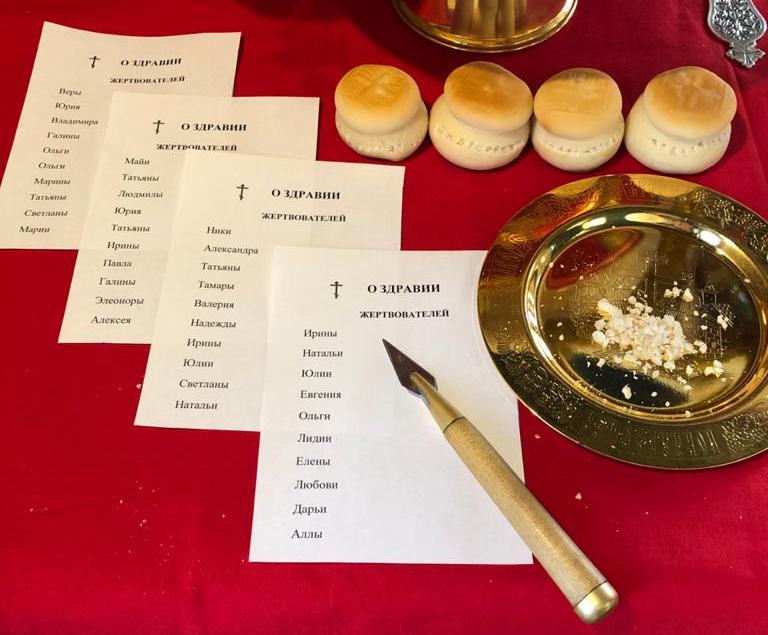
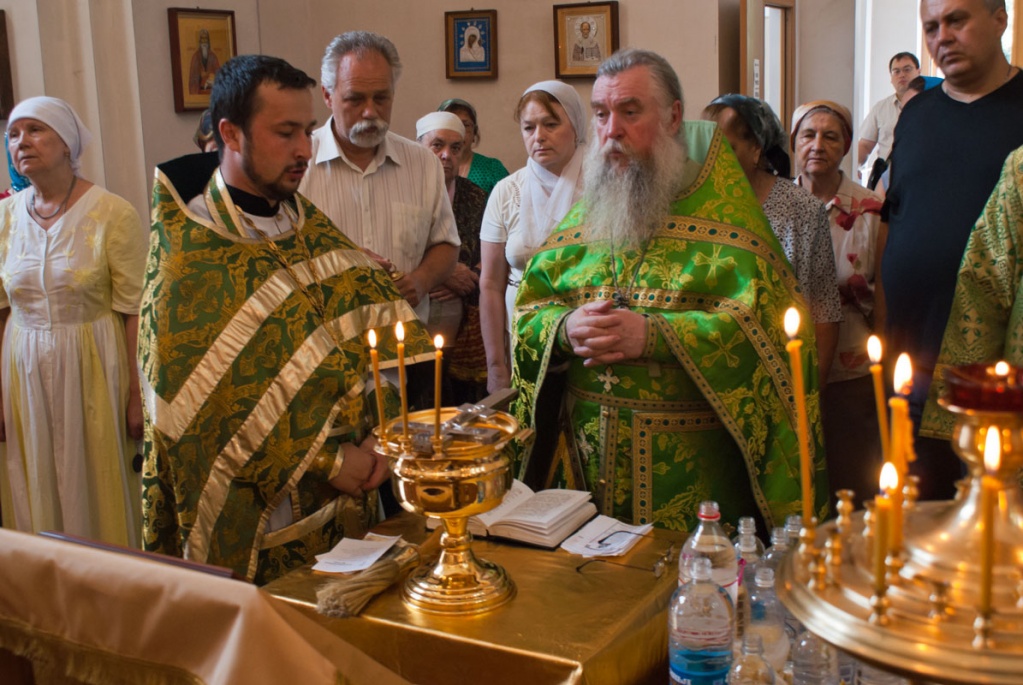
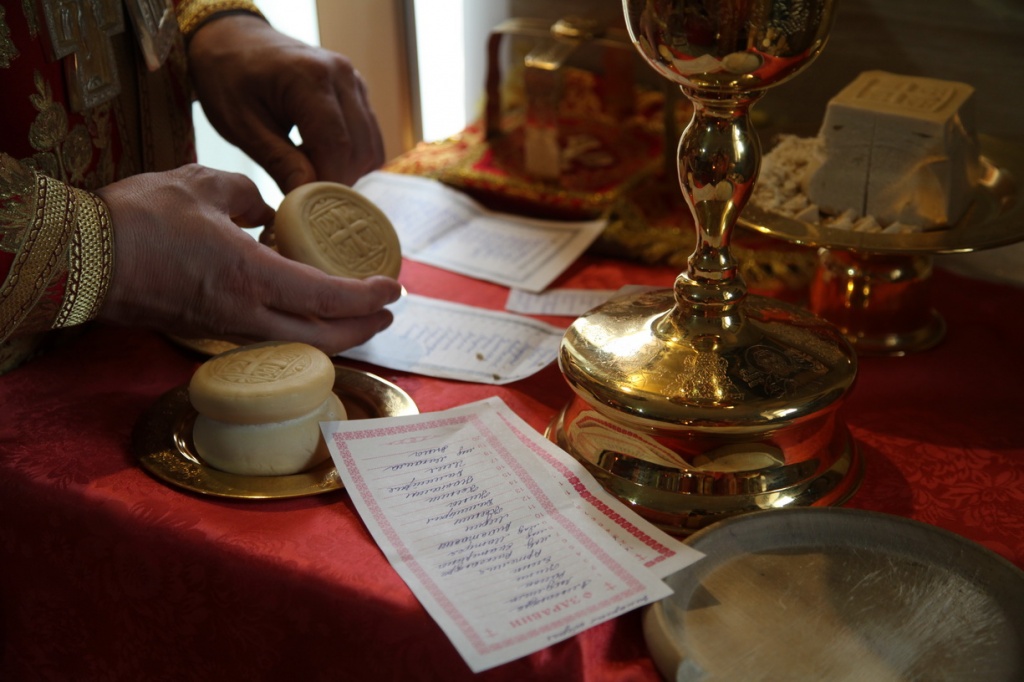
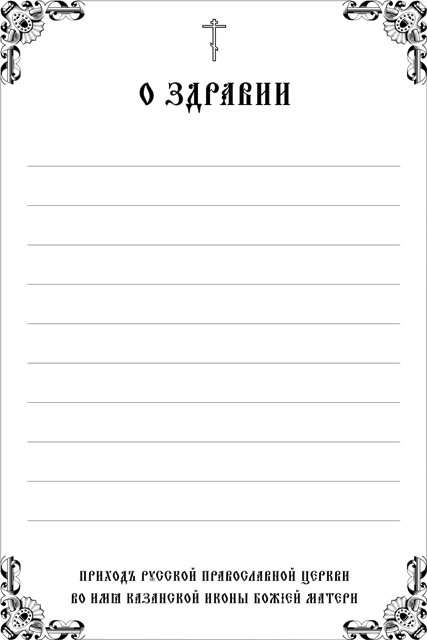
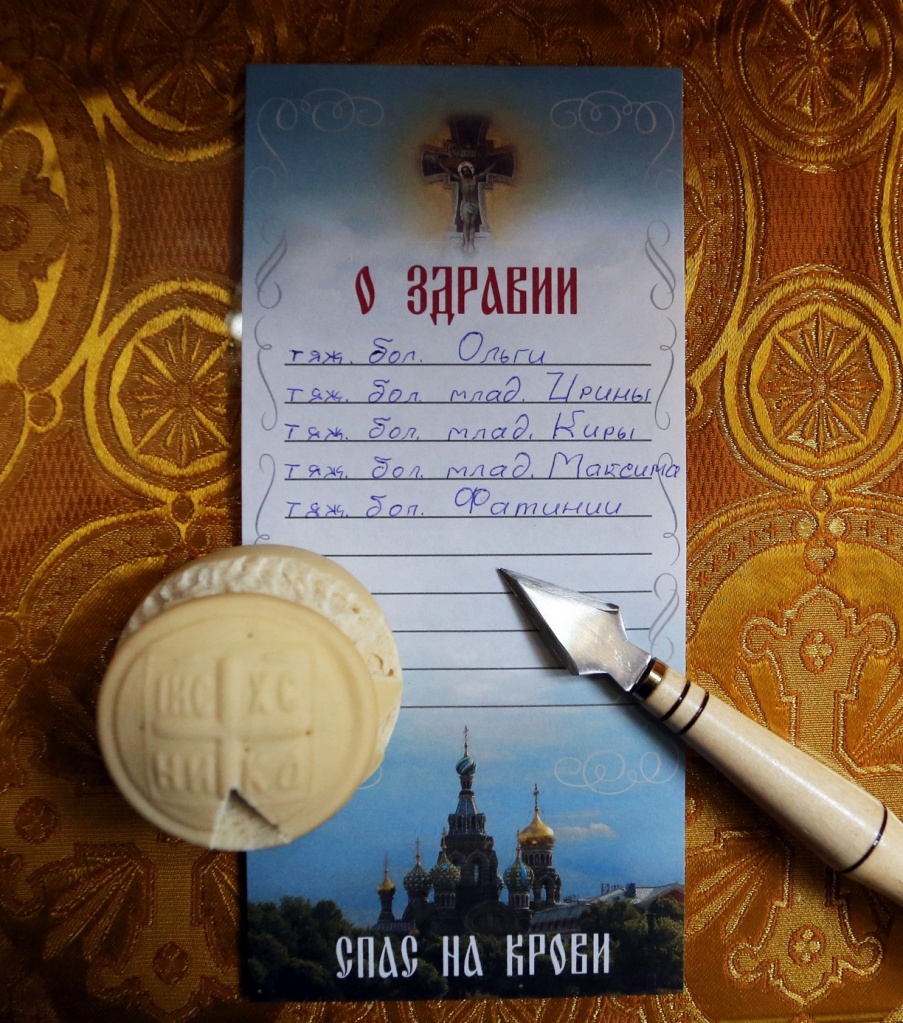
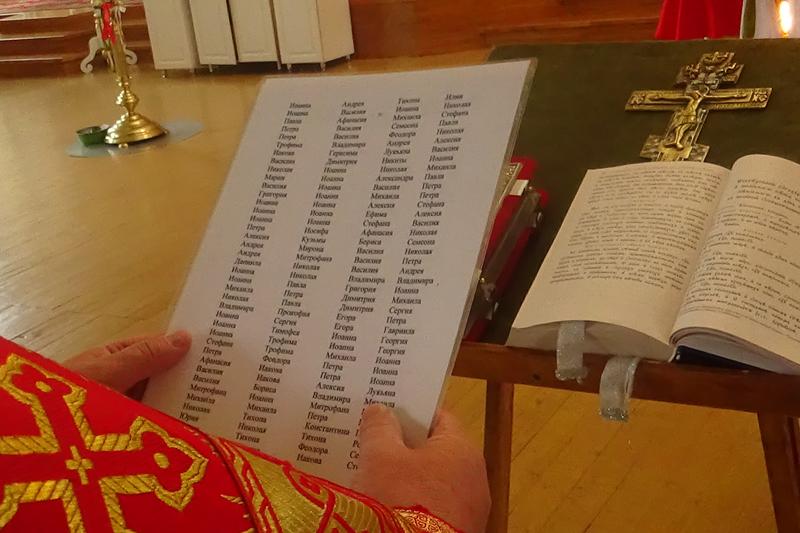
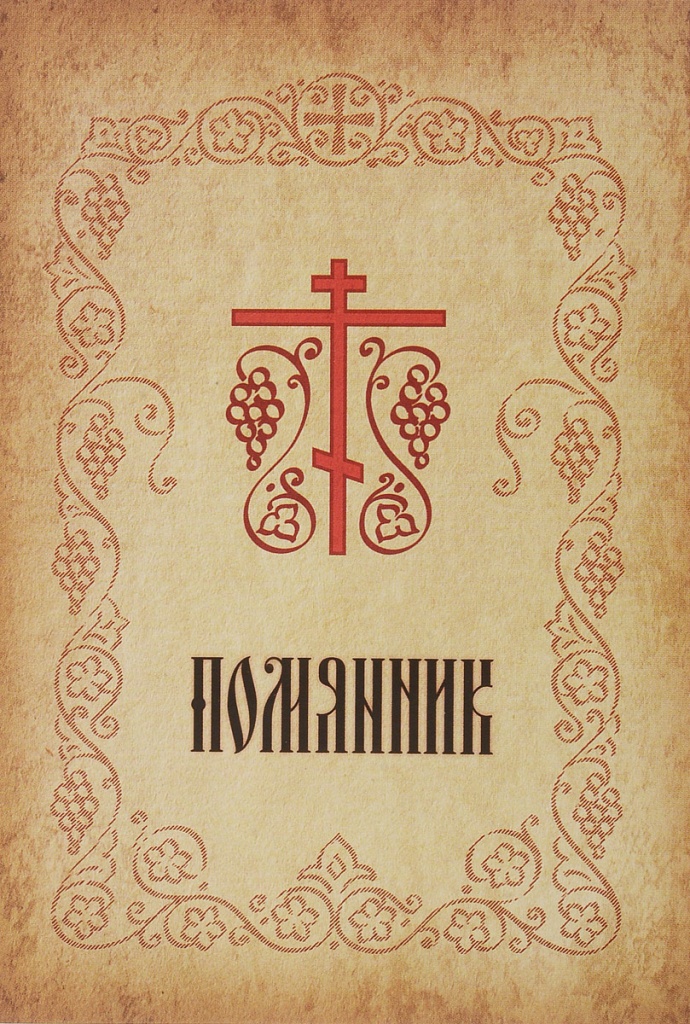
We pray for the health and well-being of our loved ones - or for those whose life history, for some reason, was especially taken to heart. Saying aloud or silently, sincere prayer has undoubted power. However, even more power is endowed with the words that sound in the church - those that are uttered by the clergyman at the service or during the service, being in the same space with the laity believers who follow the word of prayer with their hearts. Прочитывать записки О здравии во время молебна священнику может помогать другой священник, дьякон или пономарь In order for the prayer for a living person to sound in the church, it is customary in the Orthodox tradition to submit notes about health. In this case, health means not only physical health, but above all the spiritual state of a person and, of course, the peaceful and prosperous arrangement of the course of his life. The names written in the notes that are given about health during the Divine Liturgy are read four times: during the Proskomedia, after the Gospel, at the end of the Eucharistic Canon and after Holy Communion. During the main Christian worship service in the memory of the saints, as well as for those who are mentioned in the notes, particles are removed from the prosphora. Therefore, it is better to submit the notes to the temple in advance - before the start of the service, so that they can be handed over to the altar. Поминовение на проскомидии The Greek word 'proskomidia' literally means 'bringing' and refers us to the days of the first Christian communities, whose members brought with them bread and wine needed for the celebration of the liturgy. Today, instead of bread, specially baked prosphora is used; a special kind of wine is also used. During the service, these products are mysteriously transformed into the Blood and Flesh of the Lord Jesus Christ. It is at this moment, incomprehensible to the mind, that the remembrance of living and dead Christians takes place. Бланк записки о здравии For a ready-made letterhead, it is best to contact the church store. But you can also submit it on a small blank sheet of paper; the main thing is to depict an Orthodox (eight-pointed) cross on it at the top, and under it write: 'On health.' Below this inscription, the names of the people for whom you need to pray are listed in a column. Names are written in the genitive case (about the health of whom): Mary, Peter, Nicholas, Sophia and so on. The names are written in their Orthodox version - the way they are mentioned in the calendar: John (and not Jeanne), Tatiana, Fotinia (and not Svetlana). No titles other than priestly and monastic (priest Nicholas, deacon Sergius, hegumen Paul, nun Martha) are indicated in the notes. However, before the names of children under seven years old, add: 'baby / young woman ...', and from seven to fourteen years old - 'boy / young woman ...'. There are other cases in which clarification is required, for example: the warrior Vladislav (about the military), the ailing Alexander (about the sick), the traveling Xenia (about the pilgrims and those who are in general on the way), the prisoner George (about those in prison), not idle Marina (about pregnant women). Вписывая имена в записку, вспоминайте каждого из названных людей с искренним поожеланием им блага It is customary to write no more than ten names on one health form. As for their order, there are no clear regulations on this issue. However, usually, the name of the confessor is indicated first, then - the parents and older relatives, and after - all the rest. By the way, for ill-wishers and persecutors, according to the spirit of the Christian doctrine can also - and even needs to be taught about health. After all, the Lord Himself, as you remember, prayed for those who crucified Him. Of course, the heart of a person who serves for the health of such people should be free from anger, despondency, anger and malice. An important question - whose names cannot be indicated in the notes that are submitted about health to the church, it is impossible. First of all, these are unbaptized people and non-believers. If there are such people among your loved ones, you can pray for them at home, in private. They do not serve notes about people under church excommunication - anathema. Until the last is removed, their commemoration in the temple is impossible. There is no unambiguous answer to the question, one should submit notes about the health of atheists to the temple (if they are baptized). On the one hand, the spiritual world and the afterlife do not seem to exist for people with such views. However, on the other hand, it cannot be ruled out that their materialistic outlook in the future may change by the grace of God. History knows a lot of such cases. In addition to simple notes, which are read behind the Proskomidia, custom-made ones are also accepted in the temple. Those who are indicated in it are mentioned both at the Proskomedia, and during the augmented litany (intensified petition), which is pronounced after the reading of the Gospel. Commemoration of Health at the Augmented LitanyЧисло имён, произносимых во время сорокоуста, может быть немалым - церковная молитва от этого слабее не становится Prayer commemoration of the living also occurs during prayer services. Strictly speaking, a prayer service is a kind of prayer that a priest, standing surrounded by believers, offers to the Lord God, the Queen of Heaven, angelic ranks, saint or saints. Prayer services are water-blessing even without the consecration of water. It is best not only for the water-blessing prayer service submit a note in advance, but also bring water with you - after its consecration, if possible, you should give it to the person whose prayer for whose health you ordered. You can include your name in a health note, and you can order a prayer service for yourself as well. If it was blessed with water, use blessed water at home, with a church prosphora or by itself, every time you feel the need for it. Для долгосрочного поминовения имена крещёных людей вписываются в специальную книжицу - помянник When submitting about the health of others to a temple or monastery, it is important to remember: a note about health does not work like a pill. Of course, the priest, reading it, will do everything possible to make the prayer heard. At the same time, the person submitting the note of health must have faith that the prayer offered up in the church will certainly be heard - as well as a pure intention in relation to the person for whom it is being served.
Submitting a note of health in the templeSubmitting a note of health in the temple We pray for the health and well-being of our loved ones - or for those whose life history, for some reason, was especially taken to heart. Saying aloud or silently, sincere prayer has undoubted power. However, even more power is endowed with the words that sound in the church - those that are uttered by the clergyman at the service or during the service, being in the same space with the laity believers who follow the word of prayer with their hearts. Прочитывать записки О здравии во время молебна священнику может помогать другой священник, дьякон или пономарь In order for the prayer for a living person to sound in the church, it is customary in the Orthodox tradition to submit notes about health. In this case, health means not only physical health, but above all the spiritual state of a person and, of course, the peaceful and prosperous arrangement of the course of his life. The names written in the notes that are given about health during the Divine Liturgy are read four times: during the Proskomedia, after the Gospel, at the end of the Eucharistic Canon and after Holy Communion. During the main Christian worship service in the memory of the saints, as well as for those who are mentioned in the notes, particles are removed from the prosphora. Therefore, it is better to submit the notes to the temple in advance - before the start of the service, so that they can be handed over to the altar. Поминовение на проскомидии The Greek word 'proskomidia' literally means 'bringing' and refers us to the days of the first Christian communities, whose members brought with them bread and wine needed for the celebration of the liturgy. Today, instead of bread, specially baked prosphora is used; a special kind of wine is also used. During the service, these products are mysteriously transformed into the Blood and Flesh of the Lord Jesus Christ. It is at this moment, incomprehensible to the mind, that the remembrance of living and dead Christians takes place. Бланк записки о здравии For a ready-made letterhead, it is best to contact the church store. But you can also submit it on a small blank sheet of paper; the main thing is to depict an Orthodox (eight-pointed) cross on it at the top, and under it write: 'On health.' Below this inscription, the names of the people for whom you need to pray are listed in a column. Names are written in the genitive case (about the health of whom): Mary, Peter, Nicholas, Sophia and so on. The names are written in their Orthodox version - the way they are mentioned in the calendar: John (and not Jeanne), Tatiana, Fotinia (and not Svetlana). No titles other than priestly and monastic (priest Nicholas, deacon Sergius, hegumen Paul, nun Martha) are indicated in the notes. However, before the names of children under seven years old, add: 'baby / young woman ...', and from seven to fourteen years old - 'boy / young woman ...'. There are other cases in which clarification is required, for example: the warrior Vladislav (about the military), the ailing Alexander (about the sick), the traveling Xenia (about the pilgrims and those who are in general on the way), the prisoner George (about those in prison), not idle Marina (about pregnant women). Вписывая имена в записку, вспоминайте каждого из названных людей с искренним поожеланием им блага It is customary to write no more than ten names on one health form. As for their order, there are no clear regulations on this issue. However, usually, the name of the confessor is indicated first, then - the parents and older relatives, and after - all the rest. By the way, for ill-wishers and persecutors, according to the spirit of the Christian doctrine can also - and even needs to be taught about health. After all, the Lord Himself, as you remember, prayed for those who crucified Him. Of course, the heart of a person who serves for the health of such people should be free from anger, despondency, anger and malice. An important question - whose names cannot be indicated in the notes that are submitted about health to the church, it is impossible. First of all, these are unbaptized people and non-believers. If there are such people among your loved ones, you can pray for them at home, in private. They do not serve notes about people under church excommunication - anathema. Until the last is removed, their commemoration in the temple is impossible. There is no unambiguous answer to the question, one should submit notes about the health of atheists to the temple (if they are baptized). On the one hand, the spiritual world and the afterlife do not seem to exist for people with such views. However, on the other hand, it cannot be ruled out that their materialistic outlook in the future may change by the grace of God. History knows a lot of such cases. In addition to simple notes, which are read behind the Proskomidia, custom-made ones are also accepted in the temple. Those who are indicated in it are mentioned both at the Proskomedia, and during the augmented litany (intensified petition), which is pronounced after the reading of the Gospel. Commemoration of Health at the Augmented LitanyЧисло имён, произносимых во время сорокоуста, может быть немалым - церковная молитва от этого слабее не становится Prayer commemoration of the living also occurs during prayer services. Strictly speaking, a prayer service is a kind of prayer that a priest, standing surrounded by believers, offers to the Lord God, the Queen of Heaven, angelic ranks, saint or saints. Prayer services are water-blessing even without the consecration of water. It is best not only for the water-blessing prayer service submit a note in advance, but also bring water with you - after its consecration, if possible, you should give it to the person whose prayer for whose health you ordered. You can include your name in a health note, and you can order a prayer service for yourself as well. If it was blessed with water, use blessed water at home, with a church prosphora or by itself, every time you feel the need for it. Для долгосрочного поминовения имена крещёных людей вписываются в специальную книжицу - помянник When submitting about the health of others to a temple or monastery, it is important to remember: a note about health does not work like a pill. Of course, the priest, reading it, will do everything possible to make the prayer heard. At the same time, the person submitting the note of health must have faith that the prayer offered up in the church will certainly be heard - as well as a pure intention in relation to the person for whom it is being served.Свеча Иерусалима -en
We pray for the health and well-being of our loved ones - or for those whose life history, for some reason, was especially taken to heart. Saying aloud or silently, sincere prayer has undoubted power. However, even more power is endowed with the words that sound in the church - those that are uttered by the clergyman at the service or during the service, being in the same space with the laity believers who follow the word of prayer with their hearts. Прочитывать записки О здравии во время молебна священнику может помогать другой священник, дьякон или пономарь In order for the prayer for a living person to sound in the church, it is customary in the Orthodox tradition to submit notes about health. In this case, health means not only physical health, but above all the spiritual state of a person and, of course, the peaceful and prosperous arrangement of the course of his life. The names written in the notes that are given about health during the Divine Liturgy are read four times: during the Proskomedia, after the Gospel, at the end of the Eucharistic Canon and after Holy Communion. During the main Christian worship service in the memory of the saints, as well as for those who are mentioned in the notes, particles are removed from the prosphora. Therefore, it is better to submit the notes to the temple in advance - before the start of the service, so that they can be handed over to the altar. Поминовение на проскомидии The Greek word 'proskomidia' literally means 'bringing' and refers us to the days of the first Christian communities, whose members brought with them bread and wine needed for the celebration of the liturgy. Today, instead of bread, specially baked prosphora is used; a special kind of wine is also used. During the service, these products are mysteriously transformed into the Blood and Flesh of the Lord Jesus Christ. It is at this moment, incomprehensible to the mind, that the remembrance of living and dead Christians takes place. Бланк записки о здравии For a ready-made letterhead, it is best to contact the church store. But you can also submit it on a small blank sheet of paper; the main thing is to depict an Orthodox (eight-pointed) cross on it at the top, and under it write: 'On health.' Below this inscription, the names of the people for whom you need to pray are listed in a column. Names are written in the genitive case (about the health of whom): Mary, Peter, Nicholas, Sophia and so on. The names are written in their Orthodox version - the way they are mentioned in the calendar: John (and not Jeanne), Tatiana, Fotinia (and not Svetlana). No titles other than priestly and monastic (priest Nicholas, deacon Sergius, hegumen Paul, nun Martha) are indicated in the notes. However, before the names of children under seven years old, add: 'baby / young woman ...', and from seven to fourteen years old - 'boy / young woman ...'. There are other cases in which clarification is required, for example: the warrior Vladislav (about the military), the ailing Alexander (about the sick), the traveling Xenia (about the pilgrims and those who are in general on the way), the prisoner George (about those in prison), not idle Marina (about pregnant women). Вписывая имена в записку, вспоминайте каждого из названных людей с искренним поожеланием им блага It is customary to write no more than ten names on one health form. As for their order, there are no clear regulations on this issue. However, usually, the name of the confessor is indicated first, then - the parents and older relatives, and after - all the rest. By the way, for ill-wishers and persecutors, according to the spirit of the Christian doctrine can also - and even needs to be taught about health. After all, the Lord Himself, as you remember, prayed for those who crucified Him. Of course, the heart of a person who serves for the health of such people should be free from anger, despondency, anger and malice. An important question - whose names cannot be indicated in the notes that are submitted about health to the church, it is impossible. First of all, these are unbaptized people and non-believers. If there are such people among your loved ones, you can pray for them at home, in private. They do not serve notes about people under church excommunication - anathema. Until the last is removed, their commemoration in the temple is impossible. There is no unambiguous answer to the question, one should submit notes about the health of atheists to the temple (if they are baptized). On the one hand, the spiritual world and the afterlife do not seem to exist for people with such views. However, on the other hand, it cannot be ruled out that their materialistic outlook in the future may change by the grace of God. History knows a lot of such cases. In addition to simple notes, which are read behind the Proskomidia, custom-made ones are also accepted in the temple. Those who are indicated in it are mentioned both at the Proskomedia, and during the augmented litany (intensified petition), which is pronounced after the reading of the Gospel. Commemoration of Health at the Augmented LitanyЧисло имён, произносимых во время сорокоуста, может быть немалым - церковная молитва от этого слабее не становится Prayer commemoration of the living also occurs during prayer services. Strictly speaking, a prayer service is a kind of prayer that a priest, standing surrounded by believers, offers to the Lord God, the Queen of Heaven, angelic ranks, saint or saints. Prayer services are water-blessing even without the consecration of water. It is best not only for the water-blessing prayer service submit a note in advance, but also bring water with you - after its consecration, if possible, you should give it to the person whose prayer for whose health you ordered. You can include your name in a health note, and you can order a prayer service for yourself as well. If it was blessed with water, use blessed water at home, with a church prosphora or by itself, every time you feel the need for it. Для долгосрочного поминовения имена крещёных людей вписываются в специальную книжицу - помянник When submitting about the health of others to a temple or monastery, it is important to remember: a note about health does not work like a pill. Of course, the priest, reading it, will do everything possible to make the prayer heard. At the same time, the person submitting the note of health must have faith that the prayer offered up in the church will certainly be heard - as well as a pure intention in relation to the person for whom it is being served.