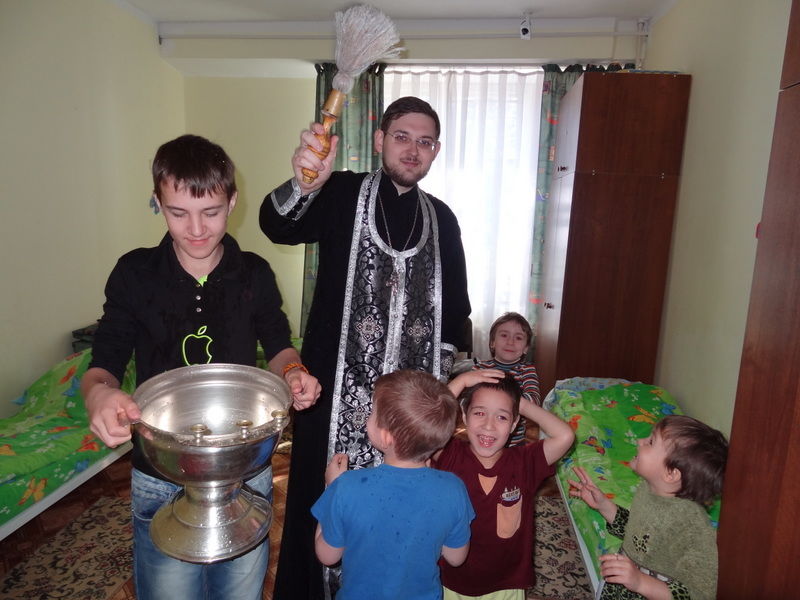
Consecration of the house: what you need to know about it
27 April 2018
Along with the acceleration of the pace of life in the modern world, its circumstances are also changing. If even a century and a half ago, most people spent their entire lives in one, maximum - in two dwellings, today a person can change dozens of houses and apartments in a measured number of years. Not because, of course, it is fickle or completely cut off from its roots - it's just that the lifestyle in a modern metropolis, and even smaller cities, has become fundamentally different. And at each new place of residence, a person strives to feel peace and tranquility - even in those spaces where many other people lived before him. Meanwhile, the rite of consecration of the house, with the aim of invoking God's blessing in the dwelling, is customary to perform only once. How, then, to proceed? Many people today rent housing or buy it on the secondary market, sometimes not knowing not only whether it was consecrated or not, but even the personalities and the number of previous owners or tenants of the dwelling. In addition, even thirty or forty years ago (and many houses in Russia are much older), it was not only not customary for most of our fellow citizens to consecrate an apartment for most of our fellow citizens, but also fraught with troubles, which the atheistic Soviet state gladly organized for a believer. Therefore, if you purchase an apartment in the secondary housing market, it is most likely not consecrated. This fact can explain the anxiety, irritability, discomfort that people feel in a new place. However, not only this: in the past godless era, the ancient knowledge of where it is favorable to build a house, and where it is not, were discarded; buildings were built where pre-revolutionary planners never dared to choose a place for their construction - for example, on the site of former hospitals, prisons, destroyed temples, monasteries and even cemeteries. Yes, and houses built in the nineteenth and early twentieth centuries in Soviet times knew acts equivalent to desecration - searches, arrests, torture, executions and much more ... Everything that happened in the house before we settled there, we do not know with certainty we can. Therefore, be that as it may, it is better to invite a priest and consecrate the house. Or, more precisely, to perform the rite of consecration of the house.
Consecration is one of the rituals associated with the everyday needs of Christians. There are many of them: this is the commemoration of the dead, the consecration of things, food and all sorts of good undertakings such as study, fasting, travel, and others. All rituals of this kind are purifying, a renewing, beneficial effect on a person - of course, if this person is a believer and tries to live in accordance with Christian ideas about the passage of the earthly path. Therefore, the rite of consecration expresses our hope that God will not leave us without his guidance and will bless our beginnings and daily life, and in the case of a house or apartment, he will protect our home from all evil. “If the Lord does not build the house, they labor in vain that build it; if the Lord does not guard the city, the watchman is vainly awake, ”says the prophet and Psalmist David. The rite of consecration of the house itself is set out in the Trebnik - sometimes, depending on the circumstances, the priests add to it special prayers 'over the cave' (that is, the furnace) and 'about the temple, chilled from evil spirits'; the latter - in case of the already mentioned anxiety, discomfort, or even a direct effect on people of demonic forces. Unfortunately, such examples in our time, with his passion for the occult and fortune-telling, are not rare - such cases will be recalled by almost every parish priest who has a long experience of priestly ministry. But now we are talking about something else, namely, about the very rite of the consecration of the house. If the priest did not take holy water with him from the temple, the consecration of the house begins with a small consecration of water. For him, the owners of the house will need a table with laid with a clean (preferably white) tablecloth. A vessel with holy (or consecrated) water will be placed on it, another, smaller one - with simple (unsanctified) oil (vegetable oil), lighted candles - as well as the cross and the Gospel. As for candles and oil , they can be either purchased for consecration in a church shop - or saved at home especially for such occasions - for example, brought from the Holy Land. During the consecration, a cross is depicted in advance on the walls of the dwelling, oriented to four different directions of the world; its purpose is to protect the house from enemies visible and invisible, from misfortune and any unfavorable circumstances. After the initial exclamation 'Blessed be our God ...' and the initial prayers, the priest reads the ninetieth psalm 'Alive in help ...' and the troparion is sung in a request for God's mercy to this house. After the priest says, 'Let us pray to the Lord,' the tenants or owners of the house, bowing their heads, say 'Lord, have mercy.' Then the priest turns to the Savior openly with a prayer and reads the following secretly, silently - with a request to send down a blessing to everyone living in the house. After the priest proclaims “Yours is, he is merciful and rescuing, our God, and we give glory to Thee, the Father and the Son and the Holy Spirit, now and Always, and forever and ever ', those present answer:' Amen. ' After that, the aforementioned prayer “over the cave” can be added to the rite: for a long time, special importance has been given to the place of cooking in the house.
Having overshadowed the oil three times with the cross, the priest prays for the sending of the Holy Spirit to him in order to sanctify him to drive out 'all resistance forces and satanic slander.' Then he prayerfully sprinkles blessed water on the four sides of each of the rooms - and anoints the four main walls in the house with blessed oil, saying 'This house is blessed with the anointing of this holy oil, in the name of the Father and the Son and the Holy Spirit, amen.' Candles are lit in front of each of the crosses inscribed on the walls - then a stichera sounds with a prayer request to fill the house with earthly blessings, preserve its inhabitants and grant them an abundance of both earthly and heavenly. Then the priest reads the Gospel about the Savior's visit to the publican Zacchaeus, symbolically reminding those living here that the blessing of God has come to their home. Then the hundredth psalm is read, instructing the tenants to behave piously in the newly consecrated house: 'I will walk in the integrity of my heart in the midst of my house.' After When reading the Gospel, the priest sometimes burns incense - incense the sanctified room with fragrant smoke. And, finally, a litany sounds with a request for the blessing of the house and the sending down of a guardian angel to it, as well as for the preservation of those living in it from hunger, wounds and granting them health and longevity. At the end of the rite, the residents who prayed for it are sprinkled with holy water; the priest gives each of them a kiss on the cross. Special mention should be made of the crosses depicted on the walls during the consecration (today, instead of them, special stickers with the image of the cross imprinted on them are often used). In no case should they be thrown away: all four, they are, as it were, points of fixation of the priest's rite of consecration of the dwelling. No matter how many times after that repairs are made in the house or the wallpaper is not re-glued, these crosses must be carefully cut out and returned to their places after the end of the work. You can let the candles burn out completely - or you can save them for self-cleaning at home, which we will talk about a little later. Is it possible to consecrate a dwelling yourself without inviting a priest for this? It is possible, but only in exceptional cases - for example, if the house is located at a great distance from the nearest temple. In addition, it is advisable to receive a blessing for self-consecration of the home, at least by phone.
Consecration of a house with a secular rank is quite simple. As a rule, this rite is performed on Sunday, having stocked up in advance with a sufficient amount of holy water. Candles are lit near the icon or crucifix, and holy water is poured into a special container. The owner of the house takes a vessel with holy water in his hands and consecutively walks with it all the premises of the house or apartment. At the same time, with his hand folded with three fingers, as for the sign of the cross, he sprinkles water all the corners and walls in the house with water. Simultaneously with sprinkling with holy water, prayers are read: Psalm 90, 'Our Father' and others that a person knows by heart. If the house has coals, incense and other Christian incense, you can then fumigate all the rooms with smoke. At the same time, the greatest attention is paid to those places where a person spends a lot of time - eating, sleeping, working at the table, and so on. During the self-consecration of the dwelling, it is advisable to open windows and doors so that all unnecessary, unnecessary, go out of the house. Ideally, the consecration of the dwelling should be carried out on Sunday, after participating in church prayer at the divine liturgy. Self-consecration of the house, of course, does not replace the church - at the same time, it is good that such the procedure can be repeated periodically. There are no guidelines on how often this should be done: it is better to focus here on your own feelings. In many modern houses and apartments, TV broadcasts for a long time, residents play consoles and computer games, visit sites on the Internet that are far from pious ... All this is associated with an outburst of emotions, with a passionate reaction to what they see or read - and, one way or another, remains in the dwelling in the form of information that can bring discomfort to residents. Therefore, sprinkling a home with holy water, lighting candles and fumigating rooms with incense is best repeated periodically - it has been noticed that in houses where this is done, residents become calmer, the number of disputes and quarrels decreases. There is another means for creating a calm, serene atmosphere in the house, which does not cancel the rite of consecration, but complements it. This is the so-called ' Home Blessing '. As a rule, it consists of several icons, collected together on a cruciform or other basis; they are supplemented by the text of a prayer calling for grace to the house and everyone living in it, and sometimes - particles of incense, consecrated salt or earth, less often - miniature bottles with oil or Christian incense. All this, taken together, has an effect on space at home, an undeniable beneficial effect. However, it must be remembered that the main purpose of such a blessing for the house is to attract the attention of those who enter and leave it so that each of them, at least for a few seconds, should direct their attention to the divine, reading as much as possible a short prayer to the Lord, the Theotokos, angels or saints depicted on icons. Therefore, such a blessing is placed in the dwelling, as a rule, opposite the entrance.
Modern life is such that for most people a significant part of their time is spent outside the home - at work. Therefore, the question often arises: is it possible to consecrate an office, shop, workplace? One well-known Orthodox priest answered this question exhaustively: all places and objects that are not related to sinful use can be sanctified, but connected ones cannot. That is, the decision in this case depends entirely on who is doing what. The icon on the table of a person who daily knocks out debts from others is unlikely to soften his heart - although, as they say, the ways of the Lord are inscrutable. If a person is engaged in a constructive work useful for others, the holy image in his workplace can serve as a source of successful ideas for him and additional forces that will eventually bear fruit in the form of new professional successes. There are even special “Blessings for Business” (similar to blessings for the home, but different from them with the text of the prayer and the images of the depicted saints), as well as icons that can be conveniently placed on the desktop or above it. As for the office, production or retail space in which the workplace is located, it is possible to consecrate it by inviting a priest - the main thing is that the initiative in this good deed comes from the head and does not cause protest from colleagues. V. Sergienko
Consecration of the house: what you need to know about itConsecration of the house: what you need to know about it Along with the acceleration of the pace of life in the modern world, its circumstances are also changing. If even a century and a half ago, most people spent their entire lives in one, maximum - in two dwellings, today a person can change dozens of houses and apartments in a measured number of years. Not because, of course, it is fickle or completely cut off from its roots - it's just that the lifestyle in a modern metropolis, and even smaller cities, has become fundamentally different. And at each new place of residence, a person strives to feel peace and tranquility - even in those spaces where many other people lived before him. Meanwhile, the rite of consecration of the house, with the aim of invoking God's blessing in the dwelling, is customary to perform only once. How, then, to proceed? Many people today rent housing or buy it on the secondary market, sometimes not knowing not only whether it was consecrated or not, but even the personalities and the number of previous owners or tenants of the dwelling. In addition, even thirty or forty years ago (and many houses in Russia are much older), it was not only not customary for most of our fellow citizens to consecrate an apartment for most of our fellow citizens, but also fraught with troubles, which the atheistic Soviet state gladly organized for a believer. Therefore, if you purchase an apartment in the secondary housing market, it is most likely not consecrated. This fact can explain the anxiety, irritability, discomfort that people feel in a new place. However, not only this: in the past godless era, the ancient knowledge of where it is favorable to build a house, and where it is not, were discarded; buildings were built where pre-revolutionary planners never dared to choose a place for their construction - for example, on the site of former hospitals, prisons, destroyed temples, monasteries and even cemeteries. Yes, and houses built in the nineteenth and early twentieth centuries in Soviet times knew acts equivalent to desecration - searches, arrests, torture, executions and much more ... Everything that happened in the house before we settled there, we do not know with certainty we can. Therefore, be that as it may, it is better to invite a priest and consecrate the house. Or, more precisely, to perform the rite of consecration of the house. Consecration is one of the rituals associated with the everyday needs of Christians. There are many of them: this is the commemoration of the dead, the consecration of things, food and all sorts of good undertakings such as study, fasting, travel, and others. All rituals of this kind are purifying, a renewing, beneficial effect on a person - of course, if this person is a believer and tries to live in accordance with Christian ideas about the passage of the earthly path. Therefore, the rite of consecration expresses our hope that God will not leave us without his guidance and will bless our beginnings and daily life, and in the case of a house or apartment, he will protect our home from all evil. “If the Lord does not build the house, they labor in vain that build it; if the Lord does not guard the city, the watchman is vainly awake, ”says the prophet and Psalmist David. The rite of consecration of the house itself is set out in the Trebnik - sometimes, depending on the circumstances, the priests add to it special prayers 'over the cave' (that is, the furnace) and 'about the temple, chilled from evil spirits'; the latter - in case of the already mentioned anxiety, discomfort, or even a direct effect on people of demonic forces. Unfortunately, such examples in our time, with his passion for the occult and fortune-telling, are not rare - such cases will be recalled by almost every parish priest who has a long experience of priestly ministry. But now we are talking about something else, namely, about the very rite of the consecration of the house. If the priest did not take holy water with him from the temple, the consecration of the house begins with a small consecration of water. For him, the owners of the house will need a table with laid with a clean (preferably white) tablecloth. A vessel with holy (or consecrated) water will be placed on it, another, smaller one - with simple (unsanctified) oil (vegetable oil), lighted candles - as well as the cross and the Gospel. As for candles and oil , they can be either purchased for consecration in a church shop - or saved at home especially for such occasions - for example, brought from the Holy Land. During the consecration, a cross is depicted in advance on the walls of the dwelling, oriented to four different directions of the world; its purpose is to protect the house from enemies visible and invisible, from misfortune and any unfavorable circumstances. After the initial exclamation 'Blessed be our God ...' and the initial prayers, the priest reads the ninetieth psalm 'Alive in help ...' and the troparion is sung in a request for God's mercy to this house. After the priest says, 'Let us pray to the Lord,' the tenants or owners of the house, bowing their heads, say 'Lord, have mercy.' Then the priest turns to the Savior openly with a prayer and reads the following secretly, silently - with a request to send down a blessing to everyone living in the house. After the priest proclaims “Yours is, he is merciful and rescuing, our God, and we give glory to Thee, the Father and the Son and the Holy Spirit, now and Always, and forever and ever ', those present answer:' Amen. ' After that, the aforementioned prayer “over the cave” can be added to the rite: for a long time, special importance has been given to the place of cooking in the house. Having overshadowed the oil three times with the cross, the priest prays for the sending of the Holy Spirit to him in order to sanctify him to drive out 'all resistance forces and satanic slander.' Then he prayerfully sprinkles blessed water on the four sides of each of the rooms - and anoints the four main walls in the house with blessed oil, saying 'This house is blessed with the anointing of this holy oil, in the name of the Father and the Son and the Holy Spirit, amen.' Candles are lit in front of each of the crosses inscribed on the walls - then a stichera sounds with a prayer request to fill the house with earthly blessings, preserve its inhabitants and grant them an abundance of both earthly and heavenly. Then the priest reads the Gospel about the Savior's visit to the publican Zacchaeus, symbolically reminding those living here that the blessing of God has come to their home. Then the hundredth psalm is read, instructing the tenants to behave piously in the newly consecrated house: 'I will walk in the integrity of my heart in the midst of my house.' After When reading the Gospel, the priest sometimes burns incense - incense the sanctified room with fragrant smoke. And, finally, a litany sounds with a request for the blessing of the house and the sending down of a guardian angel to it, as well as for the preservation of those living in it from hunger, wounds and granting them health and longevity. At the end of the rite, the residents who prayed for it are sprinkled with holy water; the priest gives each of them a kiss on the cross. Special mention should be made of the crosses depicted on the walls during the consecration (today, instead of them, special stickers with the image of the cross imprinted on them are often used). In no case should they be thrown away: all four, they are, as it were, points of fixation of the priest's rite of consecration of the dwelling. No matter how many times after that repairs are made in the house or the wallpaper is not re-glued, these crosses must be carefully cut out and returned to their places after the end of the work. You can let the candles burn out completely - or you can save them for self-cleaning at home, which we will talk about a little later. Is it possible to consecrate a dwelling yourself without inviting a priest for this? It is possible, but only in exceptional cases - for example, if the house is located at a great distance from the nearest temple. In addition, it is advisable to receive a blessing for self-consecration of the home, at least by phone. Consecration of a house with a secular rank is quite simple. As a rule, this rite is performed on Sunday, having stocked up in advance with a sufficient amount of holy water. Candles are lit near the icon or crucifix, and holy water is poured into a special container. The owner of the house takes a vessel with holy water in his hands and consecutively walks with it all the premises of the house or apartment. At the same time, with his hand folded with three fingers, as for the sign of the cross, he sprinkles water all the corners and walls in the house with water. Simultaneously with sprinkling with holy water, prayers are read: Psalm 90, 'Our Father' and others that a person knows by heart. If the house has coals, incense and other Christian incense, you can then fumigate all the rooms with smoke. At the same time, the greatest attention is paid to those places where a person spends a lot of time - eating, sleeping, working at the table, and so on. During the self-consecration of the dwelling, it is advisable to open windows and doors so that all unnecessary, unnecessary, go out of the house. Ideally, the consecration of the dwelling should be carried out on Sunday, after participating in church prayer at the divine liturgy. Self-consecration of the house, of course, does not replace the church - at the same time, it is good that such the procedure can be repeated periodically. There are no guidelines on how often this should be done: it is better to focus here on your own feelings. In many modern houses and apartments, TV broadcasts for a long time, residents play consoles and computer games, visit sites on the Internet that are far from pious ... All this is associated with an outburst of emotions, with a passionate reaction to what they see or read - and, one way or another, remains in the dwelling in the form of information that can bring discomfort to residents. Therefore, sprinkling a home with holy water, lighting candles and fumigating rooms with incense is best repeated periodically - it has been noticed that in houses where this is done, residents become calmer, the number of disputes and quarrels decreases. There is another means for creating a calm, serene atmosphere in the house, which does not cancel the rite of consecration, but complements it. This is the so-called ' Home Blessing '. As a rule, it consists of several icons, collected together on a cruciform or other basis; they are supplemented by the text of a prayer calling for grace to the house and everyone living in it, and sometimes - particles of incense, consecrated salt or earth, less often - miniature bottles with oil or Christian incense. All this, taken together, has an effect on space at home, an undeniable beneficial effect. However, it must be remembered that the main purpose of such a blessing for the house is to attract the attention of those who enter and leave it so that each of them, at least for a few seconds, should direct their attention to the divine, reading as much as possible a short prayer to the Lord, the Theotokos, angels or saints depicted on icons. Therefore, such a blessing is placed in the dwelling, as a rule, opposite the entrance. Modern life is such that for most people a significant part of their time is spent outside the home - at work. Therefore, the question often arises: is it possible to consecrate an office, shop, workplace? One well-known Orthodox priest answered this question exhaustively: all places and objects that are not related to sinful use can be sanctified, but connected ones cannot. That is, the decision in this case depends entirely on who is doing what. The icon on the table of a person who daily knocks out debts from others is unlikely to soften his heart - although, as they say, the ways of the Lord are inscrutable. If a person is engaged in a constructive work useful for others, the holy image in his workplace can serve as a source of successful ideas for him and additional forces that will eventually bear fruit in the form of new professional successes. There are even special “Blessings for Business” (similar to blessings for the home, but different from them with the text of the prayer and the images of the depicted saints), as well as icons that can be conveniently placed on the desktop or above it. As for the office, production or retail space in which the workplace is located, it is possible to consecrate it by inviting a priest - the main thing is that the initiative in this good deed comes from the head and does not cause protest from colleagues. V. Sergienko Свеча Иерусалима -en
Along with the acceleration of the pace of life in the modern world, its circumstances are also changing. If even a century and a half ago, most people spent their entire lives in one, maximum - in two dwellings, today a person can change dozens of houses and apartments in a measured number of years. Not because, of course, it is fickle or completely cut off from its roots - it's just that the lifestyle in a modern metropolis, and even smaller cities, has become fundamentally different. And at each new place of residence, a person strives to feel peace and tranquility - even in those spaces where many other people lived before him. Meanwhile, the rite of consecration of the house, with the aim of invoking God's blessing in the dwelling, is customary to perform only once. How, then, to proceed? Many people today rent housing or buy it on the secondary market, sometimes not knowing not only whether it was consecrated or not, but even the personalities and the number of previous owners or tenants of the dwelling. In addition, even thirty or forty years ago (and many houses in Russia are much older), it was not only not customary for most of our fellow citizens to consecrate an apartment for most of our fellow citizens, but also fraught with troubles, which the atheistic Soviet state gladly organized for a believer. Therefore, if you purchase an apartment in the secondary housing market, it is most likely not consecrated. This fact can explain the anxiety, irritability, discomfort that people feel in a new place. However, not only this: in the past godless era, the ancient knowledge of where it is favorable to build a house, and where it is not, were discarded; buildings were built where pre-revolutionary planners never dared to choose a place for their construction - for example, on the site of former hospitals, prisons, destroyed temples, monasteries and even cemeteries. Yes, and houses built in the nineteenth and early twentieth centuries in Soviet times knew acts equivalent to desecration - searches, arrests, torture, executions and much more ... Everything that happened in the house before we settled there, we do not know with certainty we can. Therefore, be that as it may, it is better to invite a priest and consecrate the house. Or, more precisely, to perform the rite of consecration of the house. Consecration is one of the rituals associated with the everyday needs of Christians. There are many of them: this is the commemoration of the dead, the consecration of things, food and all sorts of good undertakings such as study, fasting, travel, and others. All rituals of this kind are purifying, a renewing, beneficial effect on a person - of course, if this person is a believer and tries to live in accordance with Christian ideas about the passage of the earthly path. Therefore, the rite of consecration expresses our hope that God will not leave us without his guidance and will bless our beginnings and daily life, and in the case of a house or apartment, he will protect our home from all evil. “If the Lord does not build the house, they labor in vain that build it; if the Lord does not guard the city, the watchman is vainly awake, ”says the prophet and Psalmist David. The rite of consecration of the house itself is set out in the Trebnik - sometimes, depending on the circumstances, the priests add to it special prayers 'over the cave' (that is, the furnace) and 'about the temple, chilled from evil spirits'; the latter - in case of the already mentioned anxiety, discomfort, or even a direct effect on people of demonic forces. Unfortunately, such examples in our time, with his passion for the occult and fortune-telling, are not rare - such cases will be recalled by almost every parish priest who has a long experience of priestly ministry. But now we are talking about something else, namely, about the very rite of the consecration of the house. If the priest did not take holy water with him from the temple, the consecration of the house begins with a small consecration of water. For him, the owners of the house will need a table with laid with a clean (preferably white) tablecloth. A vessel with holy (or consecrated) water will be placed on it, another, smaller one - with simple (unsanctified) oil (vegetable oil), lighted candles - as well as the cross and the Gospel. As for candles and oil , they can be either purchased for consecration in a church shop - or saved at home especially for such occasions - for example, brought from the Holy Land. During the consecration, a cross is depicted in advance on the walls of the dwelling, oriented to four different directions of the world; its purpose is to protect the house from enemies visible and invisible, from misfortune and any unfavorable circumstances. After the initial exclamation 'Blessed be our God ...' and the initial prayers, the priest reads the ninetieth psalm 'Alive in help ...' and the troparion is sung in a request for God's mercy to this house. After the priest says, 'Let us pray to the Lord,' the tenants or owners of the house, bowing their heads, say 'Lord, have mercy.' Then the priest turns to the Savior openly with a prayer and reads the following secretly, silently - with a request to send down a blessing to everyone living in the house. After the priest proclaims “Yours is, he is merciful and rescuing, our God, and we give glory to Thee, the Father and the Son and the Holy Spirit, now and Always, and forever and ever ', those present answer:' Amen. ' After that, the aforementioned prayer “over the cave” can be added to the rite: for a long time, special importance has been given to the place of cooking in the house. Having overshadowed the oil three times with the cross, the priest prays for the sending of the Holy Spirit to him in order to sanctify him to drive out 'all resistance forces and satanic slander.' Then he prayerfully sprinkles blessed water on the four sides of each of the rooms - and anoints the four main walls in the house with blessed oil, saying 'This house is blessed with the anointing of this holy oil, in the name of the Father and the Son and the Holy Spirit, amen.' Candles are lit in front of each of the crosses inscribed on the walls - then a stichera sounds with a prayer request to fill the house with earthly blessings, preserve its inhabitants and grant them an abundance of both earthly and heavenly. Then the priest reads the Gospel about the Savior's visit to the publican Zacchaeus, symbolically reminding those living here that the blessing of God has come to their home. Then the hundredth psalm is read, instructing the tenants to behave piously in the newly consecrated house: 'I will walk in the integrity of my heart in the midst of my house.' After When reading the Gospel, the priest sometimes burns incense - incense the sanctified room with fragrant smoke. And, finally, a litany sounds with a request for the blessing of the house and the sending down of a guardian angel to it, as well as for the preservation of those living in it from hunger, wounds and granting them health and longevity. At the end of the rite, the residents who prayed for it are sprinkled with holy water; the priest gives each of them a kiss on the cross. Special mention should be made of the crosses depicted on the walls during the consecration (today, instead of them, special stickers with the image of the cross imprinted on them are often used). In no case should they be thrown away: all four, they are, as it were, points of fixation of the priest's rite of consecration of the dwelling. No matter how many times after that repairs are made in the house or the wallpaper is not re-glued, these crosses must be carefully cut out and returned to their places after the end of the work. You can let the candles burn out completely - or you can save them for self-cleaning at home, which we will talk about a little later. Is it possible to consecrate a dwelling yourself without inviting a priest for this? It is possible, but only in exceptional cases - for example, if the house is located at a great distance from the nearest temple. In addition, it is advisable to receive a blessing for self-consecration of the home, at least by phone. Consecration of a house with a secular rank is quite simple. As a rule, this rite is performed on Sunday, having stocked up in advance with a sufficient amount of holy water. Candles are lit near the icon or crucifix, and holy water is poured into a special container. The owner of the house takes a vessel with holy water in his hands and consecutively walks with it all the premises of the house or apartment. At the same time, with his hand folded with three fingers, as for the sign of the cross, he sprinkles water all the corners and walls in the house with water. Simultaneously with sprinkling with holy water, prayers are read: Psalm 90, 'Our Father' and others that a person knows by heart. If the house has coals, incense and other Christian incense, you can then fumigate all the rooms with smoke. At the same time, the greatest attention is paid to those places where a person spends a lot of time - eating, sleeping, working at the table, and so on. During the self-consecration of the dwelling, it is advisable to open windows and doors so that all unnecessary, unnecessary, go out of the house. Ideally, the consecration of the dwelling should be carried out on Sunday, after participating in church prayer at the divine liturgy. Self-consecration of the house, of course, does not replace the church - at the same time, it is good that such the procedure can be repeated periodically. There are no guidelines on how often this should be done: it is better to focus here on your own feelings. In many modern houses and apartments, TV broadcasts for a long time, residents play consoles and computer games, visit sites on the Internet that are far from pious ... All this is associated with an outburst of emotions, with a passionate reaction to what they see or read - and, one way or another, remains in the dwelling in the form of information that can bring discomfort to residents. Therefore, sprinkling a home with holy water, lighting candles and fumigating rooms with incense is best repeated periodically - it has been noticed that in houses where this is done, residents become calmer, the number of disputes and quarrels decreases. There is another means for creating a calm, serene atmosphere in the house, which does not cancel the rite of consecration, but complements it. This is the so-called ' Home Blessing '. As a rule, it consists of several icons, collected together on a cruciform or other basis; they are supplemented by the text of a prayer calling for grace to the house and everyone living in it, and sometimes - particles of incense, consecrated salt or earth, less often - miniature bottles with oil or Christian incense. All this, taken together, has an effect on space at home, an undeniable beneficial effect. However, it must be remembered that the main purpose of such a blessing for the house is to attract the attention of those who enter and leave it so that each of them, at least for a few seconds, should direct their attention to the divine, reading as much as possible a short prayer to the Lord, the Theotokos, angels or saints depicted on icons. Therefore, such a blessing is placed in the dwelling, as a rule, opposite the entrance. Modern life is such that for most people a significant part of their time is spent outside the home - at work. Therefore, the question often arises: is it possible to consecrate an office, shop, workplace? One well-known Orthodox priest answered this question exhaustively: all places and objects that are not related to sinful use can be sanctified, but connected ones cannot. That is, the decision in this case depends entirely on who is doing what. The icon on the table of a person who daily knocks out debts from others is unlikely to soften his heart - although, as they say, the ways of the Lord are inscrutable. If a person is engaged in a constructive work useful for others, the holy image in his workplace can serve as a source of successful ideas for him and additional forces that will eventually bear fruit in the form of new professional successes. There are even special “Blessings for Business” (similar to blessings for the home, but different from them with the text of the prayer and the images of the depicted saints), as well as icons that can be conveniently placed on the desktop or above it. As for the office, production or retail space in which the workplace is located, it is possible to consecrate it by inviting a priest - the main thing is that the initiative in this good deed comes from the head and does not cause protest from colleagues. V. Sergienko