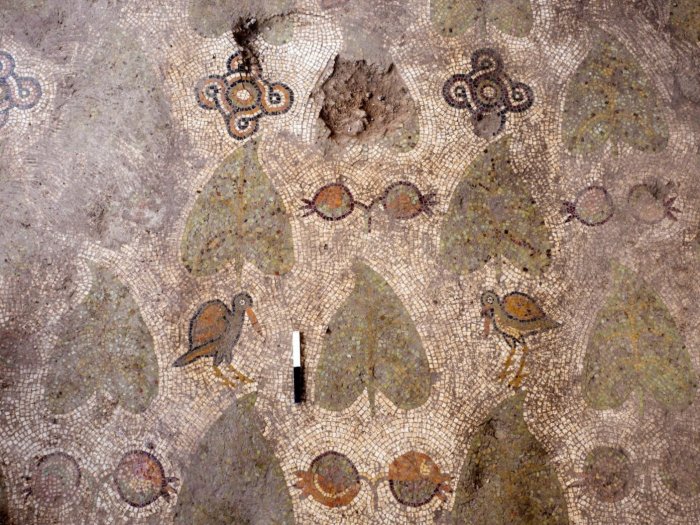
During the exploration work that preceded the planned construction of a new house in Ramat Beit Shemesh, Israeli archaeologists discovered the remains of a 7th century religious building with perfectly preserved mosaics. She and other finds allowed scientists to assert with certainty that a Christian monastery operated in this place during the Byzantine period, WallaNews reports. About a thousand volunteers - schoolchildren, students, and IDF recruits joined the work on the remains of the monastery. Under the guidance of archaeologists, they managed to find artifacts from non-native marble; many objects bore early Christian symbolism. The preservation of the finds is very good: this concerns the remains of a marble column with crosses, window bars made of the same material, and, of course, mosaics depicting birds and pomegranate fruits. According to scientists, some of the items found were probably delivered to the site by sea from the territory belonging to modern Turkey. So far, neither the building plan, nor the reason why its inhabitants left the monastery in the 7th century have not been determined. Nevertheless, the uniqueness of the find, as they say, is evident - first of all, thanks to the original Virantine mosaics, perfectly preserved. “On the border of Judea and Shefela, many ruins of churches and monasteries have been found. But this object surprised us with its excellent level of preservation. ' - said, commenting on the progress of the work, the head of the excavation archaeologist Benjamin Storchan.
Share: