The Mosaic Savior Not Made by Hands will decorate the entrance to the Transfiguration Church of Abakan

Мозаичный Спас Нерукотворный украсит вход в Преображенский храм Абакана
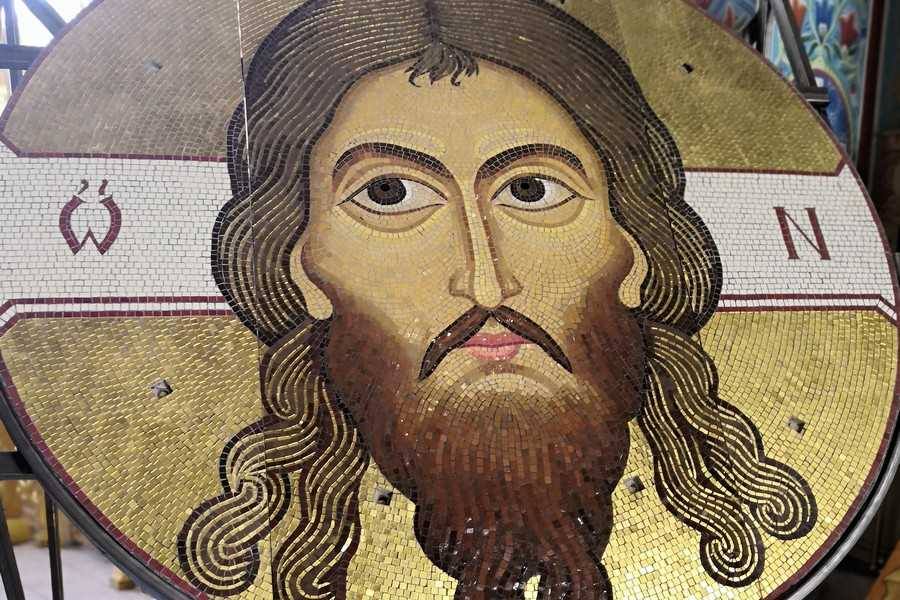
The 400-kilogram image of the Savior Not Made by Hands, made of mosaics, will appear above the entrance to the Holy Transfiguration Church in the capital of Khakassia. This was announced today by 'Abakan Online'. Unusual in its technique of work and an unusually large (side - about two meters) icon was created in Volgodonsk, Rostov region by order of the company 'SUEK-Khakassia'. They wanted to erect the holy image over the entrance on Christmas Day, but then severe frosts prevented the implementation of the plan. Now the icon has been consecrated - and in the coming days it will take its intended place. The icon 'Savior Not Made by Hands' is one of the most famous faces of the Savior. However, the version that is going to be installed in Abakan has its own peculiarities. - This is a Novgorod image, but somewhat softer, the original is more formidable, - noted the Archbishop of Abakan and Khakass Jonathan, who performed the rite of consecration of the icon. The mosaic face of the Savior is made of smalt - colored glass that has undergone a special treatment. In the same technique, images were created in the Constantinople Church of St. Sophia - from the fourth century to the present day, their colors have not lost their brightness. Photo: Svetlana Stafievskaya.
Share:
The Mosaic Savior Not Made by Hands will decorate the entrance to the Transfiguration Church of Abakan The Mosaic Savior Not Made by Hands will decorate the entrance to the Transfiguration Church of Abakan The 400-kilogram image of the Savior Not Made by Hands, made of mosaics, will appear above the entrance to the Holy Transfiguration Church in the capital of Khakassia. This was announced today by 'Abakan Online'. Unusual in its technique of work and an unusually large (side - about two meters) icon was created in Volgodonsk, Rostov region by order of the company 'SUEK-Khakassia'. They wanted to erect the holy image over the entrance on Christmas Day, but then severe frosts prevented the implementation of the plan. Now the icon has been consecrated - and in the coming days it will take its intended place. The icon 'Savior Not Made by Hands' is one of the most famous faces of the Savior. However, the version that is going to be installed in Abakan has its own peculiarities. - This is a Novgorod image, but somewhat softer, the original is more formidable, - noted the Archbishop of Abakan and Khakass Jonathan, who performed the rite of consecration of the icon. The mosaic face of the Savior is made of smalt - colored glass that has undergone a special treatment. In the same technique, images were created in the Constantinople Church of St. Sophia - from the fourth century to the present day, their colors have not lost their brightness. Photo: Svetlana Stafievskaya.
The 400-kilogram image of the Savior Not Made by Hands, made of mosaics, will appear above the entrance to the Holy Transfiguration Church in the capital of Khakassia. This was announced today by 'Abakan Online'. Unusual in its technique of work and an unusually large (side - about two meters) icon was created in Volgodonsk, Rostov region by order of the company 'SUEK-Khakassia'. They wanted to erect the holy image over the entrance on Christmas Day, but then severe frosts prevented the implementation of the plan. Now the icon has been consecrated - and in the coming days it will take its intended place. The icon 'Savior Not Made by Hands' is one of the most famous faces of the Savior. However, the version that is going to be installed in Abakan has its own peculiarities. - This is a Novgorod image, but somewhat softer, the original is more formidable, - noted the Archbishop of Abakan and Khakass Jonathan, who performed the rite of consecration of the icon. The mosaic face of the Savior is made of smalt - colored glass that has undergone a special treatment. In the same technique, images were created in the Constantinople Church of St. Sophia - from the fourth century to the present day, their colors have not lost their brightness. Photo: Svetlana Stafievskaya.