Unlike Jerusalem, Bethlehem and Nazareth, the city of Hebron is not as popular with Christian pilgrims to the Holy Land. Nevertheless, it is here, in one of the oldest cities in the world, according to Tradition, that the ashes of the three biblical forefathers - Abraham, Isaac and Jacob, as well as their wives - Sarah, Rebekah and Leah, rest. The tradition of Judaism also connects this place with the burial of Adam and Eve, and Muslims believe that the Old Testament Patriarch Joseph was also buried in Hebron, near Machpela. Hebron is located in the historical region of Judea, in the Palestinian Authority. The city is divided into two parts: the larger one is inhabited by Arabs, the smaller one is the Jewish quarter, the inhabitants of which live under the protection of the Israeli army. It is here, in the Jewish part of the city, that the crypt of the Patriarchs is located - Makhpela, which in translation from Hebrew means 'double', 'pair' and indicates the structure of the burial cave, as well as several paired matrimonial graves that are inside.
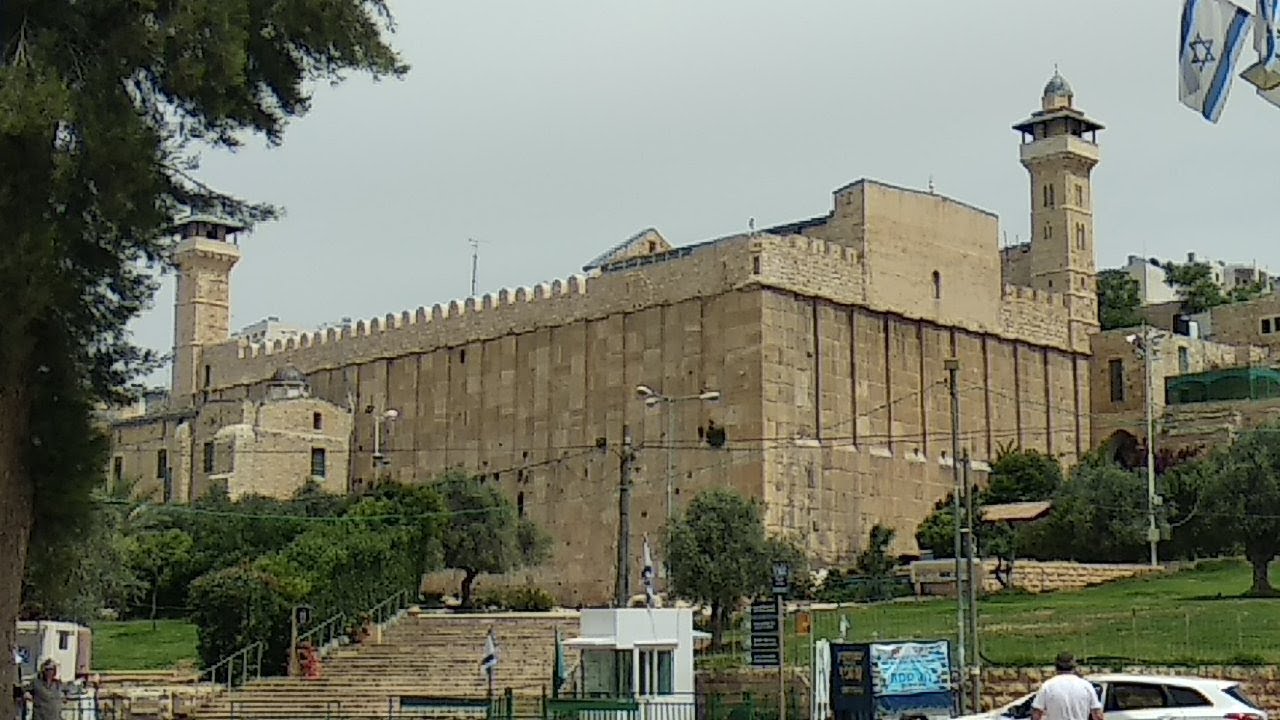
Once the forefather Abraham bought this place for 400 shekels of silver from a local resident, the Hittite Ephron. According to the biblical story, in later times, Hebron was one of the six cities of refuge where they could hide from retaliation. people who have committed manslaughter. In Hebron, the king and the prophet David was anointed for the kingdom. Small Hebron is visited by about a million people annually - and, of course, the most visited place in the city is the Cave of the Patriarchs, Mearat ha-Mahpela. However, the burial cave itself is only a part of the monumental structure erected during the time of Herod the Great, and perhaps even somewhat earlier. The outer walls of the building (looking ahead, we note that since 2010 UNESCO has secured the status of a mosque) reach twelve meters in height. The similarity of the cut stones in the masonry of the Western Wall is not accidental: for the Jews, Machpelah is the second most holy place after the Temple Mount, and Hebron itself is considered one of the four holy cities of Israel - along with Jerusalem, Safed and Tiberias. It is not known exactly when the walls of Makhpela were erected. The ancient historian Josephus Flavius, describing in detail the location of the tombstones, does not mention the walls. This, however, does not mean that they were not with him - most likely, the writer simply focused on the main thing, rejecting the secondary.
Over the centuries of its existence, this two-level building has managed to visit a synagogue, a Byzantine church, a mosque, a basilica of the Crusaders - and more recently, this day, Arabs and Jews alternately pray in it on strictly defined days and hours. The entrance to the caves themselves is currently inaccessible - in the hole leading to the burials of the patriarchs from the Hall of Isaac, according to Muslim custom, only an unquenchable lamp descends, sanctifying the deserted space of the lower tier. And in the upper tier above the graves of the forefathers there are symbolic sarcophagi of holy men and women - cenotaphs - before which the believers pray. Since 1994, by decision of the Government of Israel, the upper tier has been delimited into Muslim and Jewish parts - but on certain days associated with major holidays, Judaists pray in the territory belonging to Muslims, and on other days - vice versa: Muslims have the opportunity to perform prayers in halls. assigned to Jews. During the Byzantine rule, the southern part of the building was turned into a church, which was consecrated in the name of the forefather Abraham. Christians entered the building with one door, Jews with another. In the sixth century, the building was surrounded by galleries on all four sides. Then the entrance to the burial places of the biblical patriarchs and their wives was still open. In Muslim times, access there was no longer possible.
Inaccessibility of caves intrigues and has long been a fertile ground for the emergence of folk tales and rumors. Here is one such story. In the middle of the seventeenth century, the sultan's saber fell into the hole leading downward - and all attempts to get it ended in failure. Muslims who wanted to please the sultan were lowered down on ropes and removed from there dead. After several such attempts, no new volunteers were found to repeat the descent. Then someone advised the ruler, under the threat of extermination of all Jews in Hebron, to force a Jew to go down for a saber - which was done. The Jew Abraham Azulay was able to get a saber. Then he told his compatriots that he had met the patriarchs below, and they announced to him that he would receive weapons and thus save the Jews from reprisals, but he himself would leave the earthly world. What soon happened: the next morning Azulai was found on his bed, already departed to another world. In the tenth century, the entrance to the tomb was blocked by an extension called 'Joseph's tomb'. But the Jews categorically disagree with the Muslim location of the grave of this Old Testament patriarch: referring to the Holy Scriptures, they remind that Joseph died in Egypt, and his body was transferred to Nablus (Shechem), where he was buried. Point.
During the time of the Kingdom of Jerusalem, the Crusaders the walls of the structure were reinforced - and it was possible to get inside the Makhpela cave for a certain fee. Here is one of the reliable written testimonies of that era, belonging to the traveler Benjamin from Tudela: “ If a Jew pays the Ishmaelite watchman, he will open an iron gate for him. From there you need to go down with a candle in your hand to the third cave, where there are six graves. On one side are the graves of Abraham, Isaac and Jacob, and opposite the graves of Sarah, Rebecca and Leah. 'The Mamluks, who came to the Holy Land to replace the Crusaders in the13thcentury, closed the caves again - and Jews and Christians were even prohibited from visiting the halls of the upper tier. However, Sultan Baybars showed, so to speak, condescension to the Jews: he allowed them to climb the outer steps to the seventh in a row and pray there, pushing prayer notes into a special hole in the two and a half meter thick wall, leading to the inside of the cave. Only seven hundred years later, after the victory of the Jews in the Six Day War, this ban was lifted, the steps were destroyed, and the Jews were again able to pray in the halls with cenotaphs. (However, some of them to this day prefer to pray in the same place.)The end of the Six Day War allowed the Israelites to explore the cave. Since an adult could not go down into a narrow hole, the daughter of one of the Israeli officers was lowered there on ropes - of course, with her own consent and the permission of her mother. The brave girl was named Michal. This is how she herself later described the event:
“ On Wednesday, October 9, 1968, my mother asked me if I would agree to go down the narrow opening into the cave. I agreed, and she said that it was about a dungeon under the Machpela cave ... I saw an opening through which I had to go down. It was measured, its diameter was 28 centimeters. They tied me up with ropes, gave me a lantern and matches (to determine the composition of the air below) and began to lower me. I landed on a pile of papers and paper money. I found myself in a square room. Against me were three tombstones, the middle one taller and more decorated than the other two. There was a small square opening in the wall opposite. At the top, they let go of the rope a little, I climbed through it and found myself in a low, narrow corridor, the walls of which were carved into the rock. The corridor was shaped like a rectangular box. At the end of it there was a staircase, and its steps rested against a sealed wall ... The narrow corridor measured out with steps: it was 34 steps in length. When descending, I counted 16 steps, and when ascending, only 15. I went up and down five times, but the result remained the same. the same. Each step was 25 cm high. I went up the steps for the sixth time and knocked on the ceiling. There was a knock in return. Came back. They gave me a camera, and I went downstairs again and photographed the square room, the tombstones, the corridor and the stairs. She got up again, took pencil and paper and went down again and sketched. I measured the room in steps: 6 by 5. The width of each tombstone was equal to one step and the distance between the tombstones was also one step. The corridor was one step wide and about one meter high. They pulled me out. While climbing, I dropped the lantern. I had to go down again, go up again ... '
A more thorough examination of Makhpela was carried out by several local residents who entered the cave in 1981. One of the expedition members, Noam Arnon, reports the following: “It turned out that there are two floors under the building: on the upper floor there is a“ candle room ”and a corridor leads to it. The cave itself is on the lower floor. This cave is double, it consists of two cavities connected by a narrow passage. The burial method corresponds to the period described in the Torah. Both of these cavities are now filled almost to the top with earth that covers the ancient graves. ' How, however, to be with a discrepancy in legends of Christianity and Judaism associated with the burial place of Adam? The first points to Mount Golgotha in Jerusalem, the second to Machpela Cave in Hebron. Perhaps a little-known apocryphal of the seventh century called 'The Cave of Treasures' can shed light on the apparent contradiction. This Syriac manuscript tells of how Noah preserved the remains of Adam and Eve during the Flood, and after the flood he again buried them in the land where Hebron is now located. And only the skull and two bones of the first man Adam Noah bequeathed to his son Shem to bury where, according to ancient ideas, the center of the Earth was located - of course, in Jerusalem. Which is what the respectful son did ... If this is indeed the case, there is simply no contradiction between the two different versions of Adam's burial place. Why, to this day, Hebron, where the Machpela cave is located, to put it mildly, is not the most popular route among Christian pilgrims visiting the Holy Land? Because you can get here from Jerusalem only on an armored bus, moving along a strictly defined route. It is a difficult area, home to roughly 250,000 Arabs and fewer than 1,000 Jews, and the situation here remains peaceful only thanks to the presence of the Israeli military. However, pilgrims and tourists, albeit in small numbers, still have a chance to visit Hebron and visit Machpela. Since its building, as we remember, has the status of a mosque, at the entrance you will have to take off your shoes, and women will also have to put on a loose robe, leaving only the face and hands open. Interestingly, photography outside and inside Mahpela is allowed - however, when visiting the hall with cenotaphs, you will have to observe absolute silence. Well, the opportunity to visit this shrine, which is not the most open for Christian pilgrims, is worth it! V. Sergienko
Machpela - Cave of the Patriarchs in HebronMachpela - Cave of the Patriarchs in Hebron Unlike Jerusalem, Bethlehem and Nazareth, the city of Hebron is not as popular with Christian pilgrims to the Holy Land. Nevertheless, it is here, in one of the oldest cities in the world, according to Tradition, that the ashes of the three biblical forefathers - Abraham, Isaac and Jacob, as well as their wives - Sarah, Rebekah and Leah, rest. The tradition of Judaism also connects this place with the burial of Adam and Eve, and Muslims believe that the Old Testament Patriarch Joseph was also buried in Hebron, near Machpela. Hebron is located in the historical region of Judea, in the Palestinian Authority. The city is divided into two parts: the larger one is inhabited by Arabs, the smaller one is the Jewish quarter, the inhabitants of which live under the protection of the Israeli army. It is here, in the Jewish part of the city, that the crypt of the Patriarchs is located - Makhpela, which in translation from Hebrew means 'double', 'pair' and indicates the structure of the burial cave, as well as several paired matrimonial graves that are inside. Once the forefather Abraham bought this place for 400 shekels of silver from a local resident, the Hittite Ephron. According to the biblical story, in later times, Hebron was one of the six cities of refuge where they could hide from retaliation. people who have committed manslaughter. In Hebron, the king and the prophet David was anointed for the kingdom. Small Hebron is visited by about a million people annually - and, of course, the most visited place in the city is the Cave of the Patriarchs, Mearat ha-Mahpela. However, the burial cave itself is only a part of the monumental structure erected during the time of Herod the Great, and perhaps even somewhat earlier. The outer walls of the building (looking ahead, we note that since 2010 UNESCO has secured the status of a mosque) reach twelve meters in height. The similarity of the cut stones in the masonry of the Western Wall is not accidental: for the Jews, Machpelah is the second most holy place after the Temple Mount, and Hebron itself is considered one of the four holy cities of Israel - along with Jerusalem, Safed and Tiberias. It is not known exactly when the walls of Makhpela were erected. The ancient historian Josephus Flavius, describing in detail the location of the tombstones, does not mention the walls. This, however, does not mean that they were not with him - most likely, the writer simply focused on the main thing, rejecting the secondary. Over the centuries of its existence, this two-level building has managed to visit a synagogue, a Byzantine church, a mosque, a basilica of the Crusaders - and more recently, this day, Arabs and Jews alternately pray in it on strictly defined days and hours. The entrance to the caves themselves is currently inaccessible - in the hole leading to the burials of the patriarchs from the Hall of Isaac, according to Muslim custom, only an unquenchable lamp descends, sanctifying the deserted space of the lower tier. And in the upper tier above the graves of the forefathers there are symbolic sarcophagi of holy men and women - cenotaphs - before which the believers pray. Since 1994, by decision of the Government of Israel, the upper tier has been delimited into Muslim and Jewish parts - but on certain days associated with major holidays, Judaists pray in the territory belonging to Muslims, and on other days - vice versa: Muslims have the opportunity to perform prayers in halls. assigned to Jews. During the Byzantine rule, the southern part of the building was turned into a church, which was consecrated in the name of the forefather Abraham. Christians entered the building with one door, Jews with another. In the sixth century, the building was surrounded by galleries on all four sides. Then the entrance to the burial places of the biblical patriarchs and their wives was still open. In Muslim times, access there was no longer possible. Inaccessibility of caves intrigues and has long been a fertile ground for the emergence of folk tales and rumors. Here is one such story. In the middle of the seventeenth century, the sultan's saber fell into the hole leading downward - and all attempts to get it ended in failure. Muslims who wanted to please the sultan were lowered down on ropes and removed from there dead. After several such attempts, no new volunteers were found to repeat the descent. Then someone advised the ruler, under the threat of extermination of all Jews in Hebron, to force a Jew to go down for a saber - which was done. The Jew Abraham Azulay was able to get a saber. Then he told his compatriots that he had met the patriarchs below, and they announced to him that he would receive weapons and thus save the Jews from reprisals, but he himself would leave the earthly world. What soon happened: the next morning Azulai was found on his bed, already departed to another world. In the tenth century, the entrance to the tomb was blocked by an extension called 'Joseph's tomb'. But the Jews categorically disagree with the Muslim location of the grave of this Old Testament patriarch: referring to the Holy Scriptures, they remind that Joseph died in Egypt, and his body was transferred to Nablus (Shechem), where he was buried. Point. During the time of the Kingdom of Jerusalem, the Crusaders the walls of the structure were reinforced - and it was possible to get inside the Makhpela cave for a certain fee. Here is one of the reliable written testimonies of that era, belonging to the traveler Benjamin from Tudela: “ If a Jew pays the Ishmaelite watchman, he will open an iron gate for him. From there you need to go down with a candle in your hand to the third cave, where there are six graves. On one side are the graves of Abraham, Isaac and Jacob, and opposite the graves of Sarah, Rebecca and Leah. ' The Mamluks, who came to the Holy Land to replace the Crusaders in the 13th century, closed the caves again - and Jews and Christians were even prohibited from visiting the halls of the upper tier. However, Sultan Baybars showed, so to speak, condescension to the Jews: he allowed them to climb the outer steps to the seventh in a row and pray there, pushing prayer notes into a special hole in the two and a half meter thick wall, leading to the inside of the cave. Only seven hundred years later, after the victory of the Jews in the Six Day War, this ban was lifted, the steps were destroyed, and the Jews were again able to pray in the halls with cenotaphs. (However, some of them to this day prefer to pray in the same place.) The end of the Six Day War allowed the Israelites to explore the cave. Since an adult could not go down into a narrow hole, the daughter of one of the Israeli officers was lowered there on ropes - of course, with her own consent and the permission of her mother. The brave girl was named Michal. This is how she herself later described the event: “ On Wednesday, October 9, 1968, my mother asked me if I would agree to go down the narrow opening into the cave. I agreed, and she said that it was about a dungeon under the Machpela cave ... I saw an opening through which I had to go down. It was measured, its diameter was 28 centimeters. They tied me up with ropes, gave me a lantern and matches (to determine the composition of the air below) and began to lower me. I landed on a pile of papers and paper money. I found myself in a square room. Against me were three tombstones, the middle one taller and more decorated than the other two. There was a small square opening in the wall opposite. At the top, they let go of the rope a little, I climbed through it and found myself in a low, narrow corridor, the walls of which were carved into the rock. The corridor was shaped like a rectangular box. At the end of it there was a staircase, and its steps rested against a sealed wall ... The narrow corridor measured out with steps: it was 34 steps in length. When descending, I counted 16 steps, and when ascending, only 15. I went up and down five times, but the result remained the same. the same. Each step was 25 cm high. I went up the steps for the sixth time and knocked on the ceiling. There was a knock in return. Came back. They gave me a camera, and I went downstairs again and photographed the square room, the tombstones, the corridor and the stairs. She got up again, took pencil and paper and went down again and sketched. I measured the room in steps: 6 by 5. The width of each tombstone was equal to one step and the distance between the tombstones was also one step. The corridor was one step wide and about one meter high. They pulled me out. While climbing, I dropped the lantern. I had to go down again, go up again ... ' A more thorough examination of Makhpela was carried out by several local residents who entered the cave in 1981. One of the expedition members, Noam Arnon, reports the following: “It turned out that there are two floors under the building: on the upper floor there is a“ candle room ”and a corridor leads to it. The cave itself is on the lower floor. This cave is double, it consists of two cavities connected by a narrow passage. The burial method corresponds to the period described in the Torah. Both of these cavities are now filled almost to the top with earth that covers the ancient graves. ' How, however, to be with a discrepancy in legends of Christianity and Judaism associated with the burial place of Adam? The first points to Mount Golgotha in Jerusalem, the second to Machpela Cave in Hebron. Perhaps a little-known apocryphal of the seventh century called 'The Cave of Treasures' can shed light on the apparent contradiction. This Syriac manuscript tells of how Noah preserved the remains of Adam and Eve during the Flood, and after the flood he again buried them in the land where Hebron is now located. And only the skull and two bones of the first man Adam Noah bequeathed to his son Shem to bury where, according to ancient ideas, the center of the Earth was located - of course, in Jerusalem. Which is what the respectful son did ... If this is indeed the case, there is simply no contradiction between the two different versions of Adam's burial place. Why, to this day, Hebron, where the Machpela cave is located, to put it mildly, is not the most popular route among Christian pilgrims visiting the Holy Land? Because you can get here from Jerusalem only on an armored bus, moving along a strictly defined route. It is a difficult area, home to roughly 250,000 Arabs and fewer than 1,000 Jews, and the situation here remains peaceful only thanks to the presence of the Israeli military. However, pilgrims and tourists, albeit in small numbers, still have a chance to visit Hebron and visit Machpela. Since its building, as we remember, has the status of a mosque, at the entrance you will have to take off your shoes, and women will also have to put on a loose robe, leaving only the face and hands open. Interestingly, photography outside and inside Mahpela is allowed - however, when visiting the hall with cenotaphs, you will have to observe absolute silence. Well, the opportunity to visit this shrine, which is not the most open for Christian pilgrims, is worth it! V. SergienkoСвеча Иерусалима -en
Unlike Jerusalem, Bethlehem and Nazareth, the city of Hebron is not as popular with Christian pilgrims to the Holy Land. Nevertheless, it is here, in one of the oldest cities in the world, according to Tradition, that the ashes of the three biblical forefathers - Abraham, Isaac and Jacob, as well as their wives - Sarah, Rebekah and Leah, rest. The tradition of Judaism also connects this place with the burial of Adam and Eve, and Muslims believe that the Old Testament Patriarch Joseph was also buried in Hebron, near Machpela. Hebron is located in the historical region of Judea, in the Palestinian Authority. The city is divided into two parts: the larger one is inhabited by Arabs, the smaller one is the Jewish quarter, the inhabitants of which live under the protection of the Israeli army. It is here, in the Jewish part of the city, that the crypt of the Patriarchs is located - Makhpela, which in translation from Hebrew means 'double', 'pair' and indicates the structure of the burial cave, as well as several paired matrimonial graves that are inside. Once the forefather Abraham bought this place for 400 shekels of silver from a local resident, the Hittite Ephron. According to the biblical story, in later times, Hebron was one of the six cities of refuge where they could hide from retaliation. people who have committed manslaughter. In Hebron, the king and the prophet David was anointed for the kingdom. Small Hebron is visited by about a million people annually - and, of course, the most visited place in the city is the Cave of the Patriarchs, Mearat ha-Mahpela. However, the burial cave itself is only a part of the monumental structure erected during the time of Herod the Great, and perhaps even somewhat earlier. The outer walls of the building (looking ahead, we note that since 2010 UNESCO has secured the status of a mosque) reach twelve meters in height. The similarity of the cut stones in the masonry of the Western Wall is not accidental: for the Jews, Machpelah is the second most holy place after the Temple Mount, and Hebron itself is considered one of the four holy cities of Israel - along with Jerusalem, Safed and Tiberias. It is not known exactly when the walls of Makhpela were erected. The ancient historian Josephus Flavius, describing in detail the location of the tombstones, does not mention the walls. This, however, does not mean that they were not with him - most likely, the writer simply focused on the main thing, rejecting the secondary. Over the centuries of its existence, this two-level building has managed to visit a synagogue, a Byzantine church, a mosque, a basilica of the Crusaders - and more recently, this day, Arabs and Jews alternately pray in it on strictly defined days and hours. The entrance to the caves themselves is currently inaccessible - in the hole leading to the burials of the patriarchs from the Hall of Isaac, according to Muslim custom, only an unquenchable lamp descends, sanctifying the deserted space of the lower tier. And in the upper tier above the graves of the forefathers there are symbolic sarcophagi of holy men and women - cenotaphs - before which the believers pray. Since 1994, by decision of the Government of Israel, the upper tier has been delimited into Muslim and Jewish parts - but on certain days associated with major holidays, Judaists pray in the territory belonging to Muslims, and on other days - vice versa: Muslims have the opportunity to perform prayers in halls. assigned to Jews. During the Byzantine rule, the southern part of the building was turned into a church, which was consecrated in the name of the forefather Abraham. Christians entered the building with one door, Jews with another. In the sixth century, the building was surrounded by galleries on all four sides. Then the entrance to the burial places of the biblical patriarchs and their wives was still open. In Muslim times, access there was no longer possible. Inaccessibility of caves intrigues and has long been a fertile ground for the emergence of folk tales and rumors. Here is one such story. In the middle of the seventeenth century, the sultan's saber fell into the hole leading downward - and all attempts to get it ended in failure. Muslims who wanted to please the sultan were lowered down on ropes and removed from there dead. After several such attempts, no new volunteers were found to repeat the descent. Then someone advised the ruler, under the threat of extermination of all Jews in Hebron, to force a Jew to go down for a saber - which was done. The Jew Abraham Azulay was able to get a saber. Then he told his compatriots that he had met the patriarchs below, and they announced to him that he would receive weapons and thus save the Jews from reprisals, but he himself would leave the earthly world. What soon happened: the next morning Azulai was found on his bed, already departed to another world. In the tenth century, the entrance to the tomb was blocked by an extension called 'Joseph's tomb'. But the Jews categorically disagree with the Muslim location of the grave of this Old Testament patriarch: referring to the Holy Scriptures, they remind that Joseph died in Egypt, and his body was transferred to Nablus (Shechem), where he was buried. Point. During the time of the Kingdom of Jerusalem, the Crusaders the walls of the structure were reinforced - and it was possible to get inside the Makhpela cave for a certain fee. Here is one of the reliable written testimonies of that era, belonging to the traveler Benjamin from Tudela: “ If a Jew pays the Ishmaelite watchman, he will open an iron gate for him. From there you need to go down with a candle in your hand to the third cave, where there are six graves. On one side are the graves of Abraham, Isaac and Jacob, and opposite the graves of Sarah, Rebecca and Leah. ' The Mamluks, who came to the Holy Land to replace the Crusaders in the 13th century, closed the caves again - and Jews and Christians were even prohibited from visiting the halls of the upper tier. However, Sultan Baybars showed, so to speak, condescension to the Jews: he allowed them to climb the outer steps to the seventh in a row and pray there, pushing prayer notes into a special hole in the two and a half meter thick wall, leading to the inside of the cave. Only seven hundred years later, after the victory of the Jews in the Six Day War, this ban was lifted, the steps were destroyed, and the Jews were again able to pray in the halls with cenotaphs. (However, some of them to this day prefer to pray in the same place.) The end of the Six Day War allowed the Israelites to explore the cave. Since an adult could not go down into a narrow hole, the daughter of one of the Israeli officers was lowered there on ropes - of course, with her own consent and the permission of her mother. The brave girl was named Michal. This is how she herself later described the event: “ On Wednesday, October 9, 1968, my mother asked me if I would agree to go down the narrow opening into the cave. I agreed, and she said that it was about a dungeon under the Machpela cave ... I saw an opening through which I had to go down. It was measured, its diameter was 28 centimeters. They tied me up with ropes, gave me a lantern and matches (to determine the composition of the air below) and began to lower me. I landed on a pile of papers and paper money. I found myself in a square room. Against me were three tombstones, the middle one taller and more decorated than the other two. There was a small square opening in the wall opposite. At the top, they let go of the rope a little, I climbed through it and found myself in a low, narrow corridor, the walls of which were carved into the rock. The corridor was shaped like a rectangular box. At the end of it there was a staircase, and its steps rested against a sealed wall ... The narrow corridor measured out with steps: it was 34 steps in length. When descending, I counted 16 steps, and when ascending, only 15. I went up and down five times, but the result remained the same. the same. Each step was 25 cm high. I went up the steps for the sixth time and knocked on the ceiling. There was a knock in return. Came back. They gave me a camera, and I went downstairs again and photographed the square room, the tombstones, the corridor and the stairs. She got up again, took pencil and paper and went down again and sketched. I measured the room in steps: 6 by 5. The width of each tombstone was equal to one step and the distance between the tombstones was also one step. The corridor was one step wide and about one meter high. They pulled me out. While climbing, I dropped the lantern. I had to go down again, go up again ... ' A more thorough examination of Makhpela was carried out by several local residents who entered the cave in 1981. One of the expedition members, Noam Arnon, reports the following: “It turned out that there are two floors under the building: on the upper floor there is a“ candle room ”and a corridor leads to it. The cave itself is on the lower floor. This cave is double, it consists of two cavities connected by a narrow passage. The burial method corresponds to the period described in the Torah. Both of these cavities are now filled almost to the top with earth that covers the ancient graves. ' How, however, to be with a discrepancy in legends of Christianity and Judaism associated with the burial place of Adam? The first points to Mount Golgotha in Jerusalem, the second to Machpela Cave in Hebron. Perhaps a little-known apocryphal of the seventh century called 'The Cave of Treasures' can shed light on the apparent contradiction. This Syriac manuscript tells of how Noah preserved the remains of Adam and Eve during the Flood, and after the flood he again buried them in the land where Hebron is now located. And only the skull and two bones of the first man Adam Noah bequeathed to his son Shem to bury where, according to ancient ideas, the center of the Earth was located - of course, in Jerusalem. Which is what the respectful son did ... If this is indeed the case, there is simply no contradiction between the two different versions of Adam's burial place. Why, to this day, Hebron, where the Machpela cave is located, to put it mildly, is not the most popular route among Christian pilgrims visiting the Holy Land? Because you can get here from Jerusalem only on an armored bus, moving along a strictly defined route. It is a difficult area, home to roughly 250,000 Arabs and fewer than 1,000 Jews, and the situation here remains peaceful only thanks to the presence of the Israeli military. However, pilgrims and tourists, albeit in small numbers, still have a chance to visit Hebron and visit Machpela. Since its building, as we remember, has the status of a mosque, at the entrance you will have to take off your shoes, and women will also have to put on a loose robe, leaving only the face and hands open. Interestingly, photography outside and inside Mahpela is allowed - however, when visiting the hall with cenotaphs, you will have to observe absolute silence. Well, the opportunity to visit this shrine, which is not the most open for Christian pilgrims, is worth it! V. Sergienko