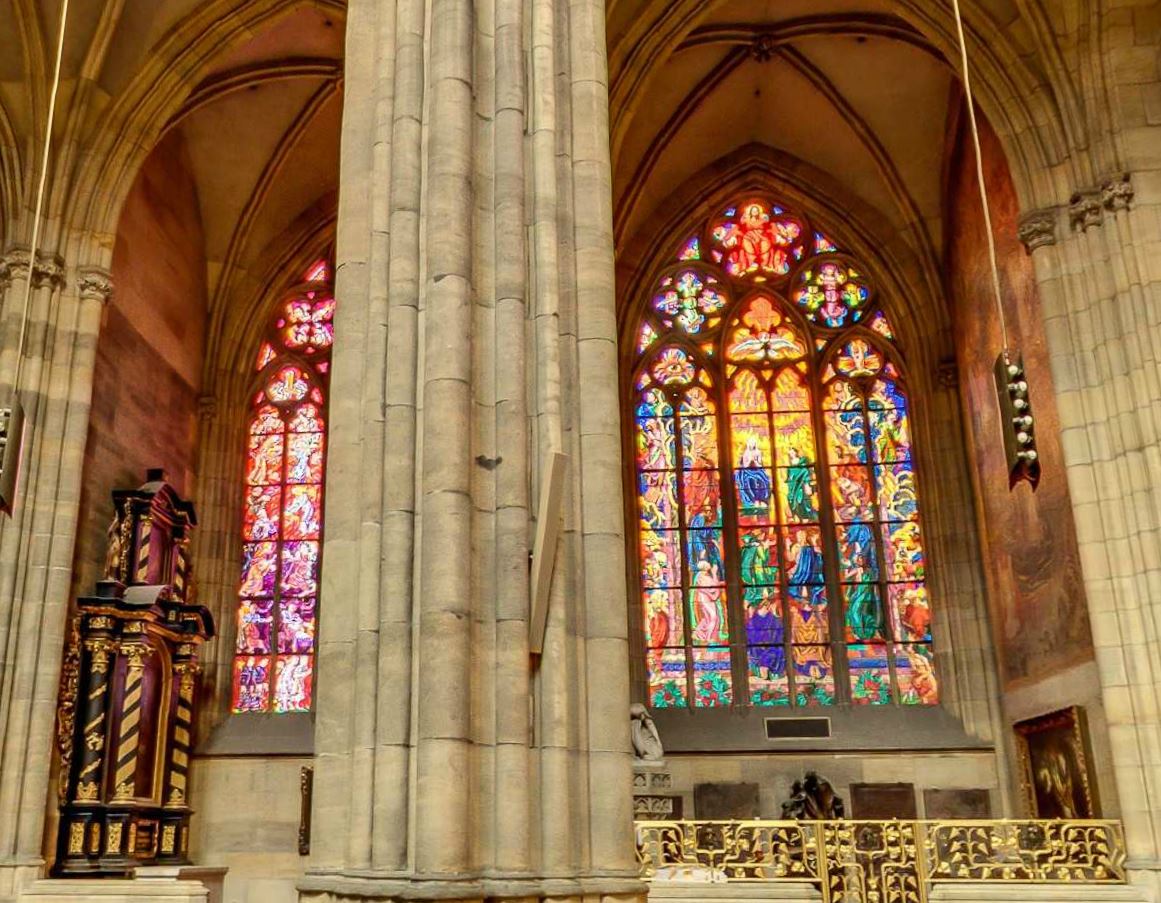
Church of St. Ludmila (Kostel svaté Ludmily) in Prague
29 May 2019
In the most mystical city in Europe, as the capital of the Czech Republic is often called, temples should be of extraordinary, Gothic beauty. So it really is - and, perhaps, the most majestic among them (although far from the oldest in the city) is the Church of St. Ludmila on Peace Square. Many gifted architects, sculptors and artists of Prague had a hand in the construction of this majestic temple and the decoration of its interior at the end of the century before last. The Church of St. Ludmila of Czech dates back to 1888. The construction of this temple cost a grandiose amount for those times of 370 thousand guilders - part of the money was allocated by the authorities, part was collected by the inhabitants of Prague and Vinohrady. In the year 1893, the construction was completed and the Catholic church was consecrated by the local bishop in the name of Saint Ludmila of Czech - revered, by the way, by both Western and Eastern Christians both in this country and far beyond its borders.
Saint Ludmila was born in the princely family of Pshovanov in the 9th century, when Christianity in these lands was still opposed to strong pagan beliefs. Both Lyudmila and her husband Borzhiva I, having united by marriage, were baptized by Saint Methodius, one of the two founders of the Slavic Cyrillic writing. Princess was an educated woman, knew several European languages, not counting classical Latin and ancient Greek. Throughout the country, she built temples, enlightening her compatriots with the teachings of the Lord Jesus Christ. After the death of her husband, Lyudmila distributed her property and raised her children - two sons and four daughters - in Christian traditions. After the death of his father, the youngest son Vratislav sat on the throne - but in fact the wise and active Lyudmila ruled the country. She outlived her son, who ruled the country for thirty-three years. After him, the throne was taken by the grandson of Lyudmila Vaclav, brought up by her. The mother of the new prince, the widow Vratislav named Dragomira, inclined towards paganism and hated her mother-in-law for the Christian upbringing of her son. Dragomira and other pagans conspired, as a result of which Lyudmila was strangled by her own headscarf during prayer. She was then sixty-one years old. In the XII century, the church canonized Ludmila Cheshskaya.
Despite the abundance of locally revered saints, the veneration of Princess Lyudmila in Bohemia is especially great. Here she is considered the patroness of her native land, the patroness of mothers and grandmothers, as well as teachers and educators. It would be strange if a grandiose cathedral was not built in Prague in honor of the main national saint - and in fact it is surprising that chronologically this was done quite late, as they say, at the end of the nineteenth century. It is interesting that on the site of the church of St. Ludmila there were previously buildings of a completely different purpose: for example, a menagerie and a circus. Be that as it may, just five years after the laying of the stone, the majestic Catholic cathedral opened its doors to believers. The facade of the building is decorated with lancet windows with colored stained-glass windows and many carved details, as well as figures of Saints Cyril and Methodius, Prokop and Vojtech. A massive staircase leads to the main entrance. You can get inside the temple by passing the heavy doors with deliberately strict ornamentation. Above the portal is a rose-shaped window. The tympanum is decorated with relief images of the Savior, the martyrs Ludmila and Wenceslas, which were made by the sculptor J. Myslbek. He, together with another sculptor, A. Prochazka, made the figures of the saints who patronized the Czech land in different historical periods - they can be seen on the pediments and in the side aisles.
The main architect of the neo-Gothic basilica was Josef Motzker. The sixty-meter-high church has two towers on either side of the entrance, which serve as belfries: inside each of them there was placed on a pair of bells. The elongated, pointed arches and spiers that complete the towers symbolize the Christian aspiration upward. If the appearance of the church to people who do not perceive Gothic architecture in any of its forms may seem austere and even gloomy, then the interior of the church - solemn and light - evokes extremely joyful feelings in any person. White columns with ornaments in the form of crosses and flower drawings on the Gothic vaults of the ceiling are made with great taste and exclusively in major tones. The famous artists J. Čapek and A. Turek worked on the painting of the interior of the church; the latter also made sketches for the arrangement of the main altar of the church. The sixteen-meter high altar is decorated with precious stones and frescoes on the themes of the life of St. Ludmila. In addition to it, there are two side ones: the right one is consecrated in the name of Saints Cyril and Methodius, and the left one - in the name of the Ever-Virgin Mary and the patron saints of the Czech Republic. The chair of the church was made by the carver J. Zika, and the sculptures that decorate it were created by A. Prochazka. The special pride of the temple is the organ with three thousand pipes. A separate story is connected with the bells of the temple. When casting, each of them received its own name: Vaclav, Prokop, Vojtech and, of course, Ludmila. During the First World War, the bells were removed for use in defense needs, leaving the church only one, used for the funeral ringing. Due to frequent use for its intended purpose, the bell cracked very quickly ... However, already in 1925, five new bells were cast instead of the previous ones with the donations collected, each of which also received a personal name. The Church of St. Ludmila is a functioning Catholic church, which is open only during services and on days of cultural and charitable events taking place here: concerts, fairs, sales. Local parishioners are very friendly people: pilgrims and tourists are always welcome here. By the way, there is another temple in Prague, consecrated in the name of the Martyr Princess Ludmila of Czech. It is located next to the Russian embassy and falls under the jurisdiction of the Russian Orthodox Church. We will tell you more about it sometime. V. Sergienko
Church of St. Ludmila (Kostel svaté Ludmily) in PragueChurch of St. Ludmila (Kostel svaté Ludmily) in Prague In the most mystical city in Europe, as the capital of the Czech Republic is often called, temples should be of extraordinary, Gothic beauty. So it really is - and, perhaps, the most majestic among them (although far from the oldest in the city) is the Church of St. Ludmila on Peace Square. Many gifted architects, sculptors and artists of Prague had a hand in the construction of this majestic temple and the decoration of its interior at the end of the century before last. The Church of St. Ludmila of Czech dates back to 1888. The construction of this temple cost a grandiose amount for those times of 370 thousand guilders - part of the money was allocated by the authorities, part was collected by the inhabitants of Prague and Vinohrady. In the year 1893, the construction was completed and the Catholic church was consecrated by the local bishop in the name of Saint Ludmila of Czech - revered, by the way, by both Western and Eastern Christians both in this country and far beyond its borders. Saint Ludmila was born in the princely family of Pshovanov in the 9th century, when Christianity in these lands was still opposed to strong pagan beliefs. Both Lyudmila and her husband Borzhiva I, having united by marriage, were baptized by Saint Methodius, one of the two founders of the Slavic Cyrillic writing. Princess was an educated woman, knew several European languages, not counting classical Latin and ancient Greek. Throughout the country, she built temples, enlightening her compatriots with the teachings of the Lord Jesus Christ. After the death of her husband, Lyudmila distributed her property and raised her children - two sons and four daughters - in Christian traditions. After the death of his father, the youngest son Vratislav sat on the throne - but in fact the wise and active Lyudmila ruled the country. She outlived her son, who ruled the country for thirty-three years. After him, the throne was taken by the grandson of Lyudmila Vaclav, brought up by her. The mother of the new prince, the widow Vratislav named Dragomira, inclined towards paganism and hated her mother-in-law for the Christian upbringing of her son. Dragomira and other pagans conspired, as a result of which Lyudmila was strangled by her own headscarf during prayer. She was then sixty-one years old. In the XII century, the church canonized Ludmila Cheshskaya. Despite the abundance of locally revered saints, the veneration of Princess Lyudmila in Bohemia is especially great. Here she is considered the patroness of her native land, the patroness of mothers and grandmothers, as well as teachers and educators. It would be strange if a grandiose cathedral was not built in Prague in honor of the main national saint - and in fact it is surprising that chronologically this was done quite late, as they say, at the end of the nineteenth century. It is interesting that on the site of the church of St. Ludmila there were previously buildings of a completely different purpose: for example, a menagerie and a circus. Be that as it may, just five years after the laying of the stone, the majestic Catholic cathedral opened its doors to believers. The facade of the building is decorated with lancet windows with colored stained-glass windows and many carved details, as well as figures of Saints Cyril and Methodius, Prokop and Vojtech. A massive staircase leads to the main entrance. You can get inside the temple by passing the heavy doors with deliberately strict ornamentation. Above the portal is a rose-shaped window. The tympanum is decorated with relief images of the Savior, the martyrs Ludmila and Wenceslas, which were made by the sculptor J. Myslbek. He, together with another sculptor, A. Prochazka, made the figures of the saints who patronized the Czech land in different historical periods - they can be seen on the pediments and in the side aisles.The main architect of the neo-Gothic basilica was Josef Motzker. The sixty-meter-high church has two towers on either side of the entrance, which serve as belfries: inside each of them there was placed on a pair of bells. The elongated, pointed arches and spiers that complete the towers symbolize the Christian aspiration upward. If the appearance of the church to people who do not perceive Gothic architecture in any of its forms may seem austere and even gloomy, then the interior of the church - solemn and light - evokes extremely joyful feelings in any person. White columns with ornaments in the form of crosses and flower drawings on the Gothic vaults of the ceiling are made with great taste and exclusively in major tones. The famous artists J. Čapek and A. Turek worked on the painting of the interior of the church; the latter also made sketches for the arrangement of the main altar of the church. The sixteen-meter high altar is decorated with precious stones and frescoes on the themes of the life of St. Ludmila. In addition to it, there are two side ones: the right one is consecrated in the name of Saints Cyril and Methodius, and the left one - in the name of the Ever-Virgin Mary and the patron saints of the Czech Republic. The chair of the church was made by the carver J. Zika, and the sculptures that decorate it were created by A. Prochazka. The special pride of the temple is the organ with three thousand pipes. A separate story is connected with the bells of the temple. When casting, each of them received its own name: Vaclav, Prokop, Vojtech and, of course, Ludmila. During the First World War, the bells were removed for use in defense needs, leaving the church only one, used for the funeral ringing. Due to frequent use for its intended purpose, the bell cracked very quickly ... However, already in 1925, five new bells were cast instead of the previous ones with the donations collected, each of which also received a personal name. The Church of St. Ludmila is a functioning Catholic church, which is open only during services and on days of cultural and charitable events taking place here: concerts, fairs, sales. Local parishioners are very friendly people: pilgrims and tourists are always welcome here. By the way, there is another temple in Prague, consecrated in the name of the Martyr Princess Ludmila of Czech. It is located next to the Russian embassy and falls under the jurisdiction of the Russian Orthodox Church. We will tell you more about it sometime. V. SergienkoСвеча Иерусалима -en
In the most mystical city in Europe, as the capital of the Czech Republic is often called, temples should be of extraordinary, Gothic beauty. So it really is - and, perhaps, the most majestic among them (although far from the oldest in the city) is the Church of St. Ludmila on Peace Square. Many gifted architects, sculptors and artists of Prague had a hand in the construction of this majestic temple and the decoration of its interior at the end of the century before last. The Church of St. Ludmila of Czech dates back to 1888. The construction of this temple cost a grandiose amount for those times of 370 thousand guilders - part of the money was allocated by the authorities, part was collected by the inhabitants of Prague and Vinohrady. In the year 1893, the construction was completed and the Catholic church was consecrated by the local bishop in the name of Saint Ludmila of Czech - revered, by the way, by both Western and Eastern Christians both in this country and far beyond its borders. Saint Ludmila was born in the princely family of Pshovanov in the 9th century, when Christianity in these lands was still opposed to strong pagan beliefs. Both Lyudmila and her husband Borzhiva I, having united by marriage, were baptized by Saint Methodius, one of the two founders of the Slavic Cyrillic writing. Princess was an educated woman, knew several European languages, not counting classical Latin and ancient Greek. Throughout the country, she built temples, enlightening her compatriots with the teachings of the Lord Jesus Christ. After the death of her husband, Lyudmila distributed her property and raised her children - two sons and four daughters - in Christian traditions. After the death of his father, the youngest son Vratislav sat on the throne - but in fact the wise and active Lyudmila ruled the country. She outlived her son, who ruled the country for thirty-three years. After him, the throne was taken by the grandson of Lyudmila Vaclav, brought up by her. The mother of the new prince, the widow Vratislav named Dragomira, inclined towards paganism and hated her mother-in-law for the Christian upbringing of her son. Dragomira and other pagans conspired, as a result of which Lyudmila was strangled by her own headscarf during prayer. She was then sixty-one years old. In the XII century, the church canonized Ludmila Cheshskaya. Despite the abundance of locally revered saints, the veneration of Princess Lyudmila in Bohemia is especially great. Here she is considered the patroness of her native land, the patroness of mothers and grandmothers, as well as teachers and educators. It would be strange if a grandiose cathedral was not built in Prague in honor of the main national saint - and in fact it is surprising that chronologically this was done quite late, as they say, at the end of the nineteenth century. It is interesting that on the site of the church of St. Ludmila there were previously buildings of a completely different purpose: for example, a menagerie and a circus. Be that as it may, just five years after the laying of the stone, the majestic Catholic cathedral opened its doors to believers. The facade of the building is decorated with lancet windows with colored stained-glass windows and many carved details, as well as figures of Saints Cyril and Methodius, Prokop and Vojtech. A massive staircase leads to the main entrance. You can get inside the temple by passing the heavy doors with deliberately strict ornamentation. Above the portal is a rose-shaped window. The tympanum is decorated with relief images of the Savior, the martyrs Ludmila and Wenceslas, which were made by the sculptor J. Myslbek. He, together with another sculptor, A. Prochazka, made the figures of the saints who patronized the Czech land in different historical periods - they can be seen on the pediments and in the side aisles.The main architect of the neo-Gothic basilica was Josef Motzker. The sixty-meter-high church has two towers on either side of the entrance, which serve as belfries: inside each of them there was placed on a pair of bells. The elongated, pointed arches and spiers that complete the towers symbolize the Christian aspiration upward. If the appearance of the church to people who do not perceive Gothic architecture in any of its forms may seem austere and even gloomy, then the interior of the church - solemn and light - evokes extremely joyful feelings in any person. White columns with ornaments in the form of crosses and flower drawings on the Gothic vaults of the ceiling are made with great taste and exclusively in major tones. The famous artists J. Čapek and A. Turek worked on the painting of the interior of the church; the latter also made sketches for the arrangement of the main altar of the church. The sixteen-meter high altar is decorated with precious stones and frescoes on the themes of the life of St. Ludmila. In addition to it, there are two side ones: the right one is consecrated in the name of Saints Cyril and Methodius, and the left one - in the name of the Ever-Virgin Mary and the patron saints of the Czech Republic. The chair of the church was made by the carver J. Zika, and the sculptures that decorate it were created by A. Prochazka. The special pride of the temple is the organ with three thousand pipes. A separate story is connected with the bells of the temple. When casting, each of them received its own name: Vaclav, Prokop, Vojtech and, of course, Ludmila. During the First World War, the bells were removed for use in defense needs, leaving the church only one, used for the funeral ringing. Due to frequent use for its intended purpose, the bell cracked very quickly ... However, already in 1925, five new bells were cast instead of the previous ones with the donations collected, each of which also received a personal name. The Church of St. Ludmila is a functioning Catholic church, which is open only during services and on days of cultural and charitable events taking place here: concerts, fairs, sales. Local parishioners are very friendly people: pilgrims and tourists are always welcome here. By the way, there is another temple in Prague, consecrated in the name of the Martyr Princess Ludmila of Czech. It is located next to the Russian embassy and falls under the jurisdiction of the Russian Orthodox Church. We will tell you more about it sometime. V. Sergienko