How the Orthodox commemorate those who have departed to the Lord
27 July 2018
One often hears words like the following: “Soon a year afterN.died. We ought to get together, remember him, raise him without clinking glasses ... ”Somehow it happened that folk beliefs related to remembrance, and not always useful from a spiritual point of view, we remember and pass from generation to generation - but the pious Christian the custom has become among our compatriots, on the contrary, forgotten ... With this small text we will try to refresh in our memory exactly how, according to the church tradition, the dead should be remembered. Remembrance of the departed begins with a correct, Christian attitude towards death. As you know, with God everyone is alive - which means that death, in essence, does not exist. There is parting with people dear to our hearts, which causes us bitterness and pain. And the more difficult it is for us to come to terms with the loss, the more difficult it is for the deceased to move to the place prepared for him in the spiritual world. He would like to comfort us, to calm us down - but, separated from the body, he is unable to do this.
But we can do a lot for the dead. Firstly, if they were baptized, they should be buried: any parish priest will tell you in detail how to do this. Already inveterate, a person can be remembered in accordance with church custom. The tradition of commemorating the dead in the third, ninth and fortieth day after their death is rooted in antiquity. Until the third day, the soul of the deceased is among us, visiting the places where she loved to be, and the people with whom she was used to communicating - and on the third day it appears before the Lord. Then, for the next six days, the soul contemplates the heavenly abodes and rejoices in their beauty, forgetting sorrow - and then again appears before the Creator. And, finally, the soul spends the period until the fortieth day after death, contemplating the fate of sinners beyond the grave - and then again ascends to God, where its fate is decided. (As we remember, the Ascension of the Lord took place on the fortieth day.) Throughout this time, and before the fortieth day in particular, the prayers of the living for the dead - both church and home - are extremely important and can directly affect his fate. The next important day of remembrance is the year after death. For a year, a full circle of church services is performed, and for an Orthodox person, the passage of this cycle symbolizes his first birthday in a new life. In addition, during the first year after death and in all subsequent ones, it is customary to remember those who have left on special days established by the Church. Common prayer on such days is considered especially gracious for the soul of the deceased. First of all, these include parental Saturdays, when the ecumenical requiem is served. Ecumenical means universal: all the fullness of the church, earthly and heavenly, prays in these days both for those who were honored with a peaceful end by confessing and receiving communion, and for those who were suddenly overtaken by death.
These days include the Sabbath of meat, Trinity Saturday before the feast of Pentecost (St. Basil the Great says that on this day the Lord delights in accepting prayers for all the dead, even 'those who are kept in hell') - as well as Saturdays of the second, third and fourth weeks ( weeks) of Great Lent. Strengthened by fasting and the repentant spirit of those praying these days, prayer for the dead becomes especially effective. The establishment of special memorial days during Great Lent is due to the fact that at this time on weekdays, memorial services are not performed, and therefore special dates have been assigned for the salvific intercession of the Church for the dead. For visiting the cemetery and praying for the dead on their graves, Radonitsa (or Radunitsa) is intended, which falls on Tuesday after Thomas week (Sunday). This, of course, does not mean that you should not visit the cemetery, look after the graves and pray there on other days of the year. According to the Orthodox tradition, people do not go to the cemetery only on Easter, when the Church celebrates the opposite Event in meaning - the Resurrection of Christ, as a guarantee of the future general resurrection.
In addition to the special days set for commemoration of the dead in the Church, where prayer for them is heard at the liturgy, it is necessary as often as possible. To do this, you need to submit a note before the service with the name of the deceased for his repose. Church prayer for the dead has tremendous power. Here is how it is said about it in the Message of the Eastern patriarchs: “We believe that the souls of people who fell into mortal sins and did not despair at death, but who repented even before being separated from real life, only did not have time to bear any fruits of repentance (such fruits could be their prayers, tears, kneeling during prayer vigils, contrition, consolation of the poor and expression in actions of love for God and neighbor) - the souls of such people descend into hell and suffer punishment for their sins, without losing hope of relief. They receive relief by the infinite goodness of God through the prayers of priests and beneficence performed for the dead, and especially by the power of a bloodless sacrifice, which, in particular, the clergyman brings for every Christian for his loved ones, and in general for everyone, the Catholic and Apostolic Church brings daily. ' There are also special memorial services, the most common of which is a memorial service. You can order a panikhida before the start of the service in the church. It is very important to pray for her and to the one who ordered it - people at the funeral service are standing with lighted candles in their hands.
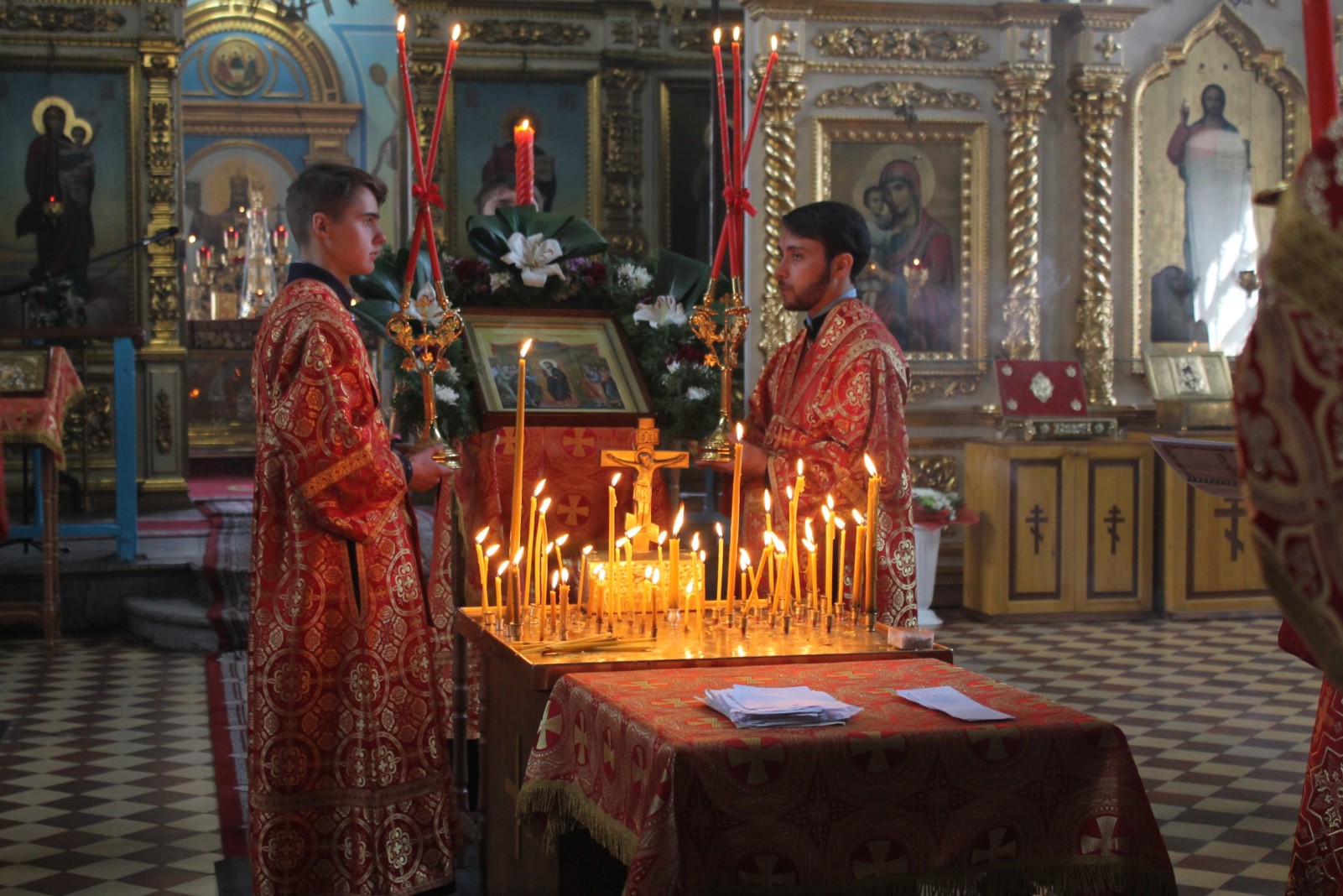
A memorial service is served before the eve, a special table with the image of the crucifixion, the Most Holy Theotokos and the Apostle John the Theologian. On it, in special cells, believers put candles for those who have departed to the Lord on other days. The funeral candle is perhaps the most common way to commemorate the departed. It must be set without fail with a prayer that may sound like this: 'Rest, O Lord, the souls of the departed, Thy servant: (names), and all Orthodox Christians, and forgive them all sins, voluntary and involuntary, and grant them the Kingdom of Heaven.' If there are many names, in the church shop you can buy a miniature booklet - a commemoration, and write down those whom you remember constantly. However, the note with the names of the deceased, which is served before the service for the repose, is also a kind of simple commemoration. In many temples, special forms are imprinted for this; if they are not there, you need to depict an eight-pointed Orthodox on a sheet of paper cross, below it with an underline write 'about the repose', and even lower - legibly, in block letters, in a column, one under the other, list the names of those remembered, indicating, if necessary, 'baby', 'boy', 'hierodeacon', 'archpriest' etc. In addition to the divine liturgy, the commemoration of the dead also takes place at special funeral evening services, which are not performed so often.
Since the days of the ancient Church, there has been a pious custom to bring wine and food to the temple. Today, as a rule, it is Cahors, bread, sweets, flour, fruits, pastries, kutia - but meat products are not brought to the temple. The brought is left on a special table located next to the eve. The tradition of handing out sweets to people met at the cemetery belongs to the same custom. She is quite pious, the only thing that should not be forgotten is that when giving sweets, you need to ask those you meet to pray for peace, naming the names of deceased relatives and friends. The aforementioned kutia or kolivo is a specially prepared memorial dish, which is boiled wheat or rice, seasoned with honey, sometimes with the addition of raisins and other sweets. Cutia is brought to church, to work, they treat her neighbors - also with the indispensable request to pray for deceased relatives or friends.
Immediately after the funeral service or at any other time, you can order a forty-day prayer for the deceased at the Liturgy in the church. The commemoration can also be ordered for a longer period: for example, for a year - and some monasteries also accept notes for an 'eternal' (while the service is being served in the monastery) commemoration. You can (and should!) Give alms for the dead - this is perhaps the most accessible form of commemoration for everyone. Equally accessible, requiring only the faith and will of a person, is the memorial prayer at home - there are special texts for this in almost every prayer book; the simplest of them, given above, is quite suitable. Finally, in remembrance of the deceased, you can do deeds of mercy: for example, take food or essentials to an orphanage or hospice. Or toys and sweets - to the orphanage. The only thing that should be remembered here is that this should be done with intelligence, finding out the needs of the inhabitants of a social institution and the willingness of the administration of the latter to accept things or products. And, finally, the well-known and familiar memorial meal - on the first, third, ninth and the fortieth days, as well as after a year - should also be prepared and offered with a Christian understanding. Not in the sense, of course, that it is not customary to eat with a spoon for it, but with an understanding of the essence of this action. Such a meal certainly begins with a prayer (as a rule, this is 'Our Father' and the 90th Psalm), during which they do not discuss everyday chores, but with a kind word remember (commemorate) the deceased. As for alcohol, only a small amount of Cahors can be present at the memorial table, regardless of whether the deceased liked to drink during his lifetime or not. Leaving a glass of wine and a piece of bread at the table for the deceased is not worth it (just as you should not do this at his grave in the cemetery): the person for whom the commemoration is arranged is already disembodied in the spiritual world, and such an offer to his soul is neither relief nor , moreover, it will not bring joy. V. Sergienko
How the Orthodox commemorate those who have departed to the LordHow the Orthodox commemorate those who have departed to the Lord One often hears words like the following: “Soon a year after N. died. We ought to get together, remember him, raise him without clinking glasses ... ”Somehow it happened that folk beliefs related to remembrance, and not always useful from a spiritual point of view, we remember and pass from generation to generation - but the pious Christian the custom has become among our compatriots, on the contrary, forgotten ... With this small text we will try to refresh in our memory exactly how, according to the church tradition, the dead should be remembered. Remembrance of the departed begins with a correct, Christian attitude towards death. As you know, with God everyone is alive - which means that death, in essence, does not exist. There is parting with people dear to our hearts, which causes us bitterness and pain. And the more difficult it is for us to come to terms with the loss, the more difficult it is for the deceased to move to the place prepared for him in the spiritual world. He would like to comfort us, to calm us down - but, separated from the body, he is unable to do this. But we can do a lot for the dead. Firstly, if they were baptized, they should be buried: any parish priest will tell you in detail how to do this. Already inveterate, a person can be remembered in accordance with church custom. The tradition of commemorating the dead in the third, ninth and fortieth day after their death is rooted in antiquity. Until the third day, the soul of the deceased is among us, visiting the places where she loved to be, and the people with whom she was used to communicating - and on the third day it appears before the Lord. Then, for the next six days, the soul contemplates the heavenly abodes and rejoices in their beauty, forgetting sorrow - and then again appears before the Creator. And, finally, the soul spends the period until the fortieth day after death, contemplating the fate of sinners beyond the grave - and then again ascends to God, where its fate is decided. (As we remember, the Ascension of the Lord took place on the fortieth day.) Throughout this time, and before the fortieth day in particular, the prayers of the living for the dead - both church and home - are extremely important and can directly affect his fate. The next important day of remembrance is the year after death. For a year, a full circle of church services is performed, and for an Orthodox person, the passage of this cycle symbolizes his first birthday in a new life. In addition, during the first year after death and in all subsequent ones, it is customary to remember those who have left on special days established by the Church. Common prayer on such days is considered especially gracious for the soul of the deceased. First of all, these include parental Saturdays, when the ecumenical requiem is served. Ecumenical means universal: all the fullness of the church, earthly and heavenly, prays in these days both for those who were honored with a peaceful end by confessing and receiving communion, and for those who were suddenly overtaken by death. These days include the Sabbath of meat, Trinity Saturday before the feast of Pentecost (St. Basil the Great says that on this day the Lord delights in accepting prayers for all the dead, even 'those who are kept in hell') - as well as Saturdays of the second, third and fourth weeks ( weeks) of Great Lent. Strengthened by fasting and the repentant spirit of those praying these days, prayer for the dead becomes especially effective. The establishment of special memorial days during Great Lent is due to the fact that at this time on weekdays, memorial services are not performed, and therefore special dates have been assigned for the salvific intercession of the Church for the dead. For visiting the cemetery and praying for the dead on their graves, Radonitsa (or Radunitsa) is intended, which falls on Tuesday after Thomas week (Sunday). This, of course, does not mean that you should not visit the cemetery, look after the graves and pray there on other days of the year. According to the Orthodox tradition, people do not go to the cemetery only on Easter, when the Church celebrates the opposite Event in meaning - the Resurrection of Christ, as a guarantee of the future general resurrection. In addition to the special days set for commemoration of the dead in the Church, where prayer for them is heard at the liturgy, it is necessary as often as possible. To do this, you need to submit a note before the service with the name of the deceased for his repose. Church prayer for the dead has tremendous power. Here is how it is said about it in the Message of the Eastern patriarchs: “We believe that the souls of people who fell into mortal sins and did not despair at death, but who repented even before being separated from real life, only did not have time to bear any fruits of repentance (such fruits could be their prayers, tears, kneeling during prayer vigils, contrition, consolation of the poor and expression in actions of love for God and neighbor) - the souls of such people descend into hell and suffer punishment for their sins, without losing hope of relief. They receive relief by the infinite goodness of God through the prayers of priests and beneficence performed for the dead, and especially by the power of a bloodless sacrifice, which, in particular, the clergyman brings for every Christian for his loved ones, and in general for everyone, the Catholic and Apostolic Church brings daily. ' There are also special memorial services, the most common of which is a memorial service. You can order a panikhida before the start of the service in the church. It is very important to pray for her and to the one who ordered it - people at the funeral service are standing with lighted candles in their hands. A memorial service is served before the eve, a special table with the image of the crucifixion, the Most Holy Theotokos and the Apostle John the Theologian. On it, in special cells, believers put candles for those who have departed to the Lord on other days. The funeral candle is perhaps the most common way to commemorate the departed. It must be set without fail with a prayer that may sound like this: 'Rest, O Lord, the souls of the departed, Thy servant: (names), and all Orthodox Christians, and forgive them all sins, voluntary and involuntary, and grant them the Kingdom of Heaven.' If there are many names, in the church shop you can buy a miniature booklet - a commemoration, and write down those whom you remember constantly. However, the note with the names of the deceased, which is served before the service for the repose, is also a kind of simple commemoration. In many temples, special forms are imprinted for this; if they are not there, you need to depict an eight-pointed Orthodox on a sheet of paper cross, below it with an underline write 'about the repose', and even lower - legibly, in block letters, in a column, one under the other, list the names of those remembered, indicating, if necessary, 'baby', 'boy', 'hierodeacon', 'archpriest' etc. In addition to the divine liturgy, the commemoration of the dead also takes place at special funeral evening services, which are not performed so often. Since the days of the ancient Church, there has been a pious custom to bring wine and food to the temple. Today, as a rule, it is Cahors, bread, sweets, flour, fruits, pastries, kutia - but meat products are not brought to the temple. The brought is left on a special table located next to the eve. The tradition of handing out sweets to people met at the cemetery belongs to the same custom. She is quite pious, the only thing that should not be forgotten is that when giving sweets, you need to ask those you meet to pray for peace, naming the names of deceased relatives and friends. The aforementioned kutia or kolivo is a specially prepared memorial dish, which is boiled wheat or rice, seasoned with honey, sometimes with the addition of raisins and other sweets. Cutia is brought to church, to work, they treat her neighbors - also with the indispensable request to pray for deceased relatives or friends. Immediately after the funeral service or at any other time, you can order a forty-day prayer for the deceased at the Liturgy in the church. The commemoration can also be ordered for a longer period: for example, for a year - and some monasteries also accept notes for an 'eternal' (while the service is being served in the monastery) commemoration. You can (and should!) Give alms for the dead - this is perhaps the most accessible form of commemoration for everyone. Equally accessible, requiring only the faith and will of a person, is the memorial prayer at home - there are special texts for this in almost every prayer book; the simplest of them, given above, is quite suitable. Finally, in remembrance of the deceased, you can do deeds of mercy: for example, take food or essentials to an orphanage or hospice. Or toys and sweets - to the orphanage. The only thing that should be remembered here is that this should be done with intelligence, finding out the needs of the inhabitants of a social institution and the willingness of the administration of the latter to accept things or products. And, finally, the well-known and familiar memorial meal - on the first, third, ninth and the fortieth days, as well as after a year - should also be prepared and offered with a Christian understanding. Not in the sense, of course, that it is not customary to eat with a spoon for it, but with an understanding of the essence of this action. Such a meal certainly begins with a prayer (as a rule, this is 'Our Father' and the 90th Psalm), during which they do not discuss everyday chores, but with a kind word remember (commemorate) the deceased. As for alcohol, only a small amount of Cahors can be present at the memorial table, regardless of whether the deceased liked to drink during his lifetime or not. Leaving a glass of wine and a piece of bread at the table for the deceased is not worth it (just as you should not do this at his grave in the cemetery): the person for whom the commemoration is arranged is already disembodied in the spiritual world, and such an offer to his soul is neither relief nor , moreover, it will not bring joy. V. SergienkoСвеча Иерусалима -en
One often hears words like the following: “Soon a year after N. died. We ought to get together, remember him, raise him without clinking glasses ... ”Somehow it happened that folk beliefs related to remembrance, and not always useful from a spiritual point of view, we remember and pass from generation to generation - but the pious Christian the custom has become among our compatriots, on the contrary, forgotten ... With this small text we will try to refresh in our memory exactly how, according to the church tradition, the dead should be remembered. Remembrance of the departed begins with a correct, Christian attitude towards death. As you know, with God everyone is alive - which means that death, in essence, does not exist. There is parting with people dear to our hearts, which causes us bitterness and pain. And the more difficult it is for us to come to terms with the loss, the more difficult it is for the deceased to move to the place prepared for him in the spiritual world. He would like to comfort us, to calm us down - but, separated from the body, he is unable to do this. But we can do a lot for the dead. Firstly, if they were baptized, they should be buried: any parish priest will tell you in detail how to do this. Already inveterate, a person can be remembered in accordance with church custom. The tradition of commemorating the dead in the third, ninth and fortieth day after their death is rooted in antiquity. Until the third day, the soul of the deceased is among us, visiting the places where she loved to be, and the people with whom she was used to communicating - and on the third day it appears before the Lord. Then, for the next six days, the soul contemplates the heavenly abodes and rejoices in their beauty, forgetting sorrow - and then again appears before the Creator. And, finally, the soul spends the period until the fortieth day after death, contemplating the fate of sinners beyond the grave - and then again ascends to God, where its fate is decided. (As we remember, the Ascension of the Lord took place on the fortieth day.) Throughout this time, and before the fortieth day in particular, the prayers of the living for the dead - both church and home - are extremely important and can directly affect his fate. The next important day of remembrance is the year after death. For a year, a full circle of church services is performed, and for an Orthodox person, the passage of this cycle symbolizes his first birthday in a new life. In addition, during the first year after death and in all subsequent ones, it is customary to remember those who have left on special days established by the Church. Common prayer on such days is considered especially gracious for the soul of the deceased. First of all, these include parental Saturdays, when the ecumenical requiem is served. Ecumenical means universal: all the fullness of the church, earthly and heavenly, prays in these days both for those who were honored with a peaceful end by confessing and receiving communion, and for those who were suddenly overtaken by death. These days include the Sabbath of meat, Trinity Saturday before the feast of Pentecost (St. Basil the Great says that on this day the Lord delights in accepting prayers for all the dead, even 'those who are kept in hell') - as well as Saturdays of the second, third and fourth weeks ( weeks) of Great Lent. Strengthened by fasting and the repentant spirit of those praying these days, prayer for the dead becomes especially effective. The establishment of special memorial days during Great Lent is due to the fact that at this time on weekdays, memorial services are not performed, and therefore special dates have been assigned for the salvific intercession of the Church for the dead. For visiting the cemetery and praying for the dead on their graves, Radonitsa (or Radunitsa) is intended, which falls on Tuesday after Thomas week (Sunday). This, of course, does not mean that you should not visit the cemetery, look after the graves and pray there on other days of the year. According to the Orthodox tradition, people do not go to the cemetery only on Easter, when the Church celebrates the opposite Event in meaning - the Resurrection of Christ, as a guarantee of the future general resurrection. In addition to the special days set for commemoration of the dead in the Church, where prayer for them is heard at the liturgy, it is necessary as often as possible. To do this, you need to submit a note before the service with the name of the deceased for his repose. Church prayer for the dead has tremendous power. Here is how it is said about it in the Message of the Eastern patriarchs: “We believe that the souls of people who fell into mortal sins and did not despair at death, but who repented even before being separated from real life, only did not have time to bear any fruits of repentance (such fruits could be their prayers, tears, kneeling during prayer vigils, contrition, consolation of the poor and expression in actions of love for God and neighbor) - the souls of such people descend into hell and suffer punishment for their sins, without losing hope of relief. They receive relief by the infinite goodness of God through the prayers of priests and beneficence performed for the dead, and especially by the power of a bloodless sacrifice, which, in particular, the clergyman brings for every Christian for his loved ones, and in general for everyone, the Catholic and Apostolic Church brings daily. ' There are also special memorial services, the most common of which is a memorial service. You can order a panikhida before the start of the service in the church. It is very important to pray for her and to the one who ordered it - people at the funeral service are standing with lighted candles in their hands. A memorial service is served before the eve, a special table with the image of the crucifixion, the Most Holy Theotokos and the Apostle John the Theologian. On it, in special cells, believers put candles for those who have departed to the Lord on other days. The funeral candle is perhaps the most common way to commemorate the departed. It must be set without fail with a prayer that may sound like this: 'Rest, O Lord, the souls of the departed, Thy servant: (names), and all Orthodox Christians, and forgive them all sins, voluntary and involuntary, and grant them the Kingdom of Heaven.' If there are many names, in the church shop you can buy a miniature booklet - a commemoration, and write down those whom you remember constantly. However, the note with the names of the deceased, which is served before the service for the repose, is also a kind of simple commemoration. In many temples, special forms are imprinted for this; if they are not there, you need to depict an eight-pointed Orthodox on a sheet of paper cross, below it with an underline write 'about the repose', and even lower - legibly, in block letters, in a column, one under the other, list the names of those remembered, indicating, if necessary, 'baby', 'boy', 'hierodeacon', 'archpriest' etc. In addition to the divine liturgy, the commemoration of the dead also takes place at special funeral evening services, which are not performed so often. Since the days of the ancient Church, there has been a pious custom to bring wine and food to the temple. Today, as a rule, it is Cahors, bread, sweets, flour, fruits, pastries, kutia - but meat products are not brought to the temple. The brought is left on a special table located next to the eve. The tradition of handing out sweets to people met at the cemetery belongs to the same custom. She is quite pious, the only thing that should not be forgotten is that when giving sweets, you need to ask those you meet to pray for peace, naming the names of deceased relatives and friends. The aforementioned kutia or kolivo is a specially prepared memorial dish, which is boiled wheat or rice, seasoned with honey, sometimes with the addition of raisins and other sweets. Cutia is brought to church, to work, they treat her neighbors - also with the indispensable request to pray for deceased relatives or friends. Immediately after the funeral service or at any other time, you can order a forty-day prayer for the deceased at the Liturgy in the church. The commemoration can also be ordered for a longer period: for example, for a year - and some monasteries also accept notes for an 'eternal' (while the service is being served in the monastery) commemoration. You can (and should!) Give alms for the dead - this is perhaps the most accessible form of commemoration for everyone. Equally accessible, requiring only the faith and will of a person, is the memorial prayer at home - there are special texts for this in almost every prayer book; the simplest of them, given above, is quite suitable. Finally, in remembrance of the deceased, you can do deeds of mercy: for example, take food or essentials to an orphanage or hospice. Or toys and sweets - to the orphanage. The only thing that should be remembered here is that this should be done with intelligence, finding out the needs of the inhabitants of a social institution and the willingness of the administration of the latter to accept things or products. And, finally, the well-known and familiar memorial meal - on the first, third, ninth and the fortieth days, as well as after a year - should also be prepared and offered with a Christian understanding. Not in the sense, of course, that it is not customary to eat with a spoon for it, but with an understanding of the essence of this action. Such a meal certainly begins with a prayer (as a rule, this is 'Our Father' and the 90th Psalm), during which they do not discuss everyday chores, but with a kind word remember (commemorate) the deceased. As for alcohol, only a small amount of Cahors can be present at the memorial table, regardless of whether the deceased liked to drink during his lifetime or not. Leaving a glass of wine and a piece of bread at the table for the deceased is not worth it (just as you should not do this at his grave in the cemetery): the person for whom the commemoration is arranged is already disembodied in the spiritual world, and such an offer to his soul is neither relief nor , moreover, it will not bring joy. V. Sergienko