Icons of the Mother of God. Written during her life on earth
6 April 2018
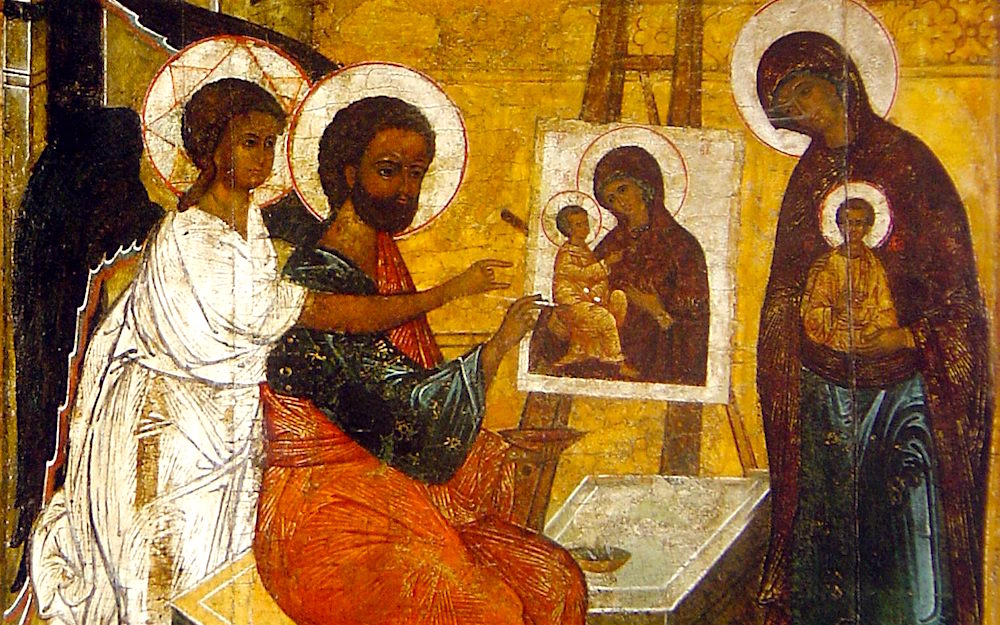
What is the difference between an icon painted during the life of a saint from that created at a later time, from memory and descriptions of contemporaries passed down from generation to generation? The analogy with portraits, one of which was taken from life, and the other from a photograph, would be rather rough, but generally correct. The lives of the saints convey to us testimonies of how martyrs, saints, reverends and righteous ones appeared to church writers and icon painters after their death, inspiring their labors, communicating important details and pointing out errors in their work. And yet, works of spiritual art - and these are, without a doubt, the holy icons - carry a special, incomparable grace in the event that they were created by people who have seen the life (and sometimes death) of the ascetics with their own eyes. Christ's. The holy Apostle and Evangelist Luke is revered as the founder of Christian icon painting. His brush, as Holy Tradition says, belongs to about seventy icons of the Most Holy Theotokos. The most famous of them - Bethlehem and Jerusalem - holy images revered in different parts of the planet, each of which is associated with a centuries-old dramatic history. However, among the icons painted by the Apostle Luke, there are three special icons painted during the life of the Most Pure Virgin and who have received Her sovereign blessing. Here is what the pre-revolutionary Chetya-Menaea say about this on the day of remembrance of the Evangelist Luke: “The ancient church writers report that Saint Luke, satisfying the pious desire of the leading Christians, was the first to paint with paints the image of the Most Holy Theotokos, holding in His hands the Eternal Child, our Lord Jesus Christ, and then he painted two other icons of the Most Holy Theotokos and brought them for the consideration of the Mother of God. She, having examined these icons, said: 'Let the grace of Him who was born of Me and My mercy be with these icons.' What are these three icons that the Lady had time to see and bless before her Assumption in the mid-forties of the first century? Tradition calls them by name. This is the image of the Mother of God of Kykkos 'Merciful', as well as the Sumele and Filermskaya icons of the Most Pure Virgin. Each of them, undoubtedly, is worth telling in more detail.
The Kykkos icon of the Mother of God 'Merciful' got this name because the Queen of Heaven is depicted on it, begging the Lord for mercy to Christians. Tradition says that the apostle and evangelist Luke, who wrote it, handed it over to the children of the Church in Egypt, in a Christian environment which even then began to emerge monastic and hermitic residence. The icon stayed here until the tenth century - and then, due to the incredibly intensified persecution of Christians and their relics, it was secretly transported to Constantinople. In the capital of Byzantium, the Kykkos icon until the twelfth century, surrounded by the greatest reverence, remained in the royal palaces. It is known that through fervent prayers before her, the daughter of the emperor Alexy Komnenos received healing, suffering from a serious illness, which doctors were powerless to cure. It happened like this. The ruler of Cyprus, Manuel Vitomit, arrived in the capital of the empire by sea with a bold request: to give the holy image to the monastery on Mount Kykkos. Obeying the first good impulse, the emperor agreed - after which his daughter was healed in an incomprehensible way. Convinced of the miraculous power of the holy image, the emperor began to regret his generosity and announced that he had changed his mind and would not give the icon to the Cypriot monastery. The ruler of the island left Constantinople in sorrow. And Alexy Komnin fell ill himself after that. In a dream, the Queen of Heaven appeared to him, commanding to immediately send the icon to the Kykkos monastery in Cyprus. While the ship was being equipped, which was to deliver the icon to the island, the emperor ordered to make a copy of the miraculous icon. The emperor recovered - as did the Cypriot ruler, who suffered from paralysis for a long time. In Cyprus, where the icon was delivered, an imperial temple was built with the contribution made by Alexis Comnenus. In subsequent times, the Kykkos icon, being in a monastic monastery, showed many miracles. When one pagan, in a frenzy, wanted to strike the holy image, his hand immediately withered. In remembrance of this, the monastic brethren attached an iron hand to the frame of the icon. On the Kykkos icon, the faces of the Queen of Heaven and the Divine Infant are covered, as it were, with a veil, located diagonally from the upper left corner to the lower right. How and when it appeared - no one knows. This veil was also reproduced on a copy of the icon, which is now open for worship in the monastery. The original is also in the holy monastery in Cyprus, but in our time it is not available for viewing. The most famous list of the miraculous Kykkos icon 'The Merciful' in Russia is located in Moscow, in the Conception Monastery. An akathist is regularly read in front of him. Believers ask the Mother of God from Her Graceful Icon to end drought, to stop bleeding, to get rid of infertility, to be encouraged in need and sorrow, to strengthen on the monastic path, to relieve headaches, to heal the relaxed, as well as in various family sorrows.
Another icon of the Mother of God, painted during her lifetime by the Apostle Luke, is the Sumelskaya. Its origin and the miracles associated with it are known from ancient sources. In 385, two monks, Barnabas and Sophronius, came to one of the churches in Athens to worship the Mother of God at Her icon, painted by the holy evangelist. The apostle himself once gave it to Thebes, and from there one of his disciples transferred it to the largest temple in Athens. Standing at the venerated image, Barnabas and Sophronius heard the voice of the Most Pure One, commanding them to go east, as far as Pontus, and to build a monastic monastery near Mount Mela. Not daring to disobey, not demanding clarifications, the monks set off on a long journey - and stopped only when they found an icon they already knew standing on a high ledge of a rock. No matter how wonderful the transfer of the image was, the monks began to be overcome with doubts: the place literally hanging on the slopes of the cliff, where there was not even water, seemed to them not very suitable for a future monastery. However, the Mother of God appeared to the monks - and from the rock, at Her command, a spring began to flow. Ashamed of their own lack of faith, Barnabas and Sophronius zealously set about building a temple, and then a monastery, which over time was filled with brethren and became known as the abode of the Virgin of the Black Mountain or Panagia Sumela. The holy monastery, where since then the icon of the Mother of God, which was carried through the air, located at an altitude of 1200 meters above sea level, has become over time the center of the spiritual life of the whole of Pontus - and the source, clogged at the behest of the Blessed Virgin, beat here continuously days). More than one generation of Comnenos was crowned here. And each of the emperors made rich contributions to the monastery, allocated funds for construction, and granted privileges to the monastic brethren. The relics of the founders of the holy monastery were also here. And even after the fall of Byzantium, the monastery continued to operate. An old legend is connected with this time. Suleiman the Magnificent, who ruled in the 16th century, once while hunting, found himself at the foot of the Black Mountain. Looking up and seeing a Christian monastery with a golden cross shining above it, the Sultan was furious and ordered the soldiers accompanying him to level the monastery to the ground. Before he had time to finish, he was thrown from his horse to the ground by an invisible force and was thrashed in a fit, as is sometimes the case before death. The next day, nevertheless coming to his senses, the Muslim ruler left all the former privileges for the Sumely Monastery, adding to them his favor. However, centuries later, during the forced resettlement of the Greeks to Hellas in 1922, the inhabitants still had to leave the Sumel monastery. The monks, leaving the place of prayer, took the miraculous icon of the Mother of God with them. And the ancient monastery gradually turned into picturesque ruins, even if they have the status of an architectural monument in modern Turkey. In 2010, on the great feast of the Assumption, the first liturgy in almost ninety years was solemnly celebrated here, for which thousands of Christians from different countries prayed together. The original of the miraculous icon is currently in Greece; many lists from her are known. Before the icon of the Mother of God Sumelskaya, parents pray for the recovery of their children, spouses - for deliverance from infertility and the gift of children, and all Christians, regardless of gender, age and marital status - for help in urgent needs.
Of the three icons painted by the Apostle Luke during the life of the Virgin, Filermskaya is the only one where She is depicted without the Baby in her arms. The face of the Most Pure One seems to implore the Lord for leniency towards people. Having painted this icon, the holy Evangelist gave it to the Antiochian Nazarite monks, who bound themselves with vows of a strict life. They had an image for almost three centuries, and then was sent to Jerusalem. There she was discovered by the wife of the emperor Evdokia, who visited the Holy Land on a pilgrimage. With the blessing of the Jerusalem bishop, she transported the icon to Constantinople, where she gave it to her husband's sister, Pulcheria the Blessed. After that, the image was solemnly installed in the newly built Blakherna church of the capital, where many believers received healing and other things that they asked in prayer in front of the icon. And in 626, the holy image, before which the believers offered up fervent prayers, saved Constantinople from the conquest by the Persians - after that an akathist was compiled for the icon, a special spiritual chant that was supposed to be listened to while standing. In total, this image of the Mother of God was in Constantinople for more than seven centuries. But the name by which it is known, the icon received later, when, together with the knights-crusaders who seized Constantinople, it first went to Jerusalem, then to Acra - and after its capture by the Turks - to Crete, and, finally, in 1309 - to the island Rhodes, where she stayed for the next two centuries. In Rhodes, especially for the miraculous icon, the knights erected a temple on the foundations of the Byzantine basilica in Yalis, on Mount Filermios. This is where its name comes from - Filermskaya. This temple has survived, it still functions today, and Orthodox Christians and Catholics pray in it in front of the list with the revered icon, while being in different parts of the building, each in its own. When in 1522, after a long siege, Rhodes was completely captured by the Turks, the knights left the island, taking with them Christian shrines, including the Filermskaya icon. For seven years the Maltese knights remained in Italy, moving from place to place - and the relics traveled with them. Finally, in 1530, the Holy Roman Emperor Charles V handed over Malta, Comino, Gozo and other Mediterranean islands to the order. The Filerma icon was transported to the Fort of Saint Angel, and later to the residence of the order, the Castle of Saint Michael. The icon is associated with the victory over the Turks who attacked Malta in 1565. But during the conquest of Mostrov by the troops of Napoleon in 1798, the Master of the Order of Gompesh had to hastily remove the relics from the island: together with the Filerm icon, he took away the right hand of St. John the Baptist and part of the Life-giving Cross of the Lord. After the Russian Emperor Paul I became the Grand Master of the Order of Malta, the transfer of the Maltese shrines to St. Petersburg took place. For the Filermskaya Icon, Paul ordered a massive golden robe with precious stones. The icon remained in Russia until the revolutionary events and was marked by many miracles. So, a terrible fire, raging in the capital of the empire in 1837, did not damage it at all, although literally everything around was destroyed by fire. While in Gatchina, the icon was solemnly brought out for the worship of believers, which was annually accompanied by a procession of the cross and other church ceremonies. For many decades, the Order of Malta did not stop trying to return the Filerme image. Nicholas II intended to give it away, and even ordered a list and photocopies of the icon, but known events prevented his intention. The relics that belonged to the Order of Malta, including the Filermskaya icon, were secretly taken out of Russia and after they had been in Estonia for some time, they were handed over to the mother of the last Russian tsar, Empress Maria Feodorovna, in Denmark. The Maltese Order received an exact copy of the icon made by the order of the king, which is currently in the basilica of the city of Assisi. There are also revered copies of the icon in Russia - for example, in the Pavlovsky Cathedral of Gatchina there is a copy of it, made by Archpriest Alexy of the Annunciation. After Empress Maria Feodorovna died in 1928, her daughters transferred the shrines to the Primate of the Russian Orthodox Church Outside of Russia, Metropolitan Anthony (Khrapovitsky). He gave his blessing to place the Vilermskaya icon in the Orthodox cathedral in Berlin. On the eve of the Nazis coming to power, fearing for the fate of the shrines, Bishop Tikhon transferred the image to the Yugoslav king Alexander I Karadjordjevich. After the Second World War, the Filermskaya icon and other Maltese relics, kept in the cache of the Montenegrin monastery of Ostrog, fell into the hands of the special services of the established communist regime and were inaccessible to believers until 1993. Currently, the Filerma Icon of the Mother of God is separated from other relics and is located in the Blue Chapel of the Monastery in Cetinje, on the territory of the National Museum. This chapel is a windowless room, in the middle of which, in an illuminated glass showcase, there is a holy image, to which many pilgrims come every year. Orthodox Montenegrins deeply revere this ancient shrine, which by the will of God ended up in their country, and they call the icon of the Mother of God Filermoza. Before the Filermskaya icon, they pray for the strengthening of faith, for the multiplication of spiritual strength, for preservation from strife and heresy. The Mother of God of Filermskaya is revered as the patroness of monks and pious laity. Apart from the Filermskaya, Sumelskoy and Kykkos icons, the Holy Tradition does not name any other images of the Mother of God painted during Her earthly life. However, there are many miraculous faces of the Most Pure One, created by the Apostle and Evangelist Luke after the Dormition of the Theotokos. Some of them perhaps not so widely known as the Bethlehem or Jerusalem icons, but also marked by many miracles, we will definitely tell you in one of our future articles on the Jerusalem Candle website. V.Sergienko
Icons of the Mother of God. Written during her life on earthIcons of the Mother of God. Written during her life on earth What is the difference between an icon painted during the life of a saint from that created at a later time, from memory and descriptions of contemporaries passed down from generation to generation? The analogy with portraits, one of which was taken from life, and the other from a photograph, would be rather rough, but generally correct. The lives of the saints convey to us testimonies of how martyrs, saints, reverends and righteous ones appeared to church writers and icon painters after their death, inspiring their labors, communicating important details and pointing out errors in their work. And yet, works of spiritual art - and these are, without a doubt, the holy icons - carry a special, incomparable grace in the event that they were created by people who have seen the life (and sometimes death) of the ascetics with their own eyes. Christ's. The holy Apostle and Evangelist Luke is revered as the founder of Christian icon painting. His brush, as Holy Tradition says, belongs to about seventy icons of the Most Holy Theotokos. The most famous of them - Bethlehem and Jerusalem - holy images revered in different parts of the planet, each of which is associated with a centuries-old dramatic history. However, among the icons painted by the Apostle Luke, there are three special icons painted during the life of the Most Pure Virgin and who have received Her sovereign blessing. Here is what the pre-revolutionary Chetya-Menaea say about this on the day of remembrance of the Evangelist Luke: “The ancient church writers report that Saint Luke, satisfying the pious desire of the leading Christians, was the first to paint with paints the image of the Most Holy Theotokos, holding in His hands the Eternal Child, our Lord Jesus Christ, and then he painted two other icons of the Most Holy Theotokos and brought them for the consideration of the Mother of God. She, having examined these icons, said: 'Let the grace of Him who was born of Me and My mercy be with these icons.' What are these three icons that the Lady had time to see and bless before her Assumption in the mid-forties of the first century? Tradition calls them by name. This is the image of the Mother of God of Kykkos 'Merciful', as well as the Sumele and Filermskaya icons of the Most Pure Virgin. Each of them, undoubtedly, is worth telling in more detail. The Kykkos icon of the Mother of God 'Merciful' got this name because the Queen of Heaven is depicted on it, begging the Lord for mercy to Christians. Tradition says that the apostle and evangelist Luke, who wrote it, handed it over to the children of the Church in Egypt, in a Christian environment which even then began to emerge monastic and hermitic residence. The icon stayed here until the tenth century - and then, due to the incredibly intensified persecution of Christians and their relics, it was secretly transported to Constantinople. In the capital of Byzantium, the Kykkos icon until the twelfth century, surrounded by the greatest reverence, remained in the royal palaces. It is known that through fervent prayers before her, the daughter of the emperor Alexy Komnenos received healing, suffering from a serious illness, which doctors were powerless to cure. It happened like this. The ruler of Cyprus, Manuel Vitomit, arrived in the capital of the empire by sea with a bold request: to give the holy image to the monastery on Mount Kykkos. Obeying the first good impulse, the emperor agreed - after which his daughter was healed in an incomprehensible way. Convinced of the miraculous power of the holy image, the emperor began to regret his generosity and announced that he had changed his mind and would not give the icon to the Cypriot monastery. The ruler of the island left Constantinople in sorrow. And Alexy Komnin fell ill himself after that. In a dream, the Queen of Heaven appeared to him, commanding to immediately send the icon to the Kykkos monastery in Cyprus. While the ship was being equipped, which was to deliver the icon to the island, the emperor ordered to make a copy of the miraculous icon. The emperor recovered - as did the Cypriot ruler, who suffered from paralysis for a long time. In Cyprus, where the icon was delivered, an imperial temple was built with the contribution made by Alexis Comnenus. In subsequent times, the Kykkos icon, being in a monastic monastery, showed many miracles. When one pagan, in a frenzy, wanted to strike the holy image, his hand immediately withered. In remembrance of this, the monastic brethren attached an iron hand to the frame of the icon. On the Kykkos icon, the faces of the Queen of Heaven and the Divine Infant are covered, as it were, with a veil, located diagonally from the upper left corner to the lower right. How and when it appeared - no one knows. This veil was also reproduced on a copy of the icon, which is now open for worship in the monastery. The original is also in the holy monastery in Cyprus, but in our time it is not available for viewing. The most famous list of the miraculous Kykkos icon 'The Merciful' in Russia is located in Moscow, in the Conception Monastery. An akathist is regularly read in front of him. Believers ask the Mother of God from Her Graceful Icon to end drought, to stop bleeding, to get rid of infertility, to be encouraged in need and sorrow, to strengthen on the monastic path, to relieve headaches, to heal the relaxed, as well as in various family sorrows. Another icon of the Mother of God, painted during her lifetime by the Apostle Luke, is the Sumelskaya. Its origin and the miracles associated with it are known from ancient sources. In 385, two monks, Barnabas and Sophronius, came to one of the churches in Athens to worship the Mother of God at Her icon, painted by the holy evangelist. The apostle himself once gave it to Thebes, and from there one of his disciples transferred it to the largest temple in Athens. Standing at the venerated image, Barnabas and Sophronius heard the voice of the Most Pure One, commanding them to go east, as far as Pontus, and to build a monastic monastery near Mount Mela. Not daring to disobey, not demanding clarifications, the monks set off on a long journey - and stopped only when they found an icon they already knew standing on a high ledge of a rock. No matter how wonderful the transfer of the image was, the monks began to be overcome with doubts: the place literally hanging on the slopes of the cliff, where there was not even water, seemed to them not very suitable for a future monastery. However, the Mother of God appeared to the monks - and from the rock, at Her command, a spring began to flow. Ashamed of their own lack of faith, Barnabas and Sophronius zealously set about building a temple, and then a monastery, which over time was filled with brethren and became known as the abode of the Virgin of the Black Mountain or Panagia Sumela. The holy monastery, where since then the icon of the Mother of God, which was carried through the air, located at an altitude of 1200 meters above sea level, has become over time the center of the spiritual life of the whole of Pontus - and the source, clogged at the behest of the Blessed Virgin, beat here continuously days). More than one generation of Comnenos was crowned here. And each of the emperors made rich contributions to the monastery, allocated funds for construction, and granted privileges to the monastic brethren. The relics of the founders of the holy monastery were also here. And even after the fall of Byzantium, the monastery continued to operate. An old legend is connected with this time. Suleiman the Magnificent, who ruled in the 16th century, once while hunting, found himself at the foot of the Black Mountain. Looking up and seeing a Christian monastery with a golden cross shining above it, the Sultan was furious and ordered the soldiers accompanying him to level the monastery to the ground. Before he had time to finish, he was thrown from his horse to the ground by an invisible force and was thrashed in a fit, as is sometimes the case before death. The next day, nevertheless coming to his senses, the Muslim ruler left all the former privileges for the Sumely Monastery, adding to them his favor. However, centuries later, during the forced resettlement of the Greeks to Hellas in 1922, the inhabitants still had to leave the Sumel monastery. The monks, leaving the place of prayer, took the miraculous icon of the Mother of God with them. And the ancient monastery gradually turned into picturesque ruins, even if they have the status of an architectural monument in modern Turkey. In 2010, on the great feast of the Assumption, the first liturgy in almost ninety years was solemnly celebrated here, for which thousands of Christians from different countries prayed together. The original of the miraculous icon is currently in Greece; many lists from her are known. Before the icon of the Mother of God Sumelskaya, parents pray for the recovery of their children, spouses - for deliverance from infertility and the gift of children, and all Christians, regardless of gender, age and marital status - for help in urgent needs. Of the three icons painted by the Apostle Luke during the life of the Virgin, Filermskaya is the only one where She is depicted without the Baby in her arms. The face of the Most Pure One seems to implore the Lord for leniency towards people. Having painted this icon, the holy Evangelist gave it to the Antiochian Nazarite monks, who bound themselves with vows of a strict life. They had an image for almost three centuries, and then was sent to Jerusalem. There she was discovered by the wife of the emperor Evdokia, who visited the Holy Land on a pilgrimage. With the blessing of the Jerusalem bishop, she transported the icon to Constantinople, where she gave it to her husband's sister, Pulcheria the Blessed. After that, the image was solemnly installed in the newly built Blakherna church of the capital, where many believers received healing and other things that they asked in prayer in front of the icon. And in 626, the holy image, before which the believers offered up fervent prayers, saved Constantinople from the conquest by the Persians - after that an akathist was compiled for the icon, a special spiritual chant that was supposed to be listened to while standing. In total, this image of the Mother of God was in Constantinople for more than seven centuries. But the name by which it is known, the icon received later, when, together with the knights-crusaders who seized Constantinople, it first went to Jerusalem, then to Acra - and after its capture by the Turks - to Crete, and, finally, in 1309 - to the island Rhodes, where she stayed for the next two centuries. In Rhodes, especially for the miraculous icon, the knights erected a temple on the foundations of the Byzantine basilica in Yalis, on Mount Filermios. This is where its name comes from - Filermskaya. This temple has survived, it still functions today, and Orthodox Christians and Catholics pray in it in front of the list with the revered icon, while being in different parts of the building, each in its own. When in 1522, after a long siege, Rhodes was completely captured by the Turks, the knights left the island, taking with them Christian shrines, including the Filermskaya icon. For seven years the Maltese knights remained in Italy, moving from place to place - and the relics traveled with them. Finally, in 1530, the Holy Roman Emperor Charles V handed over Malta, Comino, Gozo and other Mediterranean islands to the order. The Filerma icon was transported to the Fort of Saint Angel, and later to the residence of the order, the Castle of Saint Michael. The icon is associated with the victory over the Turks who attacked Malta in 1565. But during the conquest of Mostrov by the troops of Napoleon in 1798, the Master of the Order of Gompesh had to hastily remove the relics from the island: together with the Filerm icon, he took away the right hand of St. John the Baptist and part of the Life-giving Cross of the Lord. After the Russian Emperor Paul I became the Grand Master of the Order of Malta, the transfer of the Maltese shrines to St. Petersburg took place. For the Filermskaya Icon, Paul ordered a massive golden robe with precious stones. The icon remained in Russia until the revolutionary events and was marked by many miracles. So, a terrible fire, raging in the capital of the empire in 1837, did not damage it at all, although literally everything around was destroyed by fire. While in Gatchina, the icon was solemnly brought out for the worship of believers, which was annually accompanied by a procession of the cross and other church ceremonies. For many decades, the Order of Malta did not stop trying to return the Filerme image. Nicholas II intended to give it away, and even ordered a list and photocopies of the icon, but known events prevented his intention. The relics that belonged to the Order of Malta, including the Filermskaya icon, were secretly taken out of Russia and after they had been in Estonia for some time, they were handed over to the mother of the last Russian tsar, Empress Maria Feodorovna, in Denmark. The Maltese Order received an exact copy of the icon made by the order of the king, which is currently in the basilica of the city of Assisi. There are also revered copies of the icon in Russia - for example, in the Pavlovsky Cathedral of Gatchina there is a copy of it, made by Archpriest Alexy of the Annunciation. After Empress Maria Feodorovna died in 1928, her daughters transferred the shrines to the Primate of the Russian Orthodox Church Outside of Russia, Metropolitan Anthony (Khrapovitsky). He gave his blessing to place the Vilermskaya icon in the Orthodox cathedral in Berlin. On the eve of the Nazis coming to power, fearing for the fate of the shrines, Bishop Tikhon transferred the image to the Yugoslav king Alexander I Karadjordjevich. After the Second World War, the Filermskaya icon and other Maltese relics, kept in the cache of the Montenegrin monastery of Ostrog, fell into the hands of the special services of the established communist regime and were inaccessible to believers until 1993. Currently, the Filerma Icon of the Mother of God is separated from other relics and is located in the Blue Chapel of the Monastery in Cetinje, on the territory of the National Museum. This chapel is a windowless room, in the middle of which, in an illuminated glass showcase, there is a holy image, to which many pilgrims come every year. Orthodox Montenegrins deeply revere this ancient shrine, which by the will of God ended up in their country, and they call the icon of the Mother of God Filermoza. Before the Filermskaya icon, they pray for the strengthening of faith, for the multiplication of spiritual strength, for preservation from strife and heresy. The Mother of God of Filermskaya is revered as the patroness of monks and pious laity. Apart from the Filermskaya, Sumelskoy and Kykkos icons, the Holy Tradition does not name any other images of the Mother of God painted during Her earthly life. However, there are many miraculous faces of the Most Pure One, created by the Apostle and Evangelist Luke after the Dormition of the Theotokos. Some of them perhaps not so widely known as the Bethlehem or Jerusalem icons, but also marked by many miracles, we will definitely tell you in one of our future articles on the Jerusalem Candle website. V.SergienkoСвеча Иерусалима -en
What is the difference between an icon painted during the life of a saint from that created at a later time, from memory and descriptions of contemporaries passed down from generation to generation? The analogy with portraits, one of which was taken from life, and the other from a photograph, would be rather rough, but generally correct. The lives of the saints convey to us testimonies of how martyrs, saints, reverends and righteous ones appeared to church writers and icon painters after their death, inspiring their labors, communicating important details and pointing out errors in their work. And yet, works of spiritual art - and these are, without a doubt, the holy icons - carry a special, incomparable grace in the event that they were created by people who have seen the life (and sometimes death) of the ascetics with their own eyes. Christ's. The holy Apostle and Evangelist Luke is revered as the founder of Christian icon painting. His brush, as Holy Tradition says, belongs to about seventy icons of the Most Holy Theotokos. The most famous of them - Bethlehem and Jerusalem - holy images revered in different parts of the planet, each of which is associated with a centuries-old dramatic history. However, among the icons painted by the Apostle Luke, there are three special icons painted during the life of the Most Pure Virgin and who have received Her sovereign blessing. Here is what the pre-revolutionary Chetya-Menaea say about this on the day of remembrance of the Evangelist Luke: “The ancient church writers report that Saint Luke, satisfying the pious desire of the leading Christians, was the first to paint with paints the image of the Most Holy Theotokos, holding in His hands the Eternal Child, our Lord Jesus Christ, and then he painted two other icons of the Most Holy Theotokos and brought them for the consideration of the Mother of God. She, having examined these icons, said: 'Let the grace of Him who was born of Me and My mercy be with these icons.' What are these three icons that the Lady had time to see and bless before her Assumption in the mid-forties of the first century? Tradition calls them by name. This is the image of the Mother of God of Kykkos 'Merciful', as well as the Sumele and Filermskaya icons of the Most Pure Virgin. Each of them, undoubtedly, is worth telling in more detail. The Kykkos icon of the Mother of God 'Merciful' got this name because the Queen of Heaven is depicted on it, begging the Lord for mercy to Christians. Tradition says that the apostle and evangelist Luke, who wrote it, handed it over to the children of the Church in Egypt, in a Christian environment which even then began to emerge monastic and hermitic residence. The icon stayed here until the tenth century - and then, due to the incredibly intensified persecution of Christians and their relics, it was secretly transported to Constantinople. In the capital of Byzantium, the Kykkos icon until the twelfth century, surrounded by the greatest reverence, remained in the royal palaces. It is known that through fervent prayers before her, the daughter of the emperor Alexy Komnenos received healing, suffering from a serious illness, which doctors were powerless to cure. It happened like this. The ruler of Cyprus, Manuel Vitomit, arrived in the capital of the empire by sea with a bold request: to give the holy image to the monastery on Mount Kykkos. Obeying the first good impulse, the emperor agreed - after which his daughter was healed in an incomprehensible way. Convinced of the miraculous power of the holy image, the emperor began to regret his generosity and announced that he had changed his mind and would not give the icon to the Cypriot monastery. The ruler of the island left Constantinople in sorrow. And Alexy Komnin fell ill himself after that. In a dream, the Queen of Heaven appeared to him, commanding to immediately send the icon to the Kykkos monastery in Cyprus. While the ship was being equipped, which was to deliver the icon to the island, the emperor ordered to make a copy of the miraculous icon. The emperor recovered - as did the Cypriot ruler, who suffered from paralysis for a long time. In Cyprus, where the icon was delivered, an imperial temple was built with the contribution made by Alexis Comnenus. In subsequent times, the Kykkos icon, being in a monastic monastery, showed many miracles. When one pagan, in a frenzy, wanted to strike the holy image, his hand immediately withered. In remembrance of this, the monastic brethren attached an iron hand to the frame of the icon. On the Kykkos icon, the faces of the Queen of Heaven and the Divine Infant are covered, as it were, with a veil, located diagonally from the upper left corner to the lower right. How and when it appeared - no one knows. This veil was also reproduced on a copy of the icon, which is now open for worship in the monastery. The original is also in the holy monastery in Cyprus, but in our time it is not available for viewing. The most famous list of the miraculous Kykkos icon 'The Merciful' in Russia is located in Moscow, in the Conception Monastery. An akathist is regularly read in front of him. Believers ask the Mother of God from Her Graceful Icon to end drought, to stop bleeding, to get rid of infertility, to be encouraged in need and sorrow, to strengthen on the monastic path, to relieve headaches, to heal the relaxed, as well as in various family sorrows. Another icon of the Mother of God, painted during her lifetime by the Apostle Luke, is the Sumelskaya. Its origin and the miracles associated with it are known from ancient sources. In 385, two monks, Barnabas and Sophronius, came to one of the churches in Athens to worship the Mother of God at Her icon, painted by the holy evangelist. The apostle himself once gave it to Thebes, and from there one of his disciples transferred it to the largest temple in Athens. Standing at the venerated image, Barnabas and Sophronius heard the voice of the Most Pure One, commanding them to go east, as far as Pontus, and to build a monastic monastery near Mount Mela. Not daring to disobey, not demanding clarifications, the monks set off on a long journey - and stopped only when they found an icon they already knew standing on a high ledge of a rock. No matter how wonderful the transfer of the image was, the monks began to be overcome with doubts: the place literally hanging on the slopes of the cliff, where there was not even water, seemed to them not very suitable for a future monastery. However, the Mother of God appeared to the monks - and from the rock, at Her command, a spring began to flow. Ashamed of their own lack of faith, Barnabas and Sophronius zealously set about building a temple, and then a monastery, which over time was filled with brethren and became known as the abode of the Virgin of the Black Mountain or Panagia Sumela. The holy monastery, where since then the icon of the Mother of God, which was carried through the air, located at an altitude of 1200 meters above sea level, has become over time the center of the spiritual life of the whole of Pontus - and the source, clogged at the behest of the Blessed Virgin, beat here continuously days). More than one generation of Comnenos was crowned here. And each of the emperors made rich contributions to the monastery, allocated funds for construction, and granted privileges to the monastic brethren. The relics of the founders of the holy monastery were also here. And even after the fall of Byzantium, the monastery continued to operate. An old legend is connected with this time. Suleiman the Magnificent, who ruled in the 16th century, once while hunting, found himself at the foot of the Black Mountain. Looking up and seeing a Christian monastery with a golden cross shining above it, the Sultan was furious and ordered the soldiers accompanying him to level the monastery to the ground. Before he had time to finish, he was thrown from his horse to the ground by an invisible force and was thrashed in a fit, as is sometimes the case before death. The next day, nevertheless coming to his senses, the Muslim ruler left all the former privileges for the Sumely Monastery, adding to them his favor. However, centuries later, during the forced resettlement of the Greeks to Hellas in 1922, the inhabitants still had to leave the Sumel monastery. The monks, leaving the place of prayer, took the miraculous icon of the Mother of God with them. And the ancient monastery gradually turned into picturesque ruins, even if they have the status of an architectural monument in modern Turkey. In 2010, on the great feast of the Assumption, the first liturgy in almost ninety years was solemnly celebrated here, for which thousands of Christians from different countries prayed together. The original of the miraculous icon is currently in Greece; many lists from her are known. Before the icon of the Mother of God Sumelskaya, parents pray for the recovery of their children, spouses - for deliverance from infertility and the gift of children, and all Christians, regardless of gender, age and marital status - for help in urgent needs. Of the three icons painted by the Apostle Luke during the life of the Virgin, Filermskaya is the only one where She is depicted without the Baby in her arms. The face of the Most Pure One seems to implore the Lord for leniency towards people. Having painted this icon, the holy Evangelist gave it to the Antiochian Nazarite monks, who bound themselves with vows of a strict life. They had an image for almost three centuries, and then was sent to Jerusalem. There she was discovered by the wife of the emperor Evdokia, who visited the Holy Land on a pilgrimage. With the blessing of the Jerusalem bishop, she transported the icon to Constantinople, where she gave it to her husband's sister, Pulcheria the Blessed. After that, the image was solemnly installed in the newly built Blakherna church of the capital, where many believers received healing and other things that they asked in prayer in front of the icon. And in 626, the holy image, before which the believers offered up fervent prayers, saved Constantinople from the conquest by the Persians - after that an akathist was compiled for the icon, a special spiritual chant that was supposed to be listened to while standing. In total, this image of the Mother of God was in Constantinople for more than seven centuries. But the name by which it is known, the icon received later, when, together with the knights-crusaders who seized Constantinople, it first went to Jerusalem, then to Acra - and after its capture by the Turks - to Crete, and, finally, in 1309 - to the island Rhodes, where she stayed for the next two centuries. In Rhodes, especially for the miraculous icon, the knights erected a temple on the foundations of the Byzantine basilica in Yalis, on Mount Filermios. This is where its name comes from - Filermskaya. This temple has survived, it still functions today, and Orthodox Christians and Catholics pray in it in front of the list with the revered icon, while being in different parts of the building, each in its own. When in 1522, after a long siege, Rhodes was completely captured by the Turks, the knights left the island, taking with them Christian shrines, including the Filermskaya icon. For seven years the Maltese knights remained in Italy, moving from place to place - and the relics traveled with them. Finally, in 1530, the Holy Roman Emperor Charles V handed over Malta, Comino, Gozo and other Mediterranean islands to the order. The Filerma icon was transported to the Fort of Saint Angel, and later to the residence of the order, the Castle of Saint Michael. The icon is associated with the victory over the Turks who attacked Malta in 1565. But during the conquest of Mostrov by the troops of Napoleon in 1798, the Master of the Order of Gompesh had to hastily remove the relics from the island: together with the Filerm icon, he took away the right hand of St. John the Baptist and part of the Life-giving Cross of the Lord. After the Russian Emperor Paul I became the Grand Master of the Order of Malta, the transfer of the Maltese shrines to St. Petersburg took place. For the Filermskaya Icon, Paul ordered a massive golden robe with precious stones. The icon remained in Russia until the revolutionary events and was marked by many miracles. So, a terrible fire, raging in the capital of the empire in 1837, did not damage it at all, although literally everything around was destroyed by fire. While in Gatchina, the icon was solemnly brought out for the worship of believers, which was annually accompanied by a procession of the cross and other church ceremonies. For many decades, the Order of Malta did not stop trying to return the Filerme image. Nicholas II intended to give it away, and even ordered a list and photocopies of the icon, but known events prevented his intention. The relics that belonged to the Order of Malta, including the Filermskaya icon, were secretly taken out of Russia and after they had been in Estonia for some time, they were handed over to the mother of the last Russian tsar, Empress Maria Feodorovna, in Denmark. The Maltese Order received an exact copy of the icon made by the order of the king, which is currently in the basilica of the city of Assisi. There are also revered copies of the icon in Russia - for example, in the Pavlovsky Cathedral of Gatchina there is a copy of it, made by Archpriest Alexy of the Annunciation. After Empress Maria Feodorovna died in 1928, her daughters transferred the shrines to the Primate of the Russian Orthodox Church Outside of Russia, Metropolitan Anthony (Khrapovitsky). He gave his blessing to place the Vilermskaya icon in the Orthodox cathedral in Berlin. On the eve of the Nazis coming to power, fearing for the fate of the shrines, Bishop Tikhon transferred the image to the Yugoslav king Alexander I Karadjordjevich. After the Second World War, the Filermskaya icon and other Maltese relics, kept in the cache of the Montenegrin monastery of Ostrog, fell into the hands of the special services of the established communist regime and were inaccessible to believers until 1993. Currently, the Filerma Icon of the Mother of God is separated from other relics and is located in the Blue Chapel of the Monastery in Cetinje, on the territory of the National Museum. This chapel is a windowless room, in the middle of which, in an illuminated glass showcase, there is a holy image, to which many pilgrims come every year. Orthodox Montenegrins deeply revere this ancient shrine, which by the will of God ended up in their country, and they call the icon of the Mother of God Filermoza. Before the Filermskaya icon, they pray for the strengthening of faith, for the multiplication of spiritual strength, for preservation from strife and heresy. The Mother of God of Filermskaya is revered as the patroness of monks and pious laity. Apart from the Filermskaya, Sumelskoy and Kykkos icons, the Holy Tradition does not name any other images of the Mother of God painted during Her earthly life. However, there are many miraculous faces of the Most Pure One, created by the Apostle and Evangelist Luke after the Dormition of the Theotokos. Some of them perhaps not so widely known as the Bethlehem or Jerusalem icons, but also marked by many miracles, we will definitely tell you in one of our future articles on the Jerusalem Candle website. V.Sergienko