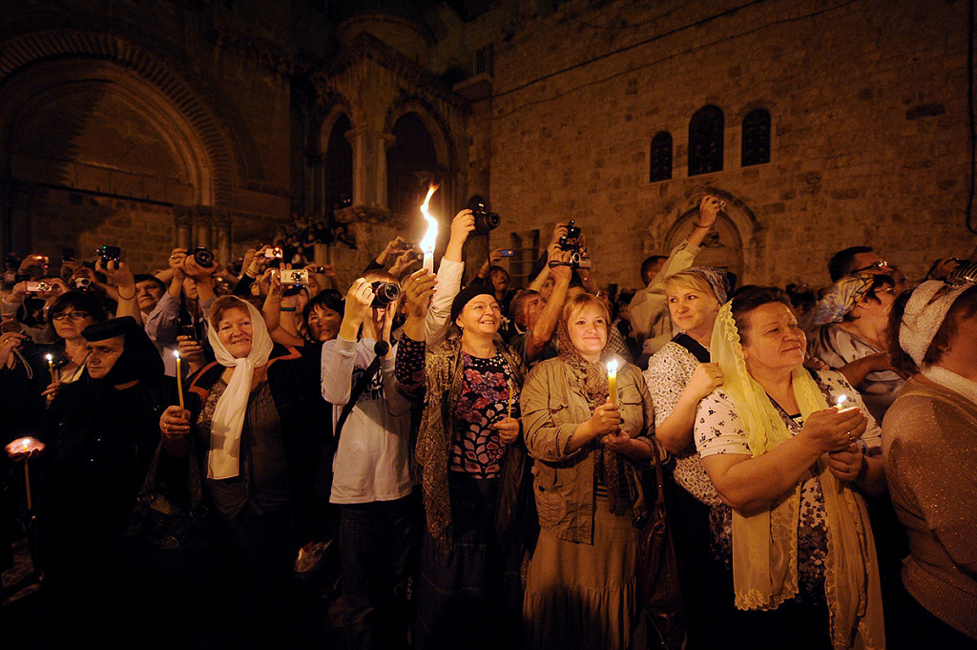
“... And if after that I remain alive, then I will either tell your love personally, if the Lord will grant, about all the places that I will see, or, if it is destined otherwise, I will write about everything. You, dear sisters, be merciful and remember me, whether I die or stay alive, ”writes a Christian pilgrim of the4thcentury in one of the letters that have survived to this day. Today, few people die on pilgrimage travel, and the risk of being in danger is now much less than in the first centuries of Christianity. And yet, as the ancient wisdom says, no one returns from a journey as he was before him. This statement is especially true when it comes to spiritual travel - pilgrimage. The custom at a special time to go to remote places to worship shrines is much older than Christianity. Scripture has preserved testimonies of how the Jews, who lived far from Jerusalem, rushed to the Holy City in order to be in it for the feast of Passover. The Savior himself, a few days before the Passover, entered Jerusalem, surrounded by the apostles, and the people, rejoicing, covered their path with palm branches, which they brought with them in their hands. From those very branches, the Latin word palmarius came from, literally - 'a man carrying a palm branch', de facto meaning precisely pilgrim. At the beginning of the last century, there was another word for the name of such people - a fan. Today it has a different meaning, but then it indicated a religiously minded person heading to worship the shrine. Unlike another Russian phenomenon - wandering, which was the way of life of some people - pilgrimage as a spiritual journey always implied a goal.
The goal, of course, is not only geographic, in the form of a point on the world map, which must be reached. From the earliest times in the Christian tradition, there was an idea that by taking on the feat of pilgrimage, a person overcomes the consequences of sin or other undesirable states - for example, the mortification of the heart, when in everyday life nothing pleases and there is even no desire to strive for anything. ... Touching the shrine penetrates into the very depths of the human essence and has a powerful cleansing, liberating effect: it would not be an exaggeration to say that it transforms a person internally and sometimes externally. But why a feat? Is it a great feat to get on, say, a ship and go several hundred or thousands of kilometers? Today, little is said about pilgrimage as a heroic deed. But from the first centuries of Christianity to the modern a time when the international law we are used to did not work, travel, say, to Mount Athos, and even more so to the Holy Land, was fraught with many dangers, with the risk of losing health, or even life itself.
But even this is not the main thing. People of past centuries, from a pious peasant or artisan to a wealthy merchant and aristocrat, often made the pilgrimage, carrying nothing but a change of clothing in a bag behind their back and a staff in their hands. Going on a spiritual journey to Kiev, Mount Athos or Jerusalem, they completely relied on the providence of God, every day of their journey as if affirming: 'Thy will be done.' Hospitality houses, of course, were there even then, as there were people who were ready to shelter, warm, feed the travelers - but the pilgrims had no guarantee of meeting them. The main thing that they had was absolute trust in the Creator, and this really was a feat.
People of our century make pilgrimages differently. More or less comfortable planes, trains, ships and buses deliver pilgrims to their destination many kilometers away - and we are ready to meet them in advance. hotels, refectory, guest cells at monasteries. Everything was paid in advance and agreed, serious overlaps on the way, although possible, but unlikely, the tour operator or the pilgrimage department of the diocese takes responsibility for getting to the final point of the route in time. Does this approach devalue the very essence of pilgrimage? Still no. Modern man is internally weaker and more whimsical than his ancestors, however, thanks to the pilgrimage trip, he also has the opportunity to overcome himself. Millions of our contemporaries for years, or even decades, live according to the usual pattern: work, home, on weekends - going to church, a trip to the country, communicating with friends and relatives. With such a monotonous rhythm of life and an unchanging social circle, it is not difficult to be “good” - at least in your own eyes. But on a pilgrimage journey, the usual way of life is violated. Around there are many unfamiliar faces and characters, with whom, whether a person wants it or not, he has to somehow interact and get along during the entire trip. Hitherto unfamiliar places, as it turns out, have their own customs and orders, which must be understood and accepted at least for a while. Finally, access to the coveted shrines, as those who have been to the Holy Land know, may, more than hopes, suddenly turn out to be closed - and then you will have to wait patiently, ask, negotiate ... It turns out that a modern, relatively convenient pilgrimage for a person of the XXI century is largely overcoming oneself. Before venerating the shrine, a modern person is waiting for a meeting with himself - such as he either did not know himself, or completely forgot. And even if the pilgrimage, as is often the case, is made according to the vow given by the person - he returns from him differently than he was before - having knowledge of those aspects of his personality that need to be corrected by prayer and repentance. By and large, their vision is already the beginning of correction.
It is especially difficult for a church-going person on trips to shrines organized by secular travel companies. The contingent in them is very different, sometimes having a faint idea of what is called Christian ethics - and the average parishioner several times a day has to gather all his will and all humility into a fist in order to stay within a decent human believer. It is not easy - and at the same time, this experience is very important. For the soul, he sometimes matters no less than the moment itself admission to the shrine. And it is impossible to separate this - after all, the pilgrimage as a path begins with the first step beyond the native threshold, and the touch to the shrine invisibly occurs before the person is physically attached to it. So the modern pilgrimage, we repeat, is, if not a feat, but a serious spiritual practice. And the teachers for a person here are not only other people, but also he himself, observing himself and sincerely desiring his correction. There are especially many temptations far from home, and often they look like quite pious thoughts and impulses - but that is only at first glance. Is it bad to remember that he promised relatives and friends to bring from Jerusalem a blessed icon, oil from an icon lamp burning at the Stone of Confirmation, a pectoral cross or a set of incense from the Holy Land? It seems that to remember this and fulfill the promises is both good and correct. But for some reason, such thoughts can begin to overwhelm a person at the most inopportune moment - for example, in the queue for the Kuvukliya in the Church of the Holy Sepulcher, on the eve of the moment when, perhaps, the only time in his life he will venerate the holy of holies for every Christian - the place of the Resurrection of the Lord. and our God Jesus Christ ... 'There is a time for everything, and a time for every thing under heaven,' said Ecclesiastes (3: 1). Ability to fully experience everyone a separate moment of being, without being carried away mentally either into the past or into the future, is very important for a Christian. And on pilgrimage, this quality acquires a special meaning, allowing you to keep in your heart every moment of new experience and not miss something that simply cannot be missed.
It must be said that the practice of pilgrimage travel in Russia, Ukraine, Belarus and other republics of the former USSR was not interrupted even in godless times. Secretly, under the guise of trips for their own needs, people went to the Kiev-Pechersk Lavra, to the places where the ascetic ministry of the Monk Seraphim of Sarov took place, to the place where the Velikoretsky religious procession took place in the taiga secretly from the authorities, the participants of which were caught every year by the police ... Was it asceticism that pilgrimage? Undoubtedly yes. And, just as importantly, the participants in those forbidden journeys conveyed a message to us: to fulfill the work of God is much more important than to please other people or worldly power, and the priorities set correctly here are more valuable than prosperity, tranquility, public approval ... after the celebration of the Millennium of the Baptism of Rus, when it suddenly became clear that the dark past would not return, thousands, tens of thousands of people rushed on pilgrimages to Christian shrines located both in our country and abroad. Depending on the alternation of obese and not very years of our modern history, the number of pilgrims was either more or less - but at the same time one thing is quite obvious: the pilgrimage as a Christian practice has fully returned to our lives, and the attitude towards it among people, including millions of ours unchurched compatriots - the most serious thing. At the end of the 19th century, a correspondent for one of the French publications, who witnessed the prayer of Russian pilgrims in Jerusalem, wrote: 'A people who know how to pray in this way has a great future.' And even if between that time and the present in the history of our country there are decades of a godless era, today, when most of our compatriots again consider themselves Christians, I want to believe that a journalist whose true vocation is to penetrate deeper into the essence of things then managed to discern something important through time. , which, perhaps, we will witness. V. Sergienko
Christian pilgrimage as a spiritual journeyChristian pilgrimage as a spiritual journey “... And if after that I remain alive, then I will either tell your love personally, if the Lord will grant, about all the places that I will see, or, if it is destined otherwise, I will write about everything. You, dear sisters, be merciful and remember me, whether I die or stay alive, ”writes a Christian pilgrim of the 4th century in one of the letters that have survived to this day. Today, few people die on pilgrimage travel, and the risk of being in danger is now much less than in the first centuries of Christianity. And yet, as the ancient wisdom says, no one returns from a journey as he was before him. This statement is especially true when it comes to spiritual travel - pilgrimage. The custom at a special time to go to remote places to worship shrines is much older than Christianity. Scripture has preserved testimonies of how the Jews, who lived far from Jerusalem, rushed to the Holy City in order to be in it for the feast of Passover. The Savior himself, a few days before the Passover, entered Jerusalem, surrounded by the apostles, and the people, rejoicing, covered their path with palm branches, which they brought with them in their hands. From those very branches, the Latin word palmarius came from, literally - 'a man carrying a palm branch', de facto meaning precisely pilgrim. At the beginning of the last century, there was another word for the name of such people - a fan. Today it has a different meaning, but then it indicated a religiously minded person heading to worship the shrine. Unlike another Russian phenomenon - wandering, which was the way of life of some people - pilgrimage as a spiritual journey always implied a goal. The goal, of course, is not only geographic, in the form of a point on the world map, which must be reached. From the earliest times in the Christian tradition, there was an idea that by taking on the feat of pilgrimage, a person overcomes the consequences of sin or other undesirable states - for example, the mortification of the heart, when in everyday life nothing pleases and there is even no desire to strive for anything. ... Touching the shrine penetrates into the very depths of the human essence and has a powerful cleansing, liberating effect: it would not be an exaggeration to say that it transforms a person internally and sometimes externally. But why a feat? Is it a great feat to get on, say, a ship and go several hundred or thousands of kilometers? Today, little is said about pilgrimage as a heroic deed. But from the first centuries of Christianity to the modern a time when the international law we are used to did not work, travel, say, to Mount Athos, and even more so to the Holy Land, was fraught with many dangers, with the risk of losing health, or even life itself. But even this is not the main thing. People of past centuries, from a pious peasant or artisan to a wealthy merchant and aristocrat, often made the pilgrimage, carrying nothing but a change of clothing in a bag behind their back and a staff in their hands. Going on a spiritual journey to Kiev, Mount Athos or Jerusalem, they completely relied on the providence of God, every day of their journey as if affirming: 'Thy will be done.' Hospitality houses, of course, were there even then, as there were people who were ready to shelter, warm, feed the travelers - but the pilgrims had no guarantee of meeting them. The main thing that they had was absolute trust in the Creator, and this really was a feat. People of our century make pilgrimages differently. More or less comfortable planes, trains, ships and buses deliver pilgrims to their destination many kilometers away - and we are ready to meet them in advance. hotels, refectory, guest cells at monasteries. Everything was paid in advance and agreed, serious overlaps on the way, although possible, but unlikely, the tour operator or the pilgrimage department of the diocese takes responsibility for getting to the final point of the route in time. Does this approach devalue the very essence of pilgrimage? Still no. Modern man is internally weaker and more whimsical than his ancestors, however, thanks to the pilgrimage trip, he also has the opportunity to overcome himself. Millions of our contemporaries for years, or even decades, live according to the usual pattern: work, home, on weekends - going to church, a trip to the country, communicating with friends and relatives. With such a monotonous rhythm of life and an unchanging social circle, it is not difficult to be “good” - at least in your own eyes. But on a pilgrimage journey, the usual way of life is violated. Around there are many unfamiliar faces and characters, with whom, whether a person wants it or not, he has to somehow interact and get along during the entire trip. Hitherto unfamiliar places, as it turns out, have their own customs and orders, which must be understood and accepted at least for a while. Finally, access to the coveted shrines, as those who have been to the Holy Land know, may, more than hopes, suddenly turn out to be closed - and then you will have to wait patiently, ask, negotiate ... It turns out that a modern, relatively convenient pilgrimage for a person of the XXI century is largely overcoming oneself. Before venerating the shrine, a modern person is waiting for a meeting with himself - such as he either did not know himself, or completely forgot. And even if the pilgrimage, as is often the case, is made according to the vow given by the person - he returns from him differently than he was before - having knowledge of those aspects of his personality that need to be corrected by prayer and repentance. By and large, their vision is already the beginning of correction. It is especially difficult for a church-going person on trips to shrines organized by secular travel companies. The contingent in them is very different, sometimes having a faint idea of what is called Christian ethics - and the average parishioner several times a day has to gather all his will and all humility into a fist in order to stay within a decent human believer. It is not easy - and at the same time, this experience is very important. For the soul, he sometimes matters no less than the moment itself admission to the shrine. And it is impossible to separate this - after all, the pilgrimage as a path begins with the first step beyond the native threshold, and the touch to the shrine invisibly occurs before the person is physically attached to it. So the modern pilgrimage, we repeat, is, if not a feat, but a serious spiritual practice. And the teachers for a person here are not only other people, but also he himself, observing himself and sincerely desiring his correction. There are especially many temptations far from home, and often they look like quite pious thoughts and impulses - but that is only at first glance. Is it bad to remember that he promised relatives and friends to bring from Jerusalem a blessed icon, oil from an icon lamp burning at the Stone of Confirmation, a pectoral cross or a set of incense from the Holy Land? It seems that to remember this and fulfill the promises is both good and correct. But for some reason, such thoughts can begin to overwhelm a person at the most inopportune moment - for example, in the queue for the Kuvukliya in the Church of the Holy Sepulcher, on the eve of the moment when, perhaps, the only time in his life he will venerate the holy of holies for every Christian - the place of the Resurrection of the Lord. and our God Jesus Christ ... 'There is a time for everything, and a time for every thing under heaven,' said Ecclesiastes (3: 1). Ability to fully experience everyone a separate moment of being, without being carried away mentally either into the past or into the future, is very important for a Christian. And on pilgrimage, this quality acquires a special meaning, allowing you to keep in your heart every moment of new experience and not miss something that simply cannot be missed. It must be said that the practice of pilgrimage travel in Russia, Ukraine, Belarus and other republics of the former USSR was not interrupted even in godless times. Secretly, under the guise of trips for their own needs, people went to the Kiev-Pechersk Lavra, to the places where the ascetic ministry of the Monk Seraphim of Sarov took place, to the place where the Velikoretsky religious procession took place in the taiga secretly from the authorities, the participants of which were caught every year by the police ... Was it asceticism that pilgrimage? Undoubtedly yes. And, just as importantly, the participants in those forbidden journeys conveyed a message to us: to fulfill the work of God is much more important than to please other people or worldly power, and the priorities set correctly here are more valuable than prosperity, tranquility, public approval ... after the celebration of the Millennium of the Baptism of Rus, when it suddenly became clear that the dark past would not return, thousands, tens of thousands of people rushed on pilgrimages to Christian shrines located both in our country and abroad. Depending on the alternation of obese and not very years of our modern history, the number of pilgrims was either more or less - but at the same time one thing is quite obvious: the pilgrimage as a Christian practice has fully returned to our lives, and the attitude towards it among people, including millions of ours unchurched compatriots - the most serious thing. At the end of the 19th century, a correspondent for one of the French publications, who witnessed the prayer of Russian pilgrims in Jerusalem, wrote: 'A people who know how to pray in this way has a great future.' And even if between that time and the present in the history of our country there are decades of a godless era, today, when most of our compatriots again consider themselves Christians, I want to believe that a journalist whose true vocation is to penetrate deeper into the essence of things then managed to discern something important through time. , which, perhaps, we will witness. V. Sergienko Свеча Иерусалима -en
“... And if after that I remain alive, then I will either tell your love personally, if the Lord will grant, about all the places that I will see, or, if it is destined otherwise, I will write about everything. You, dear sisters, be merciful and remember me, whether I die or stay alive, ”writes a Christian pilgrim of the 4th century in one of the letters that have survived to this day. Today, few people die on pilgrimage travel, and the risk of being in danger is now much less than in the first centuries of Christianity. And yet, as the ancient wisdom says, no one returns from a journey as he was before him. This statement is especially true when it comes to spiritual travel - pilgrimage. The custom at a special time to go to remote places to worship shrines is much older than Christianity. Scripture has preserved testimonies of how the Jews, who lived far from Jerusalem, rushed to the Holy City in order to be in it for the feast of Passover. The Savior himself, a few days before the Passover, entered Jerusalem, surrounded by the apostles, and the people, rejoicing, covered their path with palm branches, which they brought with them in their hands. From those very branches, the Latin word palmarius came from, literally - 'a man carrying a palm branch', de facto meaning precisely pilgrim. At the beginning of the last century, there was another word for the name of such people - a fan. Today it has a different meaning, but then it indicated a religiously minded person heading to worship the shrine. Unlike another Russian phenomenon - wandering, which was the way of life of some people - pilgrimage as a spiritual journey always implied a goal. The goal, of course, is not only geographic, in the form of a point on the world map, which must be reached. From the earliest times in the Christian tradition, there was an idea that by taking on the feat of pilgrimage, a person overcomes the consequences of sin or other undesirable states - for example, the mortification of the heart, when in everyday life nothing pleases and there is even no desire to strive for anything. ... Touching the shrine penetrates into the very depths of the human essence and has a powerful cleansing, liberating effect: it would not be an exaggeration to say that it transforms a person internally and sometimes externally. But why a feat? Is it a great feat to get on, say, a ship and go several hundred or thousands of kilometers? Today, little is said about pilgrimage as a heroic deed. But from the first centuries of Christianity to the modern a time when the international law we are used to did not work, travel, say, to Mount Athos, and even more so to the Holy Land, was fraught with many dangers, with the risk of losing health, or even life itself. But even this is not the main thing. People of past centuries, from a pious peasant or artisan to a wealthy merchant and aristocrat, often made the pilgrimage, carrying nothing but a change of clothing in a bag behind their back and a staff in their hands. Going on a spiritual journey to Kiev, Mount Athos or Jerusalem, they completely relied on the providence of God, every day of their journey as if affirming: 'Thy will be done.' Hospitality houses, of course, were there even then, as there were people who were ready to shelter, warm, feed the travelers - but the pilgrims had no guarantee of meeting them. The main thing that they had was absolute trust in the Creator, and this really was a feat. People of our century make pilgrimages differently. More or less comfortable planes, trains, ships and buses deliver pilgrims to their destination many kilometers away - and we are ready to meet them in advance. hotels, refectory, guest cells at monasteries. Everything was paid in advance and agreed, serious overlaps on the way, although possible, but unlikely, the tour operator or the pilgrimage department of the diocese takes responsibility for getting to the final point of the route in time. Does this approach devalue the very essence of pilgrimage? Still no. Modern man is internally weaker and more whimsical than his ancestors, however, thanks to the pilgrimage trip, he also has the opportunity to overcome himself. Millions of our contemporaries for years, or even decades, live according to the usual pattern: work, home, on weekends - going to church, a trip to the country, communicating with friends and relatives. With such a monotonous rhythm of life and an unchanging social circle, it is not difficult to be “good” - at least in your own eyes. But on a pilgrimage journey, the usual way of life is violated. Around there are many unfamiliar faces and characters, with whom, whether a person wants it or not, he has to somehow interact and get along during the entire trip. Hitherto unfamiliar places, as it turns out, have their own customs and orders, which must be understood and accepted at least for a while. Finally, access to the coveted shrines, as those who have been to the Holy Land know, may, more than hopes, suddenly turn out to be closed - and then you will have to wait patiently, ask, negotiate ... It turns out that a modern, relatively convenient pilgrimage for a person of the XXI century is largely overcoming oneself. Before venerating the shrine, a modern person is waiting for a meeting with himself - such as he either did not know himself, or completely forgot. And even if the pilgrimage, as is often the case, is made according to the vow given by the person - he returns from him differently than he was before - having knowledge of those aspects of his personality that need to be corrected by prayer and repentance. By and large, their vision is already the beginning of correction. It is especially difficult for a church-going person on trips to shrines organized by secular travel companies. The contingent in them is very different, sometimes having a faint idea of what is called Christian ethics - and the average parishioner several times a day has to gather all his will and all humility into a fist in order to stay within a decent human believer. It is not easy - and at the same time, this experience is very important. For the soul, he sometimes matters no less than the moment itself admission to the shrine. And it is impossible to separate this - after all, the pilgrimage as a path begins with the first step beyond the native threshold, and the touch to the shrine invisibly occurs before the person is physically attached to it. So the modern pilgrimage, we repeat, is, if not a feat, but a serious spiritual practice. And the teachers for a person here are not only other people, but also he himself, observing himself and sincerely desiring his correction. There are especially many temptations far from home, and often they look like quite pious thoughts and impulses - but that is only at first glance. Is it bad to remember that he promised relatives and friends to bring from Jerusalem a blessed icon, oil from an icon lamp burning at the Stone of Confirmation, a pectoral cross or a set of incense from the Holy Land? It seems that to remember this and fulfill the promises is both good and correct. But for some reason, such thoughts can begin to overwhelm a person at the most inopportune moment - for example, in the queue for the Kuvukliya in the Church of the Holy Sepulcher, on the eve of the moment when, perhaps, the only time in his life he will venerate the holy of holies for every Christian - the place of the Resurrection of the Lord. and our God Jesus Christ ... 'There is a time for everything, and a time for every thing under heaven,' said Ecclesiastes (3: 1). Ability to fully experience everyone a separate moment of being, without being carried away mentally either into the past or into the future, is very important for a Christian. And on pilgrimage, this quality acquires a special meaning, allowing you to keep in your heart every moment of new experience and not miss something that simply cannot be missed. It must be said that the practice of pilgrimage travel in Russia, Ukraine, Belarus and other republics of the former USSR was not interrupted even in godless times. Secretly, under the guise of trips for their own needs, people went to the Kiev-Pechersk Lavra, to the places where the ascetic ministry of the Monk Seraphim of Sarov took place, to the place where the Velikoretsky religious procession took place in the taiga secretly from the authorities, the participants of which were caught every year by the police ... Was it asceticism that pilgrimage? Undoubtedly yes. And, just as importantly, the participants in those forbidden journeys conveyed a message to us: to fulfill the work of God is much more important than to please other people or worldly power, and the priorities set correctly here are more valuable than prosperity, tranquility, public approval ... after the celebration of the Millennium of the Baptism of Rus, when it suddenly became clear that the dark past would not return, thousands, tens of thousands of people rushed on pilgrimages to Christian shrines located both in our country and abroad. Depending on the alternation of obese and not very years of our modern history, the number of pilgrims was either more or less - but at the same time one thing is quite obvious: the pilgrimage as a Christian practice has fully returned to our lives, and the attitude towards it among people, including millions of ours unchurched compatriots - the most serious thing. At the end of the 19th century, a correspondent for one of the French publications, who witnessed the prayer of Russian pilgrims in Jerusalem, wrote: 'A people who know how to pray in this way has a great future.' And even if between that time and the present in the history of our country there are decades of a godless era, today, when most of our compatriots again consider themselves Christians, I want to believe that a journalist whose true vocation is to penetrate deeper into the essence of things then managed to discern something important through time. , which, perhaps, we will witness. V. Sergienko