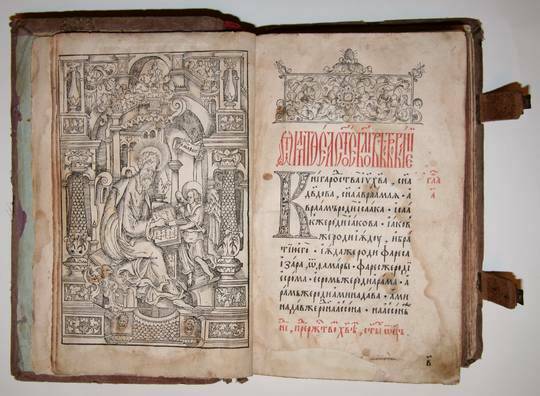
From Luke. 21: 5-7, 10-11, 20-24
And when some said about the temple that it was decorated with expensive stones and inserts, He said:
the days will come when what you see here will not be left stone unturned; everything will be destroyed.
And they asked Him: Teacher! when will it be? and what is the sign of when this should happen?
Then he said to them: Nation will rise against nation, and kingdom against kingdom;
there will be large earthquakes in places, and famines, and pestilences, and terrible phenomena, and great signs from heaven.
John Bukharev archpriest
Interpretation of a group of verses: Luke 21: 7-7
When will this be, and what is the sign (what is the sign), do they always want this to be (when it should happen)?
According to the gospel. Matthew, the disciples asked the Lord about two subjects: about the time of destruction of Jerusalem and about the end of the world. In accordance with these questions, he also expounded the speech of the Lord.
The gospels. Luke, like Mark, apparently sets out the answer to one question - about the destruction of Jerusalem; but since the circumstance of the destruction of this city also serves as a prototype of the end of the world, one might think that the question is: when will it be? refers to the destruction of Jerusalem itself, but the question is: what is the sign when this should happen? - to the second coming of Christ and the end of the world, it is asked about the sign (what sign) by which one could guess when this coming should happen.
The apostles thought that the end of the world would follow with the destruction of Jerusalem. Accordingly, the Lord gives the answers to these two questions as one, so that they unite together that which relates to the destruction of Jerusalem, when the fate of the Old Testament church ends, and to His second coming, when the fate of the New Testament church is accomplished. For this reason, this speech of Christ about the destruction of Jerusalem and His second coming is one of the most difficult to explain, and not all, even the ancient interpreters, explain some of its passages in the same way.
It is prophetic speech, and in prophetic speeches, near and distant events usually merge, as it were, especially if one, the nearest, serves as a prototype of the other, the most distant. (Micah.) Thus, for example, the prophet Isaiah (chap. 40–66) depicts the events of the deliverance of the Jews from the captivity of Babylon and the deliverance of all mankind by the Messiah from the captivity of the devil and sin, of which the first serves as a type of the second.
And here the judgment of the Jews represents the judgment of the whole world.
Prepared by the rector of the Nikolsky Church, Archpriest Roman Romanov.
And when some said about the temple that it was decorated with expensive stones and inserts, He said:
the days will come when what you see here will not be left stone unturned; everything will be destroyed.
And they asked Him: Teacher! when will it be? and what is the sign of when this should happen?
Then he said to them: Nation will rise against nation, and kingdom against kingdom;
there will be large earthquakes in places, and famines, and pestilences, and terrible phenomena, and great signs from heaven.
John Bukharev archpriest
Interpretation of a group of verses: Luke 21: 7-7
When will this be, and what is the sign (what is the sign), do they always want this to be (when it should happen)?
According to the gospel. Matthew, the disciples asked the Lord about two subjects: about the time of destruction of Jerusalem and about the end of the world. In accordance with these questions, he also expounded the speech of the Lord.
The gospels. Luke, like Mark, apparently sets out the answer to one question - about the destruction of Jerusalem; but since the circumstance of the destruction of this city also serves as a prototype of the end of the world, one might think that the question is: when will it be? refers to the destruction of Jerusalem itself, but the question is: what is the sign when this should happen? - to the second coming of Christ and the end of the world, it is asked about the sign (what sign) by which one could guess when this coming should happen.
The apostles thought that the end of the world would follow with the destruction of Jerusalem. Accordingly, the Lord gives the answers to these two questions as one, so that they unite together that which relates to the destruction of Jerusalem, when the fate of the Old Testament church ends, and to His second coming, when the fate of the New Testament church is accomplished. For this reason, this speech of Christ about the destruction of Jerusalem and His second coming is one of the most difficult to explain, and not all, even the ancient interpreters, explain some of its passages in the same way.
It is prophetic speech, and in prophetic speeches, near and distant events usually merge, as it were, especially if one, the nearest, serves as a prototype of the other, the most distant. (Micah.) Thus, for example, the prophet Isaiah (chap. 40–66) depicts the events of the deliverance of the Jews from the captivity of Babylon and the deliverance of all mankind by the Messiah from the captivity of the devil and sin, of which the first serves as a type of the second.
And here the judgment of the Jews represents the judgment of the whole world.
Prepared by the rector of the Nikolsky Church, Archpriest Roman Romanov.
Share: