'If there was a beginning, do not doubt the end ...' Depiction of the Last Judgment in Christian Art
25 November 2017
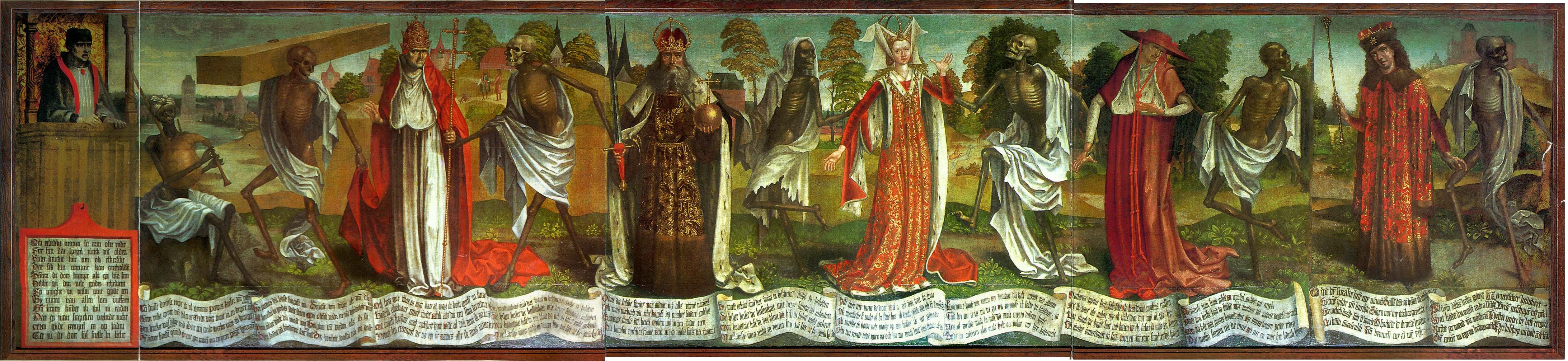
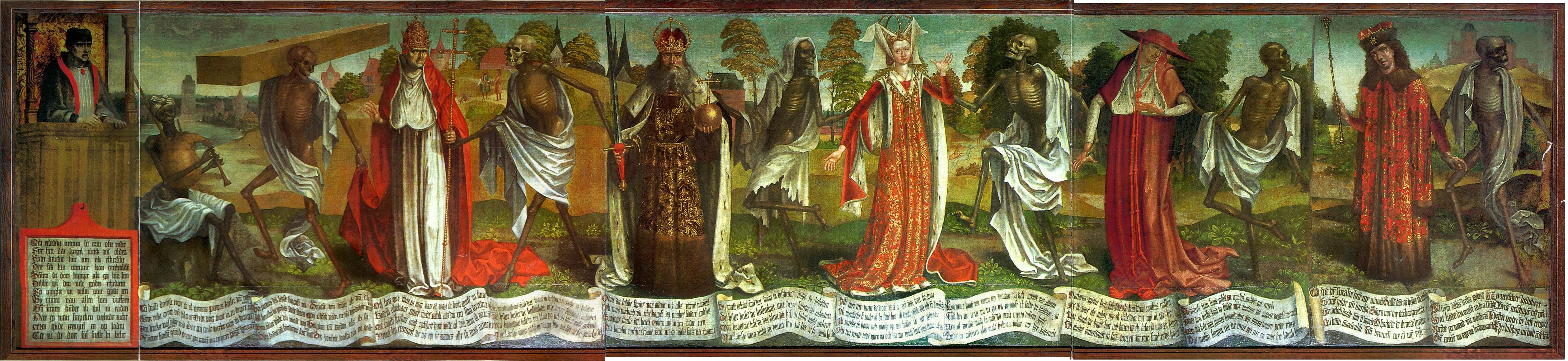
Sooner or later, any person thinks about the topic 'is there life after death?' ? .. During the Middle Ages, these issues were an integral part of the everyday life of a person, and the expectation of the end of the world and the Last Judgment was constant, becoming especially tense on the eve of certain dates, which can be conventionally called 'anniversary'. So, for example, shortly before the onset of 1000, the daily life of Europeans, who were confident in the proximity of the 'last days', turned out to be almost completely paralyzed: the harvest in the fields remained unharvested, and economic activity ceased. On the night of December 31, 999 Pope Sylvester II (in the world known as Herbert Avrilaksky - his image has been used by MA Bulgakov's famous novel, at the beginning of which Woland Berlioz explains his arrival in Moscow, the need to disassemble the paper of this scholar warlock), in the presence of huge crowds of believers, served the 'last' Mass in St. Peter's Cathedral, at the end of which there was deathly silence. People froze in anticipation of the 'end of time' ... Intensely awaited the Last Judgment in the second half of the XIV century, and especially on the eve of 1500, the feeling of the approaching end of the world was facilitated by the outbreak of plague epidemics, which claimed thousands of lives, and the active work of the Inquisition, which identified and eradicated the 'heresies' that were widespread on the eve of such round dates. It was on the eve of the “jubilee” year 1500 in Europe that a mass of images called “Dances of Death” were created, and the great German artist Albrecht Durer illustrated his favorite book of the Middle Ages - the mysterious and terrible Apocalypse - with a cycle of engravings that immortalized his name.
Notke. Dance of Death. Fresco in St. Nicholas Church in Tallinn. 1470s But what can we say about the Middle Ages; Suffice it to recall the feeling of exciting anticipation with which our contemporaries greeted the offensive of 2000! In fact, the entire path of Christian civilization is colored by this constant expectation of a universal catastrophe and the hope to overcome it.
A. Durer. A vision of seven lamps. Engraving from the cycle 'Apocalypse'. 1498 g.
A. Durer. Four horsemen. Engraving from the cycle 'Apocalypse'. 1498 g.
In Christian art, the image of the Last Judgment is extremely widespread: it can be found in temple paintings, in book miniatures, and in sculptural relief, and in icons. The chronology of the 'last days' was thoroughly known thanks to the numerous writings of the church fathers (primarily the Revelation of John the Evangelist) and the apocrypha. For the first time, a hint of the Last Judgment is visually embodied in the paintings of the Roman catacombs, where the first Christians buried members of their community. This is the image of Christ - the Good Shepherd. If next to him stands a sheep personifying his flock (on the right hand) and a goat (on the left hand), then such an image contains an allusion to the separation of sheep from goats, righteous from unrighteous, described in the Gospel of Matthew - a type of the Last Judgment: “When will come The Son of Man in His glory and all the holy angels are with Him, then He, as King, will sit on the throne ... And all nations will gather before Him, and He will separate some people from others, just as a shepherd separates sheep from goats; and he will set the sheep on his right hand, and the goats on his left. '
Christ is the Good Shepherd Painting of the catacombs of St. Callistus in Rome. III century.
Christ is the Good Shepherd Fresco in the catacombs of Priscilla. III century.
The most interesting images of episodes of the end of the world and the last Last Judgment can be found in medieval book miniatures, especially created at the turn of the 10th and 11th centuries. - a time permeated with the expectation of the approaching end of the world. The fantastic images created by unnamed artists illustrating the texts of the Apocalypse perfectly convey the atmosphere of the frightening prophecies of the ancient book. The figure of a trumpeting angel is often found here, announcing the beginning of the calamities of humanity. Since John the Theologian in his visions describes the fall to the earth of hail and fire, a flaming mountain and a luminous star, an eclipse of the Sun and stars, a trumpeting angel often appears against the background of a starry sky with an eclipsed sun and moon. On other sheets, scaly-armored beasts with long horns and clawed paws can be seen racing, their scorpion tails digging into people's heads. These are locusts that came out 'from the pit of the abyss' in order to defeat sinners 'who do not have the seal of God on their foreheads.'
Trumpeting angel and eclipse of the luminaries. Miniature from the Apocalypse. XI century
Locusts that came out of hell. Miniature from the Apocalypse of Beatus. X century.
Babylonian harlot on the beast. Miniature from the Bamberg Apocalypse. XI century
The four horsemen of the Apocalypse, the seven-headed dragon-serpent threatening “the woman clothed in the sun” (the image of the Church of Christ), the Babylonian harlot riding on the scarlet beast, the image of Heavenly Jerusalem unfold before our eyes with a grandiose fairytale panorama illustrating the time “when time is will not be'.
The seven-headed dragon and the Holy wife, clothed with the sun. Miniature from the Apocalypse of Beatus. XI centuryIn Western European medieval churches, painted sculptural reliefs with a scene of the Last Judgment were placed above the portal of the entrance, and each parishioner passed under this image, literally confirming the well-known saying “we all walk under God” (the figure of Christ the judge sitting on the throne in surrounded by angels, occupied the central dominant place in such compositions). And if you remember the words of Christ “I am the gate, he who entered through me, will be saved”, the sacred meaning of just such a location of this scene becomes clear: those who crossed the threshold of the temple received hope for forgiveness at the Last Judgment.
Western portal of the Saint-Lazare cathedral with the scene of the Last Judgment; Autun, France. XII century.
Fragment of the composition 'The Last Judgment'. Weighing Souls
In the space of an Orthodox Christian church, the western wall was traditionally assigned to the image of the Last Judgment, in which the main entrance was located (as opposed to the eastern side of the temple, where the altar symbolizing the Kingdom of Heaven is located). Fresco paintings with grandiose paintings of the last judgment have been found in Russia since the 12th century. Among the most impressive are the scenes of the Last Judgment, painted by the Monks Andrei Rublev and Daniel Cherny in the Assumption Cathedral of Vladimir, as well as the frescoes of Dionysius in the cathedral of the Ferapontov Monastery.
Andrey Rublev. Christ in glory and angels winding the sky like a scroll. Fragment of the Last Judgment composition in the Assumption Cathedral, Vladimir. XV century
Dionysius. The Last Judgment. Painting of the western wall in the Cathedral of the Ferapontov Monastery. XVI century
From about the 15th century. the theme of the Last Judgment, with all the details described in the Revelation (Apocalypse) of John the Theologian, also penetrates into Old Russian icon painting. The image includes showing the end of the world, scenes of hell (fiery gehenna), as well as pictures of Paradise and the happy righteous in it. In the center is Christ, the Judge of the world, with the forthcoming John the Baptist and the Mother of God; at the foot of the throne are kneeling Adam and Eve. In the upper right ('righteous') corner is Heavenly Paradise, in the left ('unrighteous') - Mount Golgotha and the angels rolling up the scroll of heaven as a sign that earthly history is over: 'The angel raised his hand to heaven and swore that time there will be no more ... And the sky disappeared, being rolled up like a scroll ... and the stars of heaven fell on the earth. '
The Last Judgment. Icon of the 15th and 16th centuries.
The Last Judgment. Icon of the 15th and 16th centuries.
The Last Judgment. Icon of the 15th and 16th centuries
Under the figure of Christ in glory one can see the “throne prepared” for Christ the judge; on the throne - the Book of Genesis, which contains the names of all the living and the dead. Crowds of righteous (right) and sinners (left) approach the throne.
Christ is the judge with those who stand, the throne prepared, sinners and righteous. Fragment of the icon The Last Judgment To the right of the viewer (and to the left of Christ) pictures of hell unfold, where demons and sinners are depicted in a fiery stream. Here Satan sits, holding on his knees the most terrible sinner - Judas, and under him, at the edge of the icon, are hellish cauldrons intended for torment. In the 'righteous' part, the Garden of Eden of Our Lady is presented. Two opposite parts of the icon, the place of heaven and the place of hell, are separated from each other by a huge wriggling figure of the Serpent of ordeals. With his tail he rests against the fire of hell, and with his head with a sting, against the heel of Adam, bowed before Christ. Numerous colored rings on the body of the Snake denote sins and 'ordeals' through which the human soul passes: vanity, avarice, drunkenness, fornication and many others.
Satan in hell with the soul of Judas. Fragment of the Last Judgment icon
Serpent of ordeals. Fragment of the Last Judgment icon
A nude male figure at the bottom of the icon, tied to a pillar, is very instructive, as if stuck between Heaven and Hell. This is a 'pious' or 'merciful fornicator' who gave much alms to the poor, but lived in the sin of fornication all his life. Therefore, there is no place for him either in Paradise (since he is a 'fornicator') or in Hell (since he is 'pious').
Merciful fornicator. Fragment of the Last Judgment icon The image of the Last Judgment also includes the 'Vision' of the Old Testament prophet Daniel: a circle containing 'four ruinous kingdoms': Babylonian (bear), Macedonian (griffin), Persian (lion) and Roman (horned beast).
Andrey Rublev. Symbols of the four kingdoms. Fragment of the Last Judgment fresco. Dormition Cathedral, Vladimir In general, at all times, the images of the Last Judgment were that kind of mirror, which reflected human fears and hopes for a new kingdom of truth, for the coming justice and that the coming of the Savior will bring harmony and order to this devoid of perfection peace.
'If there was a beginning, do not doubt the end ...' Depiction of the Last Judgment in Christian Art'If there was a beginning, do not doubt the end ...' Depiction of the Last Judgment in Christian Art Sooner or later, any person thinks about the topic 'is there life after death?' ? .. During the Middle Ages, these issues were an integral part of the everyday life of a person, and the expectation of the end of the world and the Last Judgment was constant, becoming especially tense on the eve of certain dates, which can be conventionally called 'anniversary'. So, for example, shortly before the onset of 1000, the daily life of Europeans, who were confident in the proximity of the 'last days', turned out to be almost completely paralyzed: the harvest in the fields remained unharvested, and economic activity ceased. On the night of December 31, 999 Pope Sylvester II (in the world known as Herbert Avrilaksky - his image has been used by MA Bulgakov's famous novel, at the beginning of which Woland Berlioz explains his arrival in Moscow, the need to disassemble the paper of this scholar warlock), in the presence of huge crowds of believers, served the 'last' Mass in St. Peter's Cathedral, at the end of which there was deathly silence. People froze in anticipation of the 'end of time' ... Intensely awaited the Last Judgment in the second half of the XIV century, and especially on the eve of 1500, the feeling of the approaching end of the world was facilitated by the outbreak of plague epidemics, which claimed thousands of lives, and the active work of the Inquisition, which identified and eradicated the 'heresies' that were widespread on the eve of such round dates. It was on the eve of the “jubilee” year 1500 in Europe that a mass of images called “Dances of Death” were created, and the great German artist Albrecht Durer illustrated his favorite book of the Middle Ages - the mysterious and terrible Apocalypse - with a cycle of engravings that immortalized his name. Notke. Dance of Death. Fresco in St. Nicholas Church in Tallinn. 1470s But what can we say about the Middle Ages; Suffice it to recall the feeling of exciting anticipation with which our contemporaries greeted the offensive of 2000! In fact, the entire path of Christian civilization is colored by this constant expectation of a universal catastrophe and the hope to overcome it. A. Durer. A vision of seven lamps. Engraving from the cycle 'Apocalypse'. 1498 g. A. Durer. Four horsemen. Engraving from the cycle 'Apocalypse'. 1498 g. In Christian art, the image of the Last Judgment is extremely widespread: it can be found in temple paintings, in book miniatures, and in sculptural relief, and in icons. The chronology of the 'last days' was thoroughly known thanks to the numerous writings of the church fathers (primarily the Revelation of John the Evangelist) and the apocrypha. For the first time, a hint of the Last Judgment is visually embodied in the paintings of the Roman catacombs, where the first Christians buried members of their community. This is the image of Christ - the Good Shepherd. If next to him stands a sheep personifying his flock (on the right hand) and a goat (on the left hand), then such an image contains an allusion to the separation of sheep from goats, righteous from unrighteous, described in the Gospel of Matthew - a type of the Last Judgment: “When will come The Son of Man in His glory and all the holy angels are with Him, then He, as King, will sit on the throne ... And all nations will gather before Him, and He will separate some people from others, just as a shepherd separates sheep from goats; and he will set the sheep on his right hand, and the goats on his left. ' Christ is the Good Shepherd Painting of the catacombs of St. Callistus in Rome. III century. Christ is the Good Shepherd Fresco in the catacombs of Priscilla. III century. The most interesting images of episodes of the end of the world and the last Last Judgment can be found in medieval book miniatures, especially created at the turn of the 10th and 11th centuries. - a time permeated with the expectation of the approaching end of the world. The fantastic images created by unnamed artists illustrating the texts of the Apocalypse perfectly convey the atmosphere of the frightening prophecies of the ancient book. The figure of a trumpeting angel is often found here, announcing the beginning of the calamities of humanity. Since John the Theologian in his visions describes the fall to the earth of hail and fire, a flaming mountain and a luminous star, an eclipse of the Sun and stars, a trumpeting angel often appears against the background of a starry sky with an eclipsed sun and moon. On other sheets, scaly-armored beasts with long horns and clawed paws can be seen racing, their scorpion tails digging into people's heads. These are locusts that came out 'from the pit of the abyss' in order to defeat sinners 'who do not have the seal of God on their foreheads.' Trumpeting angel and eclipse of the luminaries. Miniature from the Apocalypse. XI century Locusts that came out of hell. Miniature from the Apocalypse of Beatus. X century. Babylonian harlot on the beast. Miniature from the Bamberg Apocalypse. XI century The four horsemen of the Apocalypse, the seven-headed dragon-serpent threatening “the woman clothed in the sun” (the image of the Church of Christ), the Babylonian harlot riding on the scarlet beast, the image of Heavenly Jerusalem unfold before our eyes with a grandiose fairytale panorama illustrating the time “when time is will not be'. The seven-headed dragon and the Holy wife, clothed with the sun. Miniature from the Apocalypse of Beatus. XI century In Western European medieval churches, painted sculptural reliefs with a scene of the Last Judgment were placed above the portal of the entrance, and each parishioner passed under this image, literally confirming the well-known saying “we all walk under God” (the figure of Christ the judge sitting on the throne in surrounded by angels, occupied the central dominant place in such compositions). And if you remember the words of Christ “I am the gate, he who entered through me, will be saved”, the sacred meaning of just such a location of this scene becomes clear: those who crossed the threshold of the temple received hope for forgiveness at the Last Judgment. Western portal of the Saint-Lazare cathedral with the scene of the Last Judgment; Autun, France. XII century. Fragment of the composition 'The Last Judgment'. Weighing Souls In the space of an Orthodox Christian church, the western wall was traditionally assigned to the image of the Last Judgment, in which the main entrance was located (as opposed to the eastern side of the temple, where the altar symbolizing the Kingdom of Heaven is located). Fresco paintings with grandiose paintings of the last judgment have been found in Russia since the 12th century. Among the most impressive are the scenes of the Last Judgment, painted by the Monks Andrei Rublev and Daniel Cherny in the Assumption Cathedral of Vladimir, as well as the frescoes of Dionysius in the cathedral of the Ferapontov Monastery. Andrey Rublev. Christ in glory and angels winding the sky like a scroll. Fragment of the Last Judgment composition in the Assumption Cathedral, Vladimir. XV century Dionysius. The Last Judgment. Painting of the western wall in the Cathedral of the Ferapontov Monastery. XVI century From about the 15th century. the theme of the Last Judgment, with all the details described in the Revelation (Apocalypse) of John the Theologian, also penetrates into Old Russian icon painting. The image includes showing the end of the world, scenes of hell (fiery gehenna), as well as pictures of Paradise and the happy righteous in it. In the center is Christ, the Judge of the world, with the forthcoming John the Baptist and the Mother of God; at the foot of the throne are kneeling Adam and Eve. In the upper right ('righteous') corner is Heavenly Paradise, in the left ('unrighteous') - Mount Golgotha and the angels rolling up the scroll of heaven as a sign that earthly history is over: 'The angel raised his hand to heaven and swore that time there will be no more ... And the sky disappeared, being rolled up like a scroll ... and the stars of heaven fell on the earth. ' The Last Judgment. Icon of the 15th and 16th centuries. The Last Judgment. Icon of the 15th and 16th centuries. The Last Judgment. Icon of the 15th and 16th centuries Under the figure of Christ in glory one can see the “throne prepared” for Christ the judge; on the throne - the Book of Genesis, which contains the names of all the living and the dead. Crowds of righteous (right) and sinners (left) approach the throne. Christ is the judge with those who stand, the throne prepared, sinners and righteous. Fragment of the icon The Last Judgment To the right of the viewer (and to the left of Christ) pictures of hell unfold, where demons and sinners are depicted in a fiery stream. Here Satan sits, holding on his knees the most terrible sinner - Judas, and under him, at the edge of the icon, are hellish cauldrons intended for torment. In the 'righteous' part, the Garden of Eden of Our Lady is presented. Two opposite parts of the icon, the place of heaven and the place of hell, are separated from each other by a huge wriggling figure of the Serpent of ordeals. With his tail he rests against the fire of hell, and with his head with a sting, against the heel of Adam, bowed before Christ. Numerous colored rings on the body of the Snake denote sins and 'ordeals' through which the human soul passes: vanity, avarice, drunkenness, fornication and many others. Satan in hell with the soul of Judas. Fragment of the Last Judgment icon Serpent of ordeals. Fragment of the Last Judgment icon A nude male figure at the bottom of the icon, tied to a pillar, is very instructive, as if stuck between Heaven and Hell. This is a 'pious' or 'merciful fornicator' who gave much alms to the poor, but lived in the sin of fornication all his life. Therefore, there is no place for him either in Paradise (since he is a 'fornicator') or in Hell (since he is 'pious'). Merciful fornicator. Fragment of the Last Judgment icon The image of the Last Judgment also includes the 'Vision' of the Old Testament prophet Daniel: a circle containing 'four ruinous kingdoms': Babylonian (bear), Macedonian (griffin), Persian (lion) and Roman (horned beast). Andrey Rublev. Symbols of the four kingdoms. Fragment of the Last Judgment fresco. Dormition Cathedral, Vladimir In general, at all times, the images of the Last Judgment were that kind of mirror, which reflected human fears and hopes for a new kingdom of truth, for the coming justice and that the coming of the Savior will bring harmony and order to this devoid of perfection peace.Свеча Иерусалима -en
Sooner or later, any person thinks about the topic 'is there life after death?' ? .. During the Middle Ages, these issues were an integral part of the everyday life of a person, and the expectation of the end of the world and the Last Judgment was constant, becoming especially tense on the eve of certain dates, which can be conventionally called 'anniversary'. So, for example, shortly before the onset of 1000, the daily life of Europeans, who were confident in the proximity of the 'last days', turned out to be almost completely paralyzed: the harvest in the fields remained unharvested, and economic activity ceased. On the night of December 31, 999 Pope Sylvester II (in the world known as Herbert Avrilaksky - his image has been used by MA Bulgakov's famous novel, at the beginning of which Woland Berlioz explains his arrival in Moscow, the need to disassemble the paper of this scholar warlock), in the presence of huge crowds of believers, served the 'last' Mass in St. Peter's Cathedral, at the end of which there was deathly silence. People froze in anticipation of the 'end of time' ... Intensely awaited the Last Judgment in the second half of the XIV century, and especially on the eve of 1500, the feeling of the approaching end of the world was facilitated by the outbreak of plague epidemics, which claimed thousands of lives, and the active work of the Inquisition, which identified and eradicated the 'heresies' that were widespread on the eve of such round dates. It was on the eve of the “jubilee” year 1500 in Europe that a mass of images called “Dances of Death” were created, and the great German artist Albrecht Durer illustrated his favorite book of the Middle Ages - the mysterious and terrible Apocalypse - with a cycle of engravings that immortalized his name. Notke. Dance of Death. Fresco in St. Nicholas Church in Tallinn. 1470s But what can we say about the Middle Ages; Suffice it to recall the feeling of exciting anticipation with which our contemporaries greeted the offensive of 2000! In fact, the entire path of Christian civilization is colored by this constant expectation of a universal catastrophe and the hope to overcome it. A. Durer. A vision of seven lamps. Engraving from the cycle 'Apocalypse'. 1498 g. A. Durer. Four horsemen. Engraving from the cycle 'Apocalypse'. 1498 g. In Christian art, the image of the Last Judgment is extremely widespread: it can be found in temple paintings, in book miniatures, and in sculptural relief, and in icons. The chronology of the 'last days' was thoroughly known thanks to the numerous writings of the church fathers (primarily the Revelation of John the Evangelist) and the apocrypha. For the first time, a hint of the Last Judgment is visually embodied in the paintings of the Roman catacombs, where the first Christians buried members of their community. This is the image of Christ - the Good Shepherd. If next to him stands a sheep personifying his flock (on the right hand) and a goat (on the left hand), then such an image contains an allusion to the separation of sheep from goats, righteous from unrighteous, described in the Gospel of Matthew - a type of the Last Judgment: “When will come The Son of Man in His glory and all the holy angels are with Him, then He, as King, will sit on the throne ... And all nations will gather before Him, and He will separate some people from others, just as a shepherd separates sheep from goats; and he will set the sheep on his right hand, and the goats on his left. ' Christ is the Good Shepherd Painting of the catacombs of St. Callistus in Rome. III century. Christ is the Good Shepherd Fresco in the catacombs of Priscilla. III century. The most interesting images of episodes of the end of the world and the last Last Judgment can be found in medieval book miniatures, especially created at the turn of the 10th and 11th centuries. - a time permeated with the expectation of the approaching end of the world. The fantastic images created by unnamed artists illustrating the texts of the Apocalypse perfectly convey the atmosphere of the frightening prophecies of the ancient book. The figure of a trumpeting angel is often found here, announcing the beginning of the calamities of humanity. Since John the Theologian in his visions describes the fall to the earth of hail and fire, a flaming mountain and a luminous star, an eclipse of the Sun and stars, a trumpeting angel often appears against the background of a starry sky with an eclipsed sun and moon. On other sheets, scaly-armored beasts with long horns and clawed paws can be seen racing, their scorpion tails digging into people's heads. These are locusts that came out 'from the pit of the abyss' in order to defeat sinners 'who do not have the seal of God on their foreheads.' Trumpeting angel and eclipse of the luminaries. Miniature from the Apocalypse. XI century Locusts that came out of hell. Miniature from the Apocalypse of Beatus. X century. Babylonian harlot on the beast. Miniature from the Bamberg Apocalypse. XI century The four horsemen of the Apocalypse, the seven-headed dragon-serpent threatening “the woman clothed in the sun” (the image of the Church of Christ), the Babylonian harlot riding on the scarlet beast, the image of Heavenly Jerusalem unfold before our eyes with a grandiose fairytale panorama illustrating the time “when time is will not be'. The seven-headed dragon and the Holy wife, clothed with the sun. Miniature from the Apocalypse of Beatus. XI century In Western European medieval churches, painted sculptural reliefs with a scene of the Last Judgment were placed above the portal of the entrance, and each parishioner passed under this image, literally confirming the well-known saying “we all walk under God” (the figure of Christ the judge sitting on the throne in surrounded by angels, occupied the central dominant place in such compositions). And if you remember the words of Christ “I am the gate, he who entered through me, will be saved”, the sacred meaning of just such a location of this scene becomes clear: those who crossed the threshold of the temple received hope for forgiveness at the Last Judgment. Western portal of the Saint-Lazare cathedral with the scene of the Last Judgment; Autun, France. XII century. Fragment of the composition 'The Last Judgment'. Weighing Souls In the space of an Orthodox Christian church, the western wall was traditionally assigned to the image of the Last Judgment, in which the main entrance was located (as opposed to the eastern side of the temple, where the altar symbolizing the Kingdom of Heaven is located). Fresco paintings with grandiose paintings of the last judgment have been found in Russia since the 12th century. Among the most impressive are the scenes of the Last Judgment, painted by the Monks Andrei Rublev and Daniel Cherny in the Assumption Cathedral of Vladimir, as well as the frescoes of Dionysius in the cathedral of the Ferapontov Monastery. Andrey Rublev. Christ in glory and angels winding the sky like a scroll. Fragment of the Last Judgment composition in the Assumption Cathedral, Vladimir. XV century Dionysius. The Last Judgment. Painting of the western wall in the Cathedral of the Ferapontov Monastery. XVI century From about the 15th century. the theme of the Last Judgment, with all the details described in the Revelation (Apocalypse) of John the Theologian, also penetrates into Old Russian icon painting. The image includes showing the end of the world, scenes of hell (fiery gehenna), as well as pictures of Paradise and the happy righteous in it. In the center is Christ, the Judge of the world, with the forthcoming John the Baptist and the Mother of God; at the foot of the throne are kneeling Adam and Eve. In the upper right ('righteous') corner is Heavenly Paradise, in the left ('unrighteous') - Mount Golgotha and the angels rolling up the scroll of heaven as a sign that earthly history is over: 'The angel raised his hand to heaven and swore that time there will be no more ... And the sky disappeared, being rolled up like a scroll ... and the stars of heaven fell on the earth. ' The Last Judgment. Icon of the 15th and 16th centuries. The Last Judgment. Icon of the 15th and 16th centuries. The Last Judgment. Icon of the 15th and 16th centuries Under the figure of Christ in glory one can see the “throne prepared” for Christ the judge; on the throne - the Book of Genesis, which contains the names of all the living and the dead. Crowds of righteous (right) and sinners (left) approach the throne. Christ is the judge with those who stand, the throne prepared, sinners and righteous. Fragment of the icon The Last Judgment To the right of the viewer (and to the left of Christ) pictures of hell unfold, where demons and sinners are depicted in a fiery stream. Here Satan sits, holding on his knees the most terrible sinner - Judas, and under him, at the edge of the icon, are hellish cauldrons intended for torment. In the 'righteous' part, the Garden of Eden of Our Lady is presented. Two opposite parts of the icon, the place of heaven and the place of hell, are separated from each other by a huge wriggling figure of the Serpent of ordeals. With his tail he rests against the fire of hell, and with his head with a sting, against the heel of Adam, bowed before Christ. Numerous colored rings on the body of the Snake denote sins and 'ordeals' through which the human soul passes: vanity, avarice, drunkenness, fornication and many others. Satan in hell with the soul of Judas. Fragment of the Last Judgment icon Serpent of ordeals. Fragment of the Last Judgment icon A nude male figure at the bottom of the icon, tied to a pillar, is very instructive, as if stuck between Heaven and Hell. This is a 'pious' or 'merciful fornicator' who gave much alms to the poor, but lived in the sin of fornication all his life. Therefore, there is no place for him either in Paradise (since he is a 'fornicator') or in Hell (since he is 'pious'). Merciful fornicator. Fragment of the Last Judgment icon The image of the Last Judgment also includes the 'Vision' of the Old Testament prophet Daniel: a circle containing 'four ruinous kingdoms': Babylonian (bear), Macedonian (griffin), Persian (lion) and Roman (horned beast). Andrey Rublev. Symbols of the four kingdoms. Fragment of the Last Judgment fresco. Dormition Cathedral, Vladimir In general, at all times, the images of the Last Judgment were that kind of mirror, which reflected human fears and hopes for a new kingdom of truth, for the coming justice and that the coming of the Savior will bring harmony and order to this devoid of perfection peace.