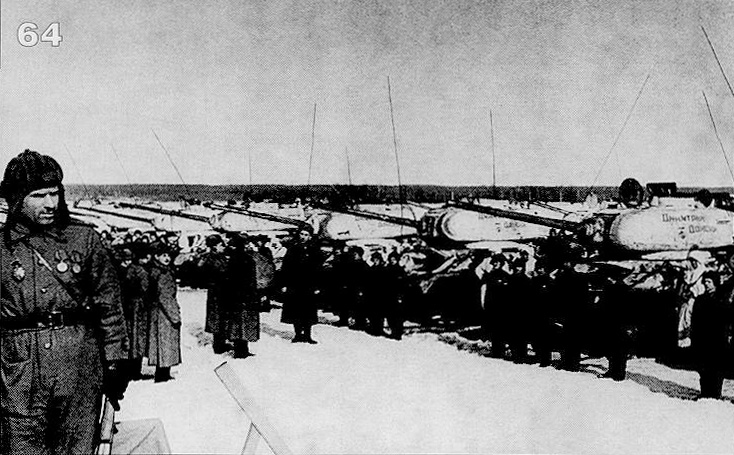
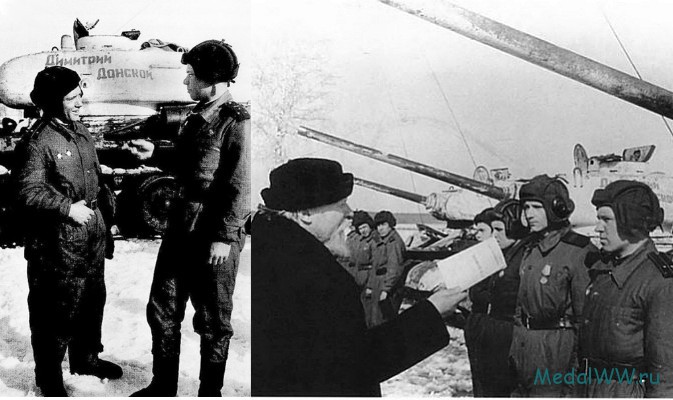
On the eve of the 75th anniversary of Victory in the Great Patriotic War, it would be unfair not to recall the contribution that Orthodox believers made in those years to a common cause - the fight against Hitlerite Germany. The eight million rubles collected by the Christians of the Soviet Union - colossal money by the standards of the forties - were used to build 40 tanks that beat the Nazis in Ukraine, Belarus and Eastern Europe.
The beginning of the Great Patriotic War for the Soviet government was a time of unpleasant discoveries. The struggle for the class interests of the workers and peasants turned out to be insufficient motivation for the Red Army men. The German proletarians did not show class solidarity with their Soviet brethren. And in the territories occupied by the Nazis, churches were opened, which were immediately filled with believers and announced with Orthodox prayers ... pre-revolutionary Russia and the traditional religion of the state-forming people of the country - Orthodoxy.
In just a few months, eight million rubles were collected on the account for collecting donations. In the face of hunger and lack of basic necessities, believers in the belligerent country raised a huge sum. It is interesting to note that donations came even from places where there was not a single functioning temple, chapels or houses of prayer!
With the funds raised, industrial enterprises in that part of the country that had not been occupied by the occupation immediately began to build tanks for the army fighting the enemy. 'Thirty-four' T-34-85 produced the 112th Krasnoye Sormovo plant in Gorky (now Nizhny Novgorod). Flamethrowers OT-34 were made by the Chelyabinsk Tractor Plant, which received the name Kirovsky during the war: seven and a half thousand workers of the Kirov plant were evacuated to Chelyabinsk from besieged Leningrad; besides them, specialists from many other industrial cities of the country worked here. Cars for the tank column 'Dimitry Donskoy' were also made by the Nizhne-Tagil Tank Plant.
Already at the beginning of March 1944, 19 'thirty-fours' and 21 flamethrower tanks were transferred to military units - the 38th tank regiment and the 516th flamethrower-tank regiment. The transfer of combat vehicles took place on March 7 near the village of Gorelki, Tula Region. Metropolitan Nicholas of Krutitsky, who was present at the meeting, on behalf of the country's Orthodox believers, addressed the soldiers and officers with the words: “Drive the hated enemy from our Great Russia. Let the glorious name of Dimitry Donskoy lead us to the battle for the sacred Russian land. Forward to victory, brothers-warriors! '.
From near Tula regiments equipped with new armored vehicles went to the front. Tankers of the 38th regiment participated in the Uman-Batashev operation, after they distinguished themselves when crossing the Dniester River and reached the southwestern borders of the USSR. For heroism and military skill, the 38th separate tank regiment was named 'Dniester'. By the end of April, only four out of nineteen combat vehicles remained in service with the regiment.
The 516th separate flamethrower-tank regiment received its baptism of fire in mid-June 1944 on the territory of Belarus, where it took part in the Bobruisk offensive operation. A little more than a month later, the regiment crossed the border and entered the territory of Poland, which it had to liberate from the enemy. Facing west, the Nazis fiercely resisted. By mid-autumn, of the 21 tanks transferred near Tula, only two survived in the regiment.
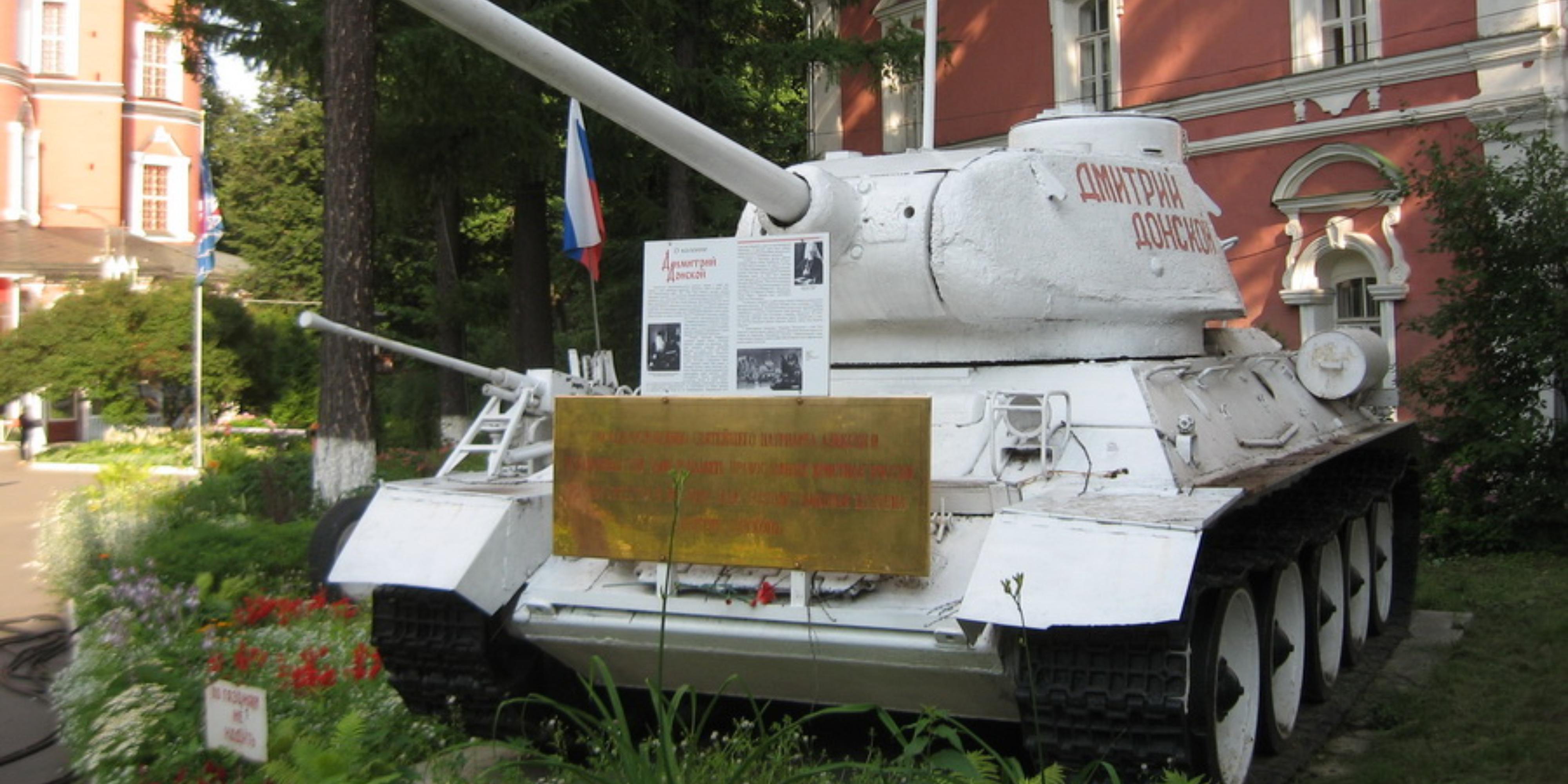
The Lord God preserved for posterity the memory of the tank column 'Dimitry Donskoy', built with donations from believers - despite the fact that most of the combat vehicles were killed in the battles of the Great Patriotic War. Memories and letters of tankers, frontline photos, newspaper publications war years allow us to trace the combat path of the 38th and 516th tank regiments from beginning to end. After the Victory, the surviving combat vehicles took places in the museums of Tula, Moscow and Leningrad. And in 2005, one of the armored vehicles, which was part of a tank column built at the expense of Orthodox citizens of the country, with the blessing of the Primate of the Russian Church, the blessed memory of Alexy II, was installed on a pedestal specially built for this in the Donskoy Monastery of the capital of Russia.
Dimitri Donskoy vs. PanzerwaffeDimitri Donskoy vs. Panzerwaffe On the eve of the 75th anniversary of Victory in the Great Patriotic War, it would be unfair not to recall the contribution that Orthodox believers made in those years to a common cause - the fight against Hitlerite Germany. The eight million rubles collected by the Christians of the Soviet Union - colossal money by the standards of the forties - were used to build 40 tanks that beat the Nazis in Ukraine, Belarus and Eastern Europe. The beginning of the Great Patriotic War for the Soviet government was a time of unpleasant discoveries. The struggle for the class interests of the workers and peasants turned out to be insufficient motivation for the Red Army men. The German proletarians did not show class solidarity with their Soviet brethren. And in the territories occupied by the Nazis, churches were opened, which were immediately filled with believers and announced with Orthodox prayers ... pre-revolutionary Russia and the traditional religion of the state-forming people of the country - Orthodoxy. One of the steps along this path, along with the opening of churches, was the establishment of military awards in honor and glory of the great Russian commanders of the past - Suvorov, Kutuzov, Alexander Nevsky. And on December 30, 1942, the locum tenens of the patriarchal throne, Metropolitan Sergius, appealed to the episcopate, priesthood and laity. He called on the Orthodox believers to help the army not only with prayers, but also with monetary donations, which could be used to form a tank column named after the Grand Duke Dmitry Donskoy (decades later, he will be glorified by the Russian Church in the face of the saints of the faithful). At the same time, Metropolitan Sergius asked Stalin in writing to open a special account for this purpose in the State Bank - and it was soon opened. In just a few months, eight million rubles were collected on the account for collecting donations. In the face of hunger and lack of basic necessities, believers in the belligerent country raised a huge sum. It is interesting to note that donations came even from places where there was not a single functioning temple, chapels or houses of prayer! With the funds raised, industrial enterprises in that part of the country that had not been occupied by the occupation immediately began to build tanks for the army fighting the enemy. 'Thirty-four' T-34-85 produced the 112th Krasnoye Sormovo plant in Gorky (now Nizhny Novgorod). Flamethrowers OT-34 were made by the Chelyabinsk Tractor Plant, which received the name Kirovsky during the war: seven and a half thousand workers of the Kirov plant were evacuated to Chelyabinsk from besieged Leningrad; besides them, specialists from many other industrial cities of the country worked here. Cars for the tank column 'Dimitry Donskoy' were also made by the Nizhne-Tagil Tank Plant. Already at the beginning of March 1944, 19 'thirty-fours' and 21 flamethrower tanks were transferred to military units - the 38th tank regiment and the 516th flamethrower-tank regiment. The transfer of combat vehicles took place on March 7 near the village of Gorelki, Tula Region. Metropolitan Nicholas of Krutitsky, who was present at the meeting, on behalf of the country's Orthodox believers, addressed the soldiers and officers with the words: “Drive the hated enemy from our Great Russia. Let the glorious name of Dimitry Donskoy lead us to the battle for the sacred Russian land. Forward to victory, brothers-warriors! '. From near Tula regiments equipped with new armored vehicles went to the front. Tankers of the 38th regiment participated in the Uman-Batashev operation, after they distinguished themselves when crossing the Dniester River and reached the southwestern borders of the USSR. For heroism and military skill, the 38th separate tank regiment was named 'Dniester'. By the end of April, only four out of nineteen combat vehicles remained in service with the regiment. The 516th separate flamethrower-tank regiment received its baptism of fire in mid-June 1944 on the territory of Belarus, where it took part in the Bobruisk offensive operation. A little more than a month later, the regiment crossed the border and entered the territory of Poland, which it had to liberate from the enemy. Facing west, the Nazis fiercely resisted. By mid-autumn, of the 21 tanks transferred near Tula, only two survived in the regiment. The Lord God preserved for posterity the memory of the tank column 'Dimitry Donskoy', built with donations from believers - despite the fact that most of the combat vehicles were killed in the battles of the Great Patriotic War. Memories and letters of tankers, frontline photos, newspaper publications war years allow us to trace the combat path of the 38th and 516th tank regiments from beginning to end. After the Victory, the surviving combat vehicles took places in the museums of Tula, Moscow and Leningrad. And in 2005, one of the armored vehicles, which was part of a tank column built at the expense of Orthodox citizens of the country, with the blessing of the Primate of the Russian Church, the blessed memory of Alexy II, was installed on a pedestal specially built for this in the Donskoy Monastery of the capital of Russia. V. Sergienko.Свеча Иерусалима -en
On the eve of the 75th anniversary of Victory in the Great Patriotic War, it would be unfair not to recall the contribution that Orthodox believers made in those years to a common cause - the fight against Hitlerite Germany. The eight million rubles collected by the Christians of the Soviet Union - colossal money by the standards of the forties - were used to build 40 tanks that beat the Nazis in Ukraine, Belarus and Eastern Europe. The beginning of the Great Patriotic War for the Soviet government was a time of unpleasant discoveries. The struggle for the class interests of the workers and peasants turned out to be insufficient motivation for the Red Army men. The German proletarians did not show class solidarity with their Soviet brethren. And in the territories occupied by the Nazis, churches were opened, which were immediately filled with believers and announced with Orthodox prayers ... pre-revolutionary Russia and the traditional religion of the state-forming people of the country - Orthodoxy. One of the steps along this path, along with the opening of churches, was the establishment of military awards in honor and glory of the great Russian commanders of the past - Suvorov, Kutuzov, Alexander Nevsky. And on December 30, 1942, the locum tenens of the patriarchal throne, Metropolitan Sergius, appealed to the episcopate, priesthood and laity. He called on the Orthodox believers to help the army not only with prayers, but also with monetary donations, which could be used to form a tank column named after the Grand Duke Dmitry Donskoy (decades later, he will be glorified by the Russian Church in the face of the saints of the faithful). At the same time, Metropolitan Sergius asked Stalin in writing to open a special account for this purpose in the State Bank - and it was soon opened. In just a few months, eight million rubles were collected on the account for collecting donations. In the face of hunger and lack of basic necessities, believers in the belligerent country raised a huge sum. It is interesting to note that donations came even from places where there was not a single functioning temple, chapels or houses of prayer! With the funds raised, industrial enterprises in that part of the country that had not been occupied by the occupation immediately began to build tanks for the army fighting the enemy. 'Thirty-four' T-34-85 produced the 112th Krasnoye Sormovo plant in Gorky (now Nizhny Novgorod). Flamethrowers OT-34 were made by the Chelyabinsk Tractor Plant, which received the name Kirovsky during the war: seven and a half thousand workers of the Kirov plant were evacuated to Chelyabinsk from besieged Leningrad; besides them, specialists from many other industrial cities of the country worked here. Cars for the tank column 'Dimitry Donskoy' were also made by the Nizhne-Tagil Tank Plant. Already at the beginning of March 1944, 19 'thirty-fours' and 21 flamethrower tanks were transferred to military units - the 38th tank regiment and the 516th flamethrower-tank regiment. The transfer of combat vehicles took place on March 7 near the village of Gorelki, Tula Region. Metropolitan Nicholas of Krutitsky, who was present at the meeting, on behalf of the country's Orthodox believers, addressed the soldiers and officers with the words: “Drive the hated enemy from our Great Russia. Let the glorious name of Dimitry Donskoy lead us to the battle for the sacred Russian land. Forward to victory, brothers-warriors! '. From near Tula regiments equipped with new armored vehicles went to the front. Tankers of the 38th regiment participated in the Uman-Batashev operation, after they distinguished themselves when crossing the Dniester River and reached the southwestern borders of the USSR. For heroism and military skill, the 38th separate tank regiment was named 'Dniester'. By the end of April, only four out of nineteen combat vehicles remained in service with the regiment. The 516th separate flamethrower-tank regiment received its baptism of fire in mid-June 1944 on the territory of Belarus, where it took part in the Bobruisk offensive operation. A little more than a month later, the regiment crossed the border and entered the territory of Poland, which it had to liberate from the enemy. Facing west, the Nazis fiercely resisted. By mid-autumn, of the 21 tanks transferred near Tula, only two survived in the regiment. The Lord God preserved for posterity the memory of the tank column 'Dimitry Donskoy', built with donations from believers - despite the fact that most of the combat vehicles were killed in the battles of the Great Patriotic War. Memories and letters of tankers, frontline photos, newspaper publications war years allow us to trace the combat path of the 38th and 516th tank regiments from beginning to end. After the Victory, the surviving combat vehicles took places in the museums of Tula, Moscow and Leningrad. And in 2005, one of the armored vehicles, which was part of a tank column built at the expense of Orthodox citizens of the country, with the blessing of the Primate of the Russian Church, the blessed memory of Alexy II, was installed on a pedestal specially built for this in the Donskoy Monastery of the capital of Russia. V. Sergienko.

 One of the steps along this path, along with the opening of churches, was the establishment of military awards in honor and glory of the great Russian commanders of the past - Suvorov, Kutuzov, Alexander Nevsky. And on December 30, 1942, the locum tenens of the patriarchal throne, Metropolitan Sergius, appealed to the episcopate, priesthood and laity. He called on the Orthodox believers to help the army not only with prayers, but also with monetary donations, which could be used to form a tank column named after the Grand Duke Dmitry Donskoy (decades later, he will be glorified by the Russian Church in the face of the saints of the faithful). At the same time, Metropolitan Sergius asked Stalin in writing to open a special account for this purpose in the State Bank - and it was soon opened.