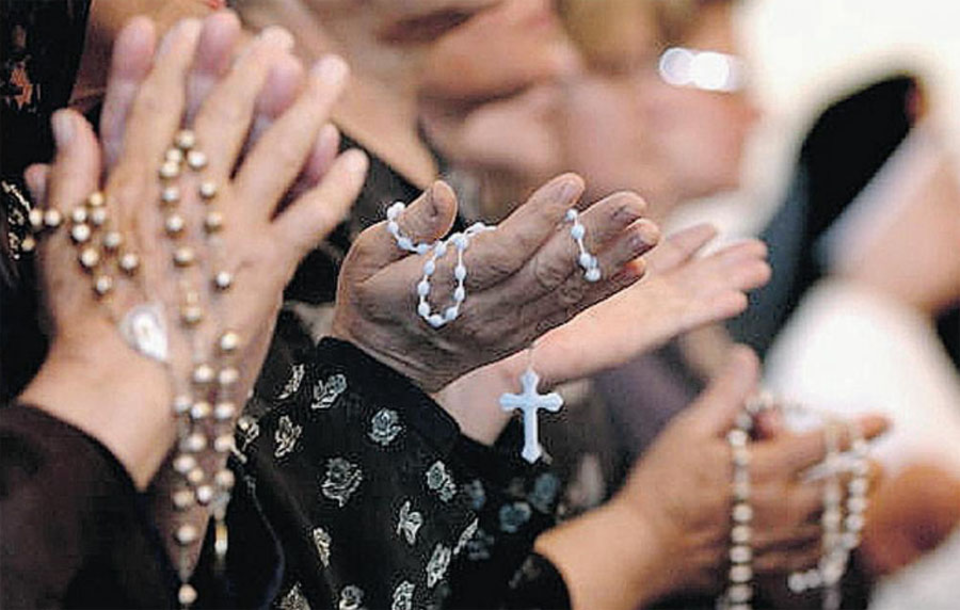
Beads as a tool for reading prayers and other ritual addresses have been used since ancient times. The world's oldest rosary beads were discovered by archaeologists in India and date back to the second millennium BC. This instrument of the spirit found its application in the practice of Hinduism, Buddhism, Islam, Sikhism, Bahaism ... However, the most widespread and maximum variety of forms of the rosary were received precisely in the Christian tradition.
It is easy to find that the words 'rosary' and 'counting' in Russian have the same root - which, in fact, indicates the main purpose of this subject: to count prayers. But is it possible at the same time deeply, with all your mind and heart, to be in prayer and at the same time keep track of them? It turns out that it is possible - if the soul of a person is praying, and the body (or, more precisely, the hands) is engaged in the countdown. Such a prayer will be even more effective, because in addition to counting the number of prayers read, the rosary will provide them with a clear rhythm, either aloud or silently, which will make the sacred appeal more meaningful or effective. A lot of biological clocks work flawlessly in our body, so the sense of rhythm in a person is connected precisely with the body - and it is quite possible to entrust him with determining the dimension and pace when performing prayers. But why count prayers at all? Isn't it more correct to just pray as much as, as they say, the heart asks? Yes and no. The heart, the organ most connected with the human soul, really knows how, when and how many prayers to read. The question is that in the modern world with its high speeds, most of us have almost forgotten how to hear the heart - or hear it only at moments of the most important, fateful decisions. But prayer is an everyday work: those who are familiar with the practice of prayer know well how laziness, fatigue, drowsiness, agitation, irritation, re-living in the mind of the events that happened during the day, thoughts about the future, and generally uninvited thoughts, overwhelm a person. … Teachers who are experienced in spiritual matters know that it is often these unkind advisers, and not the voice of the heart, who dictate to a person the duration of his prayer rule. To prevent this from happening, the confessor determines the number and order of prayers for the believer that he needs to perform at one time or another of the day: in the morning, in the evening or in the afternoon. An indication of the number of prayers required in each individual case is contained in the prayer books. And here, in order to pray without being distracted by the count, beads come to the aid of the believer.
Orthodox rosary on the finger
The attitude to the rosary in different Christian denominations is not the same. If for Catholics the rosary, as the rosary is called in this tradition, is an object equally decent to both the clergyman and the layman, then in Orthodoxy, the rosary is still more a tool of the monastic brethren. Believers living in the world also use beads, but it is customary to ask for a special blessing from their confessor for this. And the latter, especially if he is a representative of the black, monastic clergy, knowing the usefulness of the rosary, is likely to bless their use in home prayer or on a trip, but he is unlikely to allow them to be with him throughout the day, and even more so - to pray with the rosary in public ... However, the relationship between a confessor and his spiritual child is always individual - therefore, decisions regarding the use of beads can be very different. Let's take a look together at the most common types of rosary, ancient and modern. Perhaps, in addition to the simple development of erudition, such a review will help someone find their own subject for prayer work - of course, if one is needed in principle. Monastic rosary The number of beads - or grains, whatever you like - in a rosary can vary. The most common variant in the Orthodox tradition is 33, according to the number of years of the earthly life of the Lord Jesus Christ. In other varieties of rosary beads can be 50, 100 and even 1000. For ease of use, beads of such long rosary are divided into dozens of special inserts. The fact is that to read, without distraction, the number prayers equal to a full circle of beads is only capable of a very experienced Christian in spiritual practice. The novice prayer book is often distracted by extraneous thoughts, mental stress stumbles - it is much easier for him to read prayers in cycles of ten and, if necessary, make a short inner pause before continuing. Finally, the likelihood of simply losing track of when reading prayers with an unmarked rosary is much higher. For this, every ten grains are separated from the next by a special insert. On traditional Orthodox rosary, it is most often just a bead of a larger size, and sometimes an insert made of another material - metal or stone. In Orthodoxy of the old rite, perhaps the most original rosary beads are used. This is a lestovka, the structure of which has remained unchanged for several centuries. Strictly speaking, flattering is not quite clear (or not at all clear) in our usual sense - and at the same time they serve for the same: for meaningful or “intelligent” prayer. Old Believer ladder, or ladder - This, figuratively speaking, is the ladder, using which a Christian gradually ascends to new degrees of experience in prayer. Lestovka is a ribbon connected into a ring with loops ('bobbins'), into each of which is inserted tightly rolled paper or leather cushion. In the old days, inside each of them were inscribed the words of Isusova, as the Old Believers say, prayers - now this is rarely done. Unlike our usual rosary, the ladder is divided into unequal groups of barrels, but this time we will not delve into the meaning of this division.
Rosary beads
Rosary beads
A Catholic rosary or rosary can look similar to Orthodox, or it can be very different from them. Regardless of their appearance, such beads serve for reading a rather complex sequence of four main prayers for Western Christians: 'Hail Mary', 'Our Father', 'Glory' and 'I believe', the sequence of which may differ depending on the day weeks and period of the annual liturgical circle. The entire rosary (and this is how not only the rosary itself is called, but also the reading of prayers for them) covers twenty events or 'secrets' (joyful, bright, sorrowful and glorious) from the life of the Virgin Mary and Jesus Christ and symbolizes the spiritual wreath that the praying one brings to the Lord and His Mother.
Prayer beads catholic rosary
Irish rosary beads
Rosary rosary ring It is interesting to note that with the spread of Protestantism, the persecution of the Catholic faith also affected the rosary: for example, in England or Ireland, such rosary, found on a believer, promised him big trouble. For this reason, Irish Catholics invented the open rose garden - a chain with beads made of stones, at one end of which there was a cross, at the other - a medallion with the Madonna. In the eyes of an inexperienced contemporary, such a rose garden looks more like a piece of jewelry or a keychain. Meanwhile, two hundred fifty - three hundred years ago, he was a symbol of devotion to the traditional faith, for which one could even lose one's life. And in Spain, the Basque country, a rose garden can look like a ring with ten projections slipped onto a finger. Such a rosary is otherwise called ten-day or soldier's: taking it on a military campaign and using it there for prayer is both more convenient and simpler. However, there is also an Orthodox version of the rosary in the form of a ring, worn on the finger: in principle, these are the same rosary, only short and with miniature grains. It is interesting that Protestantism, which for a long time acted as an antagonist of the Catholic faith, eventually came to use some of its attributes, including the beads of interest to us. In the eighties of the last century, the so-called ecumenical rosary entered the use of the Anglican Church. In them, as in traditional Orthodox, thirty-three beads - but their division into groups is done according to the Catholic tradition. Beads Lutheran Pearls of Life Another variant of modern Protestant beads is the Frälsarkransen or “pearls of life”. This rosary was designed by Lutheran Bishop Martin Lennebo in 1996. Their 18 beads come in a variety of colors, sizes, and materials. For a person far from Protestantism, such beads look very bright and unusual. There are a lot of options for the execution of Christian rosary, and of course, it is not limited to the types we have listed. It is believed that rosary beads made in the Holy Land have especially beneficial power. Considering that all major Christian denominations are widely represented in modern Israel, here you can buy Orthodox, Catholic and other types of rosary made of olive wood , cypress, semi-precious and even precious stones , decorated with silver or gilded metal. The variety of beads made by Middle Eastern masters is very great, and the most appreciated among them are those that were consecrated on the Stone of Confirmation in the Church of the Holy Sepulcher in Jerusalem. Concluding this small review, we note especially that beads, even modern ones, regardless of how impressive they may look outwardly, are, first of all, an instrument of prayer. Wearing them with you, explicit or hidden, presupposes a certain style of behavior of their owner, corresponding to the Christian view of the world and understanding of their own place in it. For an idle seeker of entertainment, a bored traveler, in search of new impressions devouring the world with his eyes, even rare and expensive rosary beads will be of little use. But for a Christian striving for spiritual self-improvement, they will help to gain a meaningful view of the world and maintain a cheerful state of mind every single day.
Rosary: a tool of mental prayerRosary: a tool of mental prayer Beads as a tool for reading prayers and other ritual addresses have been used since ancient times. The world's oldest rosary beads were discovered by archaeologists in India and date back to the second millennium BC. This instrument of the spirit found its application in the practice of Hinduism, Buddhism, Islam, Sikhism, Bahaism ... However, the most widespread and maximum variety of forms of the rosary were received precisely in the Christian tradition. It is easy to find that the words 'rosary' and 'counting' in Russian have the same root - which, in fact, indicates the main purpose of this subject: to count prayers. But is it possible at the same time deeply, with all your mind and heart, to be in prayer and at the same time keep track of them? It turns out that it is possible - if the soul of a person is praying, and the body (or, more precisely, the hands) is engaged in the countdown. Such a prayer will be even more effective, because in addition to counting the number of prayers read, the rosary will provide them with a clear rhythm, either aloud or silently, which will make the sacred appeal more meaningful or effective. A lot of biological clocks work flawlessly in our body, so the sense of rhythm in a person is connected precisely with the body - and it is quite possible to entrust him with determining the dimension and pace when performing prayers. But why count prayers at all? Isn't it more correct to just pray as much as, as they say, the heart asks? Yes and no. The heart, the organ most connected with the human soul, really knows how, when and how many prayers to read. The question is that in the modern world with its high speeds, most of us have almost forgotten how to hear the heart - or hear it only at moments of the most important, fateful decisions. But prayer is an everyday work: those who are familiar with the practice of prayer know well how laziness, fatigue, drowsiness, agitation, irritation, re-living in the mind of the events that happened during the day, thoughts about the future, and generally uninvited thoughts, overwhelm a person. … Teachers who are experienced in spiritual matters know that it is often these unkind advisers, and not the voice of the heart, who dictate to a person the duration of his prayer rule. To prevent this from happening, the confessor determines the number and order of prayers for the believer that he needs to perform at one time or another of the day: in the morning, in the evening or in the afternoon. An indication of the number of prayers required in each individual case is contained in the prayer books. And here, in order to pray without being distracted by the count, beads come to the aid of the believer. Orthodox rosary on the finger The attitude to the rosary in different Christian denominations is not the same. If for Catholics the rosary, as the rosary is called in this tradition, is an object equally decent to both the clergyman and the layman, then in Orthodoxy, the rosary is still more a tool of the monastic brethren. Believers living in the world also use beads, but it is customary to ask for a special blessing from their confessor for this. And the latter, especially if he is a representative of the black, monastic clergy, knowing the usefulness of the rosary, is likely to bless their use in home prayer or on a trip, but he is unlikely to allow them to be with him throughout the day, and even more so - to pray with the rosary in public ... However, the relationship between a confessor and his spiritual child is always individual - therefore, decisions regarding the use of beads can be very different. Let's take a look together at the most common types of rosary, ancient and modern. Perhaps, in addition to the simple development of erudition, such a review will help someone find their own subject for prayer work - of course, if one is needed in principle. Monastic rosary The number of beads - or grains, whatever you like - in a rosary can vary. The most common variant in the Orthodox tradition is 33, according to the number of years of the earthly life of the Lord Jesus Christ. In other varieties of rosary beads can be 50, 100 and even 1000. For ease of use, beads of such long rosary are divided into dozens of special inserts. The fact is that to read, without distraction, the number prayers equal to a full circle of beads is only capable of a very experienced Christian in spiritual practice. The novice prayer book is often distracted by extraneous thoughts, mental stress stumbles - it is much easier for him to read prayers in cycles of ten and, if necessary, make a short inner pause before continuing. Finally, the likelihood of simply losing track of when reading prayers with an unmarked rosary is much higher. For this, every ten grains are separated from the next by a special insert. On traditional Orthodox rosary, it is most often just a bead of a larger size, and sometimes an insert made of another material - metal or stone. In Orthodoxy of the old rite, perhaps the most original rosary beads are used. This is a lestovka, the structure of which has remained unchanged for several centuries. Strictly speaking, flattering is not quite clear (or not at all clear) in our usual sense - and at the same time they serve for the same: for meaningful or “intelligent” prayer. Old Believer ladder, or ladder - This, figuratively speaking, is the ladder, using which a Christian gradually ascends to new degrees of experience in prayer. Lestovka is a ribbon connected into a ring with loops ('bobbins'), into each of which is inserted tightly rolled paper or leather cushion. In the old days, inside each of them were inscribed the words of Isusova, as the Old Believers say, prayers - now this is rarely done. Unlike our usual rosary, the ladder is divided into unequal groups of barrels, but this time we will not delve into the meaning of this division. Rosary beads Rosary beads A Catholic rosary or rosary can look similar to Orthodox, or it can be very different from them. Regardless of their appearance, such beads serve for reading a rather complex sequence of four main prayers for Western Christians: 'Hail Mary', 'Our Father', 'Glory' and 'I believe', the sequence of which may differ depending on the day weeks and period of the annual liturgical circle. The entire rosary (and this is how not only the rosary itself is called, but also the reading of prayers for them) covers twenty events or 'secrets' (joyful, bright, sorrowful and glorious) from the life of the Virgin Mary and Jesus Christ and symbolizes the spiritual wreath that the praying one brings to the Lord and His Mother. Prayer beads catholic rosary Irish rosary beads Rosary rosary ring It is interesting to note that with the spread of Protestantism, the persecution of the Catholic faith also affected the rosary: for example, in England or Ireland, such rosary, found on a believer, promised him big trouble. For this reason, Irish Catholics invented the open rose garden - a chain with beads made of stones, at one end of which there was a cross, at the other - a medallion with the Madonna. In the eyes of an inexperienced contemporary, such a rose garden looks more like a piece of jewelry or a keychain. Meanwhile, two hundred fifty - three hundred years ago, he was a symbol of devotion to the traditional faith, for which one could even lose one's life. And in Spain, the Basque country, a rose garden can look like a ring with ten projections slipped onto a finger. Such a rosary is otherwise called ten-day or soldier's: taking it on a military campaign and using it there for prayer is both more convenient and simpler. However, there is also an Orthodox version of the rosary in the form of a ring, worn on the finger: in principle, these are the same rosary, only short and with miniature grains. It is interesting that Protestantism, which for a long time acted as an antagonist of the Catholic faith, eventually came to use some of its attributes, including the beads of interest to us. In the eighties of the last century, the so-called ecumenical rosary entered the use of the Anglican Church. In them, as in traditional Orthodox, thirty-three beads - but their division into groups is done according to the Catholic tradition. Beads Lutheran Pearls of Life Another variant of modern Protestant beads is the Frälsarkransen or “pearls of life”. This rosary was designed by Lutheran Bishop Martin Lennebo in 1996. Their 18 beads come in a variety of colors, sizes, and materials. For a person far from Protestantism, such beads look very bright and unusual. There are a lot of options for the execution of Christian rosary, and of course, it is not limited to the types we have listed. It is believed that rosary beads made in the Holy Land have especially beneficial power. Considering that all major Christian denominations are widely represented in modern Israel, here you can buy Orthodox, Catholic and other types of rosary made of olive wood , cypress, semi-precious and even precious stones , decorated with silver or gilded metal. The variety of beads made by Middle Eastern masters is very great, and the most appreciated among them are those that were consecrated on the Stone of Confirmation in the Church of the Holy Sepulcher in Jerusalem. Concluding this small review, we note especially that beads, even modern ones, regardless of how impressive they may look outwardly, are, first of all, an instrument of prayer. Wearing them with you, explicit or hidden, presupposes a certain style of behavior of their owner, corresponding to the Christian view of the world and understanding of their own place in it. For an idle seeker of entertainment, a bored traveler, in search of new impressions devouring the world with his eyes, even rare and expensive rosary beads will be of little use. But for a Christian striving for spiritual self-improvement, they will help to gain a meaningful view of the world and maintain a cheerful state of mind every single day.Свеча Иерусалима -en
Beads as a tool for reading prayers and other ritual addresses have been used since ancient times. The world's oldest rosary beads were discovered by archaeologists in India and date back to the second millennium BC. This instrument of the spirit found its application in the practice of Hinduism, Buddhism, Islam, Sikhism, Bahaism ... However, the most widespread and maximum variety of forms of the rosary were received precisely in the Christian tradition. It is easy to find that the words 'rosary' and 'counting' in Russian have the same root - which, in fact, indicates the main purpose of this subject: to count prayers. But is it possible at the same time deeply, with all your mind and heart, to be in prayer and at the same time keep track of them? It turns out that it is possible - if the soul of a person is praying, and the body (or, more precisely, the hands) is engaged in the countdown. Such a prayer will be even more effective, because in addition to counting the number of prayers read, the rosary will provide them with a clear rhythm, either aloud or silently, which will make the sacred appeal more meaningful or effective. A lot of biological clocks work flawlessly in our body, so the sense of rhythm in a person is connected precisely with the body - and it is quite possible to entrust him with determining the dimension and pace when performing prayers. But why count prayers at all? Isn't it more correct to just pray as much as, as they say, the heart asks? Yes and no. The heart, the organ most connected with the human soul, really knows how, when and how many prayers to read. The question is that in the modern world with its high speeds, most of us have almost forgotten how to hear the heart - or hear it only at moments of the most important, fateful decisions. But prayer is an everyday work: those who are familiar with the practice of prayer know well how laziness, fatigue, drowsiness, agitation, irritation, re-living in the mind of the events that happened during the day, thoughts about the future, and generally uninvited thoughts, overwhelm a person. … Teachers who are experienced in spiritual matters know that it is often these unkind advisers, and not the voice of the heart, who dictate to a person the duration of his prayer rule. To prevent this from happening, the confessor determines the number and order of prayers for the believer that he needs to perform at one time or another of the day: in the morning, in the evening or in the afternoon. An indication of the number of prayers required in each individual case is contained in the prayer books. And here, in order to pray without being distracted by the count, beads come to the aid of the believer. Orthodox rosary on the finger The attitude to the rosary in different Christian denominations is not the same. If for Catholics the rosary, as the rosary is called in this tradition, is an object equally decent to both the clergyman and the layman, then in Orthodoxy, the rosary is still more a tool of the monastic brethren. Believers living in the world also use beads, but it is customary to ask for a special blessing from their confessor for this. And the latter, especially if he is a representative of the black, monastic clergy, knowing the usefulness of the rosary, is likely to bless their use in home prayer or on a trip, but he is unlikely to allow them to be with him throughout the day, and even more so - to pray with the rosary in public ... However, the relationship between a confessor and his spiritual child is always individual - therefore, decisions regarding the use of beads can be very different. Let's take a look together at the most common types of rosary, ancient and modern. Perhaps, in addition to the simple development of erudition, such a review will help someone find their own subject for prayer work - of course, if one is needed in principle. Monastic rosary The number of beads - or grains, whatever you like - in a rosary can vary. The most common variant in the Orthodox tradition is 33, according to the number of years of the earthly life of the Lord Jesus Christ. In other varieties of rosary beads can be 50, 100 and even 1000. For ease of use, beads of such long rosary are divided into dozens of special inserts. The fact is that to read, without distraction, the number prayers equal to a full circle of beads is only capable of a very experienced Christian in spiritual practice. The novice prayer book is often distracted by extraneous thoughts, mental stress stumbles - it is much easier for him to read prayers in cycles of ten and, if necessary, make a short inner pause before continuing. Finally, the likelihood of simply losing track of when reading prayers with an unmarked rosary is much higher. For this, every ten grains are separated from the next by a special insert. On traditional Orthodox rosary, it is most often just a bead of a larger size, and sometimes an insert made of another material - metal or stone. In Orthodoxy of the old rite, perhaps the most original rosary beads are used. This is a lestovka, the structure of which has remained unchanged for several centuries. Strictly speaking, flattering is not quite clear (or not at all clear) in our usual sense - and at the same time they serve for the same: for meaningful or “intelligent” prayer. Old Believer ladder, or ladder - This, figuratively speaking, is the ladder, using which a Christian gradually ascends to new degrees of experience in prayer. Lestovka is a ribbon connected into a ring with loops ('bobbins'), into each of which is inserted tightly rolled paper or leather cushion. In the old days, inside each of them were inscribed the words of Isusova, as the Old Believers say, prayers - now this is rarely done. Unlike our usual rosary, the ladder is divided into unequal groups of barrels, but this time we will not delve into the meaning of this division. Rosary beads Rosary beads A Catholic rosary or rosary can look similar to Orthodox, or it can be very different from them. Regardless of their appearance, such beads serve for reading a rather complex sequence of four main prayers for Western Christians: 'Hail Mary', 'Our Father', 'Glory' and 'I believe', the sequence of which may differ depending on the day weeks and period of the annual liturgical circle. The entire rosary (and this is how not only the rosary itself is called, but also the reading of prayers for them) covers twenty events or 'secrets' (joyful, bright, sorrowful and glorious) from the life of the Virgin Mary and Jesus Christ and symbolizes the spiritual wreath that the praying one brings to the Lord and His Mother. Prayer beads catholic rosary Irish rosary beads Rosary rosary ring It is interesting to note that with the spread of Protestantism, the persecution of the Catholic faith also affected the rosary: for example, in England or Ireland, such rosary, found on a believer, promised him big trouble. For this reason, Irish Catholics invented the open rose garden - a chain with beads made of stones, at one end of which there was a cross, at the other - a medallion with the Madonna. In the eyes of an inexperienced contemporary, such a rose garden looks more like a piece of jewelry or a keychain. Meanwhile, two hundred fifty - three hundred years ago, he was a symbol of devotion to the traditional faith, for which one could even lose one's life. And in Spain, the Basque country, a rose garden can look like a ring with ten projections slipped onto a finger. Such a rosary is otherwise called ten-day or soldier's: taking it on a military campaign and using it there for prayer is both more convenient and simpler. However, there is also an Orthodox version of the rosary in the form of a ring, worn on the finger: in principle, these are the same rosary, only short and with miniature grains. It is interesting that Protestantism, which for a long time acted as an antagonist of the Catholic faith, eventually came to use some of its attributes, including the beads of interest to us. In the eighties of the last century, the so-called ecumenical rosary entered the use of the Anglican Church. In them, as in traditional Orthodox, thirty-three beads - but their division into groups is done according to the Catholic tradition. Beads Lutheran Pearls of Life Another variant of modern Protestant beads is the Frälsarkransen or “pearls of life”. This rosary was designed by Lutheran Bishop Martin Lennebo in 1996. Their 18 beads come in a variety of colors, sizes, and materials. For a person far from Protestantism, such beads look very bright and unusual. There are a lot of options for the execution of Christian rosary, and of course, it is not limited to the types we have listed. It is believed that rosary beads made in the Holy Land have especially beneficial power. Considering that all major Christian denominations are widely represented in modern Israel, here you can buy Orthodox, Catholic and other types of rosary made of olive wood , cypress, semi-precious and even precious stones , decorated with silver or gilded metal. The variety of beads made by Middle Eastern masters is very great, and the most appreciated among them are those that were consecrated on the Stone of Confirmation in the Church of the Holy Sepulcher in Jerusalem. Concluding this small review, we note especially that beads, even modern ones, regardless of how impressive they may look outwardly, are, first of all, an instrument of prayer. Wearing them with you, explicit or hidden, presupposes a certain style of behavior of their owner, corresponding to the Christian view of the world and understanding of their own place in it. For an idle seeker of entertainment, a bored traveler, in search of new impressions devouring the world with his eyes, even rare and expensive rosary beads will be of little use. But for a Christian striving for spiritual self-improvement, they will help to gain a meaningful view of the world and maintain a cheerful state of mind every single day.