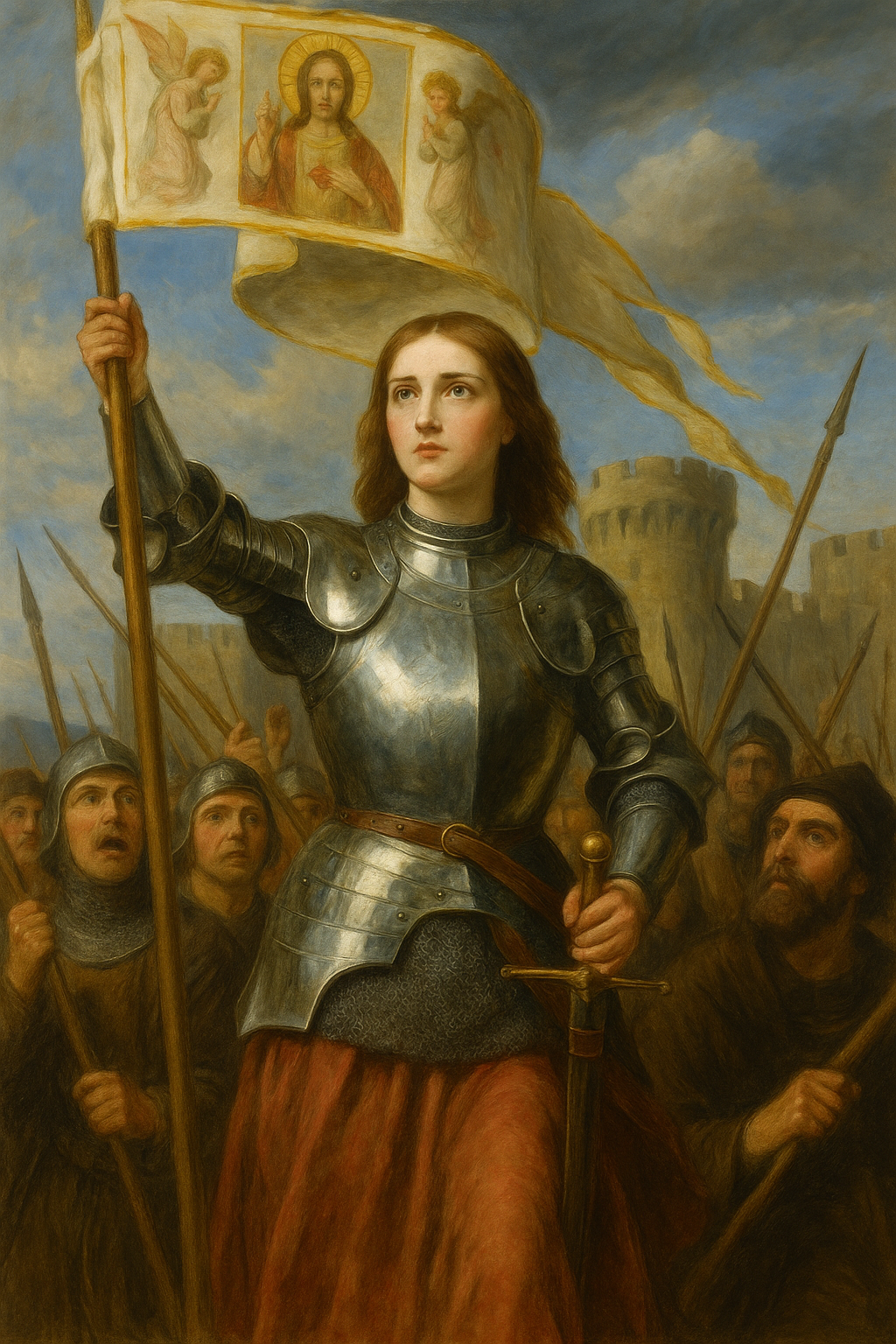
On May 30, the Catholic Church honors Saint Joan of Arc, a young heroine of France, martyr, and patron of patriotic virtue. Her life combines mystical vision, national mission, and deep spiritual devotion, making her a timeless symbol of courage and holiness.
Historical Background and Vocation
Joan of Arc was born in 1412 in Domrémy, eastern France, to a peasant family. Her childhood was overshadowed by the Hundred Years’ War between France and England. At the age of 13, she began to hear "voices" — visions of Saint Michael the Archangel, Saint Catherine, and Saint Margaret, calling her to liberate France and guide the dauphin Charles to his coronation.
Despite her humble background, Joan approached military leaders and eventually gained the trust of the dauphin. In 1429, she led the liberation of Orléans and played a pivotal role in the coronation of Charles VII in Reims.
Trial and Martyrdom
In 1430, Joan was captured by the Burgundians and handed over to the English. She was put on trial for heresy. The charges focused on her wearing of male clothing, her claim of divine guidance, and defiance of Church authorities.
On May 30, 1431, Joan of Arc was burned at the stake in Rouen. Her last words were prayers to Jesus. She died holding a crucifix and forgiving her accusers. Her conviction was later overturned in 1456 in a retrial that declared her innocent.
Canonization and Legacy
Joan of Arc was canonized in 1920 by Pope Benedict XV. She is now a national heroine of France, patroness of soldiers, women, and the wrongly accused. Her life continues to inspire believers, human rights defenders, and all who fight for justice.