September 27 - Feast of the Finding of the Honest and Life-Giving Cross of the Lord
27 September 2020
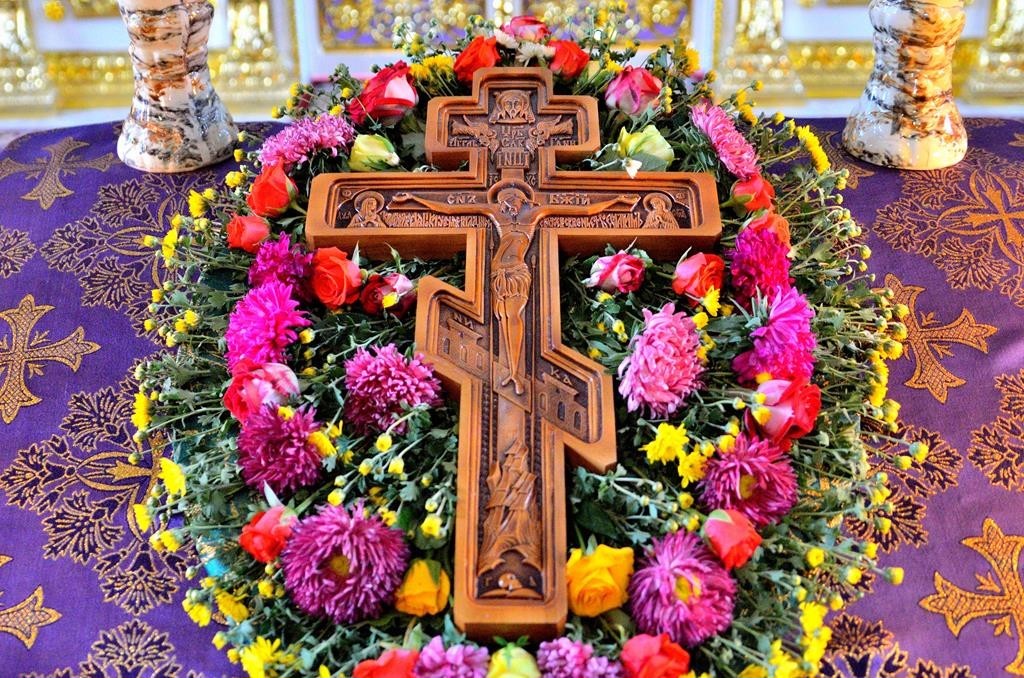
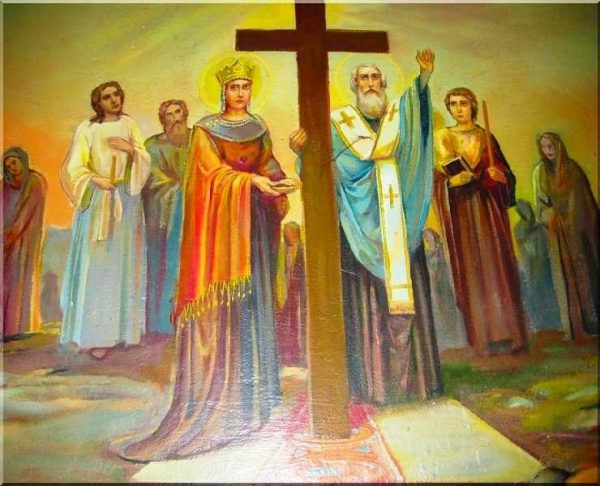
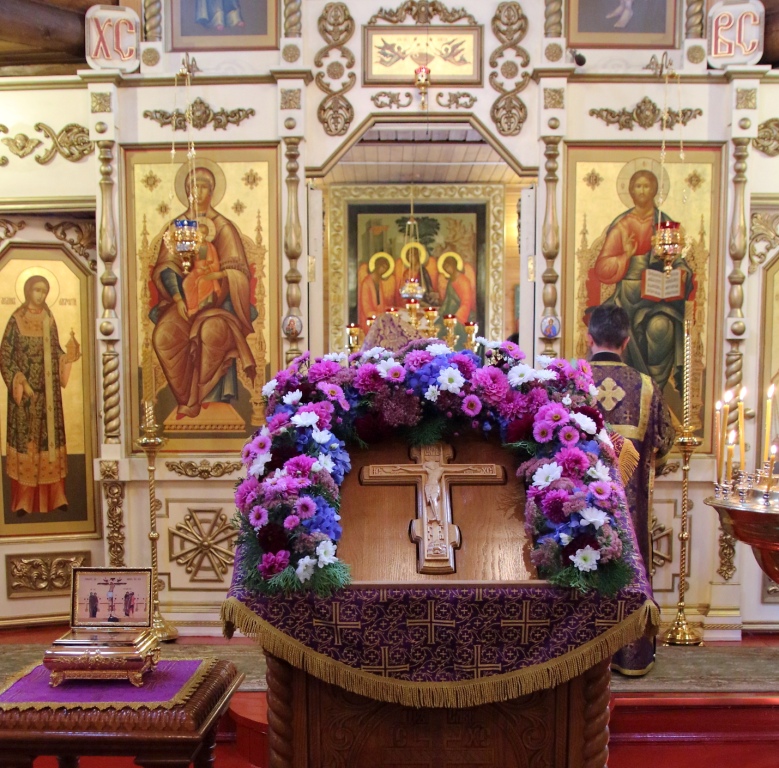
The Exaltation of the Cross occupies a special place in the series of Christian holidays. Its celebration began to be performed by the Church not years or centuries later, but from the very day when it happened in 326 AD. Царица Елена и Иерусалимский епископ Макарий воздвигают Истинный Крест As you know, Jerusalem in 70 was completely destroyed by the Roman Emperor Titus. The view of Mount Golgotha, the place of the suffering and death of the Lord Jesus Christ, has also changed. According to the testimony of Eusebius, the cave in which the Savior of the world was buried and resurrected on the third day was covered with stones and rubbish, the mound was paved with stones - and the altar of Venus was erected on top. Later, in the second century, the emperor Hadrian built a new city on the site of the Holy City - thus, landmarks were also lost, by which it would be possible to calculate where the sacred places for Christians are located. Nevertheless, the knowledge of their location was carefully passed on by Christians from generation to generation. Equal to the Apostles Emperor Constantine, who made Christianity the state religion of the Roman Empire, and his mother, Queen Helen 'align =' left '> In the IV century, Emperor Constantine the Great united a gigantic empire that was ready to collapse and stopped the persecution of Christians that had become customary. on the eve of the decisive battle, the emperor saw the cross as a sign of the impending victory over the enemy.Constantine really defeated the enemy, after which he sent his mother, Queen Helen, to Jerusalem, instructing her to find the True Cross of Christ. the instruments of the Passion of Christ after the execution of the Savior were thrown into a pit very close to Golgotha and ordered to dig up the entire mountain The mother of Emperor Constantine was determined to dig up the entire Mount of Golgotha in search of a sacred relic. Soon after the beginning of the exploration in Jerusalem, the locals pointed the Jerusalem Bishop Macarius and Queen Helena to a hill crowned with a pagan sanctuary. The temple was destroyed, the hill was demolished, after which the cave of the burial and the place where the Romans threw the crosses of the Savior and the two robbers crucified next to him were opened to the eyes of the people. At the same time, not one, but all three crosses were found. Russian icon 'align =' left '> But how to understand which of the three found crosses is needed? The intervention of the Lord God helped to do this. According to the VI century historian Theophanes of Byzantium, a patient nearby touched one of the crosses and was immediately healed. and became an indication of which of the three crosses was genuine.To the great rejoicing of all Christians living in Jerusalem, the Cross of the Lord was erected high above the place of discovery - so that everyone could share the joy of its miraculous finding.Here, Queen Helena ordered to build a Christian house of prayer, which later became known as the Church of the Holy Sepulcher, and the very day on which these events took place has since then been annually celebrated as the celebration of the Finding of the Honorable and Life-giving Cross of the Lord - or the Exaltation of the Cross. В день Крестовоздвижения крест, лежащий на аналое посреди храма, принято украшать In Russia, the holiday of the Exaltation of the Cross was popularly called 'Stavrov Day' - from the Greek word 'stavros', cross. On this great holiday, it was customary to processions of the cross around cities and villages: their participants incessantly prayed, asking the Lord to protect all residents settlement from wars, diseases and troubles. In rural areas, they walked around the fields in the same way, praying for a safe harvest for the next year. Pious villagers put the image of a cross on the door lintels and barn gates, and in the manger they put rowan branches folded crosswise. The installation of crosses on newly built churches and chapels in Russia was also tried, whenever possible, to coincide with the Feast of the Exaltation of the Cross. There were many signs associated with this day and made it possible to understand what the weather would be like. So the north wind blowing that day made it known that the next summer would be warm. Frosts in the morning indicated the imminent onset of winter, and cool weather during the day indicated that spring would come early.
September 27 - Feast of the Finding of the Honest and Life-Giving Cross of the LordSeptember 27 - Feast of the Finding of the Honest and Life-Giving Cross of the Lord The Exaltation of the Cross occupies a special place in the series of Christian holidays. Its celebration began to be performed by the Church not years or centuries later, but from the very day when it happened in 326 AD. Царица Елена и Иерусалимский епископ Макарий воздвигают Истинный Крест As you know, Jerusalem in 70 was completely destroyed by the Roman Emperor Titus. The view of Mount Golgotha, the place of the suffering and death of the Lord Jesus Christ, has also changed. According to the testimony of Eusebius, the cave in which the Savior of the world was buried and resurrected on the third day was covered with stones and rubbish, the mound was paved with stones - and the altar of Venus was erected on top. Later, in the second century, the emperor Hadrian built a new city on the site of the Holy City - thus, landmarks were also lost, by which it would be possible to calculate where the sacred places for Christians are located. Nevertheless, the knowledge of their location was carefully passed on by Christians from generation to generation. Equal to the Apostles Emperor Constantine, who made Christianity the state religion of the Roman Empire, and his mother, Queen Helen 'align =' left '> In the IV century, Emperor Constantine the Great united a gigantic empire that was ready to collapse and stopped the persecution of Christians that had become customary. on the eve of the decisive battle, the emperor saw the cross as a sign of the impending victory over the enemy.Constantine really defeated the enemy, after which he sent his mother, Queen Helen, to Jerusalem, instructing her to find the True Cross of Christ. the instruments of the Passion of Christ after the execution of the Savior were thrown into a pit very close to Golgotha and ordered to dig up the entire mountain The mother of Emperor Constantine was determined to dig up the entire Mount of Golgotha in search of a sacred relic. Soon after the beginning of the exploration in Jerusalem, the locals pointed the Jerusalem Bishop Macarius and Queen Helena to a hill crowned with a pagan sanctuary. The temple was destroyed, the hill was demolished, after which the cave of the burial and the place where the Romans threw the crosses of the Savior and the two robbers crucified next to him were opened to the eyes of the people. At the same time, not one, but all three crosses were found. Russian icon 'align =' left '> But how to understand which of the three found crosses is needed? The intervention of the Lord God helped to do this. According to the VI century historian Theophanes of Byzantium, a patient nearby touched one of the crosses and was immediately healed. and became an indication of which of the three crosses was genuine.To the great rejoicing of all Christians living in Jerusalem, the Cross of the Lord was erected high above the place of discovery - so that everyone could share the joy of its miraculous finding.Here, Queen Helena ordered to build a Christian house of prayer, which later became known as the Church of the Holy Sepulcher, and the very day on which these events took place has since then been annually celebrated as the celebration of the Finding of the Honorable and Life-giving Cross of the Lord - or the Exaltation of the Cross. В день Крестовоздвижения крест, лежащий на аналое посреди храма, принято украшать In Russia, the holiday of the Exaltation of the Cross was popularly called 'Stavrov Day' - from the Greek word 'stavros', cross. On this great holiday, it was customary to processions of the cross around cities and villages: their participants incessantly prayed, asking the Lord to protect all residents settlement from wars, diseases and troubles. In rural areas, they walked around the fields in the same way, praying for a safe harvest for the next year. Pious villagers put the image of a cross on the door lintels and barn gates, and in the manger they put rowan branches folded crosswise. The installation of crosses on newly built churches and chapels in Russia was also tried, whenever possible, to coincide with the Feast of the Exaltation of the Cross. There were many signs associated with this day and made it possible to understand what the weather would be like. So the north wind blowing that day made it known that the next summer would be warm. Frosts in the morning indicated the imminent onset of winter, and cool weather during the day indicated that spring would come early.Свеча Иерусалима -en
The Exaltation of the Cross occupies a special place in the series of Christian holidays. Its celebration began to be performed by the Church not years or centuries later, but from the very day when it happened in 326 AD. Царица Елена и Иерусалимский епископ Макарий воздвигают Истинный Крест As you know, Jerusalem in 70 was completely destroyed by the Roman Emperor Titus. The view of Mount Golgotha, the place of the suffering and death of the Lord Jesus Christ, has also changed. According to the testimony of Eusebius, the cave in which the Savior of the world was buried and resurrected on the third day was covered with stones and rubbish, the mound was paved with stones - and the altar of Venus was erected on top. Later, in the second century, the emperor Hadrian built a new city on the site of the Holy City - thus, landmarks were also lost, by which it would be possible to calculate where the sacred places for Christians are located. Nevertheless, the knowledge of their location was carefully passed on by Christians from generation to generation. Equal to the Apostles Emperor Constantine, who made Christianity the state religion of the Roman Empire, and his mother, Queen Helen 'align =' left '> In the IV century, Emperor Constantine the Great united a gigantic empire that was ready to collapse and stopped the persecution of Christians that had become customary. on the eve of the decisive battle, the emperor saw the cross as a sign of the impending victory over the enemy.Constantine really defeated the enemy, after which he sent his mother, Queen Helen, to Jerusalem, instructing her to find the True Cross of Christ. the instruments of the Passion of Christ after the execution of the Savior were thrown into a pit very close to Golgotha and ordered to dig up the entire mountain The mother of Emperor Constantine was determined to dig up the entire Mount of Golgotha in search of a sacred relic. Soon after the beginning of the exploration in Jerusalem, the locals pointed the Jerusalem Bishop Macarius and Queen Helena to a hill crowned with a pagan sanctuary. The temple was destroyed, the hill was demolished, after which the cave of the burial and the place where the Romans threw the crosses of the Savior and the two robbers crucified next to him were opened to the eyes of the people. At the same time, not one, but all three crosses were found. Russian icon 'align =' left '> But how to understand which of the three found crosses is needed? The intervention of the Lord God helped to do this. According to the VI century historian Theophanes of Byzantium, a patient nearby touched one of the crosses and was immediately healed. and became an indication of which of the three crosses was genuine.To the great rejoicing of all Christians living in Jerusalem, the Cross of the Lord was erected high above the place of discovery - so that everyone could share the joy of its miraculous finding.Here, Queen Helena ordered to build a Christian house of prayer, which later became known as the Church of the Holy Sepulcher, and the very day on which these events took place has since then been annually celebrated as the celebration of the Finding of the Honorable and Life-giving Cross of the Lord - or the Exaltation of the Cross. В день Крестовоздвижения крест, лежащий на аналое посреди храма, принято украшать In Russia, the holiday of the Exaltation of the Cross was popularly called 'Stavrov Day' - from the Greek word 'stavros', cross. On this great holiday, it was customary to processions of the cross around cities and villages: their participants incessantly prayed, asking the Lord to protect all residents settlement from wars, diseases and troubles. In rural areas, they walked around the fields in the same way, praying for a safe harvest for the next year. Pious villagers put the image of a cross on the door lintels and barn gates, and in the manger they put rowan branches folded crosswise. The installation of crosses on newly built churches and chapels in Russia was also tried, whenever possible, to coincide with the Feast of the Exaltation of the Cross. There were many signs associated with this day and made it possible to understand what the weather would be like. So the north wind blowing that day made it known that the next summer would be warm. Frosts in the morning indicated the imminent onset of winter, and cool weather during the day indicated that spring would come early.