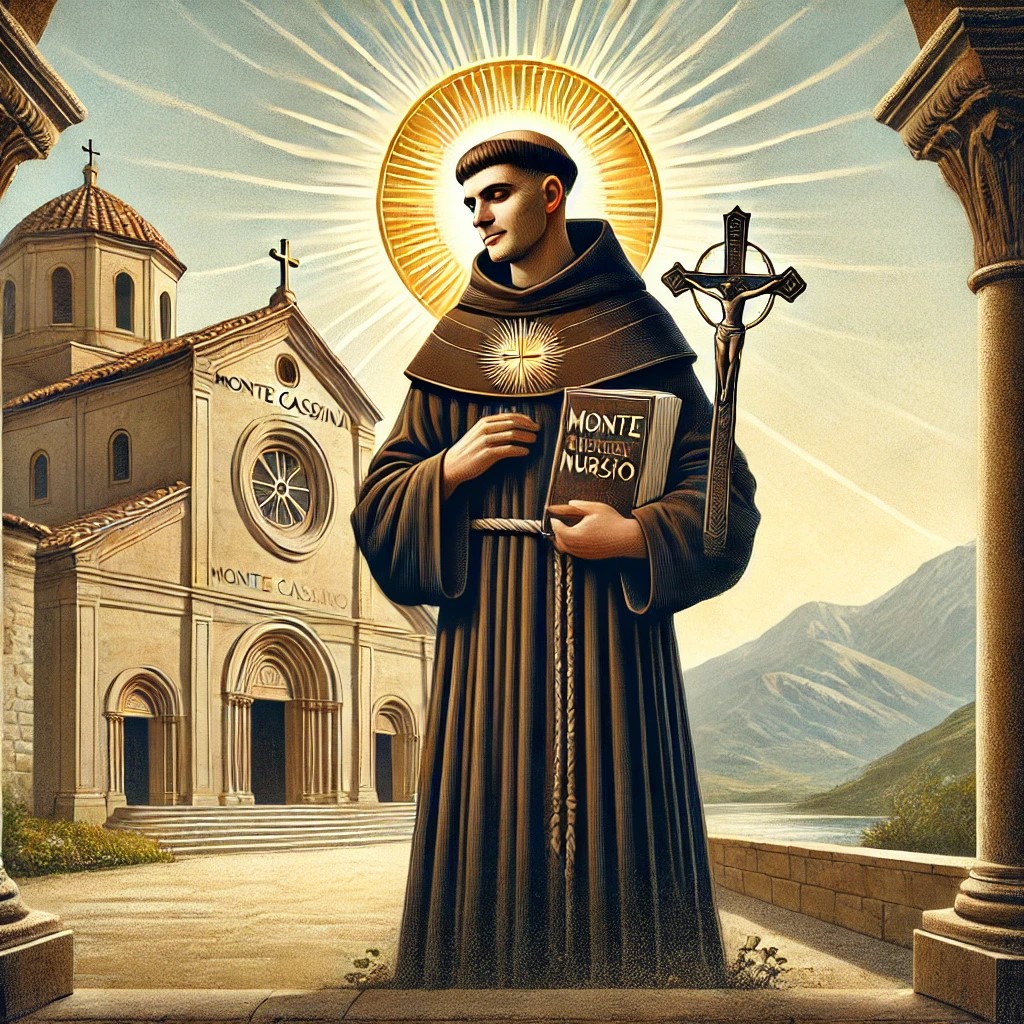
March 21: Feast of Saint Benedict of Nursia – Father of Western Monasticism

21 марта: Память Святого Бенедикта Нурсийского — Отца Западного Монашества

On March 21, the Church commemorates Saint Benedict of Nursia, the founder of Western monasticism and the author of the famous Rule of Saint Benedict.

Life of Saint Benedict

Saint Benedict was born around 480 AD in Nursia, Italy. In his youth, he withdrew to Subiaco to live in solitude and strict asceticism. Later, he founded the Monte Cassino monastery, which became a model for monastic life.

His rule was based on the principles of “ora et labora” — “pray and work.” It combined prayer, obedience, manual labor, spiritual leadership, and brotherly love.

Impact and Legacy

Saint Benedict had a profound influence on the spiritual and cultural life of Europe. His rule became the foundation for many monastic orders. In 1964, Pope Paul VI declared him the Patron of Europe.

Relevance Today

Saint Benedict is an example of how inner discipline, prayer, and labor can lead to a deeper relationship with God. His spiritual legacy remains highly relevant in our modern world, where peace, structure, and meaning are so greatly needed.

Share:
March 21: Feast of Saint Benedict of Nursia – Father of Western Monasticism March 21: Feast of Saint Benedict of Nursia – Father of Western Monasticism On March 21, the Church commemorates Saint Benedict of Nursia, the founder of Western monasticism and the author of the famous Rule of Saint Benedict. Life of Saint Benedict Saint Benedict was born around 480 AD in Nursia, Italy. In his youth, he withdrew to Subiaco to live in solitude and strict asceticism. Later, he founded the Monte Cassino monastery, which became a model for monastic life. His rule was based on the principles of “ora et labora” — “pray and work.” It combined prayer, obedience, manual labor, spiritual leadership, and brotherly love. Impact and Legacy Saint Benedict had a profound influence on the spiritual and cultural life of Europe. His rule became the foundation for many monastic orders. In 1964, Pope Paul VI declared him the Patron of Europe. Relevance Today Saint Benedict is an example of how inner discipline, prayer, and labor can lead to a deeper relationship with God. His spiritual legacy remains highly relevant in our modern world, where peace, structure, and meaning are so greatly needed.
On March 21, the Church commemorates Saint Benedict of Nursia, the founder of Western monasticism and the author of the famous Rule of Saint Benedict. Life of Saint Benedict Saint Benedict was born around 480 AD in Nursia, Italy. In his youth, he withdrew to Subiaco to live in solitude and strict asceticism. Later, he founded the Monte Cassino monastery, which became a model for monastic life. His rule was based on the principles of “ora et labora” — “pray and work.” It combined prayer, obedience, manual labor, spiritual leadership, and brotherly love. Impact and Legacy Saint Benedict had a profound influence on the spiritual and cultural life of Europe. His rule became the foundation for many monastic orders. In 1964, Pope Paul VI declared him the Patron of Europe. Relevance Today Saint Benedict is an example of how inner discipline, prayer, and labor can lead to a deeper relationship with God. His spiritual legacy remains highly relevant in our modern world, where peace, structure, and meaning are so greatly needed.