Mysterious medieval fresco from the monastery temple
16 Oktobar 2020
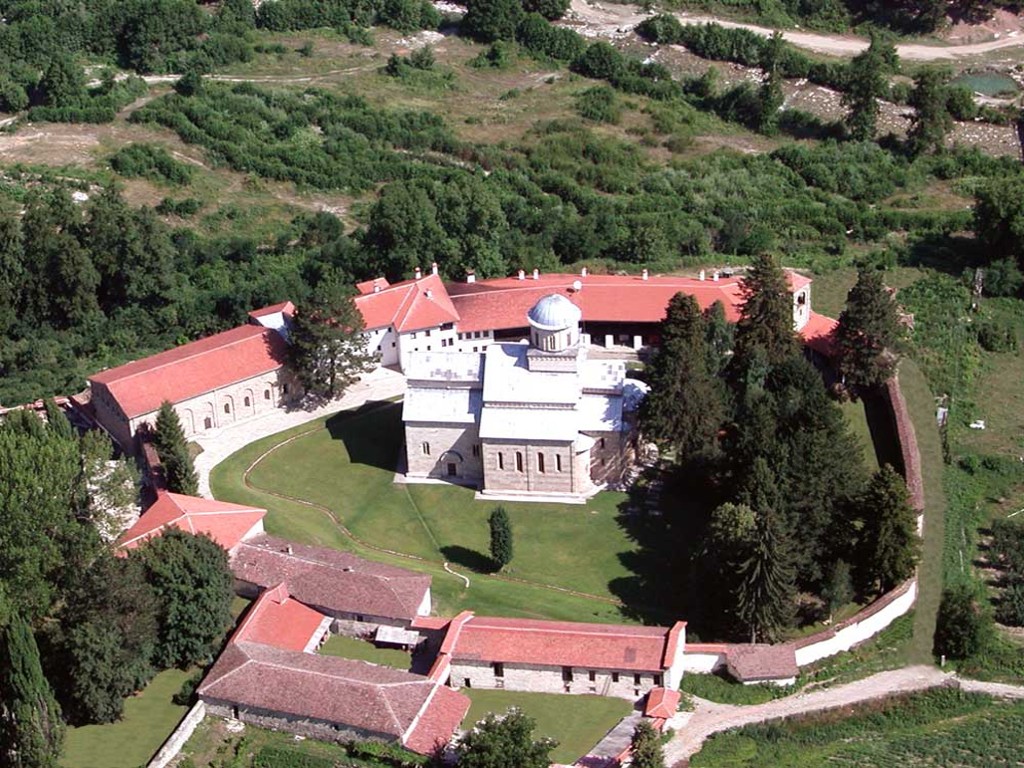
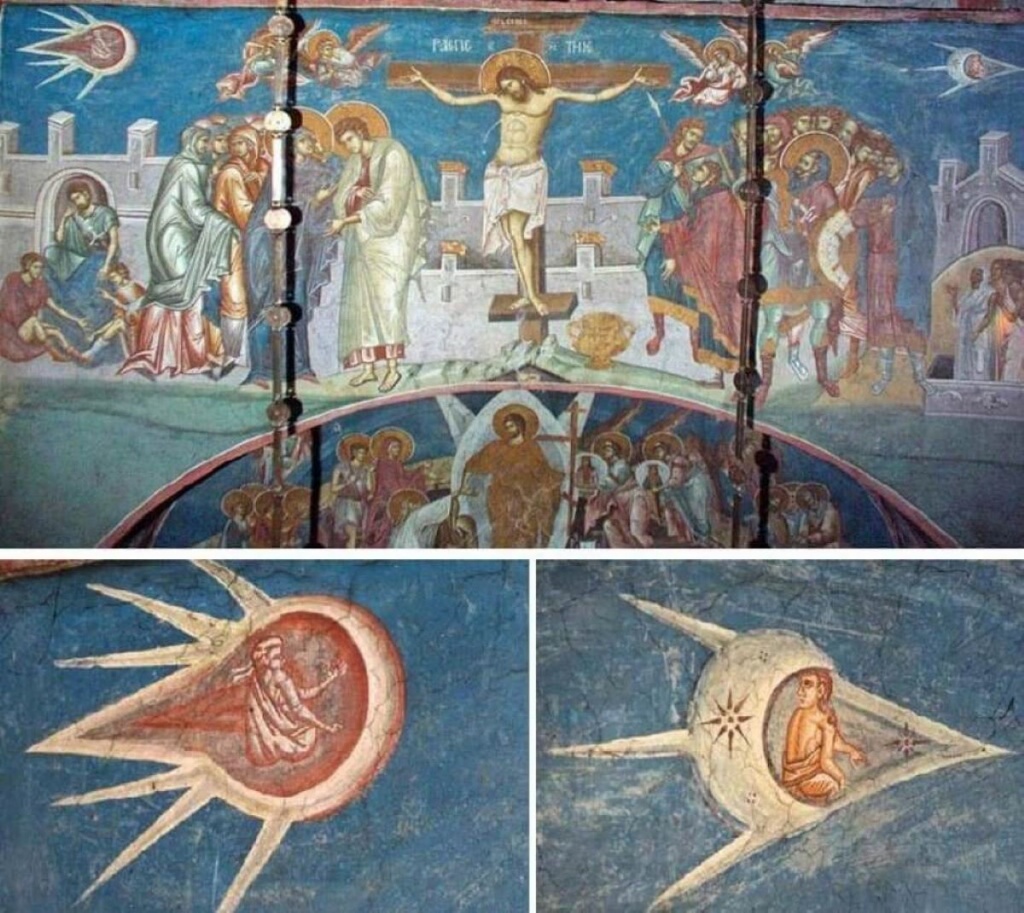
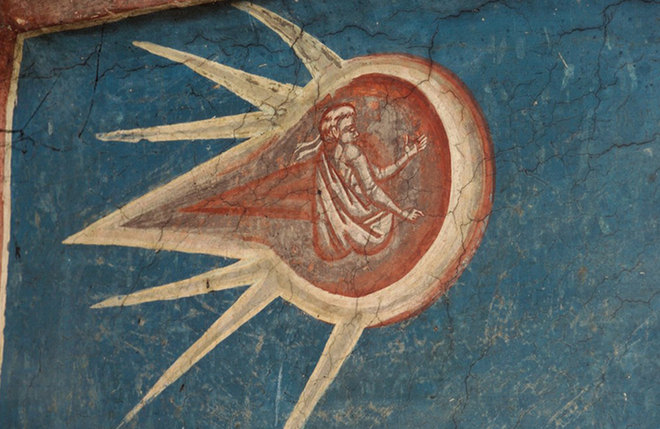
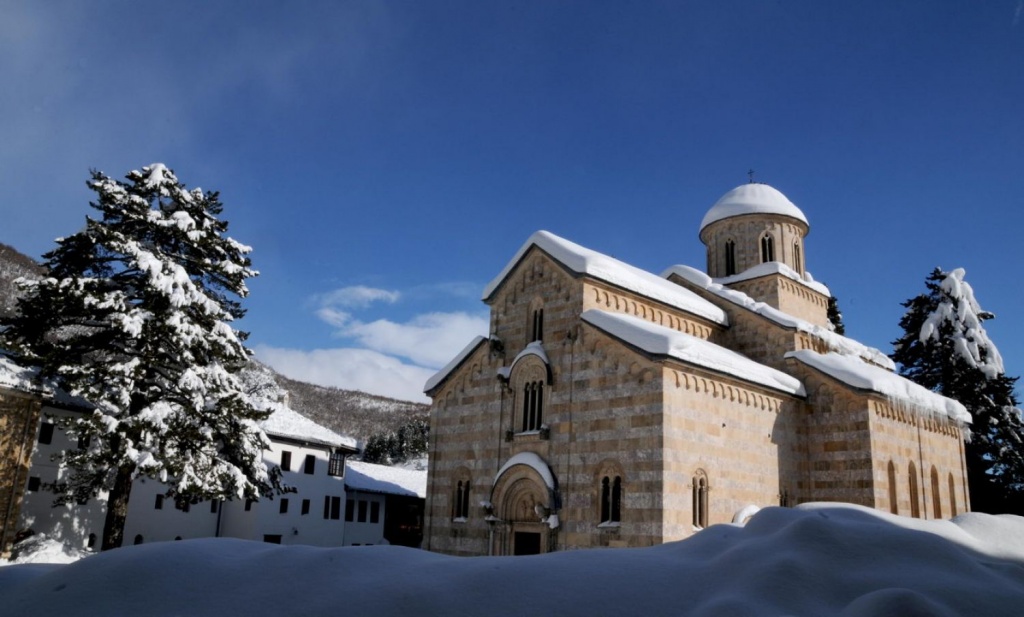
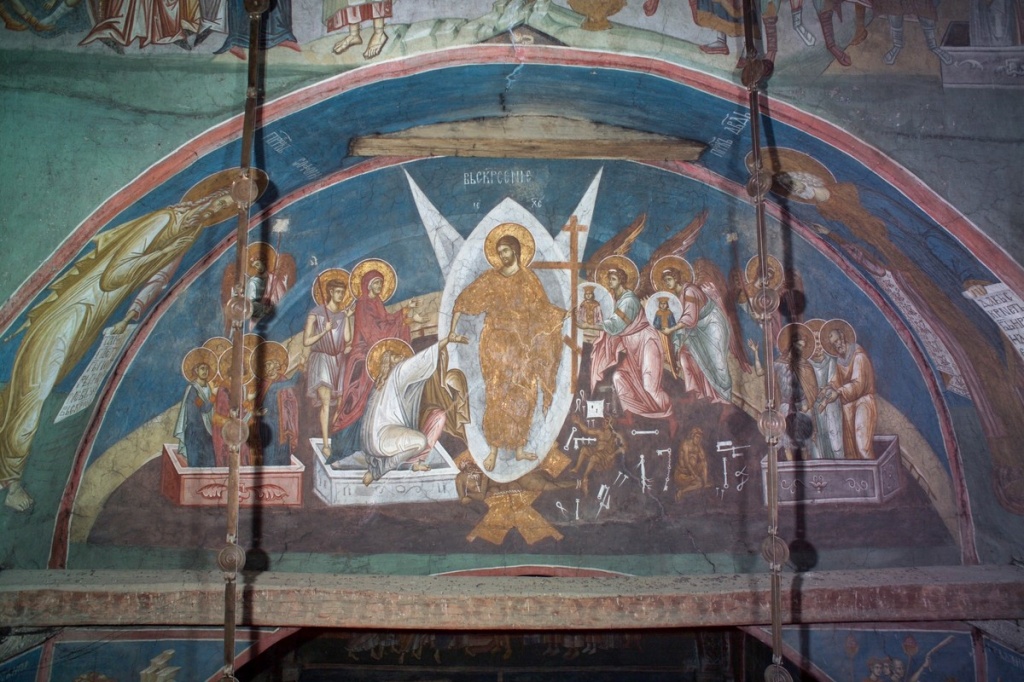
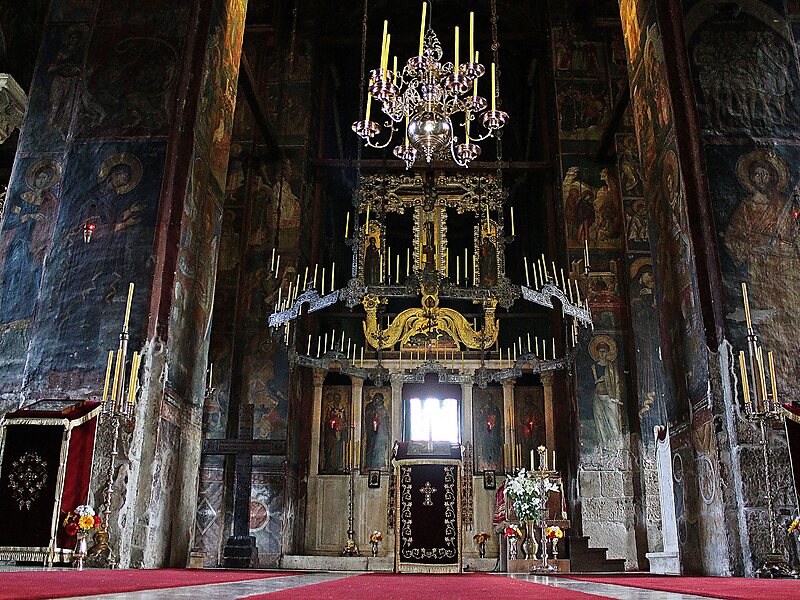
There are many impressive monuments of church history on the territory of Serbia, invariably attracting the attention of connoisseurs of spiritual culture and art. The name of one of them, the Vysokie Decany monastery in Kosovo, became known a little over half a century ago to a very wide circle of people around the world, including even those who are far from Orthodoxy and Christian painting in general. It's all about one unusual fresco in the monastery church of Christ the Almighty, which depicts the crucifixion of the Lord Jesus Christ. Фреска Распятия и два её фрагмента крупным планом Rather, even in one of the details of this fresco, which in 1964 drew attention to the student of the Yugoslav Art Academy Alexander Paunovich. The student was interested in Byzantine church painting. In the monastery church, Alexander shot several films using a camera with a telephoto lens. Having developed them at home and printed photographs, the student armed himself with a powerful magnifying glass and slowly began to examine the photographs. Gone in one of the photographs - the one in which the crucifixion fresco was captured - literally shocked him. As well as the editor of the magazine 'Light', to whom the student showed the picture the next day. Один из двух объектов, ведомый Considering the interest of the generation of the 60s in space and everything connected with it, the editor of the Yugoslavian magazine suddenly found himself in the hands of a real sensation on a global scale. The pilot of the aircraft on the right side of the fresco holds one of his hands as if on the steering wheel - and at the same time looks back at his pursuer or follower; there are side lights or something like that on the aircraft body. The figure on the right side of the frescoХрам Христа Вседержителя в Высоких Дечанах As you would expect, the publication in the Yugoslavian magazine was followed by many others, in publications around the world. Since of all the countries of the socialist camp, Yugoslavia was the most open country, many people from different countries rushed to Vysokie Decani to see the unusual fresco with their own eyes. And, of course, scientists. Analysis of paint and plaster samples showed: images are not fake, not remake; they, like other fragments of the painting, were made more than six centuries ago. Фреска Воскресение, расположенная чуть ниже By the way, it was the scientists who paid attention to the fresco located below the image that caused a stir. On the scene of the Resurrection (as indicated in the image, although the author writes, rather, Descent into Hell), the Savior is depicted as if inside a cocoon with triangular 'ears' on the sides - so a modern child, drawing a rocket or an aerial bomb, would depict its stabilizers. The monastic brethren reacted phlegmatic to the excitement around the images in the main church of the monastery. The monks said that the matter was not at all in the details - but that what the visiting laymen mistake for flying machines is a symbolic image of the sun and the moon: according to legend, during the crucifixion of the Lord Jesus Christ, a solar eclipse and an earthquake occurred, hence the supposedly clamped ears of the angels on the fresco. Интерьер главного храма святой обители с византийскими росписями Eclipse accompanied by an earthquake in the eighteenth year the reign of the Roman emperor Tiberius really was - which is confirmed by many chroniclers who lived then. However, this was not an ordinary eclipse, in which the moon obscures the sun, but some kind of mystical phenomenon. The crucifixion happened before the Jewish Passover, which is celebrated on the first spring full moon - at this time, a classic solar eclipse is simply not possible - which means that the image of the moon on the fresco is unjustified. That is why the image of the eclipse on the image of the crucifixion of the Lord Jesus Christ is not known in Christian iconography. The authorship of the unusual fresco also remains a mystery. Several masters left autographs on the walls of the holy monastery in Vysokie Decani: 'Longin', 'Srdj', 'Goldsmith Conde Vuk' ... small seven hundred years later, it will hardly succeed. An even greater mystery is what kind of event inspired the icon painter with images that our contemporary reads as a flight on controlled aircraft. It is possible that people who lived in the middle of the XIV century perceived these parts of the painting in the temple in a completely different way from us.
Mysterious medieval fresco from the monastery templeMysterious medieval fresco from the monastery temple There are many impressive monuments of church history on the territory of Serbia, invariably attracting the attention of connoisseurs of spiritual culture and art. The name of one of them, the Vysokie Decany monastery in Kosovo, became known a little over half a century ago to a very wide circle of people around the world, including even those who are far from Orthodoxy and Christian painting in general. It's all about one unusual fresco in the monastery church of Christ the Almighty, which depicts the crucifixion of the Lord Jesus Christ. Фреска Распятия и два её фрагмента крупным планом Rather, even in one of the details of this fresco, which in 1964 drew attention to the student of the Yugoslav Art Academy Alexander Paunovich. The student was interested in Byzantine church painting. In the monastery church, Alexander shot several films using a camera with a telephoto lens. Having developed them at home and printed photographs, the student armed himself with a powerful magnifying glass and slowly began to examine the photographs. Gone in one of the photographs - the one in which the crucifixion fresco was captured - literally shocked him. As well as the editor of the magazine 'Light', to whom the student showed the picture the next day. Один из двух объектов, ведомый Considering the interest of the generation of the 60s in space and everything connected with it, the editor of the Yugoslavian magazine suddenly found himself in the hands of a real sensation on a global scale. The pilot of the aircraft on the right side of the fresco holds one of his hands as if on the steering wheel - and at the same time looks back at his pursuer or follower; there are side lights or something like that on the aircraft body. The figure on the right side of the frescoХрам Христа Вседержителя в Высоких Дечанах As you would expect, the publication in the Yugoslavian magazine was followed by many others, in publications around the world. Since of all the countries of the socialist camp, Yugoslavia was the most open country, many people from different countries rushed to Vysokie Decani to see the unusual fresco with their own eyes. And, of course, scientists. Analysis of paint and plaster samples showed: images are not fake, not remake; they, like other fragments of the painting, were made more than six centuries ago. Фреска Воскресение, расположенная чуть ниже By the way, it was the scientists who paid attention to the fresco located below the image that caused a stir. On the scene of the Resurrection (as indicated in the image, although the author writes, rather, Descent into Hell), the Savior is depicted as if inside a cocoon with triangular 'ears' on the sides - so a modern child, drawing a rocket or an aerial bomb, would depict its stabilizers. The monastic brethren reacted phlegmatic to the excitement around the images in the main church of the monastery. The monks said that the matter was not at all in the details - but that what the visiting laymen mistake for flying machines is a symbolic image of the sun and the moon: according to legend, during the crucifixion of the Lord Jesus Christ, a solar eclipse and an earthquake occurred, hence the supposedly clamped ears of the angels on the fresco. Интерьер главного храма святой обители с византийскими росписями Eclipse accompanied by an earthquake in the eighteenth year the reign of the Roman emperor Tiberius really was - which is confirmed by many chroniclers who lived then. However, this was not an ordinary eclipse, in which the moon obscures the sun, but some kind of mystical phenomenon. The crucifixion happened before the Jewish Passover, which is celebrated on the first spring full moon - at this time, a classic solar eclipse is simply not possible - which means that the image of the moon on the fresco is unjustified. That is why the image of the eclipse on the image of the crucifixion of the Lord Jesus Christ is not known in Christian iconography. The authorship of the unusual fresco also remains a mystery. Several masters left autographs on the walls of the holy monastery in Vysokie Decani: 'Longin', 'Srdj', 'Goldsmith Conde Vuk' ... small seven hundred years later, it will hardly succeed. An even greater mystery is what kind of event inspired the icon painter with images that our contemporary reads as a flight on controlled aircraft. It is possible that people who lived in the middle of the XIV century perceived these parts of the painting in the temple in a completely different way from us.Свеча Иерусалима -sr
There are many impressive monuments of church history on the territory of Serbia, invariably attracting the attention of connoisseurs of spiritual culture and art. The name of one of them, the Vysokie Decany monastery in Kosovo, became known a little over half a century ago to a very wide circle of people around the world, including even those who are far from Orthodoxy and Christian painting in general. It's all about one unusual fresco in the monastery church of Christ the Almighty, which depicts the crucifixion of the Lord Jesus Christ. Фреска Распятия и два её фрагмента крупным планом Rather, even in one of the details of this fresco, which in 1964 drew attention to the student of the Yugoslav Art Academy Alexander Paunovich. The student was interested in Byzantine church painting. In the monastery church, Alexander shot several films using a camera with a telephoto lens. Having developed them at home and printed photographs, the student armed himself with a powerful magnifying glass and slowly began to examine the photographs. Gone in one of the photographs - the one in which the crucifixion fresco was captured - literally shocked him. As well as the editor of the magazine 'Light', to whom the student showed the picture the next day. Один из двух объектов, ведомый Considering the interest of the generation of the 60s in space and everything connected with it, the editor of the Yugoslavian magazine suddenly found himself in the hands of a real sensation on a global scale. The pilot of the aircraft on the right side of the fresco holds one of his hands as if on the steering wheel - and at the same time looks back at his pursuer or follower; there are side lights or something like that on the aircraft body. The figure on the right side of the frescoХрам Христа Вседержителя в Высоких Дечанах As you would expect, the publication in the Yugoslavian magazine was followed by many others, in publications around the world. Since of all the countries of the socialist camp, Yugoslavia was the most open country, many people from different countries rushed to Vysokie Decani to see the unusual fresco with their own eyes. And, of course, scientists. Analysis of paint and plaster samples showed: images are not fake, not remake; they, like other fragments of the painting, were made more than six centuries ago. Фреска Воскресение, расположенная чуть ниже By the way, it was the scientists who paid attention to the fresco located below the image that caused a stir. On the scene of the Resurrection (as indicated in the image, although the author writes, rather, Descent into Hell), the Savior is depicted as if inside a cocoon with triangular 'ears' on the sides - so a modern child, drawing a rocket or an aerial bomb, would depict its stabilizers. The monastic brethren reacted phlegmatic to the excitement around the images in the main church of the monastery. The monks said that the matter was not at all in the details - but that what the visiting laymen mistake for flying machines is a symbolic image of the sun and the moon: according to legend, during the crucifixion of the Lord Jesus Christ, a solar eclipse and an earthquake occurred, hence the supposedly clamped ears of the angels on the fresco. Интерьер главного храма святой обители с византийскими росписями Eclipse accompanied by an earthquake in the eighteenth year the reign of the Roman emperor Tiberius really was - which is confirmed by many chroniclers who lived then. However, this was not an ordinary eclipse, in which the moon obscures the sun, but some kind of mystical phenomenon. The crucifixion happened before the Jewish Passover, which is celebrated on the first spring full moon - at this time, a classic solar eclipse is simply not possible - which means that the image of the moon on the fresco is unjustified. That is why the image of the eclipse on the image of the crucifixion of the Lord Jesus Christ is not known in Christian iconography. The authorship of the unusual fresco also remains a mystery. Several masters left autographs on the walls of the holy monastery in Vysokie Decani: 'Longin', 'Srdj', 'Goldsmith Conde Vuk' ... small seven hundred years later, it will hardly succeed. An even greater mystery is what kind of event inspired the icon painter with images that our contemporary reads as a flight on controlled aircraft. It is possible that people who lived in the middle of the XIV century perceived these parts of the painting in the temple in a completely different way from us.