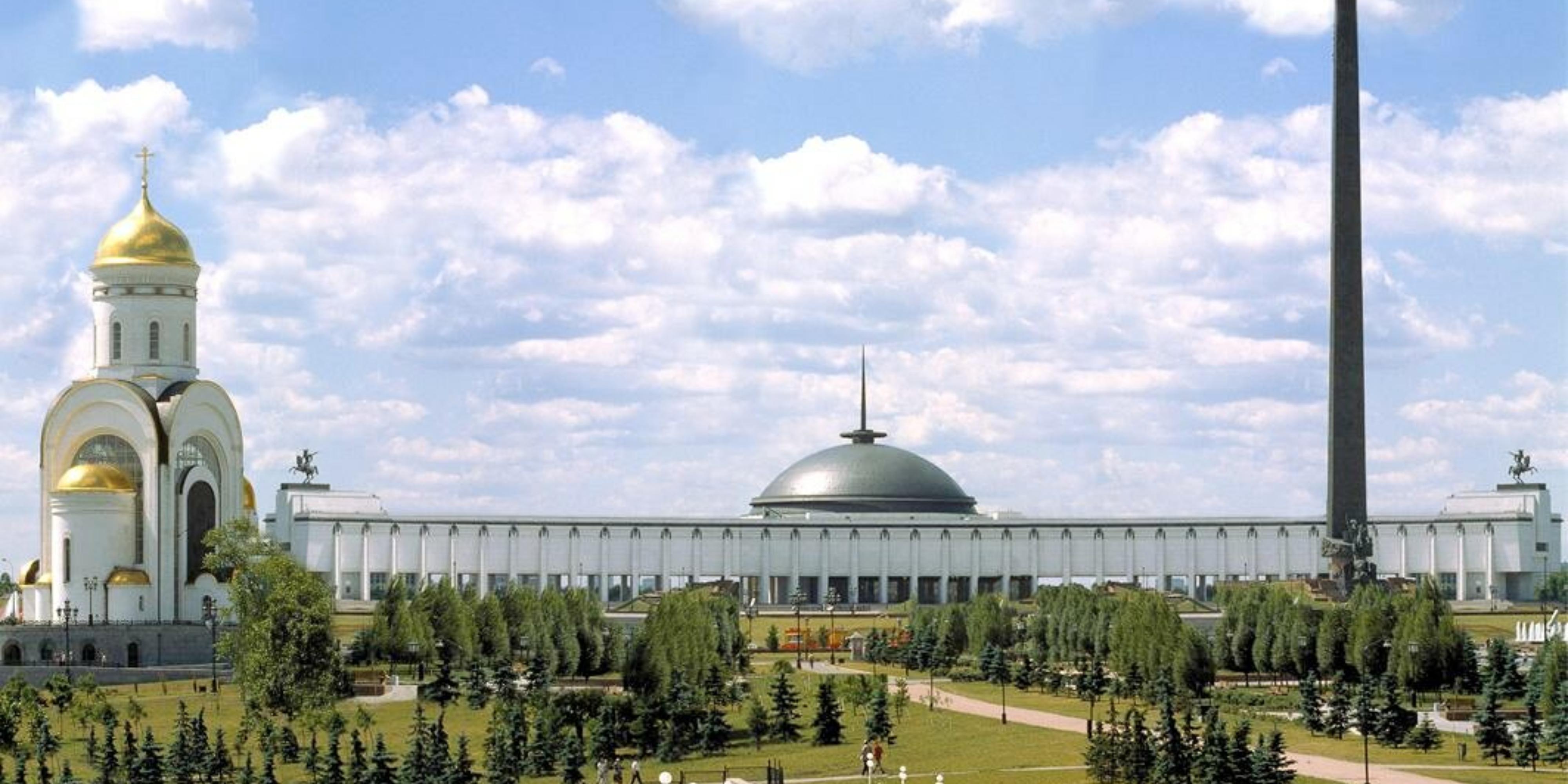
The 75th anniversary of the Victory, uniting both millions of believers and those who are just looking for their way to the Temple, is very soon. On the eve of it, it's time to remember the amazing icon pierced by a Nazi bayonet. On the eve of the holiday, many Orthodox resources recalled this image, which acquired a certain new, symbolic meaning; perhaps we will do it too.
Among the personal belongings and photographs kept in the museum, a special group is made up of those that tell about the activities of the Russian Orthodox Church at this dramatic time for it. This historical record applies not only to the ministry of bishops and priesthood, but also to the lives of ordinary lay believers. One of the relics of this kind is the list of the Kazan Icon of the Mother of God. Written in the century before last, small in size, with half-erased faces of the Queen of Heaven and the Divine Infant, he remembers the prayers of more than one generation of believers. The Great Patriotic War left its mark on the icon - and in the most literal sense.
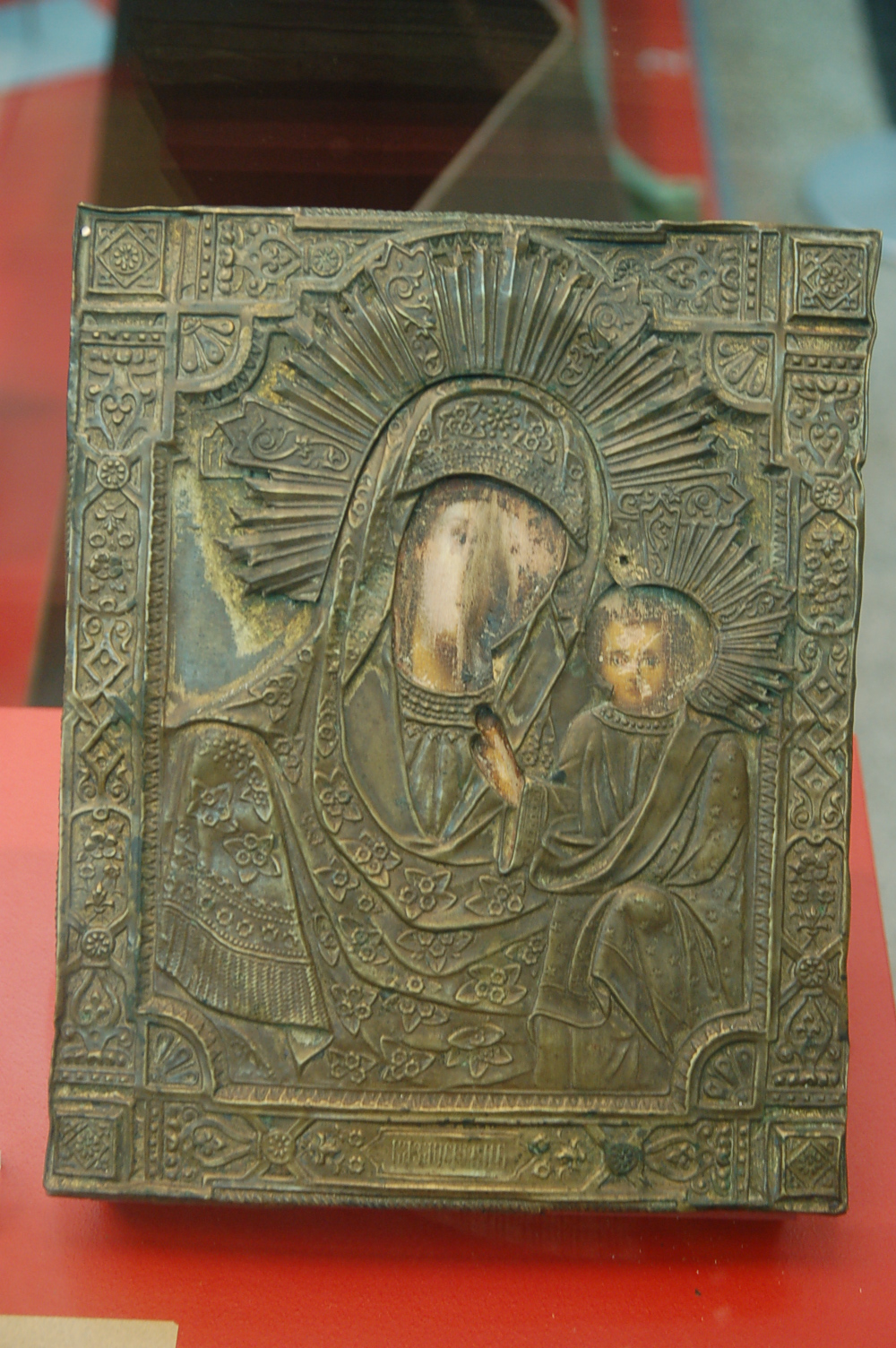
The further development of events is well known. 'Invasion of Twelve Tongues' reached the Volga, broke its teeth on the stronghold of Stalingrad and slowly, snapping, it became crawl westward, ingloriously ending its history in capitulated Berlin in May 1945. And the icon of the Queen of Heaven, pierced with a bayonet in the Kharkov region, survived, did not split and was kept in the family for another half century. The relic was donated to the Museum of the Great Patriotic War by Anna Filonenko's granddaughter, Svetlana Yuldasheva.
There are many other impressive exhibits associated with Russian Orthodoxy during the war years in the Victory Museum on Poklonnaya Hill. Among them - a cassock, a kamilavka and photographs of the author of 'Sketches of purulent surgery' - the priest Luka Krymsky (Voino-Yasenetsky), an outstanding doctor and church leader. There was a lot in his life: persecution for faith, prisons, exile, the exhausting work of a surgeon who saved hundreds of lives of wounded soldiers in an evacuation hospital in Krasnoyarsk. For the last time, Archbishop Luke was awarded the medal 'For Valiant Labor in the Great Patriotic War of 1941-1945.'
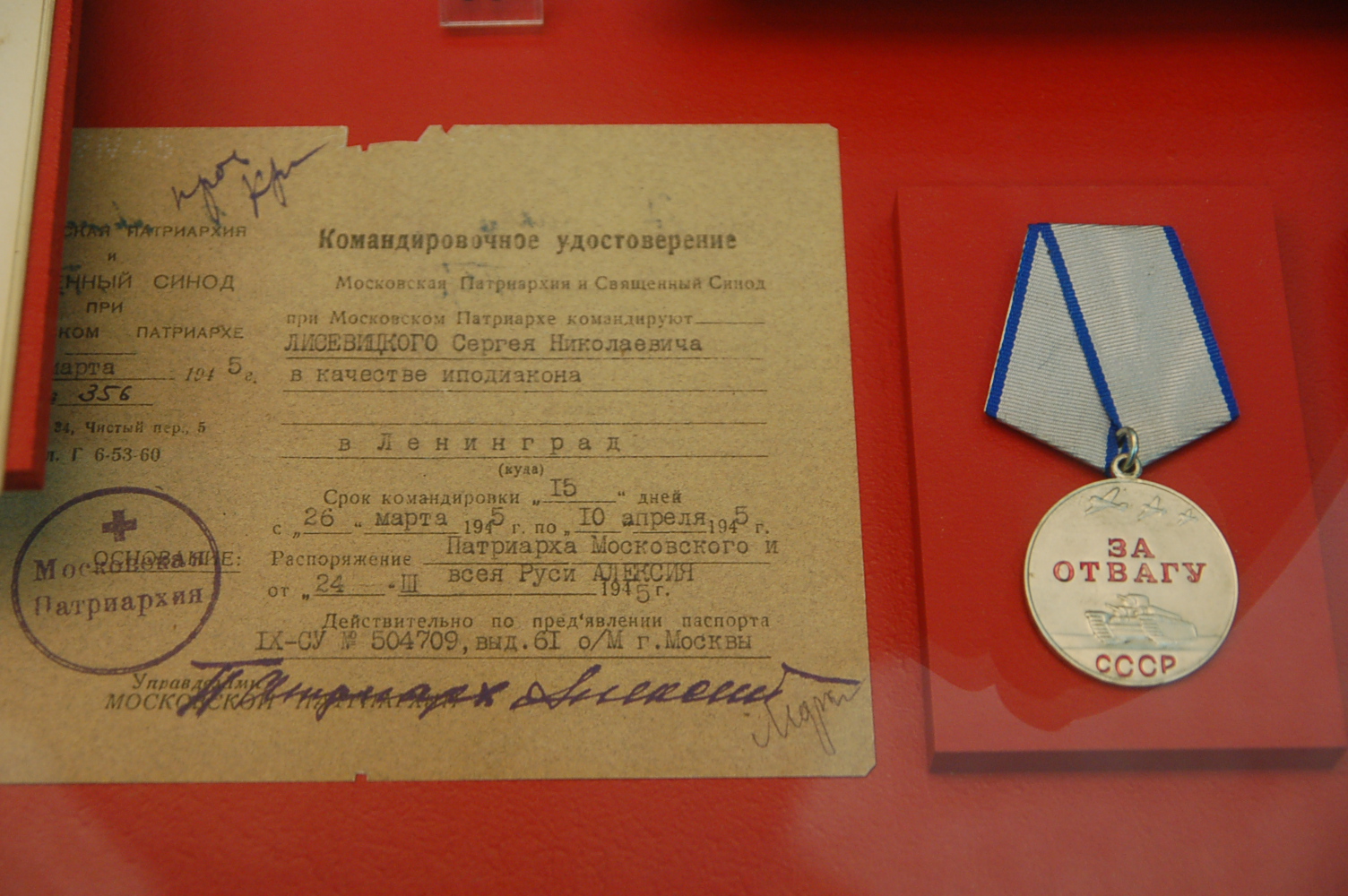
Another exhibit is a travel certificate issued to Sergei Nikolaevich Lisevitsky stating that he was sent to the city of Leningrad 'as a subdeacon' for a period from March 26 to April 10, 1945. The document bears the signature of the Primate of the Russian Church, Patriarch Alexy. There are other impressive historical evidences in the collection, for example, a photo taken in the summer of forty-fifth of priests and bishops who were awarded the medal 'For the victory over Germany in the Great Patriotic War of 1941-1945.'
Even today, 75 years after the Victory, the history of the Russian Orthodox Church during the Great Patriotic War has not yet been completed. Every year new, hitherto unknown pages open in this book. It seems that over time, by the grace of the Lord God, it will be replenished with a considerable number of documentary and photographic evidence, which will allow, finally, to objectively assess the contribution that the believing citizens of the USSR made to the common victory over the enemy.
Photo: 'Pravmir', 'Russian folk line', as well as from open sources.
V. Sergienko.