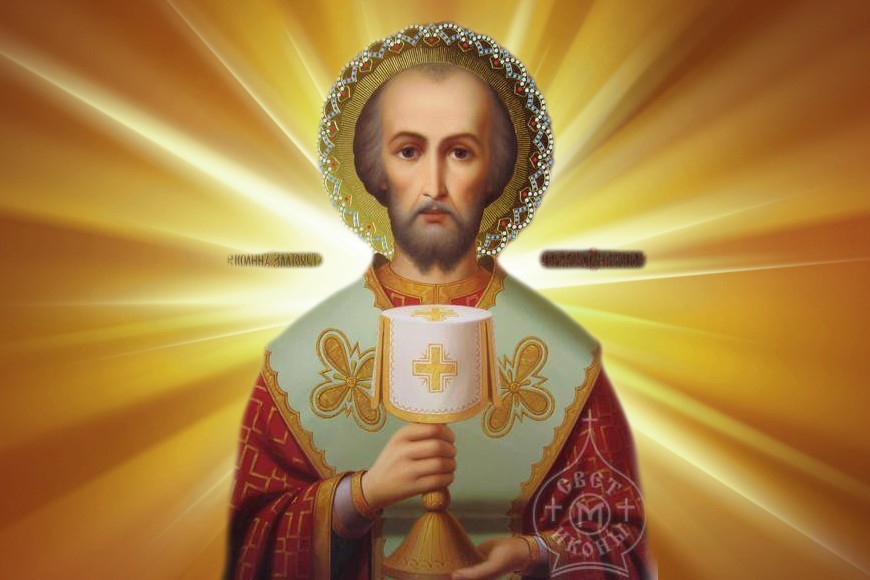
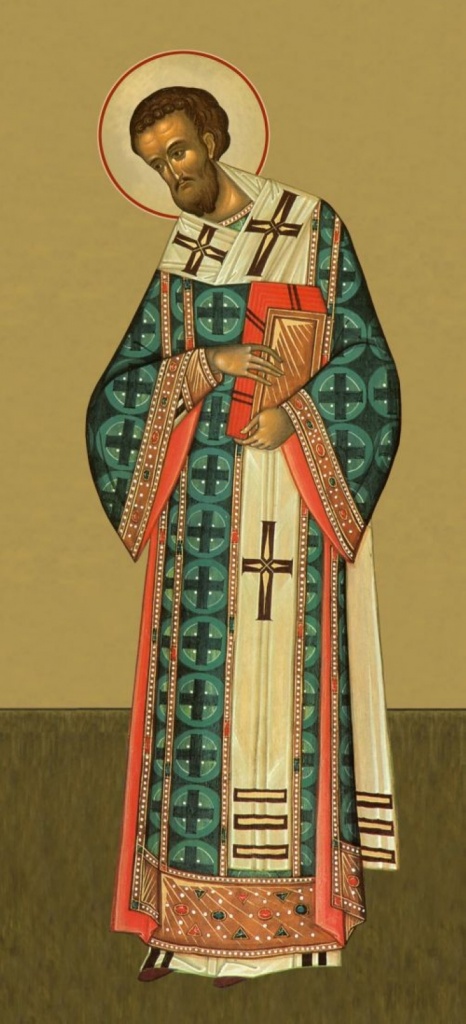
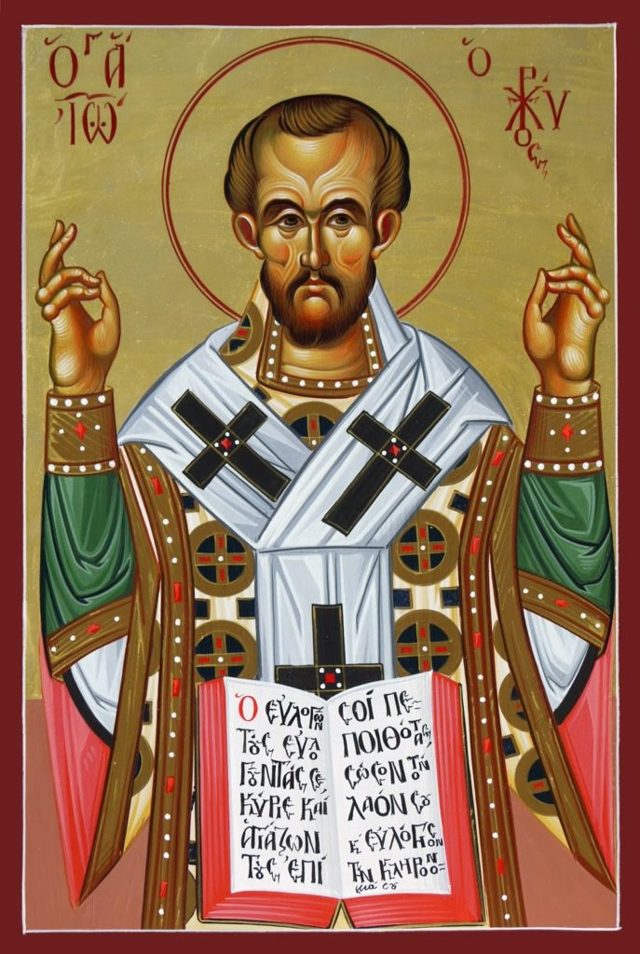
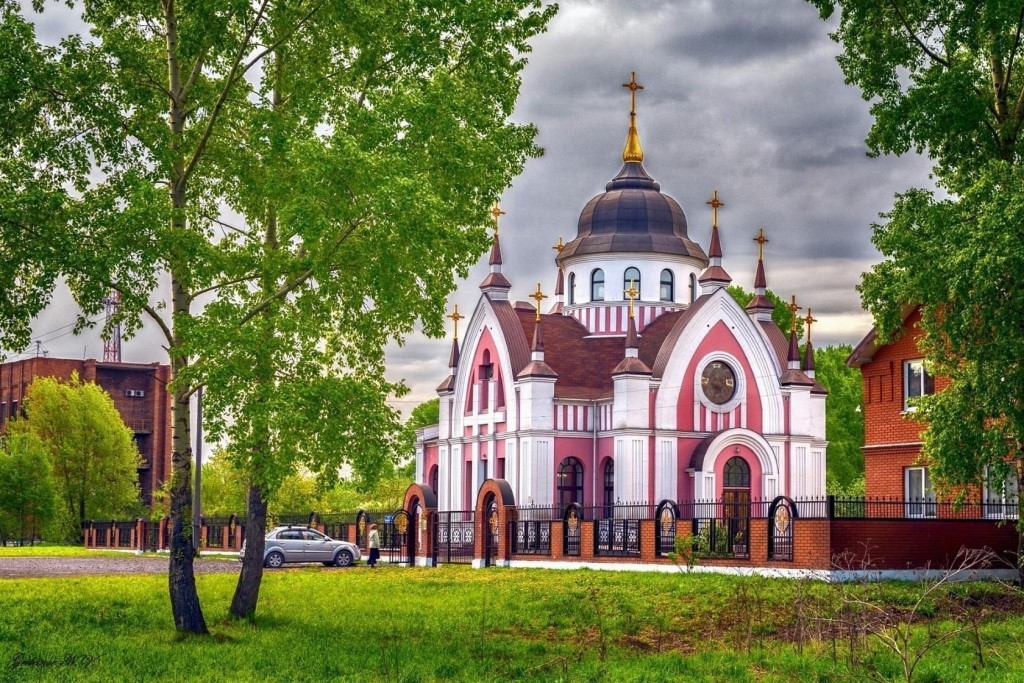
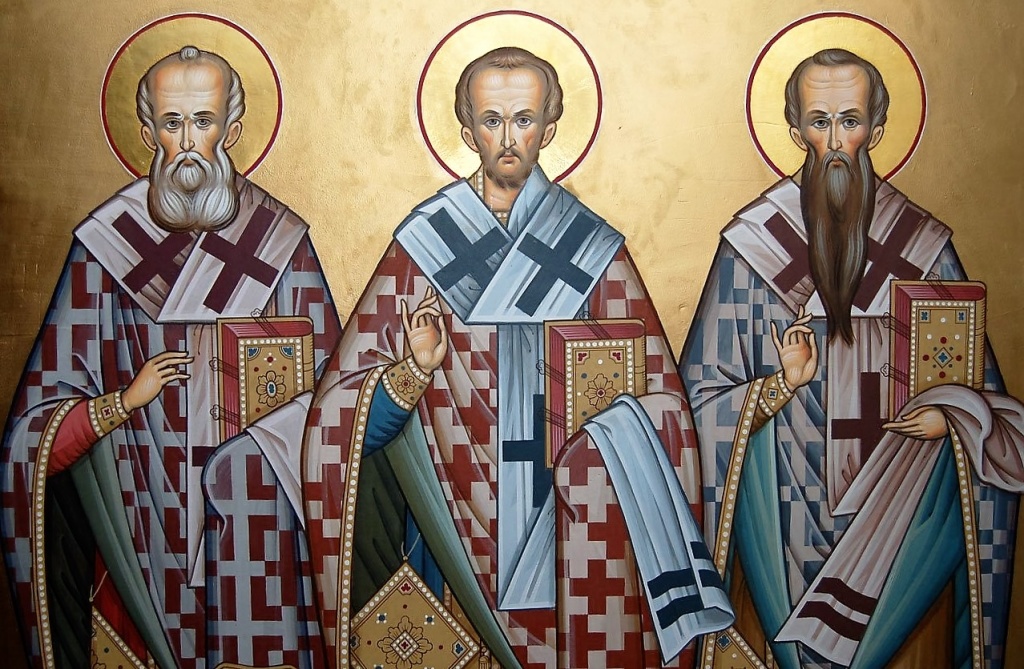
A few days before the end of autumn, on November 26, in Orthodox churches they prayerfully commemorate Saint and Ecumenical Teacher John Chrysostom, God's saint, whose contribution to the development and interpretation of the Christian doctrine and the liturgical rite is truly enormous. Святитель Иоанн Златоуст The saint, who lived in the IV-V centuries AD, departed to the Lord God on September 13 - however, one of the Great Feasts falls on this date - the Exaltation of the Lord's Cross. For this reason, the Church Council postponed the commemoration day of the saint to November 13 according to the Julian calendar - or to November 26 according to the present. John, who during his lifetime will be called Chrysostom, was born in Antioch, in a wealthy family of a Byzantine official and received a good education as a child. From an early age he learned to pray, comprehended the Holy Scriptures, and as a teenager delved into the intricacies of philosophy and rhetoric under the guidance of the best teachers of his time. At a comparatively young age, he took monastic vows under the name John, and, abandoning a career leading directly to the bishop's see, set off to wander in the wilderness. During his four years in seclusion, he created many theological works - and continued to work on them, then returning to Antioch. It was then that compatriots drew attention to the gift that John was endowed with from the Lord God: to touch human hearts with the word of a sermon. For the gift of eloquence of the young hieromonk, the Antiochians called him Chrysostom, and soon his fame spread throughout the vast empire. Св. Ионанн Златоуст. Православная икона In the year 397, Saint John was appointed archbishop of Constantinople. Through his labors, faith in the Lord Jesus Christ spread widely within the empire and even further: the tribes of the Slavs and the Goths began to accept holy Baptism. Under Archbishop John of Constantinople, a full year round of Christian worship was formed. Throughout the empire, many pilgrim houses and charitable hospitals appeared, in which the poor were treated free of charge. Храм святителя Иоанна Златоуста в Новокузнецке, Россия In his sermons, the saint eloquently and uncompromisingly denounced the excesses of the aristocracy and the vices of the priests and bishops, thereby amassing himself many ill-wishers, including the empress. Many slanderous rumors were spread about the archpastor of Constantinople, on the basis of which the unrighteous judges expelled the bishop from his dignity and sent him to the distant eastern provinces. But even from there, the saint kept in touch with his spiritual children, receiving and sending many letters every day. This influence of even an archpastor who was removed from the capital infuriated his enemies. As a result, Saint John was sent into exile to the edge of the then inhabited world - to the territory of modern Abkhazia. Here, an elderly archpastor, whose health was undermined by persecution and deprivation, departed to another world in the village of Comana in 407. “A city on top of a mountain cannot hide. And having lit a candle, they do not put it under a vessel, but on a candlestick, and it shines on everyone in the house, ”says the Holy Scriptures (Matthew 5.14-15). Thirty years after his departure to the Lord Jesus Christ, the Church glorified John Chrysostom in the face of saints, and his relics with great honor were transported from a distant province to the capital of the empire - Constantinople, where they stayed in the Church of All Saints for many centuries. Tradition says that during the setting up of the shrine in the church, a miracle happened: the saint opened his mouth and said: 'Peace to all!' In the 13th century, the crusaders took the shrine with the relics of St. John Chrysostom to Rome. However, at the beginning of the present century, by order of the Pope, the shrine was returned to Constantinople (now Istanbul) - the city where the great saint of God served as archpastoral service, and was placed in the Cathedral of St. George. Равные перед Господом. Святители и Вселенские Учители Василий Великий, Григорий Богослов и Иоанн Златоуст Throughout the centuries and to this day, the authority of St. John Chrysostom in the interpretation of Holy Scripture and the art of preaching is so great that, together with two other lamps of the Byzantine Church - Gregory the Theologian and Basil the Great - he is called not only a saint, but also an Ecumenical Teacher. They pray to St. John Chrysostom when children do not start talking for a long time, as well as about success in their studies, mastering new knowledge and skills, about getting rid of confusion and soul-destroying thoughts and about healing from various diseases.
November 26 - Memorial Day of St. John ChrysostomNovember 26 - Memorial Day of St. John Chrysostom A few days before the end of autumn, on November 26, in Orthodox churches they prayerfully commemorate Saint and Ecumenical Teacher John Chrysostom, God's saint, whose contribution to the development and interpretation of the Christian doctrine and the liturgical rite is truly enormous. Святитель Иоанн Златоуст The saint, who lived in the IV-V centuries AD, departed to the Lord God on September 13 - however, one of the Great Feasts falls on this date - the Exaltation of the Lord's Cross. For this reason, the Church Council postponed the commemoration day of the saint to November 13 according to the Julian calendar - or to November 26 according to the present. John, who during his lifetime will be called Chrysostom, was born in Antioch, in a wealthy family of a Byzantine official and received a good education as a child. From an early age he learned to pray, comprehended the Holy Scriptures, and as a teenager delved into the intricacies of philosophy and rhetoric under the guidance of the best teachers of his time. At a comparatively young age, he took monastic vows under the name John, and, abandoning a career leading directly to the bishop's see, set off to wander in the wilderness. During his four years in seclusion, he created many theological works - and continued to work on them, then returning to Antioch. It was then that compatriots drew attention to the gift that John was endowed with from the Lord God: to touch human hearts with the word of a sermon. For the gift of eloquence of the young hieromonk, the Antiochians called him Chrysostom, and soon his fame spread throughout the vast empire. Св. Ионанн Златоуст. Православная икона In the year 397, Saint John was appointed archbishop of Constantinople. Through his labors, faith in the Lord Jesus Christ spread widely within the empire and even further: the tribes of the Slavs and the Goths began to accept holy Baptism. Under Archbishop John of Constantinople, a full year round of Christian worship was formed. Throughout the empire, many pilgrim houses and charitable hospitals appeared, in which the poor were treated free of charge. Храм святителя Иоанна Златоуста в Новокузнецке, Россия In his sermons, the saint eloquently and uncompromisingly denounced the excesses of the aristocracy and the vices of the priests and bishops, thereby amassing himself many ill-wishers, including the empress. Many slanderous rumors were spread about the archpastor of Constantinople, on the basis of which the unrighteous judges expelled the bishop from his dignity and sent him to the distant eastern provinces. But even from there, the saint kept in touch with his spiritual children, receiving and sending many letters every day. This influence of even an archpastor who was removed from the capital infuriated his enemies. As a result, Saint John was sent into exile to the edge of the then inhabited world - to the territory of modern Abkhazia. Here, an elderly archpastor, whose health was undermined by persecution and deprivation, departed to another world in the village of Comana in 407. “A city on top of a mountain cannot hide. And having lit a candle, they do not put it under a vessel, but on a candlestick, and it shines on everyone in the house, ”says the Holy Scriptures (Matthew 5.14-15). Thirty years after his departure to the Lord Jesus Christ, the Church glorified John Chrysostom in the face of saints, and his relics with great honor were transported from a distant province to the capital of the empire - Constantinople, where they stayed in the Church of All Saints for many centuries. Tradition says that during the setting up of the shrine in the church, a miracle happened: the saint opened his mouth and said: 'Peace to all!' In the 13th century, the crusaders took the shrine with the relics of St. John Chrysostom to Rome. However, at the beginning of the present century, by order of the Pope, the shrine was returned to Constantinople (now Istanbul) - the city where the great saint of God served as archpastoral service, and was placed in the Cathedral of St. George. Равные перед Господом. Святители и Вселенские Учители Василий Великий, Григорий Богослов и Иоанн Златоуст Throughout the centuries and to this day, the authority of St. John Chrysostom in the interpretation of Holy Scripture and the art of preaching is so great that, together with two other lamps of the Byzantine Church - Gregory the Theologian and Basil the Great - he is called not only a saint, but also an Ecumenical Teacher. They pray to St. John Chrysostom when children do not start talking for a long time, as well as about success in their studies, mastering new knowledge and skills, about getting rid of confusion and soul-destroying thoughts and about healing from various diseases.Свеча Иерусалима -sr
A few days before the end of autumn, on November 26, in Orthodox churches they prayerfully commemorate Saint and Ecumenical Teacher John Chrysostom, God's saint, whose contribution to the development and interpretation of the Christian doctrine and the liturgical rite is truly enormous. Святитель Иоанн Златоуст The saint, who lived in the IV-V centuries AD, departed to the Lord God on September 13 - however, one of the Great Feasts falls on this date - the Exaltation of the Lord's Cross. For this reason, the Church Council postponed the commemoration day of the saint to November 13 according to the Julian calendar - or to November 26 according to the present. John, who during his lifetime will be called Chrysostom, was born in Antioch, in a wealthy family of a Byzantine official and received a good education as a child. From an early age he learned to pray, comprehended the Holy Scriptures, and as a teenager delved into the intricacies of philosophy and rhetoric under the guidance of the best teachers of his time. At a comparatively young age, he took monastic vows under the name John, and, abandoning a career leading directly to the bishop's see, set off to wander in the wilderness. During his four years in seclusion, he created many theological works - and continued to work on them, then returning to Antioch. It was then that compatriots drew attention to the gift that John was endowed with from the Lord God: to touch human hearts with the word of a sermon. For the gift of eloquence of the young hieromonk, the Antiochians called him Chrysostom, and soon his fame spread throughout the vast empire. Св. Ионанн Златоуст. Православная икона In the year 397, Saint John was appointed archbishop of Constantinople. Through his labors, faith in the Lord Jesus Christ spread widely within the empire and even further: the tribes of the Slavs and the Goths began to accept holy Baptism. Under Archbishop John of Constantinople, a full year round of Christian worship was formed. Throughout the empire, many pilgrim houses and charitable hospitals appeared, in which the poor were treated free of charge. Храм святителя Иоанна Златоуста в Новокузнецке, Россия In his sermons, the saint eloquently and uncompromisingly denounced the excesses of the aristocracy and the vices of the priests and bishops, thereby amassing himself many ill-wishers, including the empress. Many slanderous rumors were spread about the archpastor of Constantinople, on the basis of which the unrighteous judges expelled the bishop from his dignity and sent him to the distant eastern provinces. But even from there, the saint kept in touch with his spiritual children, receiving and sending many letters every day. This influence of even an archpastor who was removed from the capital infuriated his enemies. As a result, Saint John was sent into exile to the edge of the then inhabited world - to the territory of modern Abkhazia. Here, an elderly archpastor, whose health was undermined by persecution and deprivation, departed to another world in the village of Comana in 407. “A city on top of a mountain cannot hide. And having lit a candle, they do not put it under a vessel, but on a candlestick, and it shines on everyone in the house, ”says the Holy Scriptures (Matthew 5.14-15). Thirty years after his departure to the Lord Jesus Christ, the Church glorified John Chrysostom in the face of saints, and his relics with great honor were transported from a distant province to the capital of the empire - Constantinople, where they stayed in the Church of All Saints for many centuries. Tradition says that during the setting up of the shrine in the church, a miracle happened: the saint opened his mouth and said: 'Peace to all!' In the 13th century, the crusaders took the shrine with the relics of St. John Chrysostom to Rome. However, at the beginning of the present century, by order of the Pope, the shrine was returned to Constantinople (now Istanbul) - the city where the great saint of God served as archpastoral service, and was placed in the Cathedral of St. George. Равные перед Господом. Святители и Вселенские Учители Василий Великий, Григорий Богослов и Иоанн Златоуст Throughout the centuries and to this day, the authority of St. John Chrysostom in the interpretation of Holy Scripture and the art of preaching is so great that, together with two other lamps of the Byzantine Church - Gregory the Theologian and Basil the Great - he is called not only a saint, but also an Ecumenical Teacher. They pray to St. John Chrysostom when children do not start talking for a long time, as well as about success in their studies, mastering new knowledge and skills, about getting rid of confusion and soul-destroying thoughts and about healing from various diseases.